











Are you trying to figure out exactly how much do a solar electric system cost in 2026?
You might already know that switching to solar can drastically cut your utility bills and provide complete energy independence…
But what is the actual bottom-line number?
Well, you\’re in for a treat because I\’ve put together a complete, fully transparent pricing guide.
As a manufacturer with over 15 years of industry experience, I know that confusing quotes and hidden installer fees can make it impossible to get a straight answer. I\’m pulling back the curtain on the true cost of hardware and soft costs.
In this guide, you\’re going to learn exactly what drives the average cost of solar panels, how premium components like a LiFePO4 solar battery or a hybrid solar inverter affect your upfront investment, and how to maximize the federal solar tax credit 2026.
So if you\’re looking to avoid middleman markups, calculate your exact solar energy system payback period, and lower your total cost of ownership solar, this guide is for you.
Let\’s dive right in.
The Average Cost of a Solar Electric System Today
For homeowners and commercial buyers looking to secure long-term energy independence, accurately benchmarking the average cost of solar panels is the critical first step in calculating Return on Investment (ROI). As of 2026, the national average for a complete solar installation ranges from $2.50 to $3.50 per watt before financial incentives.
A standard residential or light commercial setup typically requires between 6kW and 12kW of power capability. This means a turnkey installation—including premium panels, inverters, mounting hardware, and labor—averages between $15,000 and $35,000 upfront. Smart buyers do not view this as a sunk expense; it is a strategic capital expenditure designed to permanently lower the Total Cost of Ownership (TCO) for facility or home electricity over a 25-to-30-year operational lifespan.
Cost Per Watt vs. Total System Cost
To effectively evaluate vendor quotes and hardware configurations, you must distinguish between two primary pricing metrics:
- Cost Per Watt (PPW): The industry-standard metric for comparing solar hardware value. It divides the total system cost by the total wattage capacity. In 2026, a competitive solar power system cost per watt sits at approximately $2.80 to $3.00. Use this baseline to compare different hardware combinations apples-to-apples.
- Total System Cost: The gross, out-the-door price of your complete installation. This encompasses the physical collectors, balance of system (inverters, wiring, racking), labor, and permitting. While high-capacity systems carry a steeper total cost, they consistently yield a lower cost per watt due to bulk purchasing and economies of scale.
Pricing by System Size
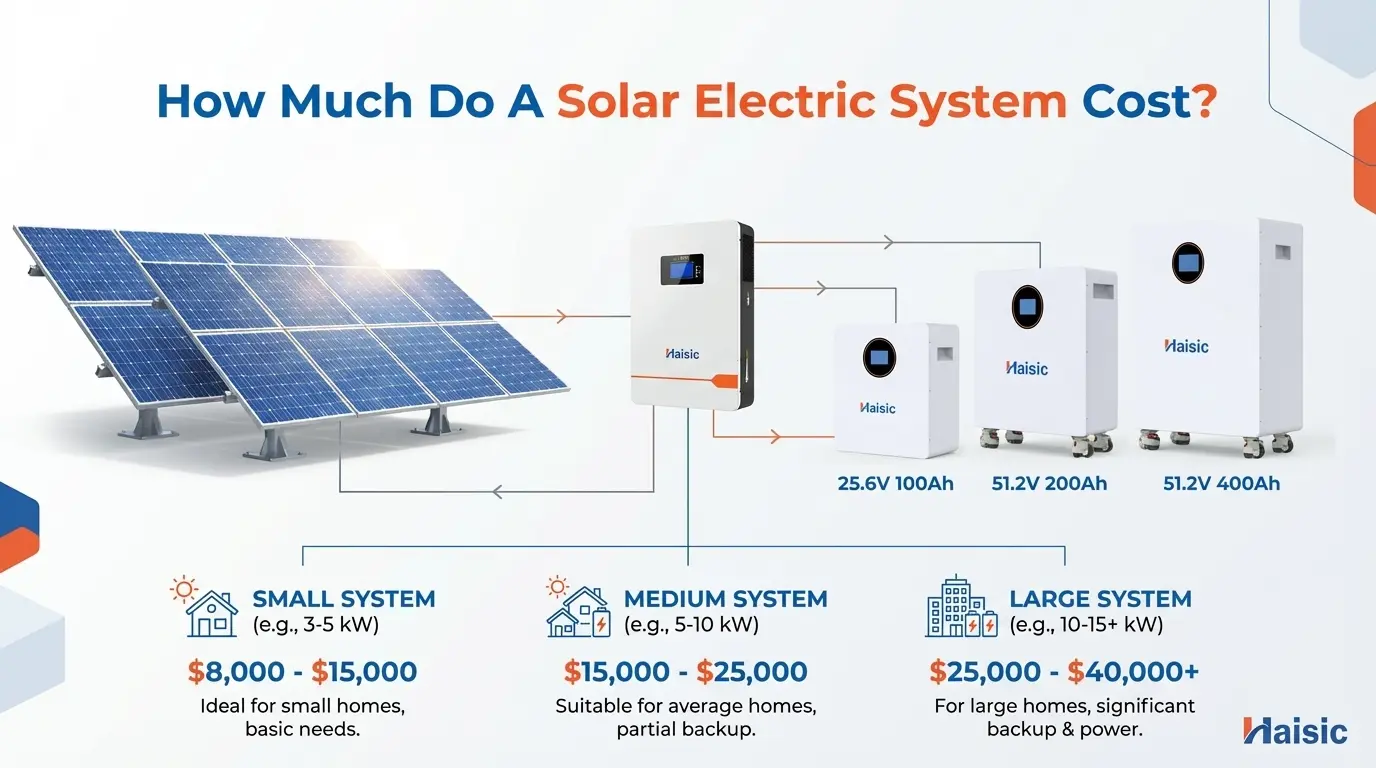
Scaling your solar array precisely to your consumption dictates your energy offset and overall financial return. Below is a data-driven cost breakdown for standard system capacities before applying the federal solar tax credit 2026, which currently allows owners to deduct 30% of the total installation cost from their federal taxes.
| System Size | Target Application | Average Cost Per Watt | Estimated Total Cost (Pre-Tax Credit) |
|---|---|---|---|
| 6 kW | Small to medium consumption profiles | $3.10 | $18,600 |
| 8 kW | Average properties / light commercial | $2.95 | $23,600 |
| 10 kW | High-consumption / EV charging | $2.85 | $28,500 |
| 12 kW+ | Large estates / heavy C&I usage | $2.75 | $33,000+ |
(Note: The 10kW solar system cost currently represents the sweet spot for maximizing ROI among heavy energy consumers aiming to achieve near-total grid independence.)
What Are You Actually Paying For? (The Cost Breakdown)
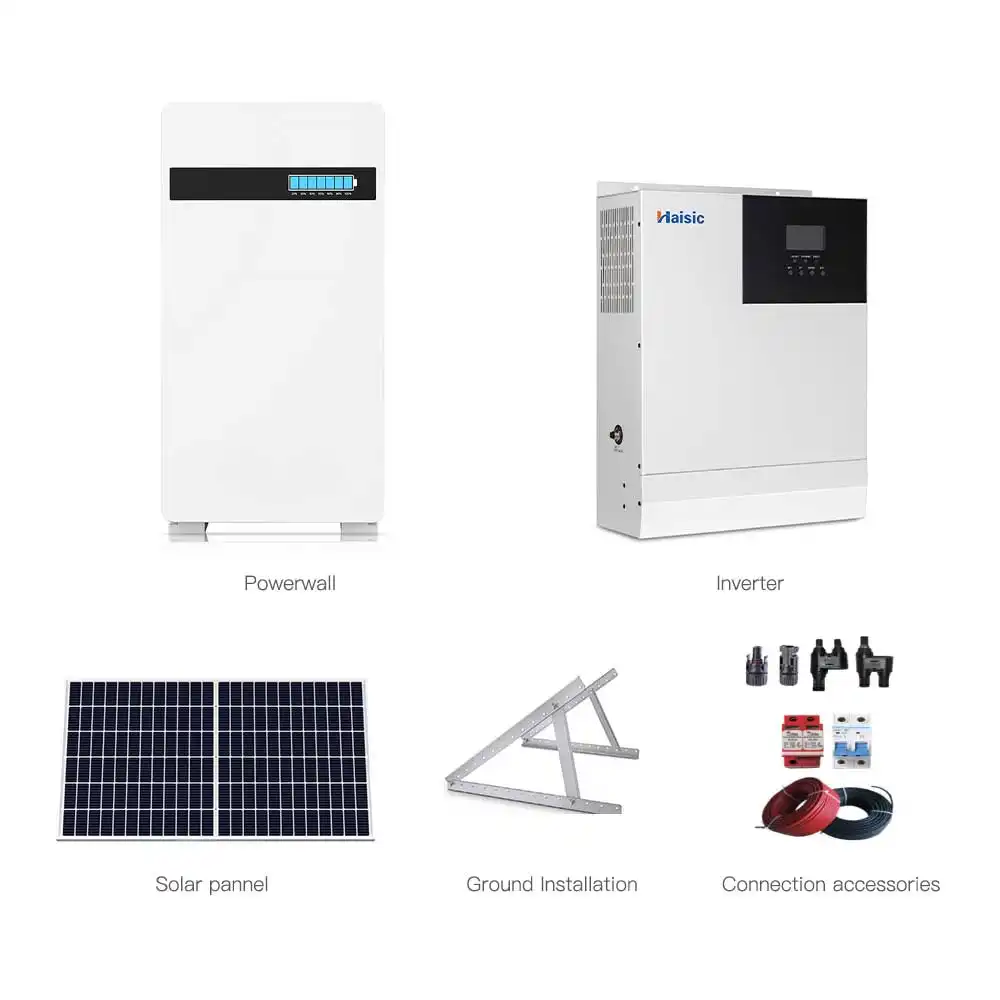
When clients ask us how much do a solar electric system cost, they usually picture just the dark glass panels on their roof. However, a reliable, fully functioning setup involves several critical pieces of hardware and labor. To understand your true solar panel installation cost, we need to look at exactly where your money goes.
Solar Panels (The Collectors)
These are the visible face of your system, working constantly to absorb sunlight and generate direct current (DC) electricity.
- Function: Capture raw solar energy.
- Cost Factor: Your price shifts based on wattage, efficiency ratings, and whether you choose premium monocrystalline or standard polycrystalline panels.
Solar Inverters (The Brains of the Operation)
Your home appliances cannot use the raw DC electricity your panels produce. Inverters are required to convert this raw energy into usable alternating current (AC).
- Function: Translates and routes power into your electrical panel.
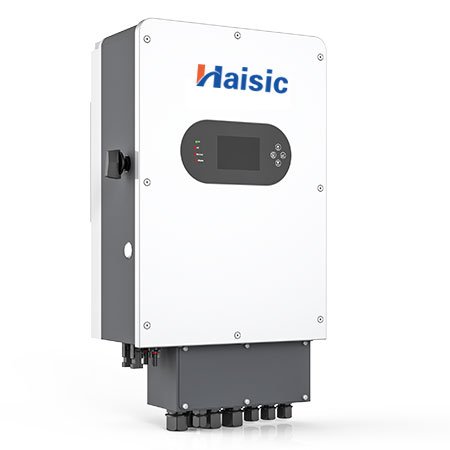
- Cost Factor: The type of technology you use drives this expense. Standard string inverters are cheaper, while opting for microinverters or evaluating the current hybrid solar inverter price will increase upfront costs but offer better system-wide efficiency.
Solar Battery Storage (The Heart of the System)
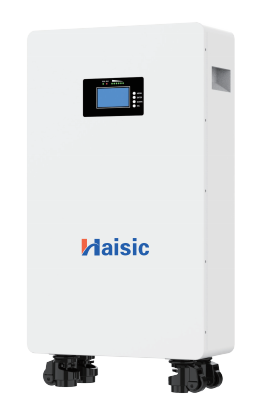
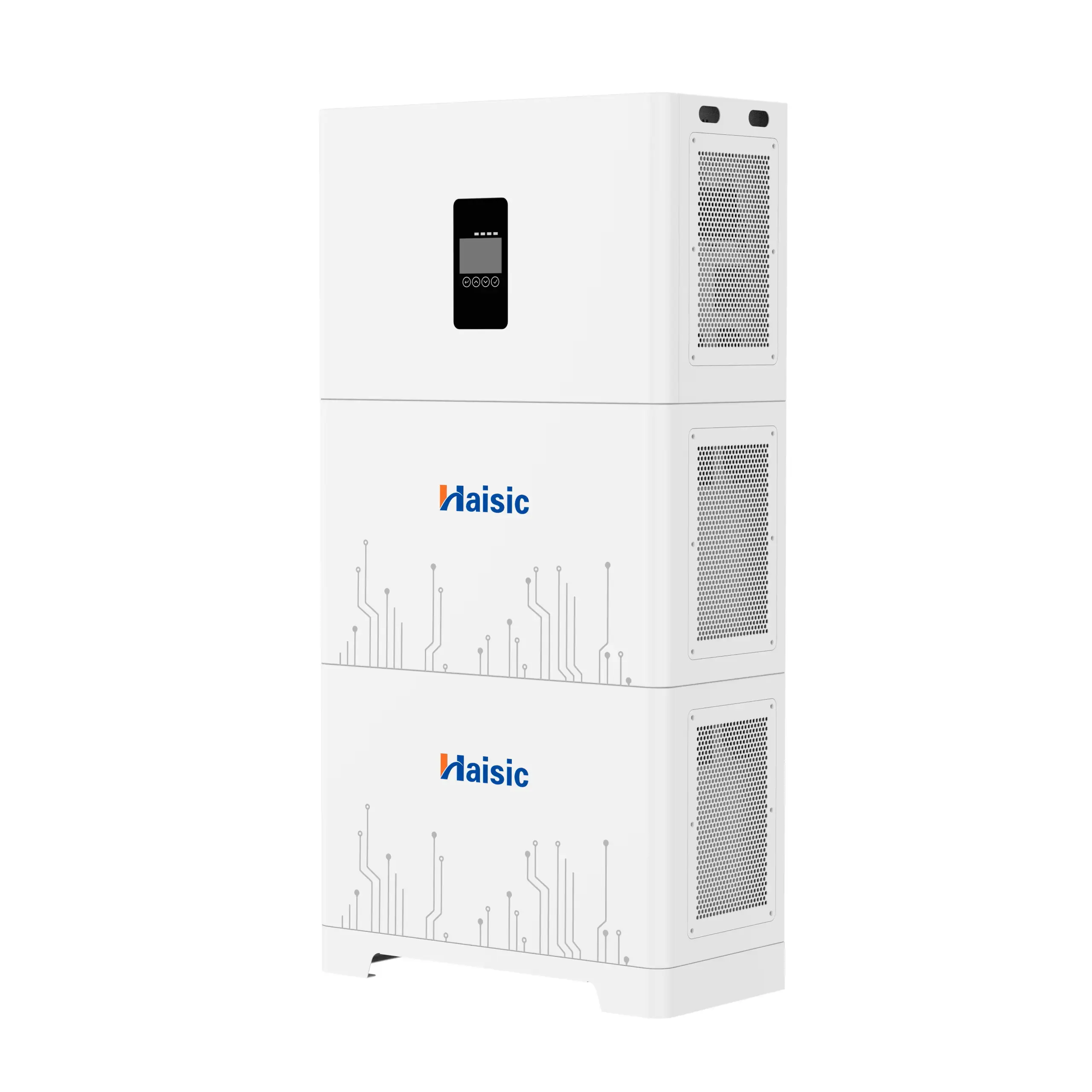
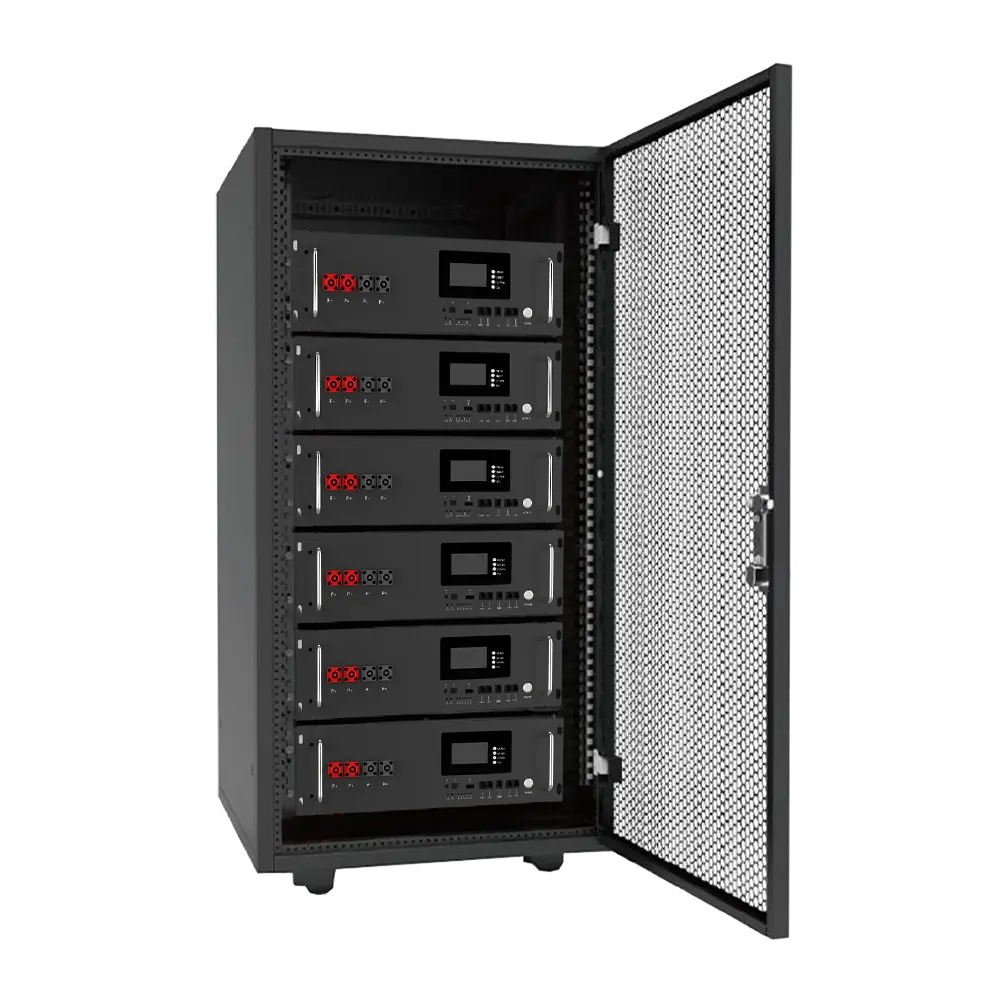
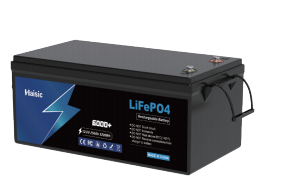
If you want to keep the lights on during a grid outage or use your own solar power at night, you need energy storage. As energy independence becomes more popular, tracking solar battery storage prices is essential. The chemistry of the battery you choose makes a massive difference in performance. For a resilient setup, installing a 48V 100Ah LiFePO4 rackmounted battery pack provides unmatched safety and longevity for modern home battery backup systems.
- Function: Stores your excess daytime energy for on-demand use.
- Cost Factor: Capacity (kWh) and lifespan. While the initial LiFePO4 solar battery cost is higher than older lead-acid technology, its multi-decade lifespan makes it a far superior financial investment.
Soft Costs
The physical equipment only accounts for about half of your total bill. The rest goes toward the logistics required to get your system safely attached to your home and legally connected to the grid.
- Labor: Professional installation by licensed electricians and roofers.
- Permitting & Interconnection: Fees paid directly to your local municipality and utility provider to approve the system.
- Overhead: System design, engineering reviews, and standard operational margins for the installation company.
Residential vs. Commercial Solar Cost Factors
When you ask exactly how much do a solar electric system cost, the answer changes drastically depending on whether we are looking at a home or a large business. The scale of the equipment, the installation process, and the core financial goals are entirely different.
Home Solar Solutions
For residential properties, our main goal is to wipe out your monthly utility bills and protect your family from unpredictable grid outages. The average cost of solar panels for a standard home is usually based on a modest 5kW to 15kW setup.
- Custom Sizing: We tailor the system directly to your roof space and your family\’s daily energy consumption.
- Energy Storage: To truly maximize your independence, integrating a reliable battery to run a house is a necessary step. This allows you to store excess daylight power to keep your appliances running smoothly through the night.
- Streamlined Permitting: Residential city permits are generally faster and less complex to secure, which helps keep the overall soft costs manageable.
Commercial & Industrial (C&I) Systems
On the industrial side, commercial setups operate on a massive scale. We engineer these heavy-duty systems specifically to power factories, expansive warehouses, and large office buildings.
- Economies of Scale: Because we utilize a massive volume of panels and equipment, the solar power system cost per watt drops significantly compared to residential projects.
- The Bottom Line: For business owners, the decision is driven entirely by the commercial solar system ROI. The design focuses on aggressively lowering long-term operating expenses and capitalizing on corporate tax depreciation.
- Complex Deployment: C&I systems demand flat-roof ballasted mounts, high-capacity three-phase inverters, and involve navigating strict commercial zoning laws, all of which shape the final total cost.
Financial Incentives That Lower Your Solar Costs
When people ask me how much do a solar electric system cost, I always tell them to look past the initial sticker price. The upfront solar panel installation cost is rarely what you actually pay out of pocket. Governments and utility companies actively want you to adopt renewable energy, and they offer substantial financial incentives that directly reduce your total investment.
The Federal Solar Tax Credit (ITC)
The biggest financial advantage for buyers right now is the federal Investment Tax Credit (ITC). Under the current federal solar tax credit 2026 guidelines, you can deduct a massive 30% of your total installation costs directly from your federal taxes. This is a dollar-for-dollar credit, not just a simple income deduction.
This credit applies to the whole package, not just the panels. If you decide to add reliable battery storage for home to keep your lights on during grid outages, the cost of that battery system qualifies for the 30% tax credit as well. Taking advantage of this credit is the absolute best way to drive down overall solar battery storage prices and maximize the value of your setup.
Local Rebates and Net Metering
Beyond federal support, local programs are key to bringing down the average cost of solar panels even further. Depending on where you live, you can stack several of these benefits:
- State and Utility Rebates: Many local utilities offer direct cash rebates upon installation, which acts as an instant discount on your hardware.
- Net Metering: If your system generates more electricity than your house consumes during the day, that excess power flows back into the grid. In exchange, your utility company credits your monthly bill. This mechanism drastically speeds up your solar energy system payback period.
- Performance-Based Incentives (PBIs): In certain markets, you can actually get paid a fixed rate per kilowatt-hour of clean energy your system produces, creating a steady stream of passive income over time.
Is a Solar Electric System Worth the Investment?
When people ask me how much do a solar electric system cost, my immediate response is to look at the long-term value, not just the upfront price tag. Yes, the initial expense is significant, but a solar power setup is a high-performing financial asset. It locks in your energy rates and acts as a shield against unpredictable, rising utility bills. Whether you are pricing out a massive commercial array or simply checking the current 8kW solar system price for your home, the long-term financial returns consistently make it a smart, profitable investment.
Calculating Your Payback Period
Your solar energy system payback period is the amount of time it takes for your energy savings to completely cover your initial system cost. For most standard residential installations, this timeline lands between 6 and 9 years. After that point, every kilowatt you generate is pure profit in the form of free electricity.
Here are the three main factors I use to calculate this timeline:
- Gross System Cost: The total, out-of-pocket expense before applying any discounts.
- Incentives and Rebates: Taking advantage of local incentives and the federal solar tax credit 2026 drastically cuts down your out-of-pocket costs and accelerates your payback time.
- Annual Utility Savings: The total amount of money you avoid paying your local utility company each year.
Lowering Total Cost of Ownership (TCO)
To maximize your investment, your primary goal should be lowering the total cost of ownership solar. This requires looking past the day-one installation price and focusing on the levelized cost of energy (LCOE) solar over the next 25 years.
You can keep your lifetime costs low by following these rules:
- Invest in Tier-One Gear: Cheap components fail. Buying high-quality solar panels and hybrid inverters upfront drastically reduces expensive maintenance and replacement costs down the line.
- Maximize Self-Consumption: Sending power back to the grid rarely pays off as much as using it yourself. Integrating reliable storage—whether that is a simple 12-volt battery backup for critical loads or a full LiFePO4 solar battery bank—ensures you capture and use your own power, cutting grid reliance and keeping your TCO at the absolute minimum.
Take the Next Step: Get a Custom Solar Hardware Quote
Figuring out exactly how much do a solar electric system cost ultimately comes down to the unique details of your property and daily energy habits. While online averages and a quick solar system cost calculator can give you a rough baseline, a personalized hardware quote is the only way to pinpoint your exact upfront investment and long-term total cost of ownership solar.
We are here to help you design a setup that perfectly matches your power requirements without making you pay for unnecessary extras. Whether you are trying to nail down a standard 10kW solar system cost or you need robust, scalable solar and energy storage hardware for a larger project, getting a tailored quote brings complete financial clarity.
What we need to build your custom hardware quote:
- Your current energy usage: A quick look at your recent electricity bills helps us properly size your inverters and panels.
- Your physical footprint: Rough dimensions of your roof space, available ground area, or parking structure.
- Your ultimate energy goals: Let us know if your priority is simply offsetting utility rates or if you need a dependable battery bank backup for home to keep critical appliances running during grid failures.
Stop guessing on the final price tag. Reach out to us today with your project specifications, and let’s put together a clear, competitive hardware quote that turns your renewable energy plans into reality.