











You might already know that the global Battery Energy Storage System (BESS) market is growing at an unprecedented rate…
But there is one critical bottleneck keeping project developers and grid operators awake at night: catastrophic fire risks.
If you are struggling to navigate strict fire codes and eliminate the threat of thermal runaway in your commercial or grid-scale deployments, you are in the right place.
As an experienced ESS battery manufacturer, we know that selecting the right cell chemistry is the difference between a highly profitable, scalable project and a regulatory nightmare.
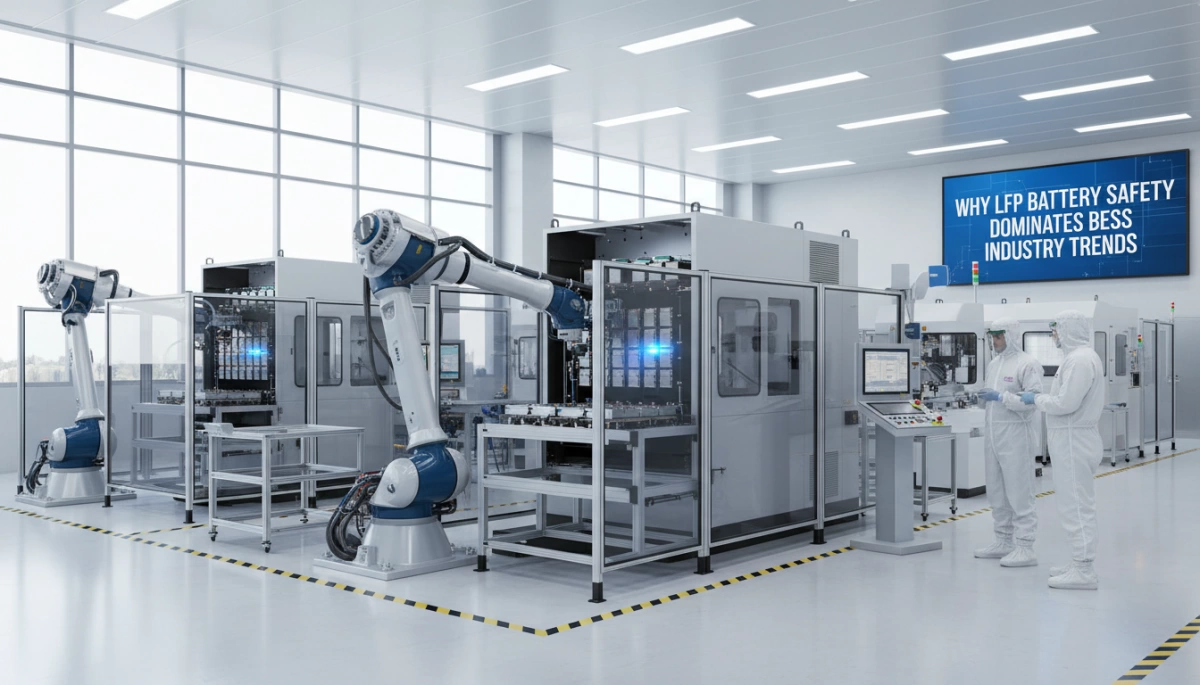
That is exactly Why LFP Battery Safety Dominates BESS Industry Trends.
In this guide, you\’re going to learn the exact science behind LiFePO4 chemical stability, how it simplifies NFPA 855 compliance, and why it consistently outperforms other chemistries in rigorous energy storage safety standards like UL9540A.
Let\’s dive in!
The Science of Safety: LiFePO4 Chemical Stability Explained
We know that when deploying a Battery Energy Storage System (BESS), nothing keeps project developers awake at night quite like the threat of battery fires and regulatory bottlenecks. Safety is not just a compliance hurdle; it is the ultimate foundation of project viability. This is exactly why LFP battery safety continues to dominate commercial energy storage systems today.
The secret to this reliability lies entirely at the molecular level. Let us break down the LiFePO4 chemical stability that makes Lithium Iron Phosphate technology the industry\’s gold standard.
Molecular Resilience
The core advantage of LFP chemistry is its unyielding structural integrity.
- Strong Covalent Bonds: LFP relies on incredibly robust phosphorus-oxygen (P-O) bonds.
- NMC vs LFP Safety Comparison: Unlike the much weaker atomic bonds found in traditional NMC (Nickel Manganese Cobalt) batteries, the strong P-O bonds in LFP resist breaking down, even when subjected to extreme electrical or mechanical stress.
Higher Thermal Thresholds
Heat is the primary enemy of grid-scale battery storage. Fortunately, LFP batteries provide an extraordinary thermal buffer.
- LFP Cells: Can comfortably withstand temperatures exceeding 270°C (518°F) before any exothermic reactions occur.
- NMC Cells: Typically begin to degrade and react dangerously at just 150°C (302°F).
This massive temperature gap provides a vital window of time for system diagnostics and drastically reduces the heavy lifting required by the battery thermal management system (BTMS).
Zero Oxygen Release
Perhaps the most critical factor in effective thermal runaway mitigation is oxygen deprivation. When traditional NMC lithium-ion chemistries degrade under high heat, they release trapped oxygen, effectively feeding their own fire from the inside out.
- The LFP Advantage: True LiFePO4 chemical stability ensures zero oxygen release during thermal degradation.
- The Result: Without an internal oxygen supply, LFP batteries simply cannot sustain internal combustion. This inherent trait prevents devastating, self-sustaining fires, making your energy storage investments fundamentally secure.
Mitigating the Ultimate Threat: Thermal Runaway in BESS

Thermal runaway is the nightmare scenario for any energy storage project. It occurs when a battery cell enters an uncontrollable, self-heating state, creating a violent chain reaction. In grid-scale battery storage, this is catastrophic. A single compromised cell can quickly ignite surrounding cells, potentially destroying the entire facility and posing massive safety risks to nearby infrastructure. For project developers and operators, effective thermal runaway mitigation is absolutely non-negotiable.
Cell-to-Pack Safety: Stopping the Spread
This is where LFP battery safety truly dominates. LFP chemistry fundamentally alters how a battery pack handles a localized failure:
- High Thermal Stability: If one cell fails, the lack of internal oxygen release means the reaction is less volatile.
- Limited Propagation: Because the overall heat output is significantly lower than other chemistries, a single thermal event struggles to trigger adjacent cells.
- Total Containment: The failure remains isolated at the cell level, protecting the broader battery pack and preventing a facility-wide disaster.
Synergy with Advanced BMS Integration
Even with inherently safe chemistry, stable hardware requires smart software. Seamless battery management system (BMS) integration acts as the critical first line of defense.
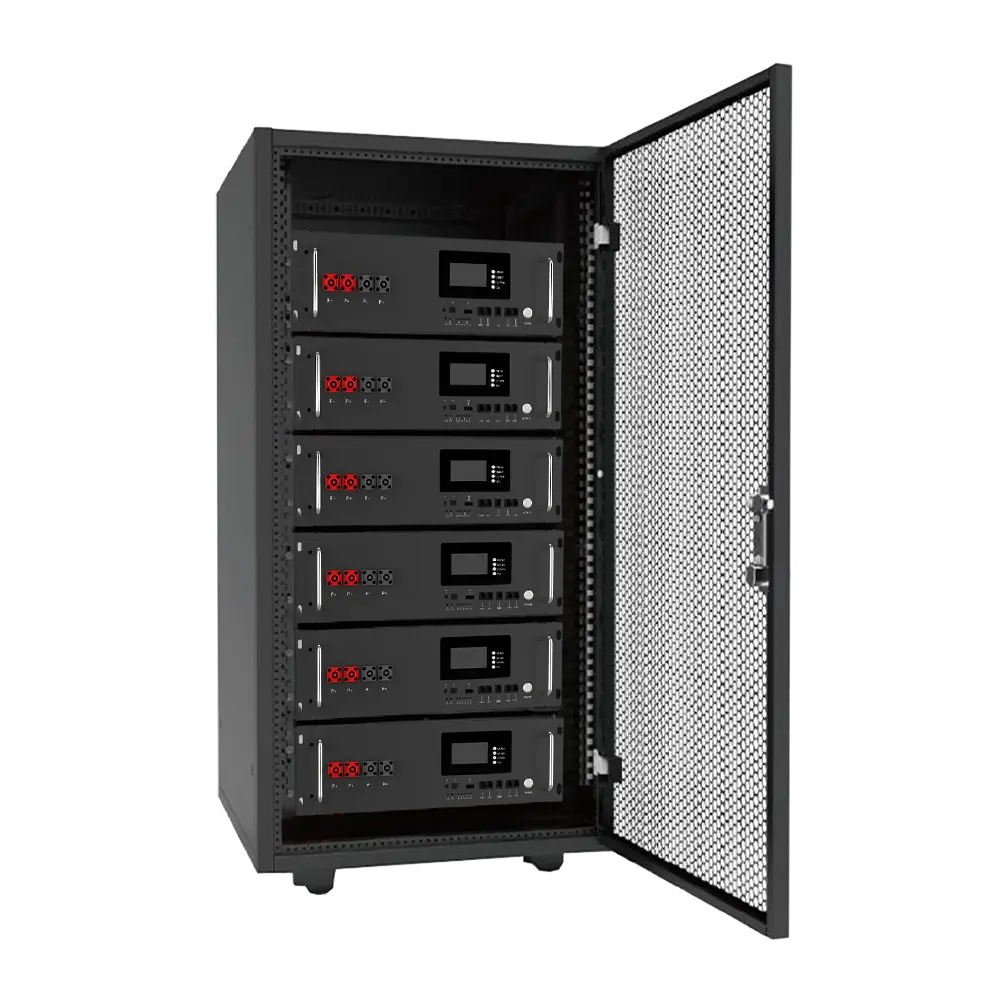
The BMS functions as the brain of the system, constantly monitoring individual cells to prevent overcharging, deep discharging, and localized overheating. When we engineer heavy-duty solutions like a 200kW industrial and commercial energy storage battery, we pair premium LiFePO4 cells with an intelligent battery thermal management system (BTMS). This powerful synergy ensures that minor voltage fluctuations or temperature spikes are detected and neutralized instantly, actively cutting off power long before a thermal event can even begin.
Regulatory Drivers and Fire Suppression Standards
As an ESS battery manufacturer, we see firsthand how strict energy storage safety standards shape the industry. The regulatory landscape demands proven safety, and LFP chemistry naturally aligns with these rigorous requirements.
Here is how LFP chemistry simplifies compliance and system design:
- Navigating UL9540A Testing: The UL9540A test method evaluates thermal runaway fire propagation at the cell, module, and unit levels. LFP batteries consistently dominate these cell-level fire tests. Because of their inherent thermal stability, a UL9540A certified battery using LFP chemistry withstands extreme stress without triggering catastrophic, fast-spreading fires.
- NFPA 855 & Fire Code Compliance: Navigating stringent local fire codes is a massive hurdle for developers. Achieving NFPA 855 compliance is drastically simplified when using LFP cells. Authorities having jurisdiction (AHJs) are more willing to approve site permits with reduced safety setbacks because the baseline chemistry is so stable. Whether deploying commercial grid storage or a lithium ion battery for solar applications, LFP guarantees an easier path to approval.
- Optimizing BESS Fire Suppression Systems: Because LFP degradation does not release oxygen, fires are far less volatile and easier to contain. This allows BESS designers to optimize HVAC layouts and utilize more cost-effective, standard aerosol or water-based BESS fire suppression systems. This inherent safety directly reduces upfront capital expenditures while keeping the entire site secure.
The Economic Impact of LFP Safety
When we look at why LFP battery safety dominates BESS industry trends, the conversation quickly turns to economics. The inherent safety of Lithium Iron Phosphate technology goes far beyond simply preventing accidents—it directly improves the bottom line for developers deploying commercial energy storage systems and grid-scale battery storage.
Lower Insurance Premiums
Risk liability is a major factor in large-scale energy storage. Because LFP chemistry significantly mitigates the risk of thermal events, insurance companies view these installations favorably.
- Reduced Risk Liabilities: The stable, proven safety profile of LFP translates directly to cheaper insurance coverage.
- Lower Operating Costs: Lower insurance premiums keep operating expenses down year after year, improving project margins.
Siting and Permitting Advantages
Getting municipal approval for grid-scale battery storage can be a major bottleneck. Highly volatile chemistries require large safety setbacks and highly complex BESS fire suppression systems.
- Urban Deployments: Because of the reduced fire risk, we can install LFP systems much closer to urban centers and even inside commercial buildings without violating stringent zoning laws.
- Faster Approvals: Local authorities and fire marshals approve permits much faster when the system presents minimal fire risks. This makes integrating commercial setups or solar energy and battery storage networks a much smoother, faster process.
Lifecycle and Maximized ROI
The financial impact of LFP safety also extends to the actual lifespan of the battery cells. The exact same chemical stability that prevents thermal runaway also prevents rapid cell degradation over time.
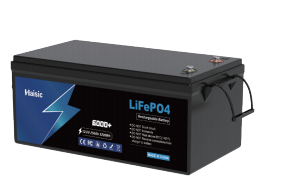
- Extended Cycle Life: LFP batteries routinely exceed 6,000 cycles, easily outlasting other lithium-ion alternatives.
- Lower LCOS: A longer operational life combined with fewer replacement costs dramatically drives down the Levelized Cost of Storage (LCOS), guaranteeing a stronger, more reliable return on investment over the lifetime of the project.

The Haisic Advantage: Engineering Safe BESS Solutions
As a premier ESS battery manufacturer and supplier, we engineer safety into the foundation of every system we build. We understand that deploying grid-scale or commercial energy storage systems requires absolute confidence in thermal stability and operational reliability. When facility managers explore how secure modern power systems are and what are solar batteries doing to mitigate site risks, we point directly to our resilient LFP architecture.
Our approach to LFP battery safety relies on a unified, proactive system design. We do not just rely on the inherent safety of the chemistry; we amplify it through engineering.
Our Core Safety Integrations:
- Premium LiFePO4 Cells: We utilize strictly vetted, top-tier LFP chemistry to ensure maximum chemical stability and prevent oxygen release from the ground up.
- Intelligent BMS Integration: Our proprietary Battery Management System actively monitors voltage, current, and temperature at the cell level, intercepting overcharge or deep discharge risks instantly.
- Advanced Thermal Management: We pair stable cells with a robust battery thermal management system (BTMS) to keep operating temperatures well within optimal thresholds, even under heavy grid loads.
Before any Haisic BESS leaves our facility, it undergoes rigorous cell-level and system-level testing to meet global safety standards. Whether you are deploying utility-scale energy storage or a localized C&I application, our precisely engineered solutions deliver the operational peace of mind required for long-term, hazard-free energy management.
FAQs on LFP Battery Safety and BESS Trends
Are LFP batteries 100% immune to thermal runaway?
While no battery chemistry is entirely invincible, LiFePO4 chemical stability makes it incredibly resistant. Thermal runaway mitigation is built right into the molecular structure. Even under extreme stress or damage, LFP cells do not release oxygen, meaning they cannot fuel and sustain a fire the way other lithium chemistries do.
How does LFP safety directly impact the Levelized Cost of Storage (LCOS)?
Safety directly translates to financial savings. Because LFP poses a significantly lower fire risk, project developers spend less on insurance premiums and complex cooling infrastructure. Combined with a massive cycle life, this heavily reduces the overall LCOS for everything from utility-scale plants to reliable house battery backup systems.
What makes UL9540A certification critical for commercial BESS deployment?
The UL9540A standards specifically evaluate how a battery system handles a thermal event. Passing this rigorous cell-level safety testing proves that a fire will not easily propagate from one cell to the entire pack. For commercial energy storage systems, this certification is the golden ticket to satisfy local fire marshals, ensure NFPA 855 compliance, and get your project permitted without delays.
How does LFP chemistry compare to NMC regarding fire suppression requirements?
NMC batteries burn much hotter and produce their own oxygen during a thermal event, requiring heavy-duty, expensive water or chemical setups to contain them. Because LFP fires are cooler and do not self-oxygenate, BESS fire suppression systems can be significantly streamlined. As an ESS battery manufacturer, we see this as the defining reason why LFP battery safety dominates BESS industry trends globally.