










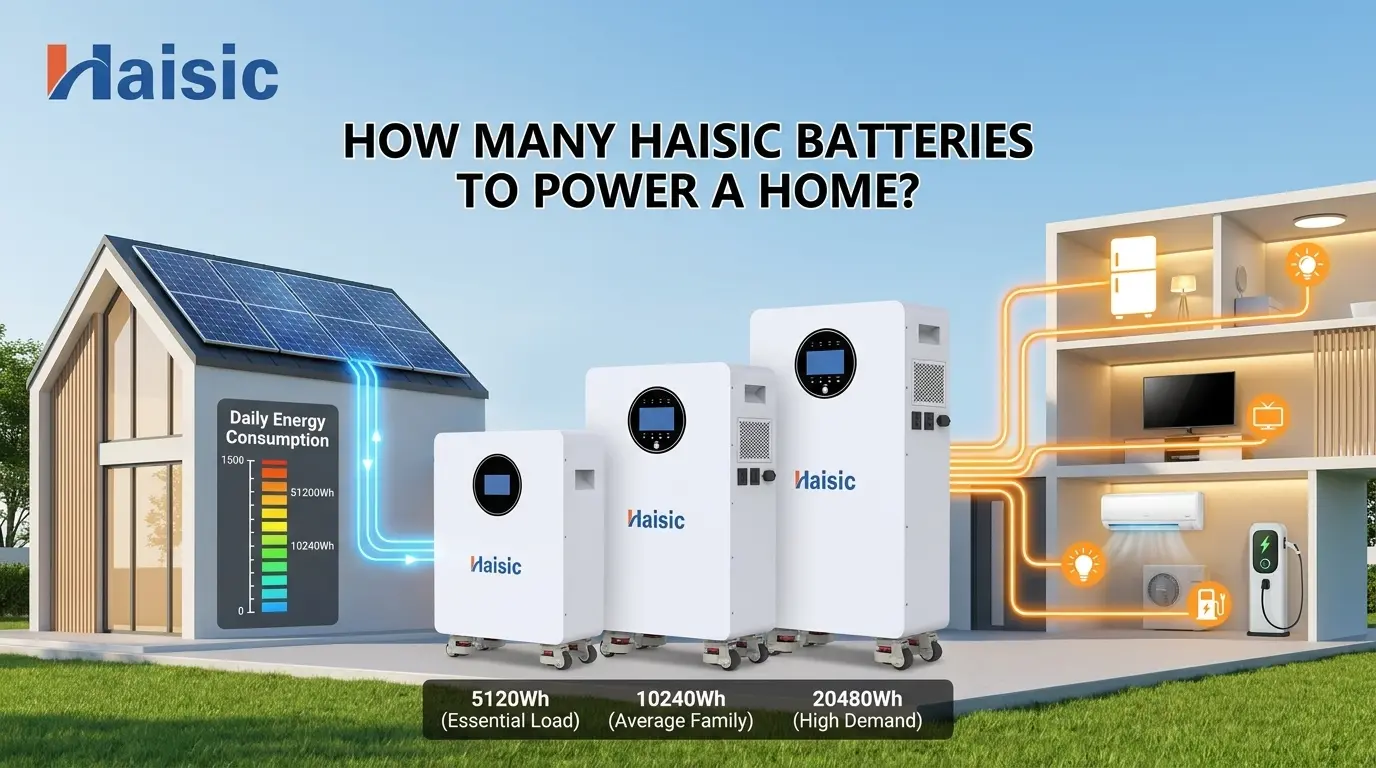
Are you struggling to calculate exactly how many battery to power a home without overspending?
Getting this number wrong means either wasting thousands on unnecessary capacity or being left in the dark during a blackout. As an energy specialist, I’ve designed hundreds of solar storage systems, and I’m going to share the exact formula for energy independence based on real-world performance.
If you want to know the precise battery capacity required to keep your lights on and your appliances running, this guide is for you.
Let’s dive in.
Understanding Your Home\’s Energy Needs
Determining how many battery to power a home starts with a clear look at your electricity bill. You cannot size a backup system accurately without knowing exactly how much energy your lifestyle demands. As manufacturers, we see many homeowners overestimate their needs or, worse, undersize their systems and end up in the dark.
How to calculate daily kWh usage
To find your baseline, look at your utility bill for the \”Total kWh Used\” over the last month. Divide that number by 30 to find your average household power consumption per day.
- Low Usage: 15–20 kWh per day (Small apartments or highly efficient homes)
- Average Usage: 30 kWh per day (Standard US household)
- High Usage: 50+ kWh per day (Large homes with multiple AC units or EV charging)
Peak vs. off-peak power consumption
When calculating your home battery backup system requirements, timing is everything. Your battery doesn\’t just provide backup; it manages \”Peak\” demand.
| Time Period | Energy Activity | Battery Role |
|---|---|---|
| Off-Peak (Day) | Solar charging or low-rate grid power | Storing energy for later use |
| Peak (Evening) | Cooking, HVAC, lighting, and TV | Discharging to avoid high utility rates |
| Critical (Night) | Refrigeration and security | Maintaining baseline power |
Essential vs. non-essential appliances
You must decide if you want a \”whole-home\” backup or a \”critical loads\” backup. This choice drastically changes the number of batteries required.
- Essential Loads: These are non-negotiable. They include your refrigerator, Wi-Fi router, LED lighting, and phone chargers. A single high-quality lithium-ion battery can often handle these for 24 hours.
- Non-Essential Loads: These are \”energy hogs\” like central air conditioning, electric clothes dryers, and pool pumps. If you plan to run these during an outage, your battery bank size will need to double or triple to handle the massive surge in kilowatt-hours (kWh).
By identifying your \”must-run\” appliances versus your \”nice-to-have\” luxuries, you can pinpoint the exact solar battery storage capacity needed to keep your home functional without overspending on unnecessary hardware.
Types of Home Solar Batteries
Choosing the right technology is the first step in figuring out how many battery to power a home. The chemistry you select dictates how much space you’ll need and how long your system will last under daily use.
Lithium-ion vs. Lead-acid Batteries
- Lithium-ion: This is the modern standard for a home battery backup system. These batteries are compact, highly efficient, and have a long lifespan. They handle deep discharges much better than older tech.
- Lead-acid: While cheaper upfront, these are bulky and have a shorter life. You would need many more units to match the performance of a single lithium setup, making them less ideal for most residential needs.
Battery Capacity (kWh) Explained
Solar battery storage capacity is measured in kilowatt-hours (kWh). Think of this as the size of your \”energy tank.\” A higher kWh rating means the battery can store more electricity to keep your home running for longer periods. When we manufacture the best battery for solar power storage, we focus on high energy density to ensure you get the most storage in the smallest possible footprint.
Power Rating vs. Usable Capacity
It is vital to distinguish between how much power a battery can \”push out\” and how much it \”holds\”:
- Power Rating (kW): This is the amount of electricity the battery can deliver at one single moment. A high power rating is necessary if you want to run heavy appliances like a well pump or an air conditioner.
- Usable Capacity (kWh): This is the actual amount of energy you can use. Because of usable capacity and depth of discharge limits, you shouldn\’t drain a battery to zero. High-quality lithium-ion solar batteries typically allow you to use 90% or more of their total capacity without causing damage.
Calculating How Many Batteries You Need
To determine exactly how many battery to power a home, we use a specific sizing formula that accounts for your consumption habits and safety margins. The goal is to ensure your battery bank can handle your peak loads without hitting empty prematurely.
The Formula for Sizing Your Battery Bank
The basic calculation follows this logic:
- Total Daily kWh Usage ÷ Usable Capacity per Battery = Number of Batteries Needed.
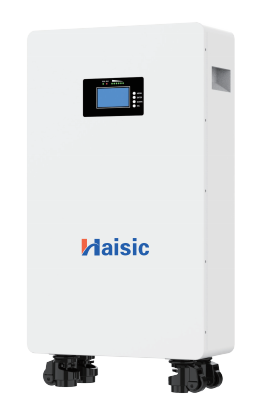
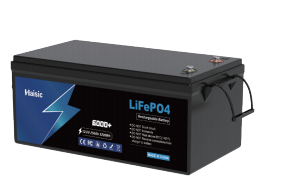
If your home consumes 30 kWh daily and you are using a Haisic 12.8V 280Ah LiFePO4 battery pack which provides roughly 3.5 kWh, you would need approximately 9 units to cover a full day of heavy usage. However, most homeowners prioritize \”essential loads\” (fridge, lights, internet) during outages, which significantly reduces the required count.
Factoring in Days of Autonomy
Days of autonomy refers to how long your system can power your home without any input from solar panels or the grid.
- Standard Backup: 1 day of autonomy is common for grid-tied systems.
- Off-Grid Security: 2 to 3 days of autonomy are recommended to account for consecutive cloudy days.
- Impact on Sizing: Doubling your days of autonomy effectively doubles the number of batteries required in your setup.
Depth of Discharge (DoD) Limitations
You cannot use 100% of a battery\’s rated capacity without risking permanent damage. This is known as the Depth of Discharge (DoD).
- Lithium (LiFePO4): Typically offers 80% to 95% DoD.
- Lead-Acid: Usually limited to 50% DoD to maintain lifespan.
When we design systems using a 12V lithium solar battery, we factor in these discharge limits so you never run out of \”usable capacity.\” If a battery is rated for 100Ah but has an 80% DoD, you only have 80Ah of real-world energy to work with. Always over-size your bank by at least 20% to account for these efficiency losses and environmental factors.
Real-World Examples of Home Battery Setups
Determining exactly how many battery to power a home depends on the scale of your property and your daily energy habits. While every house is unique, most installations fall into three primary categories based on total kilowatt-hour (kWh) requirements.
Small Home or Cabin (1-2 Batteries)
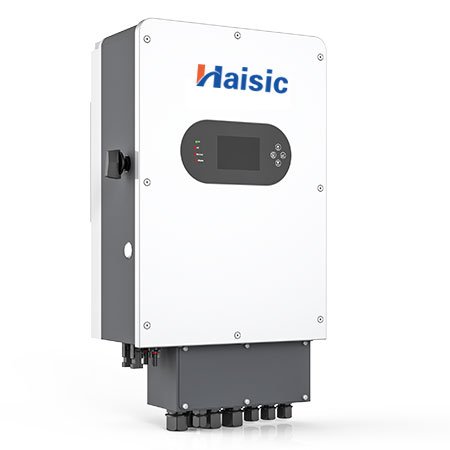
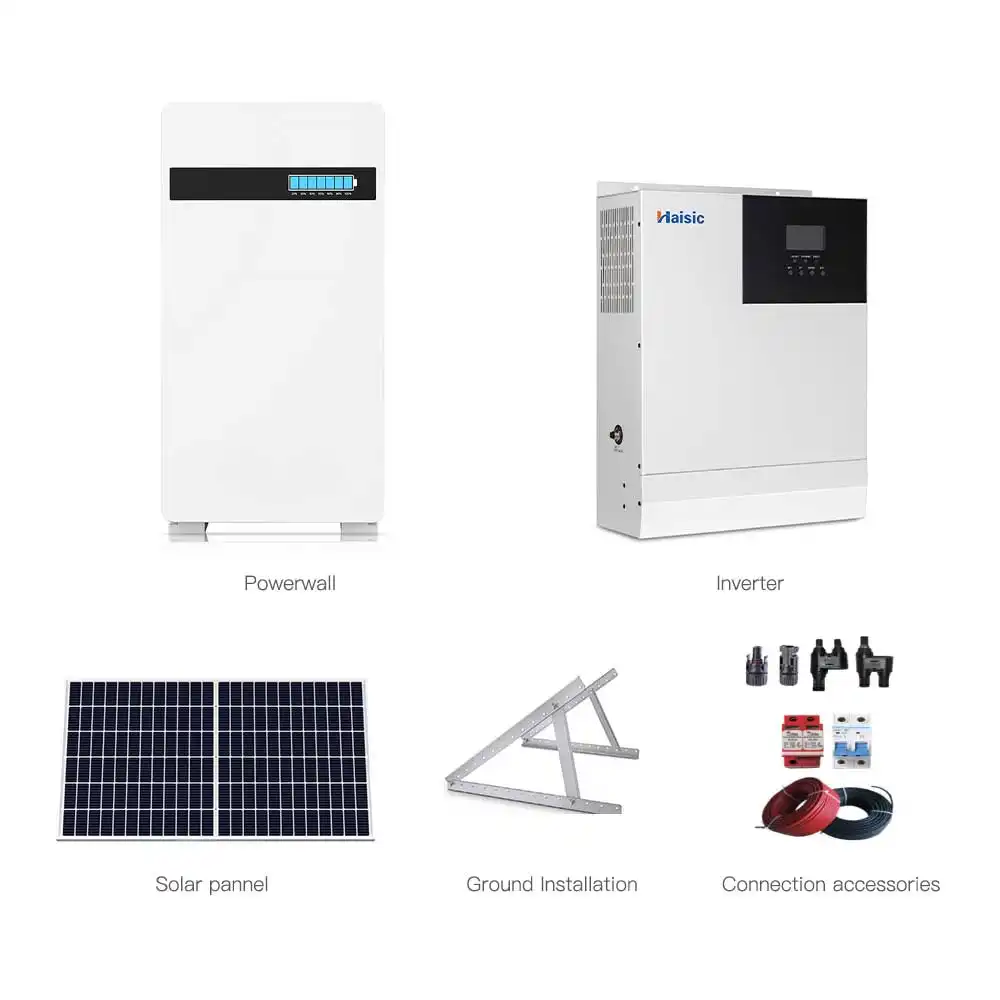
For a small off-grid cabin or a tiny home with modest energy needs, 1 to 2 lithium-ion solar batteries are usually enough. This setup typically offers 5kWh to 10kWh of storage, which is plenty for powering LED lights, a high-efficiency refrigerator, and charging laptops or phones. To ensure these smaller systems run smoothly, pairing them with a high-quality haisic 6-12kw ip65 hybrid solar inverter allows for seamless power management and protection against the elements.
Average US Household (2-4 Batteries)
The average household power consumption in the United States generally requires a home battery backup system consisting of 2 to 4 batteries. With a combined capacity of 20kWh to 40kWh, this range provides enough \”juice\” to run a standard kitchen, multiple TVs, and laundry machines. This is the sweet spot for most families looking to achieve energy independence or maintain full functionality during a multi-day grid failure.
Large Home with Heavy AC/Heating (5+ Batteries)
Large estates or homes equipped with power-hungry appliances like central air conditioning, electric water heaters, and heated swimming pools require a much larger energy reservoir. To sustain these heavy loads without interruption, you will likely need 5 or more batteries. This high-capacity configuration ensures that even when the HVAC system kicks in, your storage isn\’t depleted instantly. For these extensive setups, knowing where can i buy lithium battery units that support modular expansion is critical for long-term scalability.
| Home Type | Battery Count | Typical Capacity | Best For |
|---|---|---|---|
| Small Cabin | 1-2 Units | 5-10 kWh | Lights, Fridge, Electronics |
| Standard Home | 2-4 Units | 20-40 kWh | Full Kitchen, TV, Laundry |
| Large Luxury Home | 5+ Units | 50+ kWh | Central AC, Pools, EV Charging |
Off-Grid vs. Grid-Tied Battery Systems
The choice between staying connected to the utility or going completely independent dictates how many battery to power a home effectively. In a grid-tied setup, the grid acts as your safety net, whereas an off-grid system makes you your own utility provider.
Why Off-Grid Needs More Storage
If you are running an off-grid solar system, your battery bank must be significantly larger. You cannot rely on the grid during a week of heavy rain or snow. For total independence, we recommend sizing the system for at least three days of autonomy. This ensures that even without sun, your home remains fully functional. Because you cannot \”pull\” power from the street, off-grid users often require double or triple the battery capacity of a standard suburban home.
Grid-Tied Backup for Power Outages
For most homeowners, a grid-tied battery backup is the preferred solution. In this scenario, you only need enough batteries to cover essential loads during a blackout or to shift your energy usage away from expensive peak-hour rates.
- Grid-Tied Focus: Emergency backup for lights, refrigeration, and internet.
- Off-Grid Focus: Total energy self-sufficiency and massive storage for \”no-sun\” days.
- Cost Efficiency: Grid-tied systems require fewer batteries, lowering the initial investment.
Determining the right battery system for home use depends on these goals. If your priority is simply avoiding blackouts, a smaller setup is sufficient. However, for those asking do I need battery storage for a remote cabin, the capacity must be high enough to handle 100% of the load at all times.
FAQs About Home Battery Power
Can one battery power a whole house?
Technically, a single high-capacity battery can power a home, but it usually only covers essential loads. For a standard household with high-draw appliances like central air conditioning, a water heater, or an electric range, one unit is rarely enough to maintain a normal lifestyle. When calculating how many battery to power a home for total energy independence, most users find that a multi-battery configuration is necessary to handle the simultaneous \”surge\” demands of multiple large appliances.
How long will a 10kWh battery run a home?
A 10kWh battery typically supports a home for 10 to 12 hours if you are only running essentials like a refrigerator, LED lights, and internet routers. However, if you run heavy loads, the duration drops quickly. For instance, a 3,000-watt air conditioner would drain that capacity in just over three hours. Integrating a robust residential solar battery system ensures you have enough buffer to last through the night without relying on the grid.
Are home batteries worth the investment?
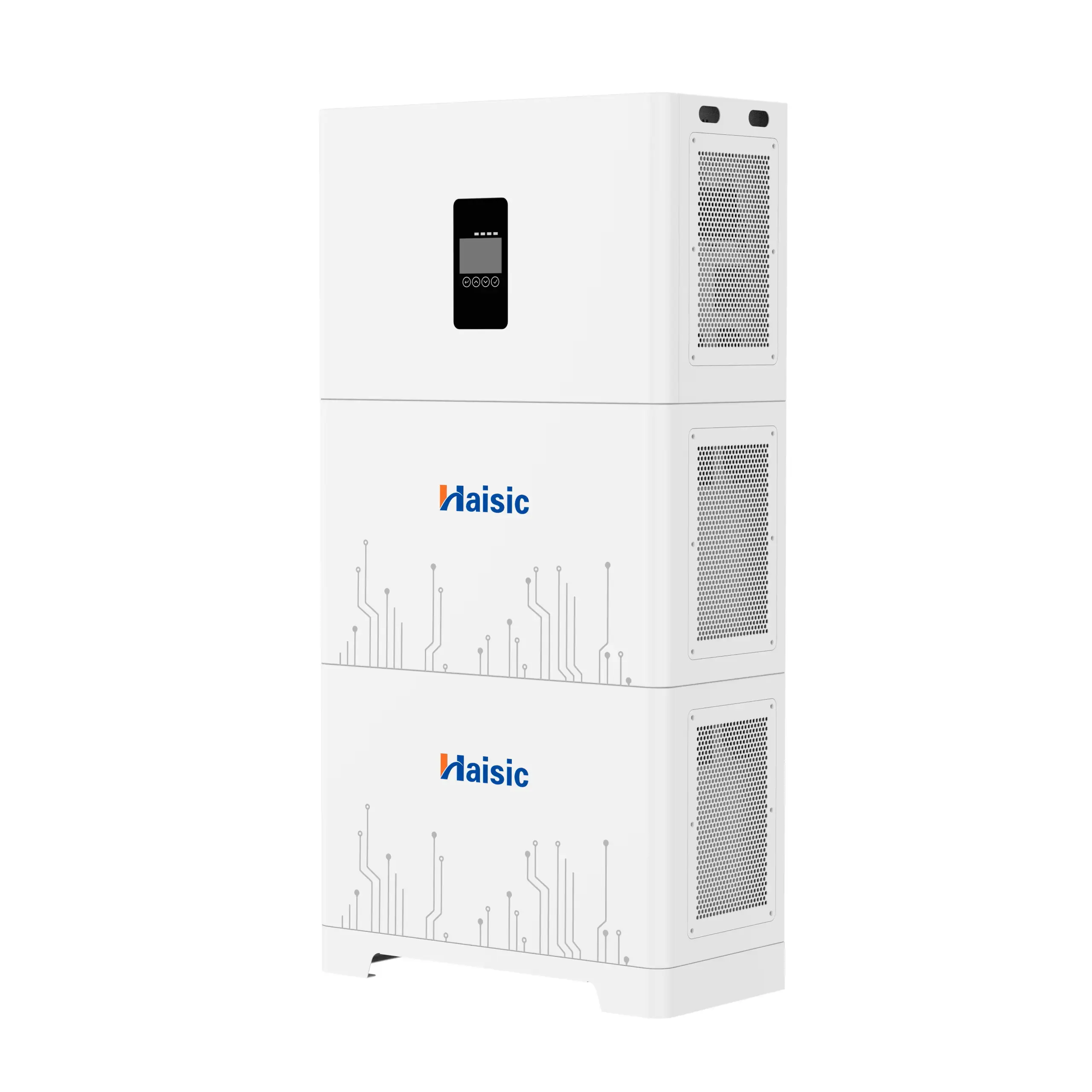
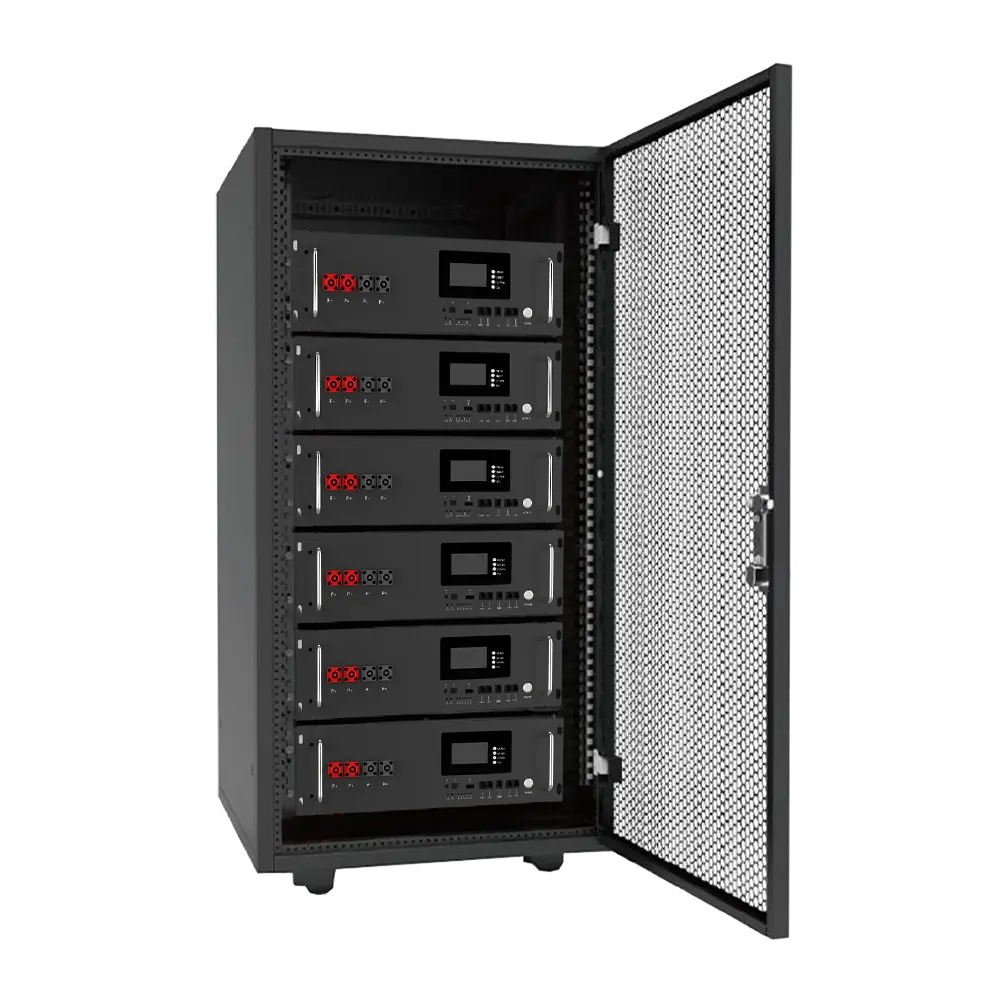
The investment is highly worth it for homeowners facing frequent power outages or high peak-hour electricity rates. Beyond the immediate benefit of backup power, these systems allow for \”peak shaving\”—using stored energy when utility prices are highest to lower your monthly bills. Installing a high-performance 10240wh touchscreen energy storage system adds significant value to a property and provides long-term energy security that traditional generators cannot match.
- Energy Independence: Reduces reliance on aging utility grids.
- Cost Savings: Maximizes the ROI of your solar panels by storing excess energy.
- Silent Backup: Operates without the noise or fuel requirements of gas generators.
- Environmental Impact: Utilizes clean, renewable energy stored directly on-site.