











Understanding Your Energy Needs: Start with Daily Consumption
Before we can answer exactly how many battery to run a house, we have to figure out how much energy you actually burn. You wouldn\’t buy a gas tank without knowing your car\’s mileage, right? The same logic applies here.
In 2026, the average US household consumes roughly 29 to 30 kWh per day (about 880 kWh per month). However, \”average\” is a dangerous word in the energy world. A sleek apartment in San Francisco uses a fraction of the power required by a sprawling ranch in Texas running AC 24/7.
To get the right number for your home battery backup, stop guessing and look at your data:
- Check Your Utility Bill: Look for a graph or line item labeled \”Average Daily Usage\” or \”Daily kWh.\”
- Use Smart Meters: Most modern providers have an app showing your usage hour-by-hour. This is gold for seeing when you use power, not just how much.
What Drives Your Number Up?
Several factors dictate how many kWh to power a house effectively:
- Climate & HVAC: Heating and cooling are the biggest energy hogs.
- Appliances: Electric dryers, hot water heaters, and EV chargers spike your daily total.
- Home Size: More square footage usually equals more lights and more space to condition.
Here is a quick reference guide to see where you likely fit on the spectrum:
| Home Size | Approx. Sq. Ft. | Typical Daily Consumption | Battery Capacity Needed (Est.) |
|---|---|---|---|
| Small / Efficient | < 1,200 sq. ft. | 10 – 20 kWh | Low (Basic Backup) |
| Medium (Avg US) | 1,500 – 2,500 sq. ft. | 25 – 35 kWh | Moderate (Standard) |
| Large / Heavy Load | > 3,000 sq. ft. | 40 – 60+ kWh | High (Multi-Battery Bank) |
Once you pinpoint your average daily household kWh, we can accurately calculate the battery bank size needed to keep your lights on.
Battery Basics: What Really Matters for Home Power
To honestly figure out how many battery to run a house, you have to look past the marketing numbers on the box. It is not just about the size of the unit; it is about the quality of the energy and how the technology handles your specific load. Before we calculate the count, we need to understand the specs that define performance.
Key Specs: Total Capacity vs. Usable Capacity
The most common mistake homeowners make is confusing total capacity with usable capacity. If a battery is rated for 10 kWh, that doesn\’t always mean you get 10 kWh of power. This comes down to Depth of Discharge (DoD).
- Total Capacity: The theoretical maximum energy the battery holds.
- Usable Capacity: The amount you can safely drain without damaging the unit.
- Efficiency: Battery round trip efficiency measures how much energy is lost during the charging and discharging process.
Old-school lead-acid batteries often have a DoD of only 50%. This means you need to buy twice as many batteries to get the power you need. In contrast, modern systems give you much more access to the stored power. For high-demand households, opting for a touchscreen 20480Wh home energy storage battery ensures you have massive usable capacity right at your fingertips with high efficiency.
Power vs. Energy: Continuous vs. Surge
Think of your battery system like a bucket of water with a hose.
- Energy (kWh): The size of the bucket (how long you can run things).
- Power (kW): The width of the hose (how many things you can run at once).
You might have enough energy to run your fridge for days, but if your inverter and battery can\’t handle the peak load surge wattage, your system will trip the moment the compressor kicks on. Appliances like air conditioners and well pumps require a massive spike of power just to start up. When sizing your bank, we always look at the continuous power rating versus the surge capability to ensure your lights stay on during those heavy startup moments.
Lead-Acid vs. LiFePO4 Battery Storage
The chemistry you choose dictates the lifespan and safety of your investment.
- Lead-Acid: These are heavy, require regular maintenance, and generally last only 3-5 years. They are cheaper upfront but cost more in the long run due to frequent replacements.
- LiFePO4 (Lithium Iron Phosphate): This is the gold standard for home backup. LiFePO4 battery storage is safer, lighter, and typically lasts 10 years or more with zero maintenance.
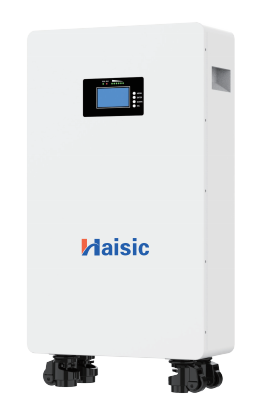
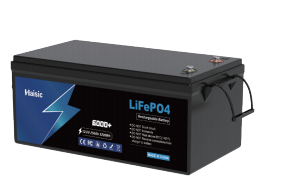
We prefer Lithium Iron Phosphate because it allows for a higher DoD (often 90%+) and maintains stable voltage. That is why we focus on modular solutions like the Haisic 51.2V 100Ah LiFePO4 stackable energy storage battery, which allows you to expand your system easily as your needs grow without worrying about the limitations of older technology.
How Many Batteries by Goal — Realistic Scenarios
When customers ask me how many battery to run a house, I always tell them the same thing: it depends entirely on what you want to achieve. Are you just trying to keep the freezer cold during a blackout, or are you looking to say goodbye to the grid forever?
Here is how we break down the three most common scenarios to help you size your system correctly.
Scenario 1: Basic Emergency Backup
This is the \”essentials only\” approach. You aren\’t trying to run the air conditioner or the electric stove. Instead, you isolate specific circuits to a critical loads panel. Your goal here is to keep the lights on, the WiFi router running, and the refrigerator cold during a short power outage.
For this setup, you typically don\’t need a massive bank. A single 5kWh to 10kWh battery is usually sufficient to power these essentials for 10 to 24 hours, depending on usage.
Typical Load List:
- LED lights in main rooms
- Refrigerator/Freezer
- Modem/Router
- Phone charging
- Gas furnace blower (if applicable)
Scenario 2: Whole-Home Backup + Peak Shaving
This is the sweet spot for most modern homeowners. You want to run almost everything in your house during an outage, but you also want to use the battery daily to save money. By storing solar energy during the day and using it during the evening when electricity rates are highest (peak shaving), the system pays for itself over time.
For whole home backup batteries, you generally need a capacity between 15kWh and 30kWh. If you are struggling to calculate your specific consumption, our guide on determining how much battery storage do I need breaks down the math. This setup can handle higher surge wattages, allowing you to run a microwave or a well pump without tripping the system.
Scenario 3: Full Off-Grid or Multi-Day Autonomy
Going off-grid is a different beast entirely. Here, you don\’t have the utility company as a safety net. You need to calculate for days of autonomy—meaning, how long can you run your house if it rains for three days straight and your solar panels produce zero power?
An off-grid battery bank requires significant capacity, often exceeding 30kWh to 50kWh depending on the size of the home. You need reliable, high-cycle LiFePO4 battery storage that can handle deep discharges daily without degrading. For these robust setups, utilizing scalable home lithium battery storage is crucial because it allows you to stack modules and expand your power reserves as your energy needs grow.
Quick Reference Guide:
| Scenario | Goal | Est. Capacity Needed | Appliances Supported |
|---|---|---|---|
| Emergency | Essential survival | 5 – 10 kWh | Lights, Fridge, WiFi, Phones |
| Hybrid | Savings + Comfort | 15 – 30 kWh | Most appliances + Limited A/C |
| Off-Grid | Total Independence | 30 – 50+ kWh | Everything (Multi-day backup) |
Step-by-Step: How to Calculate Exactly How Many Batteries You Need
Figuring out how many battery to run a house isn\’t a guessing game; it is simple math. Whether you are building an off-grid battery bank or just want security during a blackout, you need to size your system based on your worst-case scenario, not your best day.
The Formula for Days of Autonomy
To calculate your needs, you must decide on your \”days of autonomy\”—the number of days you want power without any solar or grid input.
Here is the formula we recommend using:
$$ text{Total Storage Needed} = frac{text{Daily kWh Usage} times text{Days oftext{Total Storage Needed} = frac{text{Daily kWh Usage} times text{Days of Autonomy}}{text{Depth of Discharge (DoD)} times text{Inverter Efficiency}}$$
For example, if your home consumes 20 kWh per day and you want 1 full day of backup using LiFePO4 battery storage, you don\’t just buy 20 kWh of batteries. Since you shouldn\’t drain a battery to absolute zero, and you lose some energy converting electricity from DC to AC, you need a buffer.
Real-World Calculation with Haisic
Let’s apply this to a real scenario.
- Daily Load: 20 kWh
- Autonomy: 1 Day
- DoD: 95% (Standard for our lithium tech)
- Efficiency: ~90%
Calculation: $20 div (0.95 times 0.90) approx 23.4 text{ kWh}$.
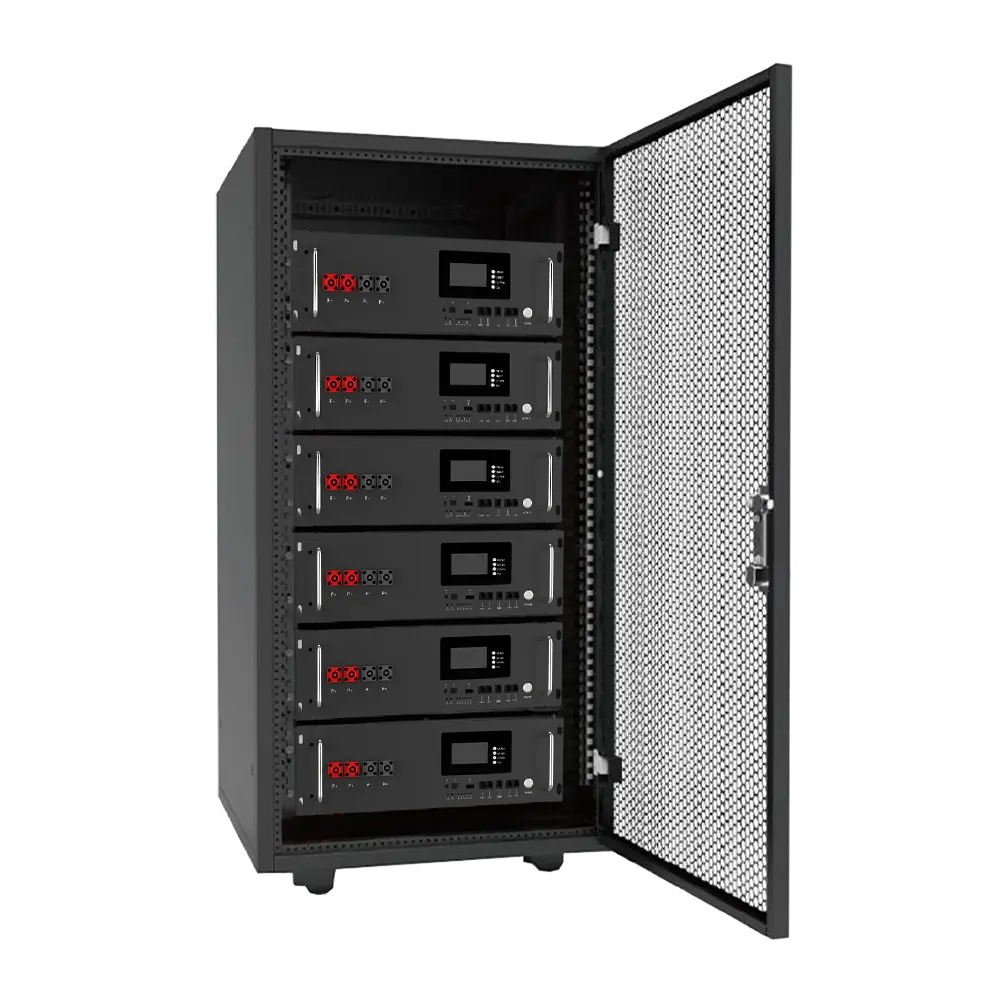
In this case, you need roughly 24 kWh of total capacity. Using our modular 48V 100Ah rack-mounted battery packs, which act as roughly 5 kWh building blocks, you would typically install five units to comfortably cover that load. This modular approach is superior to a single massive unit because it allows you to scale up easily if your energy usage increases.
Tools vs. Manual Worksheets
Online calculators can give you a quick ballpark figure, but we always suggest a manual worksheet for accuracy. Automated tools often miss the nuances of your specific appliances, like the start-up demands of well pumps or A/C units. Writing it down forces you to audit exactly what needs to stay on during a power outage.
Avoid These Common Sizing Mistakes
Even with the right math, homeowners often slip up on the hardware realities.
- Ignoring Surge Power: Your total kWh might be enough, but if your battery bank cannot deliver the high instantaneous power (kW) needed to start a fridge or compressor, the system will trip.
- Overestimating DoD: Old lead-acid batteries only allow 50% DoD. If you treat them like lithium, you will destroy them in months. Stick to depth of discharge DoD specs strictly.
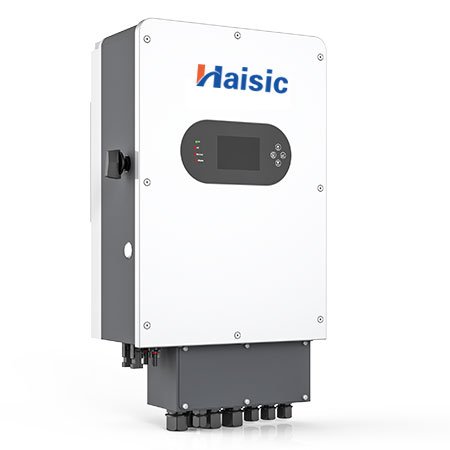
- Forgetting Inverter Losses: As mentioned, converting power eats energy. Pairing your batteries with a high-efficiency pure sine wave off-grid solar inverter minimizes these losses, ensuring you get the most out of every stored amp-hour.
Why Choose Haisic for Your Home Energy Storage?

When you ask how many battery to run a house, the answer depends heavily on the quality of the battery you choose. At Haisic, we don\’t just assemble batteries; we engineer advanced energy solutions designed for longevity and safety. We utilize top-tier LiFePO4 battery storage technology, which is widely recognized as the safest and most stable lithium chemistry available today. Unlike older cobalt-based batteries, our Lithium Iron Phosphate cells are chemically stable, virtually eliminating the risk of thermal runaway while delivering consistent power.
Advanced Technology & Key Advantages
We build our systems to solve the biggest pain points in home battery backup. Most generic batteries force you to leave a large buffer of unused energy to prevent damage, but Haisic systems allow you to use nearly every drop of power you store.
- High Depth of Discharge (DoD): You can safely use over 95% of the battery\’s capacity without degrading its lifespan. This means you need fewer physical batteries to get the same usable energy.
- Extended Cycle Life: Our LiFePO4 units are rated for thousands of cycles, often outlasting the solar panels they are paired with.
- Modular Design: Our systems are scalable. You can start small and expand later, which is crucial if you aren\’t sure exactly how many battery you\’ll eventually need.
- Safety First: Built-in Battery Management Systems (BMS) monitor temperature and voltage in real-time.
For large estates or homes with high energy demands, our 215kWh high voltage LiFePO4 home energy storage system provides an all-in-one solution that eliminates the need for stringing together dozens of smaller units.
Comparison: Haisic vs. Generic Batteries
To help you decide, here is how we stack up against standard market options:
| Feature | Haisic LiFePO4 | Generic Lead-Acid / AGM | Standard Lithium Ion |
|---|---|---|---|
| Usable Capacity (DoD) | 95%+ | ~50% | ~80% |
| Lifespan | 10+ Years (6000+ Cycles) | 3-5 Years | 7-10 Years |
| Safety | Extremely High (Stable) | Moderate (Gassing risk) | Moderate (Heat risk) |
| Maintenance | Zero Maintenance | Regular Checks Needed | Zero Maintenance |
Seamless Integration for Any Setup
Whether you are building a new hybrid solar system battery setup or retrofitting an existing array, compatibility is key. Haisic batteries are designed to communicate effectively with major inverter brands. This ensures that when your solar production dips, the transition to battery power is instant. For those looking for substantial power reserves to go fully off-grid, our 268.8kWh high voltage LiFePO4 home energy storage system offers industrial-grade reliability right at home, ensuring your lights stay on through any outage.
Would you like me to help you calculate the specific ROI (Return on Investment) for a Haisic battery system based on your local electricity rates?
Additional Considerations for a Reliable Home Battery Backup
Calculating the raw kWh numbers is only half the battle. To actually make this work reliably, you have to look at the entire ecosystem surrounding your storage. When my customers ask how many battery to run a house, I always tell them: the battery is the tank, but you still need the engine and the fuel source to match.
Inverter Compatibility is Non-Negotiable
Your battery bank is useless without a capable inverter. The inverter converts the DC power stored in your batteries into the AC power your appliances use.
- Match the Power: Your inverter\’s continuous power rating (kW) must handle your peak load, even if you have massive battery capacity (kWh).
- Communication: We recommend closed-loop communication between the battery BMS and the inverter.
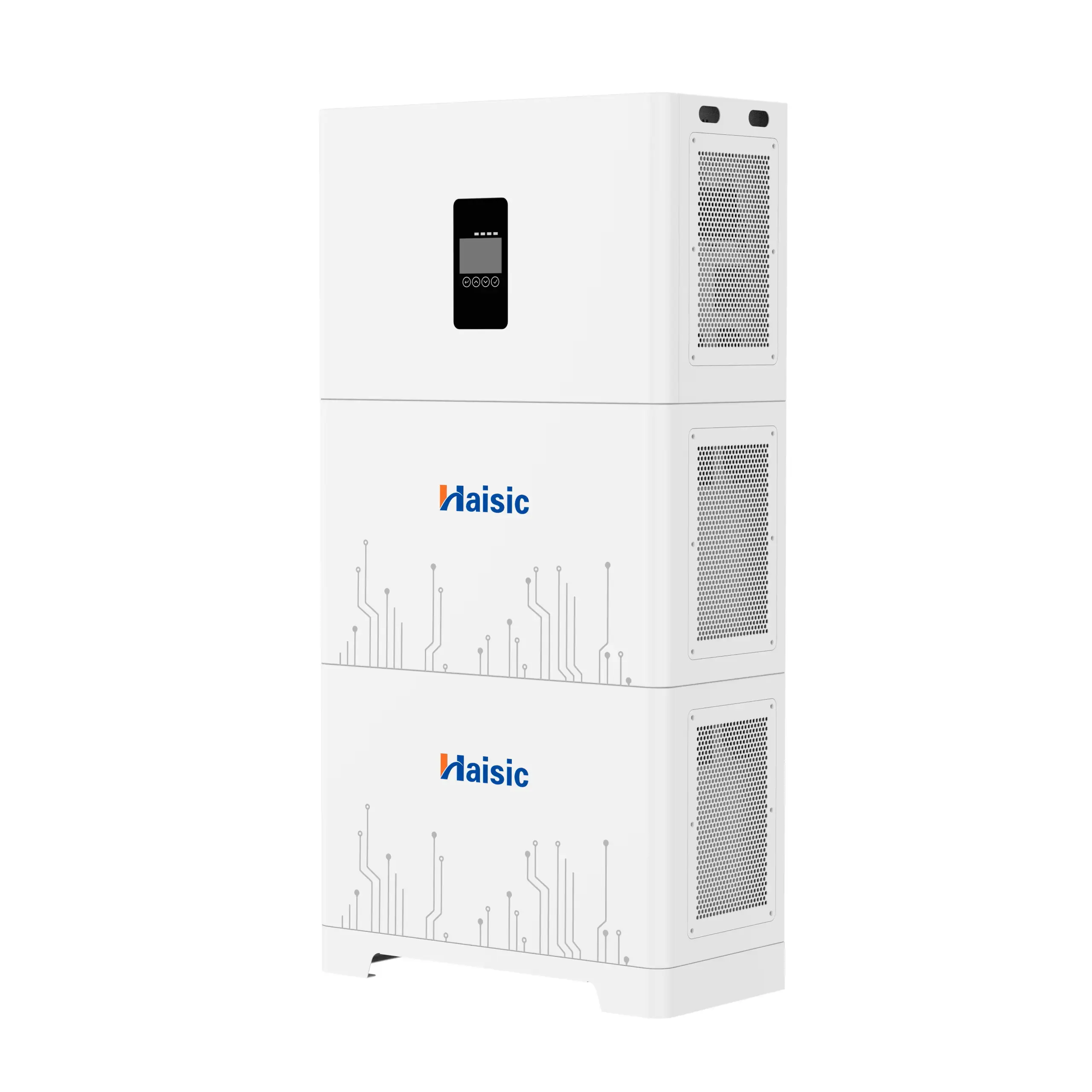
- Simplicity: To avoid the headache of matching voltage windows and communication protocols, many homeowners are switching to a Haisic 32kWh All-in-One Home Energy Storage System. These units combine the hybrid inverter and battery modules into a single, pre-wired cabinet, eliminating compatibility guesswork.
Solar Charging Realities and Weather
Sizing your bank is one thing; refilling it is another. Solar battery sizing isn\’t just about how much you can store, but how fast you can recharge during the limited sun hours you get.
If you have a massive 30kWh battery bank but only a small 3kW solar array, you will never get that battery full during a single winter day. You need to balance your roof\’s solar potential with your storage capacity.
- Roof Size: Do you have space for enough panels to charge the bank?
- Efficiency: Look for high battery round trip efficiency. Our LiFePO4 units are highly efficient, meaning you lose very little energy when moving power from the panels to the battery.
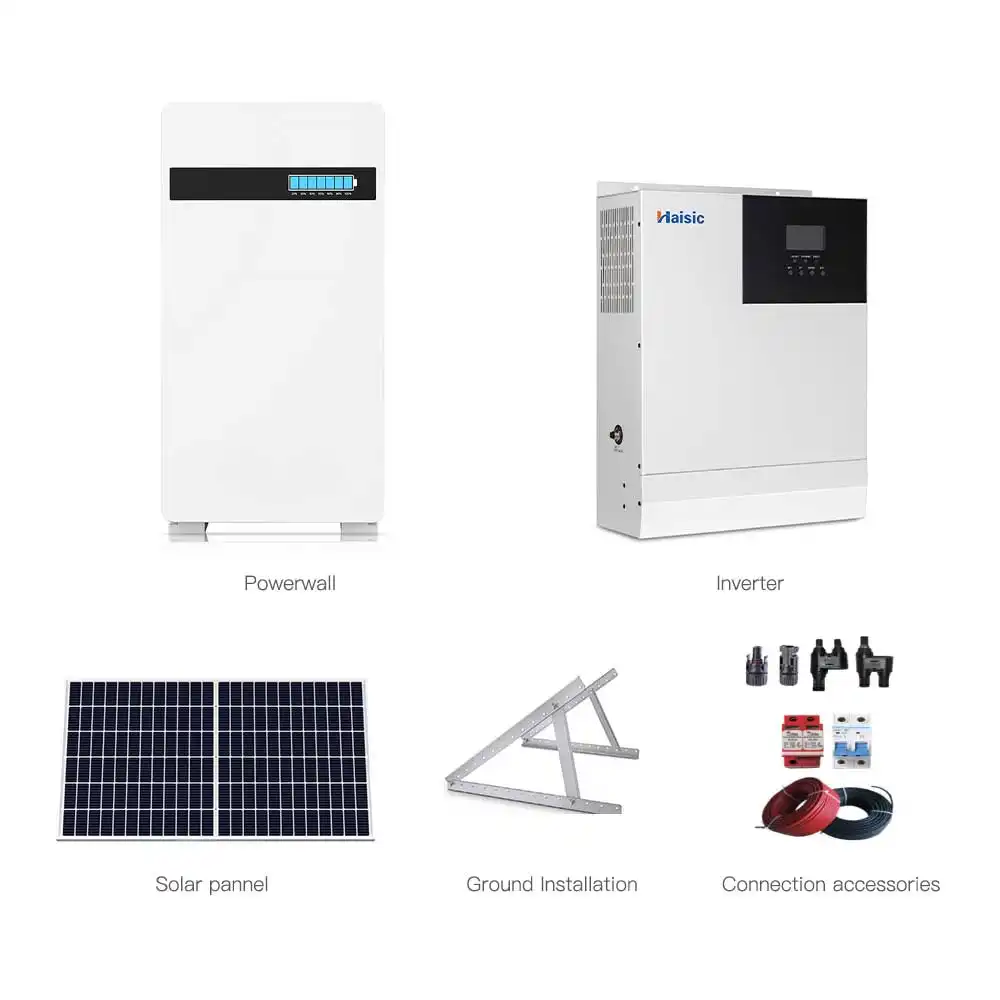
- Total Solution: For those starting from scratch, looking at a complete 10kW Off-Grid Solar Power System ensures your PV input matches your battery storage capabilities perfectly.
Cost vs. Long-Term Value
The upfront cost of a lithium ion home battery setup can feel steep, but you have to look at the lifecycle value.
- Lead-Acid: Cheap upfront, but needs replacement every 2-3 years.
- Haisic LiFePO4: Higher initial investment, but lasts 10-15 years (6000+ cycles).
Maintenance and Lifespan Expectations
Modern systems are designed to be \”set it and forget it.\” unlike old generator setups that required oil changes, a hybrid solar system battery setup requires almost zero maintenance.
- Temperature: Keep batteries in a garage or utility room; extreme freezing temps can limit charging performance.
- Monitoring: Use our smart monitoring apps to keep an eye on your depth of discharge (DoD) to ensure you aren\’t draining the system unnecessarily hard, although our BMS protects against this automatically.
Quick Checklist for izing Your System
| Component | What to Check | Why it Matters |
|---|---|---|
| Inverter | Continuous kW Output | Determines how many appliances run at once. |
| Solar Array | Total Wattage | Determines if you can refill the battery in one day. |
| Location | Climate Controlled? | Batteries perform best between 50°F and 86°F. |
| Expansion | Modular Capability | Can you add more modules later if your needs grow? |