










You might already know that your iPhone loses value the second you unbox it…
But did you know a single, hidden setting could instantly wipe out 25% of its remaining resale price?
It’s called the maximum capacity threshold, and if your iPhone battery health percentage dips even a fraction below 80%, the secondary market treats your premium device like damaged goods. Whether you are an individual trying to ace your next upgrade or an independent repair shop supply manager looking to protect your margins, smartphone depreciation rates can be brutal.
But here is the good news: you don\’t have to take that financial hit.
By strategically opting for refurbished device upgrades using premium aftermarket cells, you can reverse this penalty entirely. Upgrading to a high-density lithium-ion upgrade not only delivers extended runtime performance to the end-user but also offers a massive replacement battery ROI that safeguards your device\’s equity.
In this guide, we will break down the exact math of the secondhand iPhone marketplace, analyze why standard battery capacity benchmark scores trigger massive price drops, and show you how sourcing from a trusted manufacturer like Haisic can maximize your trade-in value before you sell.
Let’s dive right in.
The Psychology and Math of the Used iPhone Market
In the secondhand iPhone marketplace, a device\’s value hinges heavily on a single metric: the iPhone battery health percentage. As an industry-leading manufacturer, we monitor how this number dictates buyer psychology and smartphone depreciation rates.
The Dreaded 80% Benchmark
The battery capacity benchmark features a psychological cliff at 80%. When an iPhone drops to 79%, Apple iOS triggers a degradation warning, labeling the device as degraded. To a private buyer or top-tier phone buyback program, 79% capacity instantly signals \”damaged goods.\” Buyers anticipate the immediate hassle and cost of a replacement, causing them to either skip the listing entirely or demand a steep discount.
The Price Penalty Breakdown
The market splits used devices into two distinct valuation lanes. Sellers with high-capacity cells cruise in the Premium Lane, while neglected devices stall in the Penalty Lane.
| Feature | The Premium Lane (90%+) | The Penalty Lane (Sub-80%) |
|---|---|---|
| Market Perception | Turnkey, reliable, like-new | Flawed, project phone, urgent repair |
| Pricing Leverage | High; commands top-dollar market rates | Low; subject to heavy discounting |
| Depreciation Risk | Minimal; retains value over time | Severe; immediate value drop |
| Buyer Audience | Everyday users, premium resellers | Wholesalers, independent repair shops |
Case Study Comparison
Our data tracking listing-to-sale speeds confirms that refurbished device upgrades directly influence conversion rates and customer satisfaction metrics.
- 90%+ Battery Tier: These devices sell within 24 to 48 hours. Buyers willingly pay a premium for guaranteed extended runtime performance.
- 80%–89% Battery Tier: These devices linger on the marketplace for 3 to 7 days, often requiring minor price negotiations to close the deal.
- Sub-80% Battery Tier: These listings face severe smartphone depreciation rates, sitting on the market for 10+ days unless priced significantly below market value.
What Are High-Capacity iPhone Batteries?
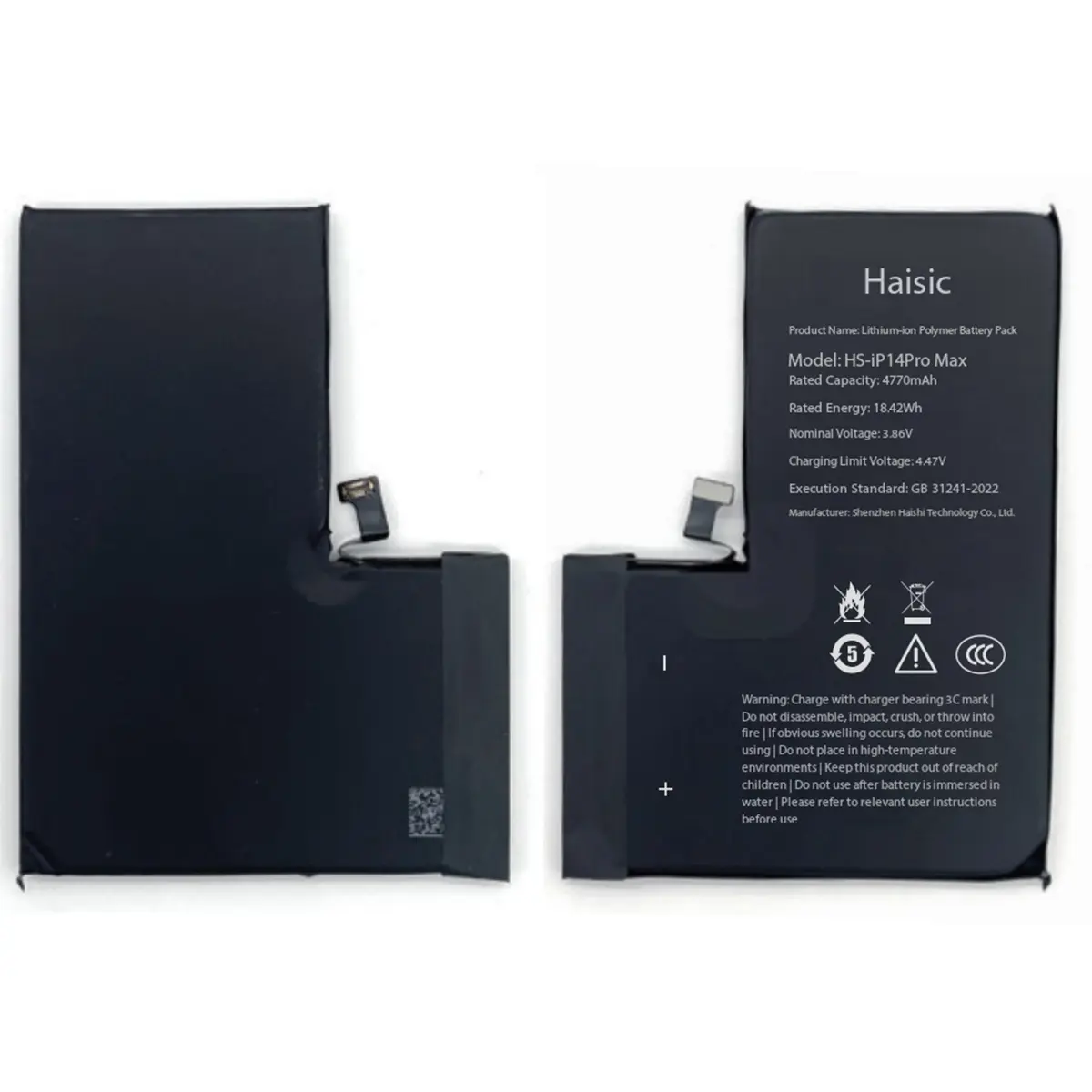
When we talk about maximizing a phone\’s potential, standard factory specifications are just the starting point. High-capacity iPhone batteries are engineered to exceed original equipment manufacturer (OEM) specifications, providing a substantial upgrade over standard replacements. As a leading manufacturer, we design these high-quality iPhone batteries specifically to breathe new life into older or refurbished devices, giving them a competitive edge in the secondhand marketplace.
Defining High Capacity: Beyond Standard OEM Specs
A standard iPhone battery health percentage degrades over time, eventually dragging down the phone\’s performance. High-capacity cells change the game by packing more energy into the exact same physical footprint.
- Standard OEM Capacity: The baseline milliampere-hour (mAh) rating the phone shipped with from the factory.
- High-Capacity Upgrade: An increase of 10% to 20% more mAh capacity without altering the physical size of the battery.
- The Goal: Overcoming the standard smartphone depreciation rates by offering a battery that outperforms a brand-new original cell.
The Technology Inside: High-Density Lithium-Ion Configurations
Achieving a higher mAh boost within strict space constraints requires advanced chemistry. We utilize a high-density lithium-ion upgrade process that modifies the internal structure of the cell.
| Feature | Standard Batteries | Our Premium Aftermarket Cells |
|---|---|---|
| Energy Density | Standard | Ultra-High Density |
| Cobalt Quality | Varied/Pure | 100% Pure Cobalt Anode Material |
| Cycle Life | ~500 Cycles to 80% | 800+ Cycles before degradation |
| Protection IC | Basic | Advanced Original-Grade IC Chips |
By upgrading the internal chemical composition rather than just making the battery bigger, these cells fit perfectly into the iPhone chassis while maintaining stable voltage and optimal safety thresholds.
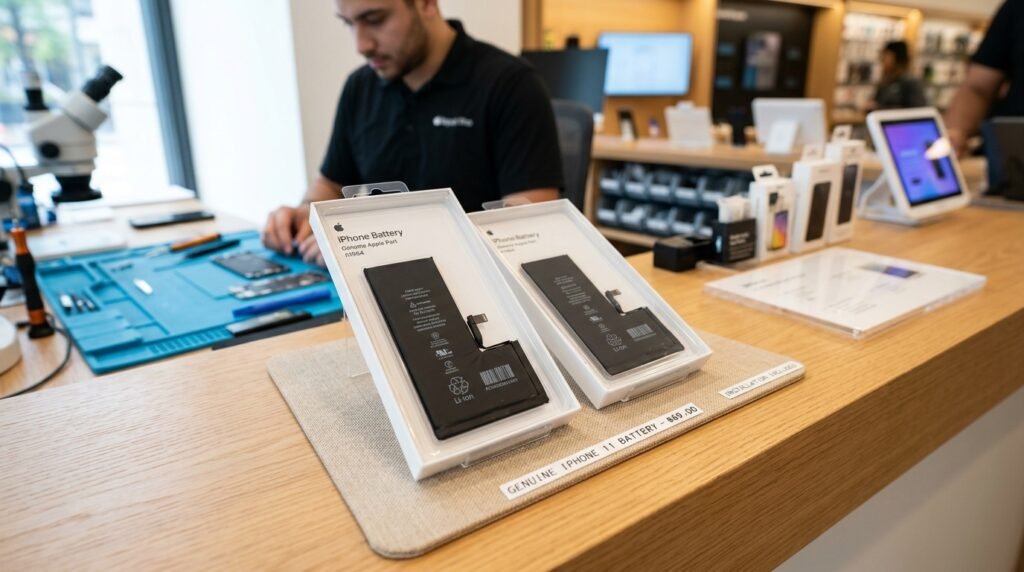
Extended Runtime Performance: Real-World Benefits
For the end user, this advanced engineering translates directly into extended runtime performance. A secondhand iPhone equipped with a high-capacity cell easily achieves prolonged screen-on time, directly boosting customer satisfaction metrics for refurbishers and resellers.
- More Screen-On Time: Up to 2–3 extra hours of active use per charge.
- Heavy Duty Reliability: Better handling of power-hungry tasks like video streaming, gaming, and 5G browsing.
- Cold Weather Stability: Less prone to sudden voltage drops and unexpected shutdowns in extreme environments.
By integrating these advanced cells into your inventory from a trusted battery for iPhone factory, you turn an ordinary repair into a premium upgrade that buyers are willing to pay more for.
The ROI Calculation: Does Replacing the Battery Pay Off?
The Math Behind the Swap: Upfront Costs vs. Resale Tier Pricing Jumps
Investing in High Capacity iPhone Batteries is a calculated financial move, not an unnecessary expense. When an iPhone\’s maximum capacity threshold drops into the 70s, its market value plummets drastically. Buyers heavily discount devices with degraded power cells because they anticipate the immediate hassle and cost of a replacement.
By paying a small upfront cost for a premium cell, you instantly shift the device from the \”degraded\” bin into the premium tier. The cost of a top-tier aftermarket battery is minimal compared to the $100 to $150 price jump a device achieves when it boasts peak performance and extended runtime capability.
Calculating the Net Uplift: Turning Technical Penalties into Financial Profit
The math is straightforward. A secondhand iPhone with a degraded battery suffers from severe smartphone depreciation rates. If a phone sells for $300 with a worn-out battery, but commands $430 with 100% capacity, the gross value increase is $130.
| Metric | Degraded Battery (Sub-80%) | High-Capacity Upgrade (100%) |
|---|---|---|
| Market Value | Low (Penalty Lane) | High (Premium Lane) |
| Buyer Demand | Sluggish / Low offers | Fast / Full asking price |
| Net Profit Uplift | Baseline | Significant margin boost |
Subtracting the wholesale cost of a premium aftermarket cell leaves a substantial net profit. You effectively erase the technical penalty imposed by automated phone buyback programs and private buyers, turning a hardware limitation into a major selling point.
The Refurbished Strategy: How Professional Flippers Boost Satisfaction
For professional flippers and independent repair shops, relying on high-capacity cells is a core strategy for optimizing trade-in value. Standard replacements only bring the phone back to factory baselines, but upgrading to a high-capacity cell delivers an extended runtime performance that genuine OEM parts cannot match.
This upgrade directly impacts customer satisfaction metrics. When buyers realize their refurbished device lasts longer on a single charge than it did when brand new, return rates drop to near zero, positive reviews increase, and repeat business grows. Delivering superior battery longevity is the easiest way to stand out in a crowded secondhand marketplace.
Choosing the Right Cell: Why Quality Safeguards Your Margin
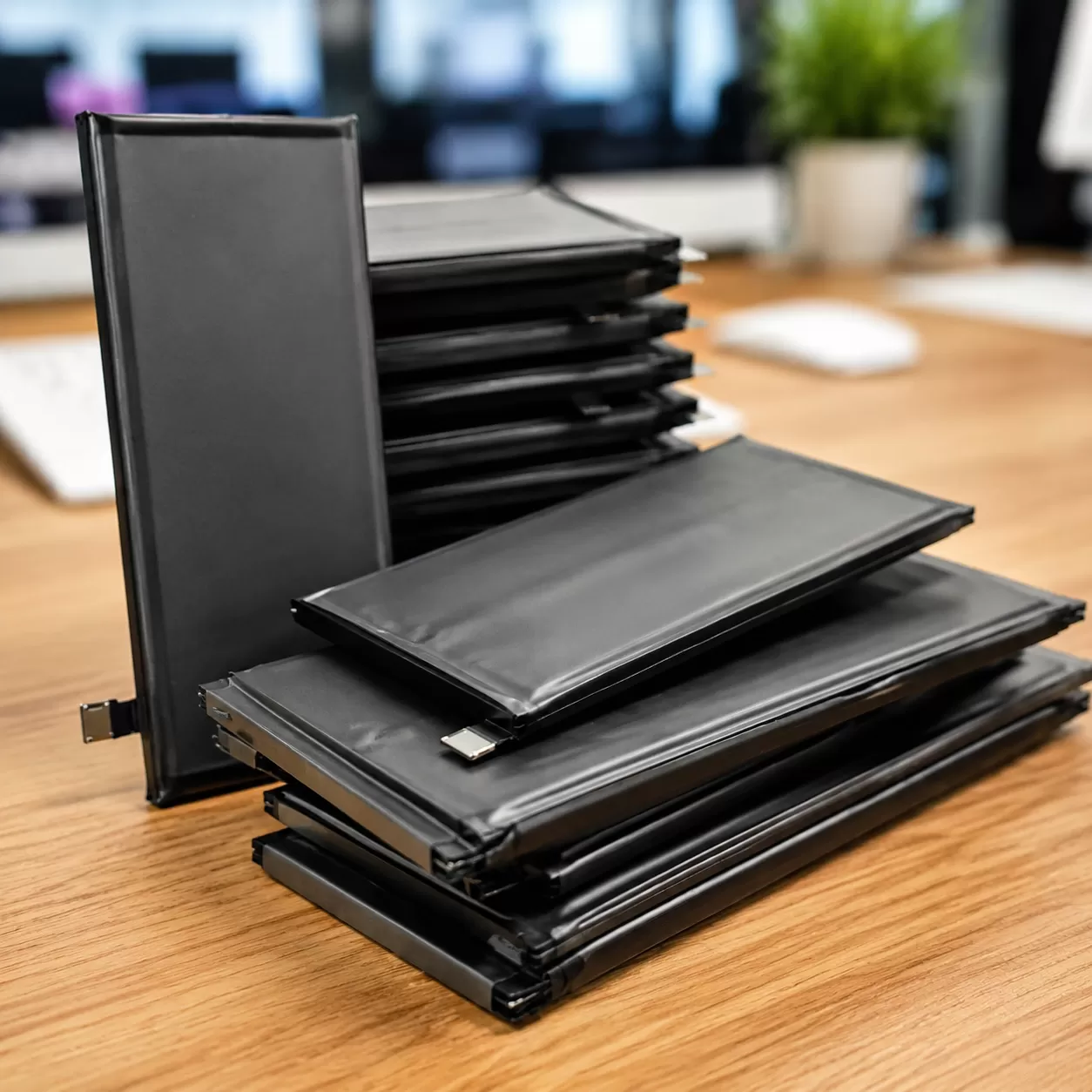
Cutting corners on hardware is the fastest way to kill your resale reputation. When you\’re flipping or refurbishing iPhones, the internal components determine whether you get a five-star review or a return request. High-quality premium aftermarket cells are the backbone of a profitable resale strategy.
The Risk of Bargain-Bin Batteries
Cheap, generic batteries are a gamble that rarely pays off. These \”bargain\” options often suffer from:
- Safety Hazards: Poor insulation and lack of thermal management can lead to swelling or fires.
- Rapid Degradation: Capacity often drops significantly within the first 30–60 days.
- Inaccurate Reporting: Glitchy chips that show \”100% health\” even when the phone is dying at 20% actual charge.
Evaluating Premium Aftermarket Cells
To protect your margins, you need cells engineered for stability. A true high-capacity upgrade isn\’t just about a bigger number on the label; it’s about the internal logic.
| Feature | Low-End Generic | Premium Haisic Cells |
|---|---|---|
| Cell Grade | Tier C/D (Recycled) | Tier-A (New Polymer) |
| Voltage Stability | Fluctuating | Constant & Regulated |
| Protection IC | Basic or Missing | Advanced Texas Instruments (TI) or Equivalent |
| Cycle Life | 300 – 500 Cycles | 800+ Cycles |
The Haisic Difference
As a leading iPhone battery manufacturer, we don\’t just assemble parts; we engineer performance. Our high-density lithium-ion upgrades utilize Tier-A cells that fit perfectly within the original chassis while offering more milliampere-hours (mAh) than the factory standard.
By integrating high-end protection ICs, we ensure the voltage remains stable even under heavy processing loads. This focus on engineering allows us to provide a battery energy storage solution that scales from individual smartphone repairs to larger energy needs, ensuring every device you sell stays powered longer and performs better. When you use a Haisic cell, you aren\’t just replacing a part—you are installing a performance guarantee that justifies a premium listing price.
Step-by-Step Strategy to Maximize Your iPhone Value
Getting the absolute highest return on your used device requires a deliberate approach. By treating a battery upgrade as a strategic investment, you can significantly beat standard smartphone depreciation rates and command a premium price in the secondhand iPhone marketplace.
Here is the exact playbook we use to execute this strategy successfully.
Step 1: Document the Baseline
Before touching a screwdriver, you need to know exactly what you are working with.
- Check the Settings: Navigate to Settings > Battery > Battery Health & Charging.
- Identify the Capacity: Note the current iPhone battery health percentage. If it hovers near or below the maximum capacity threshold of 80%, you are looking at a prime candidate for a value flip.
- Take Screenshots: Document this baseline. Showing a \”before and after\” proof of your upgrade builds immense trust with potential buyers later on.
Step 2: Time the Upgrade
Timing is everything when navigating the used phone market. To minimize loss from smartphone depreciation rates, you want to avoid seasonal market flooding.
| Market Phase | Timing | Strategy |
|---|---|---|
| The Quiet Zone | Spring / Early Summer | Best time to upgrade and sell. Demand is steady, and supply is low. |
| The Flood Zone | Late Autumn (September–November) | New iPhone release window. Market is saturated. Avoid selling here if possible. |
| The Holiday Rush | December | High demand for refurbished gifts. Great time to list a freshly upgraded device. |
Upgrading your battery 2 to 4 weeks before listing ensures the new cell is calibrated and ready to show off peak performance.
Step 3: Professional Execution
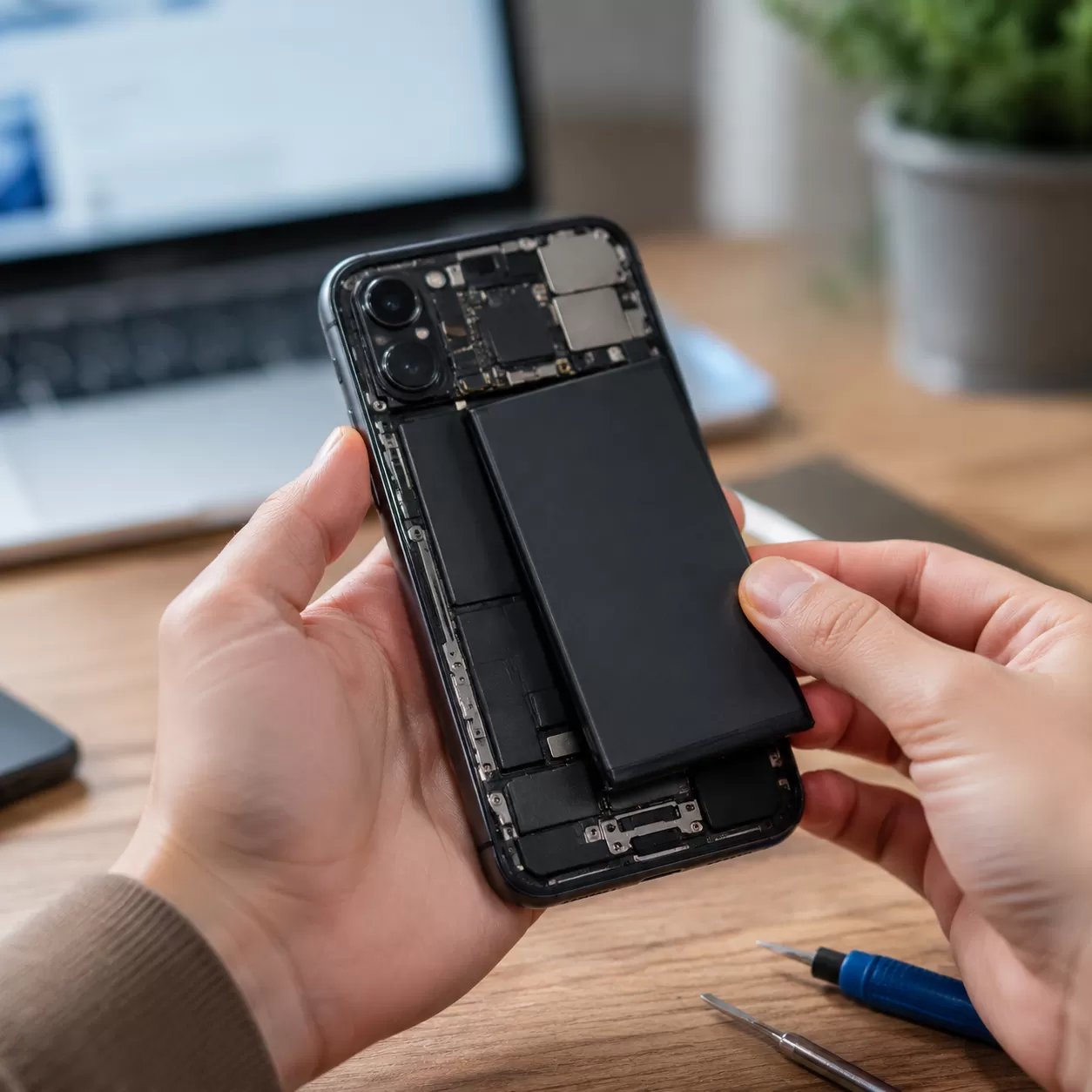
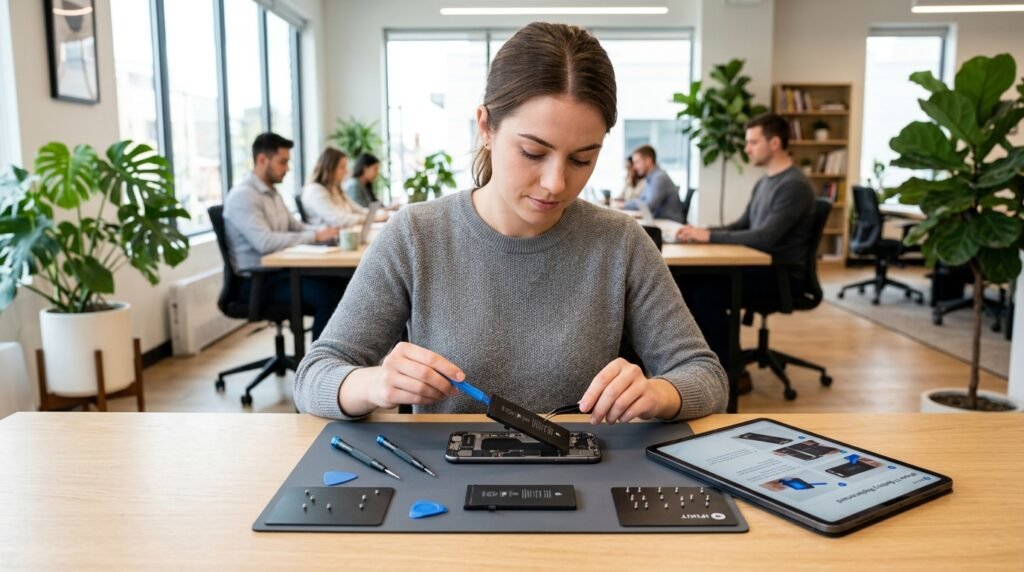
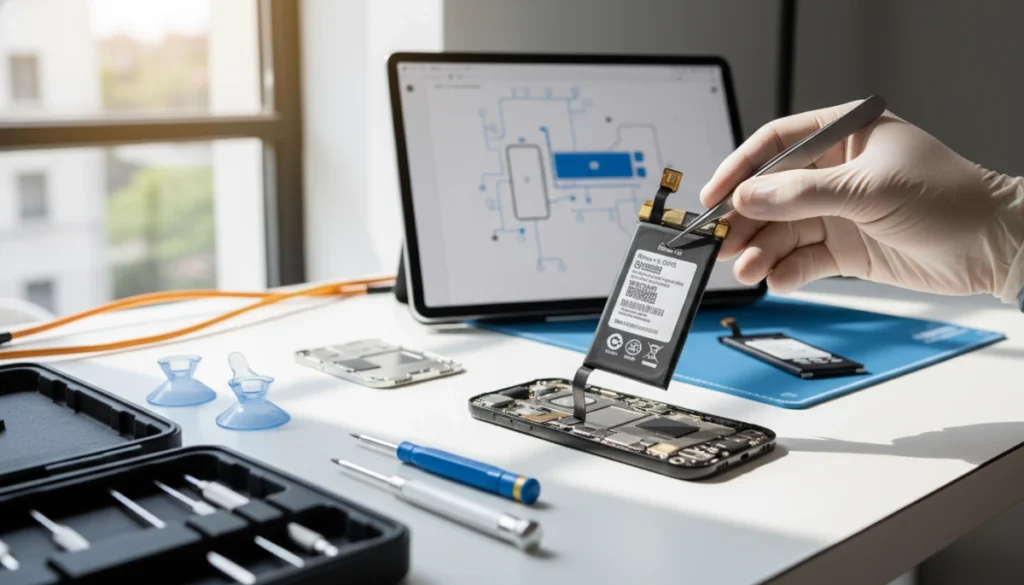
A flawless installation is what separates high-margin flips from amateur mistakes. When performing a refurbished device upgrade, using cheap components will backfire via rapid degradation or safety risks.
- Source Quality Parts: Always opt for premium aftermarket cells that match or exceed original specifications.
- Precision Matters: Ensure the adhesive strips, screen seals, and internal brackets are replaced perfectly to maintain structural integrity.
- Partner Wisely: If you are a high-volume seller or running an independent repair shop supply operation, sourcing directly from reliable tier-A manufacturers ensures consistent extended runtime performance and eliminates costly defects.
Step 4: The Perfect Listing
Once the new high-capacity cell is installed, it is time to cash in on your replacement battery ROI. Your online listing should explicitly highlight this upgrade as a major selling point.
Example Listing Headline: iPhone 13 Pro – Pristine Condition – Upgraded High-Capacity Battery (100% Health)
In the description, explain the real-world benefits to the buyer. Do not just say \”new battery.\” Instead, highlight customer satisfaction metrics like \”up to 20% more daily screen-on time than a standard factory model.\” Position the device as a superior alternative to standard used options, allowing you to bypass lowball offers and anchor your price in the premium lane.
Frequently Asked Questions (FAQs)
Does a third-party battery show a \”Genuine Part\” warning?
Yes, Apple devices typically display an \”Unknown Part\” message in the settings if a replacement is done outside an authorized service center. However, this notification is purely cosmetic and does not affect the actual extended runtime performance or safety of the phone. Premium aftermarket cells function identically to OEM parts, delivering stable power despite the software flag.
How much exactly does a battery swap increase iPhone trade-in value?
Upgrading a degraded cell to a high-capacity battery can recover 15% to 25% of the device\’s overall market value. In the secondhand iPhone marketplace, crossing the maximum capacity threshold from the sub-80% penalty lane into a fresh 100% bracket prevents heavy buyer discounting and speeds up the sale.
Are high-capacity batteries safe for long-term use in older iPhones?
Absolutely. Top-tier high-density lithium-ion upgrade cells use advanced protection ICs to prevent overheating and overcharging. For older models, these cells offer a reliable way to sustain peak performance speeds without triggering unexpected shutdowns. While our manufacturing focus centers on high-performance mobile power solutions, the underlying engineering principles mirror the strict safety standards found in advanced energy systems, such as a 48 volt battery lithium setup, ensuring long-term reliability.