










Wie ein Off-Grid-Solarsystem tatsächlich funktioniert
Wenn wir über ein Off-Grid-Solarsystem, we aren\’t just talking about slapping some glass panels on a roof. We are building a self-sufficient ecosystem. A true Unabhängiges photovoltaisches System operates independently of the utility grid, meaning you are your own power plant. The goal is simple: capture energy when it\’s available, store it efficiently, and deliver it reliably when you flip a switch.
Der Energiefluss: Vom Sonnenlicht zur Steckdose
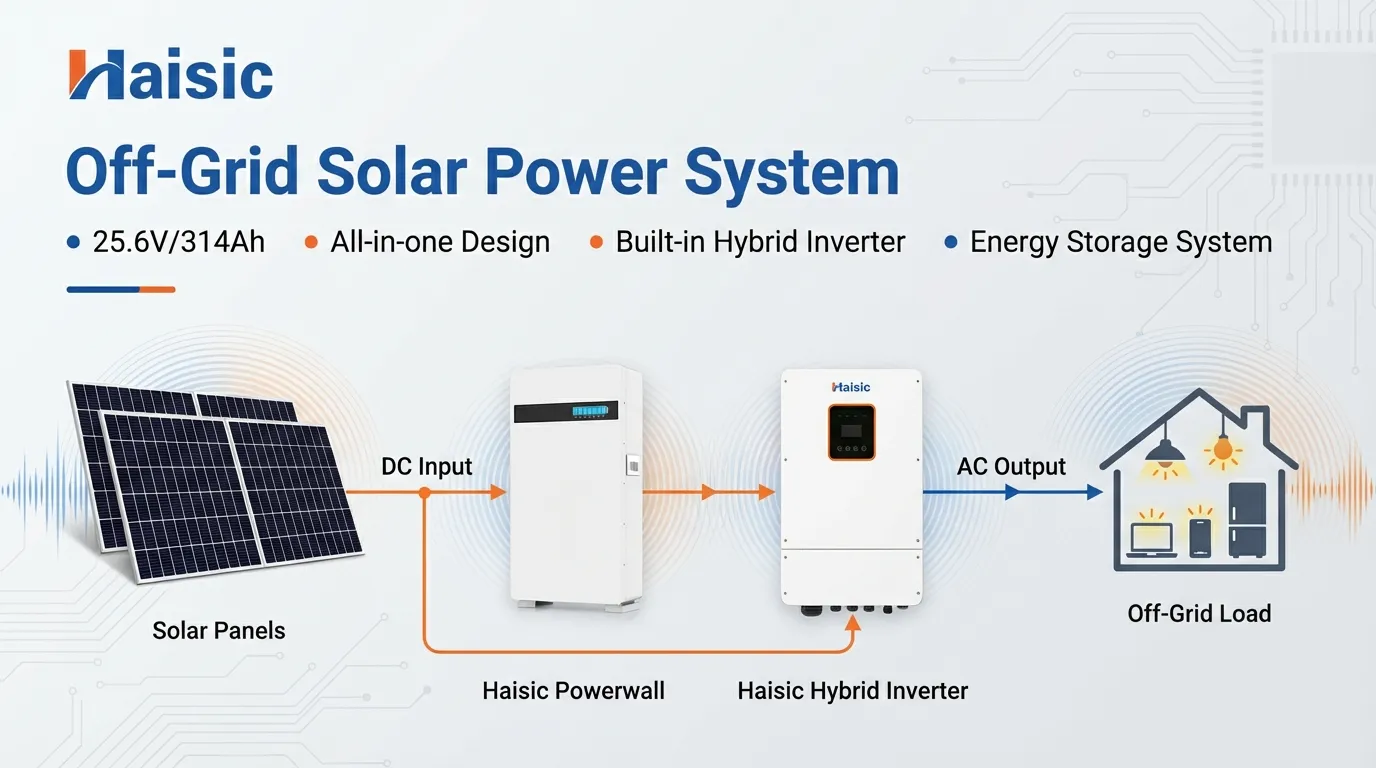
Das Verständnis der Reise eines einzelnen Elektrons in Ihrem System hilft, die Technik zu entmystifizieren. Hier ist die Schritt-für-Schritt-Aufschlüsselung, wie rohes Sonnenlicht in nutzbaren Strom umgewandelt wird:
- Erzeugung (Die Quelle): Sonnenlicht trifft auf Ihre Solaranlage, regt Elektronen an und erzeugt Gleichstrom (DC).
- Regulierung (Der Türsteher): Diese rohe Energie fließt in die Solar-Laderegler. Dieses Bauteil ist entscheidend. Es reguliert die Spannung und den Strom, die von den Paneelen kommen, um mit den Batterien kompatibel zu sein. Ohne diese besteht die Gefahr des Überladens und der Zerstörung Ihrer Speicherung.
- Speicherung (Der Tank): Die regulierte Energie füllt Ihren Batteriebank. Dies ist Ihr Reservoir für die Nacht und bewölkte Tage.
- Inversion (Die Übersetzung): Da die meisten Haushaltsgeräte mit Wechselstrom (AC) betrieben werden, wandert die Energie vom Akku zum Wechselrichter, der DC in AC umwandelt.
- Verbrauch (Die Last): Schließlich erreicht die Energie Ihren Sicherungskasten und versorgt Ihre Lichter, den Kühlschrank oder den Laptop.
Warum die Batteriebank der wahre Held ist
Solarmodule erhalten oft den ganzen Ruhm, aber in einem Off-Grid-Solarsystem, the battery bank is the backbone. The sun doesn\’t shine 24/7, but your need for power often does.
- Brücke die Kluft: Ihr LiFePO4-Batteriespeicher oder Bleisäurebank speichert die tagsüber erzeugte Energie, damit du am nächsten Tag um 6 Uhr morgens Kaffee kochen kannst.
- Systemstabilität: A properly sized battery bank stabilizes the voltage for your inverter, ensuring sensitive electronics don\’t crash.
- Schutz durch den Controller: The health of this \”hero\” relies entirely on the charge controller. As detailed in technical specifications, the controller prevents Überladung (was Gasbildung und Explosionen bei älteren Batterietypen verursacht) und Überentladung (was die Lebensdauer der Batterie verkürzt).
Durch die Priorisierung hochwertiger Energiespeicherlösungen, stellst du sicher, dass dein Off-Grid-Solarsystem nicht nur ein Tageshobby ist, sondern eine zuverlässige Versorgungslösung darstellt.
Wesentliche Komponenten: Die Hardware, die du brauchst
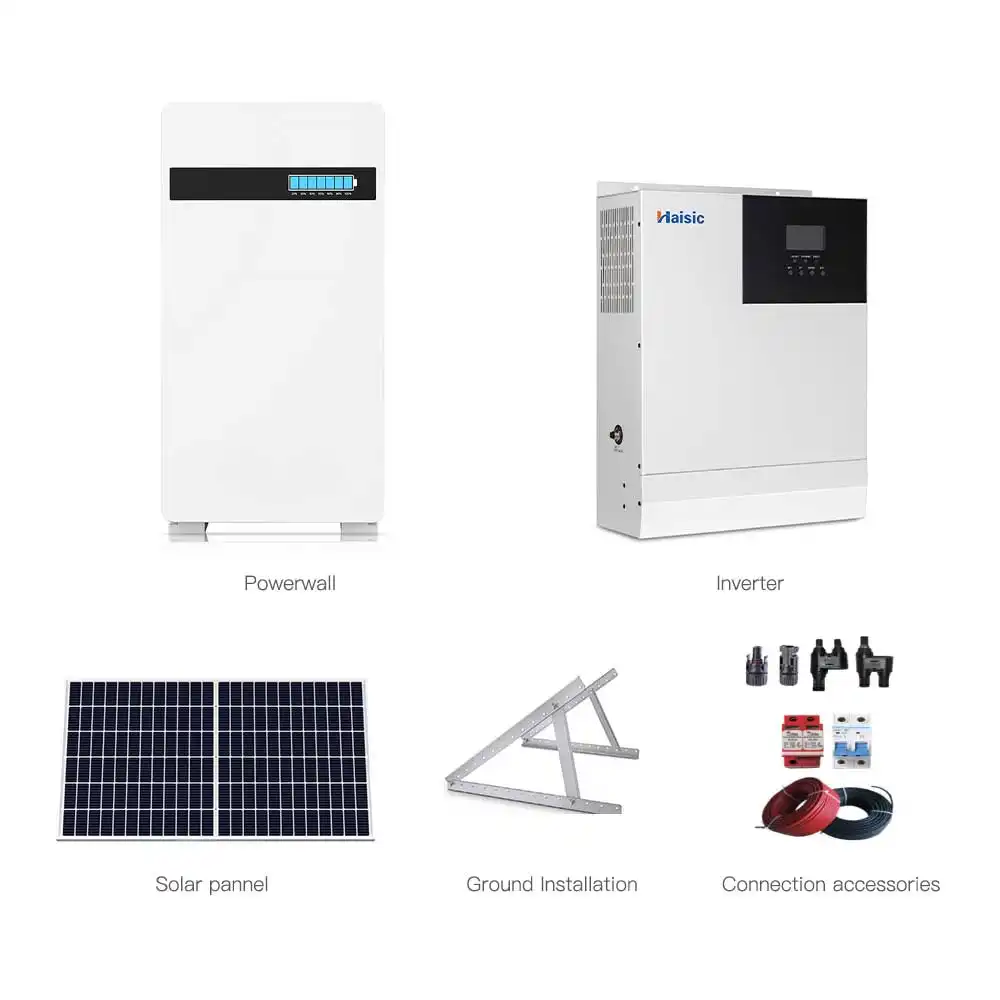
Der Aufbau eines zuverlässigen Off-Grid-Solarsystem erfordert die Auswahl von Komponenten, die nahtlos zusammenarbeiten. Wir setzen nicht nur Teile zusammen; wir entwickeln ein Gleichgewicht zwischen Energieertrag und Speicherkapazität. Die Hardware, die du wählst, bestimmt die Effizienz, Sicherheit und Langlebigkeit deiner gesamten Anlage.
Solarmodule: Monokristallin vs. Polykrystallin
Das Solarpanel ist das Herzstück deines autarken photovoltaischen Systems. Bei der Wahl zwischen monokristallinen und polykrystallinen Modulen kommt es oft auf Effizienz versus Kosten an.
- Monokristallin: Hergestellt aus einkristallinem Silizium. Sie sind effizienter und performen besser bei schlechten Lichtverhältnissen, was sie ideal macht, wenn du begrenzten Platz auf dem Dach hast.
- Polykristallin: Hergestellt aus geschmolzenen Siliziumfragmenten. Sie sind in der Regel günstiger, benötigen aber mehr Fläche, um die gleiche Leistung zu erzeugen.
Für die meisten ernsthaften Off-Grid-Anwendungen empfehlen wir monokristalline Module, um die Energieproduktion pro Quadratmeter zu maximieren.
Das Gehirn: MPPT-Solarladeregler erklärt
Der Laderegler ist die wichtigste Komponente für die Systemgesundheit. Er sitzt zwischen der Solaranlage und der Batteriebank und reguliert den Stromfluss, um Überladung und Tiefentladung zu verhindern. Ohne diese Regulierung können Batterien dauerhaft beschädigt werden, und Sicherheitsrisiken wie Kurzschlüsse oder Überströme nehmen zu.
Wir verwenden fast ausschließlich MPPT-Solarladeregler (Maximum Power Point Tracking) gegenüber älteren PWM-Typen (Pulsweitenmodulation) für netzunabhängiges Wohnen.
- PWM-Regler: Diese arbeiten, indem sie die Verbindung zur Batterie modulieren und im Wesentlichen als Schalter fungieren. Sie sind einfach, zwingen aber das Solarpanel, mit der Spannung der Batterie zu arbeiten, wodurch potenzielle Leistung verloren geht.
- MPPT-Regler: Diese sind weitaus ausgefeilter. Sie wandeln die höhere Spannung der Solarmodule in die niedrigere Spannung um, die von den Batterien benötigt wird, und erhöhen gleichzeitig den Strom.
Warum MPPT überlegen ist:
- Effizienzsteigerung: MPPT-Regler können die Ladeeffizienz um 10-30% im Vergleich zu PWM erhöhen.
- Spannungshandhabung: Sie ermöglichen höhere Panelspannungen, was die Verdrahtungskosten und den Leistungsverlust über lange Strecken reduziert.
- Klimaanpassungsfähigkeit: Sie optimieren die Leistungserzeugung auch bei unterschiedlichen Temperaturen und Beschattungsverhältnissen.
Deep-Cycle-Batteriebank: Warum wir LiFePO4 wählen
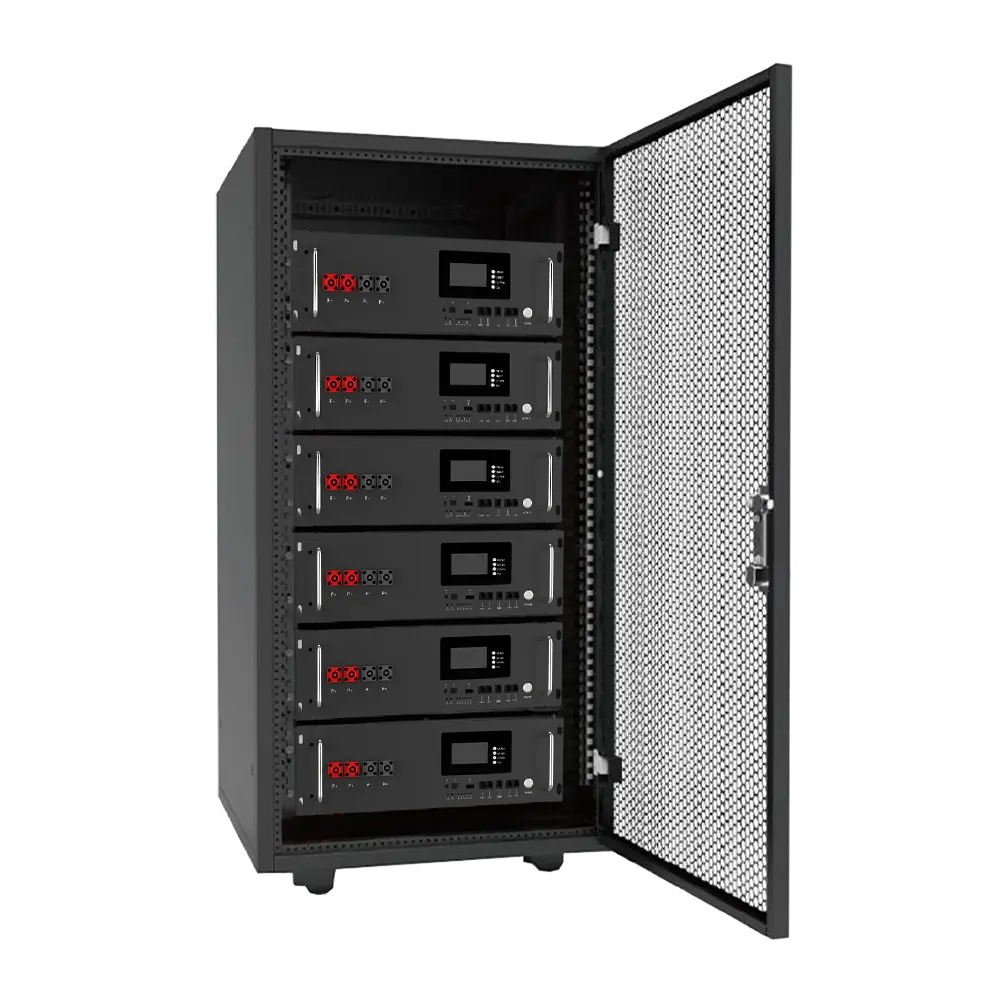
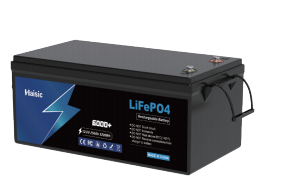
Ihre Energieunabhängigkeit hängt vollständig von Ihrer Speicherkapazität ab. Während traditionelle Blei-Säure-Batterien eine Option sind, LiFePO4-Batteriespeicher (Lithium-Eisenphosphat) hat sich zum Industriestandard für moderne Systeme entwickelt. Sie bieten eine größere Entladetiefe, ein geringeres Gewicht und eine deutlich längere Lebensdauer.
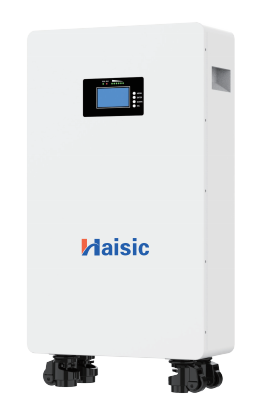
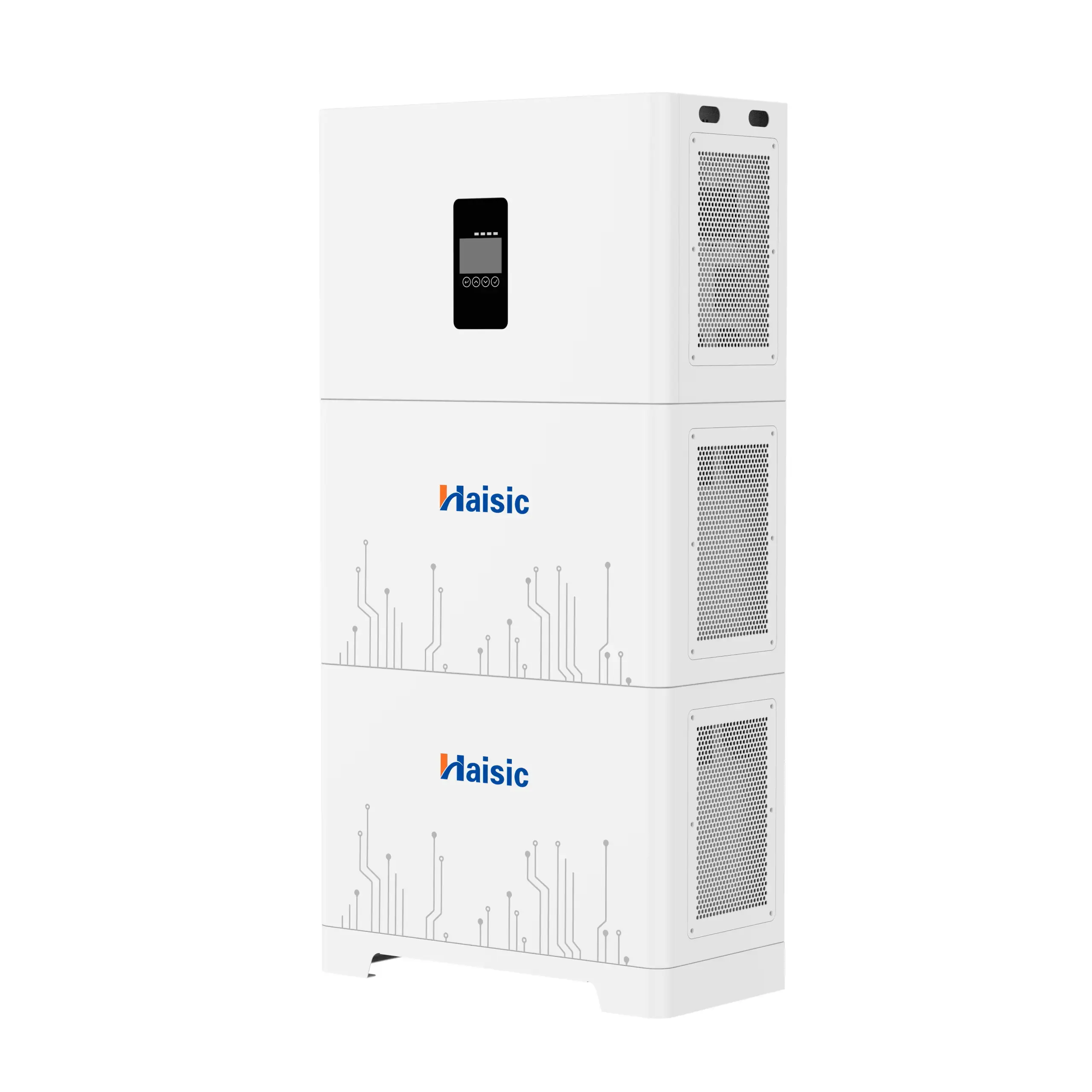
Für eine robuste Heimanlage ist die Installation eines Wandmontierte 51,2V 100Ah LiFePO4-Batterie bietet eine kompakte und sichere Lösung zur Speicherung der während des Tages gewonnenen Energie. Im Gegensatz zu Blei-Säure-Batterien erfordern diese Batterien keine regelmäßige Wartung und lassen sich gut in fortschrittliche Batteriemanagementsysteme (BMS) integrieren.
Das Gateway: Wesentliche Bestandteile des reinen Sinus-Wechselrichters
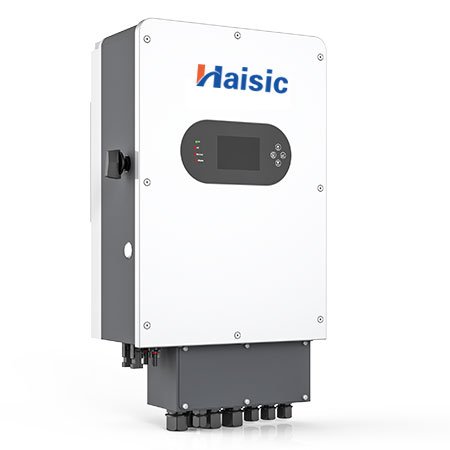
Schließlich benötigen Sie einen Wechselrichter, um die in Ihren Batterien gespeicherte Gleichstromenergie für Standard-Haushaltsgeräte nutzbar zu machen. Dieses Gerät wandelt Gleichstrom in Wechselstrom um.
Wechselrichtertypen auf einen Blick:
| Merkmal | Reiner Sinus-Wechselrichter | Modifizierter Sinus-Wechselrichter |
|---|---|---|
| Wellenform | Sanfte, gleichmäßige Welle | Blockartige, gestufte Welle |
| Kompatibilität | Sicher für alle Elektronikgeräte | Kann empfindliche Motoren/Chips beschädigen |
| Effizienz | Hoch | Geringer |
| Kosten | Höhere Investition | Preiswert |
Für irgendeine Off-Grid-Solarsystem Beim Betrieb empfindlicher Elektronik wie Laptops, Kühlschränken oder medizinischer Geräte ist ein Reines Traktionswelleninverter obligatorisch. Es sorgt dafür, dass Ihre Geräte kühl und leise laufen, genau wie bei Netzstrom.
Systemgröße bestimmen: Die Mathematik hinter der Magie
Der Aufbau eines zuverlässigen Off-Grid-Solarsystem isn\’t about guessing; it is about precision. If you undersize your setup, you will be sitting in the dark during the first cloudy week. If you oversize it without a plan, you are wasting money on capacity you will never use. We approach this with a simple three-step calculation to ensure your system handles your real-world needs.
Schritt 1: Überprüfung Ihres täglichen kWh-Verbrauchs
Bevor Sie ein einziges Panel kaufen, müssen Sie genau wissen, wie viel Energie Ihr Lebensstil erfordert. Dies ist die Grundlage für das gesamte Design. Wir erstellen eine Lastenliste, die jedes Gerät auflistet, das Sie betreiben möchten, seine Wattzahl und die Stunden pro Tag, die es in Betrieb ist.
- Liste jedes Geräts auf: Lichter, Kühlschrank, Laptop, Wasserpumpe usw.
- Wattstunden berechnen: Multiplizieren Sie die Geräteleistung mit den genutzten Stunden (z.B. eine 10W Glühbirne 5 Stunden lang eingeschaltet = 50Wh).
- Alles zusammenrechnen: Addieren Sie alles, um Ihren täglichen Kilowattstunden (kWh) Verbrauch zu ermitteln.
Don\’t cheat on this number. If you think you might add a freezer or power tools later, factor that buffer in now. This total daily requirement dictates the size of everything else in the chain.
Schritt 2: Berechnung der Batteriespeicherung für bewölkte Tage
The sun doesn\’t shine 24/7, and weather is unpredictable. Your battery bank needs to be large enough to power your home through \”days of autonomy\”—the number of days you can run without any solar input. For most off-grid setups, we recommend planning for at least 2 to 3 days of autonomy.
Sie können die Batteriekapazität jedoch nicht einfach an Ihren Verbrauch anpassen; Sie müssen die Entladungstiefe (DoD) berücksichtigen. Sie möchten eine Batterie niemals bis 0% entladen.
- Bleisäure: In der Regel auf 50% nutzbare Kapazität begrenzt.
- Lithium (LiFePO4): Kann sicher 80-90% der Kapazität nutzen.
Deshalb bevorzugen wir eine hochwertige Lithium-Batterie zur Solarstromspeicherung, as it allows for a smaller physical footprint with more usable energy. To size this, take your daily kWh consumption, multiply it by your days of autonomy, and then divide by the battery\’s recommended DoD. This ensures your lights stay on even during a winter storm.
Schritt 3: Dimensionierung der Solaranlagen
Sobald Sie wissen, wie viel Energie Sie verbrauchen und wie viel Speicher Sie benötigen, müssen Sie herausfinden, wie Sie diesen Tank wieder auffüllen. Das Berechnung der Solaranlagen depends heavily on your geographic location and \”Peak Sun Hours\”—not just daylight hours, but the hours where the sun is strong enough to generate maximum power.
- Bestimmen Sie die Spitzen-Sonnenstunden: Schauen Sie den Durchschnitt für Ihren spezifischen Standort nach (in der Regel zwischen 3 und 5 Stunden).
- Berechnen Sie den erforderlichen Input: Teilen Sie Ihren täglichen Wh-Verbrauch durch Ihre Spitzen-Sonnenstunden.
- Effizienzpuffer hinzufügen: Solarsysteme haben Verluste durch Verkabelung, Wärme und Umwandlungsineffizienzen. Wir fügen immer einen Puffer von 25-30% zum Endergebnis hinzu.
Wenn Sie beispielsweise 3000Wh pro Tag benötigen und 4 Spitzen-Sonnenstunden haben, benötigen Sie theoretisch 750W Solarleistung. Das Hinzufügen des Puffers von 30% bringt Sie auf etwa 1000W (1kW) Solarmodule. Dies stellt sicher, dass selbst an Tagen mit weniger optimalen Bedingungen Ihre Off-Grid-Solarsystem kann den Batteriespeicher vollständig aufladen.
Installation and Safety: Don\’t Burn the House Down
Der Aufbau eines zuverlässigen Off-Grid-Solarsystem erfordert mehr als nur das Anschließen von Kabeln; es verlangt die strikte Einhaltung von Sicherheitsprotokollen, um Brandgefahren und Geräteausfälle zu vermeiden. Wir arbeiten mit Hochstrom-Gleichstrom, der bei falscher Handhabung unnachgiebig sein kann. Eine ordnungsgemäße Installation stellt sicher, dass Ihre Investition Jahrzehnte hält, anstatt eine Sicherheitsrisiko zu werden.
Verdrahtung, Sicherungen und Leitungsschutzschaltergrößen
Der häufigste Fehlerpunkt bei einer Unabhängiges photovoltaisches System ist zu dünne Verkabelung. Gleichstromversorgung leidet unter Spannungsabfall über die Entfernung. Wenn Ihre Kabel für den durchfließenden Strom (Ampere) zu dünn sind, werden sie sich aufheizen, Widerstand verursachen und möglicherweise Feuer fangen. Sie müssen Ihre Kabel entsprechend der maximalen Stromstärke Ihres Ladereglers und Wechselrichters dimensionieren.
Sicherungen und Leitungsschutzschalter sind Ihre Sicherheitsvorkehrung. Sie schützen die Verkabelung, nicht nur das Gerät. Sie benötigen Überstromschutz an drei kritischen Punkten:
- Zwischen der Solaranlage und dem Laderegler.
- Zwischen dem Laderegler und dem Batteriespeicher.
- Zwischen dem Batteriespeicher und dem Wechselrichter.
Beim Anschluss eines Hochkapazitäts- 51,2-V 100Ah LiFePO4-Batterie, ist die Verwendung des richtigen Kabeldurchmessers und der passenden Sicherungsgröße unerlässlich, um die Last ohne Überhitzung zu bewältigen.
Allgemeine Verkabelungsanleitung für 12V/24V-Systeme:
| Stromfluss (Ampere) | Mindestkabelquerschnitt (AWG) | Empfohlene Sicherungsgröße |
|---|---|---|
| 0 – 15 Ampere | 14 AWG | 20A |
| 15 – 30 Ampere | 10 AWG | 40A |
| 30 – 60 Ampere | 6 AWG | 80 A |
| 60 – 100 Ampere | 4 AWG oder 2 AWG | 125A |
Anforderungen an Erdung und Belüftung
Die Erdung wird bei DIY-Installationen oft übersehen, Off-Grid-Solarsystem ist aber unerlässlich, um vor Blitzüberspannungen und statischer Aufladung zu schützen. Eine ordnungsgemäße Erdung leitet überschüssigen Strom sicher in den Boden, anstatt durch Ihre teure Elektronik. Ihr Laderegler, Wechselrichter und Solarmodulrahmen sollten alle an einem zentralen Erdungsstab geerdet sein.
Die Belüftung ist ebenso wichtig. Während moderne Lithium-Optionen wie ein Lithium-Energie-Walls keinen Wasserstoff ausgasen wie alte Blei-Säure-Batterien, erzeugt die Elektronik selbst (Wechselrichter und Laderegler) während des Betriebs erhebliche Wärme.
- Luftstrom: Stellen Sie sicher, dass um Ihren Wechselrichter und Laderegler herum mindestens 15 cm Freiraum vorhanden sind.
- Temperatur: Installieren Sie die Komponenten in einem kühlen, trockenen Bereich. Übermäßige Hitze reduziert die Effizienz von MPPT-Reglern und verkürzt die Lebensdauer Ihres Batteriemanagementsystems (BMS).
- Gehäuse: Verschließen Sie niemals Hochleistungselektronik in einer luftdichten Box ohne aktive Kühlventilatoren.
Ehrlich gesagt: Die Vor- und Nachteile des netzunabhängigen Lebens
Der Umstieg auf eine autarke Photovoltaikanlage ist eine große Verpflichtung. Die Idee, sich vom Netz abzukoppeln, ist zwar reizvoll, erfordert aber ein klares Verständnis sowohl der damit verbundenen Freiheit als auch der damit verbundenen Verantwortung. Wir müssen die Autonomie gegen die technischen Anforderungen der Verwaltung Ihres eigenen Kraftwerks abwägen.
Wahre Energieunabhängigkeit und Nachhaltigkeit
Der größte Anreiz ist Energieunabhängigkeit. Wenn Sie ein Off-Grid-Solarsystem, werden Sie Ihr eigener Energieversorger. Sie sind nicht mehr anfällig für Netzfehler, rollende Blackouts oder schwankende Strompreise. Diese Zuverlässigkeit ist entscheidend für abgelegene Orte, an denen eine Netzanschluss unmöglich oder prohibitively teuer ist. Darüber hinaus sorgt die Kombination Ihrer Paneele mit einer robusten Wohnsitz-Batteriespeichersystem stellt sicher, dass Sie auch dann Strom haben, wenn die Sonne nicht scheint, und schafft so eine wirklich nachhaltige Schleife.
Wichtige Vorteile:
- Selbstversorgung: Vollständige Kontrolle über Ihre Energieerzeugung und -verbrauch.
- Umweltbelastung: Null Emissionen während des Betriebs.
- Zuverlässigkeit: Schutz vor Ausfällen der öffentlichen Infrastruktur und Überspannungen.
Management der Anfangskosten und Wartung
Während die langfristigen Einsparungen real sind, kann die Anfangsinvestition für ein hochwertiges Off-Grid-Solarsystemset hoch sein. Die größte Ausgabe ist oft die Batteriebank. Das Verständnis des Kosten der Backup-Batterie für ein privates Solarsystem ist entscheidend für die Budgetplanung, da Kompromisse bei der Speicherqualität oft zu häufigen, teuren Ersatzteilen führen.
Wartung ist eine weitere Realität. Im Gegensatz zum Netzstrom, wenn etwas kaputt geht, müssen Sie es reparieren.
- Batteriezustand: You must monitor state-of-charge to prevent over-discharging. A quality charge controller (MPPT or PWM) is non-negotiable here; it acts as the system\’s brain, preventing damage from overcharging and ensuring efficient energy harvest.
- Systemgröße: Falsche Dimensionierung führt zu Strommangel. Sie müssen Ihre Lasten genau berechnen, um sicherzustellen, dass Ihr Solarspeicherlösungen konsecutive bewölkte Tage bewältigen kann.
- Komponentenschutz: Regelmäßige Überprüfungen der Verkabelung, Verbindungen und Panelreinigung sind erforderlich, um die maximale Effizienz zu erhalten.
FAQ: Häufig gestellte Fragen zu Off-Grid-Solar
Kann ich meine Klimaanlage mit einem Off-Grid-System betreiben?
Ja, Sie können die Klimaanlage definitiv betreiben, aber es erfordert eine sorgfältige Planung. Klimaanlagen sind große Stromverbraucher und haben einen hohen Anlaufüberschuss, was bedeutet, dass Ihr Off-Grid-Solarsystem muss speziell dimensioniert sein, um diese Last zu bewältigen. Sie können eine zentrale Klimaanlage nicht einfach an eine kleine anschließen DIY-Solarkit.
Um die Klimaanlage effektiv zu betreiben, benötigen Sie zwei Dinge:
- Ein Leistungsstarker Wechselrichter: Sie müssen einen Reines Traktionswelleninverter der in der Lage ist, den anfänglichen Stromstoß (Anlaufleistung) zu bewältigen, wenn der Kompressor startet.
- Großer Speicher: Kühlung zieht kontinuierlich Strom. Ein Standardbatteriesystem könnte in einer Stunde entladen sein. Für eine konstante Kühlung empfehlen wir eine robuste Hochspannungs-LiFePO4-Haus-Energiespeichersystem die hohe Stromstöße ohne Überhitzung oder Spannungseinbruch aushalten kann.
Wie lange halten LiFePO4-Batterien tatsächlich?
LiFePO4-Batteriespeicher ist der Branchenstandard für Langlebigkeit. Im Gegensatz zu herkömmlichen Blei-Säure-Batterien, die nach 3-5 Jahren ausfallen können, sind Lithium-Eisenphosphat-Batterien auf Langlebigkeit ausgelegt 10 bis 15 Jahren in einem gut verwalteten System.
The lifespan is determined by \”cycles.\” A quality LiFePO4 unit typically offers:
- 3.000 bis 6.000 Zyklen bei 80% Depth of Discharge (DOD).
- Keine Wartung (keine Wartung oder Ausgleich erforderlich).
- Konstante Spannung über den gesamten Entladungsverlauf.
Da sie so lange halten, sind die Kosten pro Kilowattstunde über die Lebensdauer des Systems deutlich niedriger. Die Integration eines zuverlässigen 25,6V Touchscreen-Heimspeicherbatterie ensures you aren\’t replacing your battery bank every few years.
Brauche ich wirklich einen Notstromgenerator?
Wenn Sie vollständig autark leben, ist die Antwort in der Regel ja. Während wir nach vollständiger Energieunabhängigkeit, Stromversorgung streben, ist das Wetter unberechenbar. Während längerer Regen-, Schnee- oder Bewölkungsperioden ist Ihr Solarmodul-Array kann möglicherweise nicht genug Energie ernten, um Ihren Batteriebank vollständig aufzuladen.
Backup-Generator-Integration dient als kritisches Sicherheitsnetz:
- Schützt Batterien: Verhindert, dass Ihre Batteriebank Tage lang in einem niedrigen Ladezustand verbleibt, was die Gesundheit beeinträchtigen kann.
- Garantiert Strom: Hält essentielle Verbraucher (Kühlschrank, Wasserpumpe, medizinische Geräte) während \”Sonnenfinsternissen\” am Laufen.”
- Laderegler-Unterstützung: Die meisten modernen Systeme erlauben es dem Generator, in das System einzuspeisen, wobei der MPPT-Solarladeregler oder Wechselrichter/Ladegerät die Eingabe regelt, um die Batterien sicher aufzuladen.