










Why You Need a Home Solar Battery Backup Now
If you have solar panels on your roof but no way to store that energy, you are only getting half the benefit. The reality of the modern grid is instability, and relying solely on real-time solar generation leaves you vulnerable the moment the sun goes down or the grid fails. A home solar battery backup isn\’t just an accessory anymore; it is the heart of a resilient, modern energy system.
At Haisic, we see energy storage as the bridge between intermittent renewable power and true 24/7 reliability. Here is why upgrading to a dedicated storage system is the smartest move for your home infrastructure.
Stop Fearing the Blackout (Energy Security)
The most immediate value of a solar battery backup system is simple: the lights stay on when the neighborhood goes dark. Many homeowners are shocked to learn that standard grid-tied solar panels automatically shut down during a power outage for safety reasons. Without a battery, your panels are useless during a blackout.
We engineer our systems to provide seamless Emergency Power Supply (EPS). When the grid fails, our smart hybrid inverters detect the drop instantly and switch to battery power.
- Keep Essentials Running: Keep your refrigerator cold, medical devices running, and WiFi active.
- Invisible Transition: The switchover happens so fast that most appliances won\’t even blink.
- Peace of Mind: You aren\’t scrambling for candles or noisy gas generators; you are simply continuing your life.
Slash Bills with Time-of-Use Load Shifting
Energy security is vital, but the economic argument for a solar home battery backup is just as powerful. Utility companies are increasingly moving toward Time-of-Use (TOU) billing, where electricity costs significantly more during \”peak\” evening hours (usually 4 PM – 9 PM) than it does during the day.
Our systems allow you to engage in Peak Shaving and smart load shifting:
- Charge your battery with free solar power during the day or cheap grid electricity at night.
- Discharge that stored power during expensive peak hours.
- Save the difference. You avoid paying premium rates by using your own stored energy.
By utilizing our high-efficiency LiFePO4 batteries, which offer 95%+ round-trip efficiency, you ensure that almost every watt you store is available to offset those high utility bills.
True Independence: Running in Island Mode
For those seeking maximum autonomy, our systems support \”Island Mode.\” This capability allows your home to physically disconnect from the utility grid and operate as a self-sustaining microgrid.
Whether you are dealing with a multi-day outage or simply want to minimize your reliance on utility companies, our solar battery backup system for home is built for the task. We use Lithium Iron Phosphate (LiFePO4) chemistry specifically because it can handle the deep discharge cycles required for off-grid or island-mode operation without degrading quickly. With a cycle life of 6,000 to 8,000+ cycles, our batteries are designed to be worked hard daily, giving you the freedom to generate, store, and consume your own power on your own terms.
Critical Specs: Don\’t Buy Until You Read This
Before investing in a home solar battery backup, you need to look past the glossy marketing brochures and focus on the raw technical specifications. The difference between a system that lasts 15 years and one that fails in five often comes down to chemistry and compatibility.
Battery Chemistry Battle: Why LiFePO4 Beats NMC
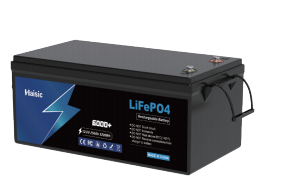
In the world of residential energy storage, safety is non-negotiable. That is why we exclusively manufacture systems using LiFePO4 (Lithium Iron Phosphate) chemistry rather than the older NMC (Nickel Manganese Cobalt) found in some electric vehicles.
LiFePO4 is chemically stable and virtually eliminates the risk of thermal runaway—meaning these batteries won\’t catch fire even under extreme conditions. Beyond safety, they are cobalt-free, making them a more sustainable choice. When you are installing a powerful energy source in your garage or basement, choosing a stable chemistry like LiFePO4 provides essential peace of mind.
Understanding Cycle Life (What 6000+ Cycles Really Means)
Cycle life is the best indicator of your system\’s longevity. A \”cycle\” happens every time you discharge and recharge the battery.
Haisic systems are rated for 6,000 to 8,000+ cycles at 80% Depth of Discharge (DOD). To put that in perspective:
- Daily Use: If you cycle the battery once every day, 6,000 cycles equals roughly 16 years of service life.
- Occasional Use: If used strictly for backup during outages, the lifespan extends even further.
Cheap lead-acid batteries might offer 500 cycles, and standard lithium options often cap out at 3,000. Investing in a high-cycle wholesale energy storage system ensures you aren\’t replacing expensive hardware just as your solar investment starts paying off.
Capacity vs Power Output: What Do You Actually Need?
It is crucial to distinguish between Capacity (kWh) and Power Output (kW).
- Capacity (kWh): This is the size of your fuel tank. A 10kWh battery can run a 1kW load for 10 hours.
- Power Output (kW): This is the horsepower. It determines how many appliances you can run simultaneously.
For a robust home solar battery backup, you need enough continuous power output to handle surges from inductive loads like pumps or A/C units. Our modular designs allow you to scale capacity easily—starting with a 5.12kWh unit and stacking modules to reach 20kWh or more as your energy needs grow.
Inverter Compatibility: Will It Work With Your Gear?
A battery is useless if it cannot talk to your inverter. The Battery Management System (BMS) must communicate seamlessly with the inverter to manage charging, discharging, and safety protocols efficiently.
We engineer our batteries with versatile communication ports (CAN, RS485, RS232) to ensure broad compatibility. Whether you are using Growatt, Deye, Victron, GoodWe, or other major hybrid inverter brands, our systems integrate without complex workarounds. This \”plug-and-play\” capability simplifies installation and ensures your solar battery backup system operates at peak efficiency from day one.
Sizing Your System: Essentials vs Whole Home
Getting the size right is the single most important decision you will make when buying a home solar battery backup. If you go too small, you are left in the dark when you need power most. If you go too big without a plan, you are wasting money on capacity you will never cycle. We generally see homeowners take one of two paths: covering just the basics or powering the entire house.
The Critical Load Strategy (Keeping the Fridge Running)
This is the \”survival mode\” approach. Instead of trying to power your entire house, you isolate specific \”critical loads\” on a separate sub-panel. This usually includes your refrigerator, Wi-Fi router, a few lights, and maybe a sump pump or medical device.
For this setup, a smaller solar battery backup system—typically around 5kWh to 10kWh—is often sufficient. The goal here isn\’t luxury; it\’s about keeping food from spoiling and maintaining communication during a grid outage. Because you aren\’t running heavy appliances like HVAC or electric dryers, the battery drains slowly, giving you maximum runtime for the things that actually matter.
The Whole Home Backup Approach (AC and Everything Else)
If you want to live as if the grid never went down, you need a whole-home backup power solution. This means running high-draw appliances like air conditioners, electric stoves, and water heaters.
To pull this off, you need significantly more capacity and power output. We are talking about systems starting at 20kWh and often pushing past 30kWh. For example, understanding the cost of a 10kW solar system with battery storage is crucial here, as these larger setups require powerful hybrid inverters capable of handling high surge currents when motors start up. This approach offers total peace of mind but requires a larger physical footprint and a higher upfront investment.
Why Scalability and Stackable Units Win
Predicting your exact energy usage for the next ten years is impossible. Your family might grow, or you might buy an EV. This is why we strictly recommend modular, stackable designs over fixed-capacity boxes.
With a scalable solar home battery backup, you can start small—perhaps with a single 5.12kWh module to cover critical loads—and simply stack more modules later if you decide you want to run the AC or charge a car. Our Haisic low-voltage and high-voltage stacking systems allow you to expand capacity without rewiring the entire system. It is a \”pay-as-you-grow\” model that prevents you from overspending on day one while keeping your future options open.
Installation and Safety Standards
Getting a home solar battery backup isn\’t just about buying a box of energy; it\’s about ensuring that box is installed correctly and operates safely for the next decade. We see too many homeowners overlook the physical installation requirements, only to face expensive retrofits or performance issues later.
Indoor vs Outdoor: Checking IP Ratings and Weatherproofing
Where you install your solar battery backup system dictates the durability you need. If you have a climate-controlled garage, standard enclosures work fine. However, for outdoor installations or humid basements, you need robust protection against the elements.
- IP65 Rating: This is the standard you should look for if the battery will be exposed to the environment. It means the unit is dust-tight and protected against water jets, making it suitable for outdoor placement.
- Temperature Resilience: Batteries rely on chemistry, and chemistry cares about temperature. Our systems are designed to operate reliably between -25°C and 60°C, ensuring your power stays on even during extreme weather events.
Safety Certifications You Must Check (UL, CE, TUV)
Never compromise on safety certifications. A reliable solar home battery backup must undergo rigorous testing to ensure it won\’t fail under stress. We prioritize manufacturing that meets global standards like CE, TUV, and UL. These certifications verify that the Battery Management System (BMS) correctly handles overcharging, short circuits, and thermal management, preventing the risks associated with cheaper, uncertified alternatives.
Why We Love Plug-and-Play Designs
Complex wiring is the enemy of a quick, affordable installation. That is why we advocate for modular, stackable designs. A modern household battery backup solution should be easy to scale without rewiring your entire electrical panel.
- Reduced Labor Costs: Installers spend less time on site, directly lowering your upfront investment.
- Scalability: You can start with a base module and stack more later as your energy needs grow, without needing a new inverter.
- Clean Aesthetics: No messy cable nests—just a clean, integrated look that fits neatly on your wall or floor.
The Money Talk: Costs and ROI
Investing in a home solar battery backup is a significant financial decision, but looking at the sticker price alone doesn\’t tell the whole story. To understand the real value, you have to break down the upfront investment against the long-term savings from energy independence and peak shaving.
Upfront Hardware vs Installation Costs
When you receive a quote for a solar battery backup system, the cost is split into two main buckets: the equipment and the labor.
- Hardware: This includes the battery modules, the hybrid inverter, and the BMS. Because we operate as a direct manufacturer, our clients avoid the heavy markups added by distributors and re-sellers.
- Installation: This covers the electrical work, permitting, and labor. While we can\’t control your local electrician\’s rates, starting with factory-direct pricing on the hardware significantly lowers your barrier to entry compared to buying through a middleman.
Don\’t Miss the Federal Tax Credits and Local Rebates
Never pay full price if you don\’t have to. Governments globally are pushing for grid stability, and they are willing to pay you to help. In many regions, installing a solar battery backup system for home use qualifies you for substantial financial incentives.
- Tax Credits: Programs like the US Federal ITC can cover a large percentage of the total system cost.
- Rebates: Local utility companies often offer cash rebates for installing storage that helps stabilize the grid.
- VAT Exemptions: Some countries have removed VAT on residential energy storage products entirely.
Total Cost of Ownership: Why Cheap Batteries Cost More Later
The cheapest battery on the market is usually the most expensive one to own. This comes down to Cycle Life. A traditional lead-acid battery or a lower-quality lithium unit might save you money on day one, but if it only lasts 500 to 2,000 cycles, you will be replacing it in a few years.
Our LiFePO4 systems are engineered for 6,000 to 8,000+ cycles. That translates to over a decade of daily charging and discharging. When you are calculating the long-term expense of a battery to run a house, a system that lasts 15 years offers a far better Return on Investment (ROI) than a \”cheap\” unit you have to replace three times in the same period. Durability is the ultimate cost-saver.
Why We Recommend Haisic Energy Storage
When you are looking for a reliable home solar battery backup system, the source matters just as much as the specs. We recommend Haisic because they aren\’t just a reseller slapping a label on a generic box; they are the actual manufacturer. This distinction is critical for quality control and pricing. By cutting out the middlemen, Haisic provides industrial-grade energy solutions directly to homeowners and installers, ensuring you get premium technology without the inflated markup often seen with big consumer brands.
Direct Manufacturer Quality (Grade-A Cells Only)
The heart of any solar battery backup system is the cell chemistry. Haisic strictly utilizes Grade-A LiFePO4 (Lithium Iron Phosphate) cells. Unlike cheaper, second-rate cells that degrade quickly, Grade-A cells are built for longevity and stability. This commitment to quality means the system is safer—eliminating the thermal runaway risks associated with Cobalt-based batteries—and more efficient. You are getting a system designed for 6,000 to 8,000+ cycles, which translates to over a decade of daily charging and discharging. When you invest in a battery for home energy storage, you need the assurance that the internal components are fresh, high-capacity, and rigorously tested before they ever leave the factory floor.
The Importance of a Rock-Solid 10-Year Warranty
A warranty is only as good as the company standing behind it. Because Haisic controls the manufacturing process from start to finish, they confidently offer a standard 5-year warranty with options to extend up to 10 years. This isn\’t just marketing fluff; it is a guarantee of performance. In the world of solar home battery backup, a 10-year warranty aligns perfectly with the lifespan of the battery cells, ensuring that your investment is protected against manufacturing defects and premature capacity loss. It gives you peace of mind knowing that your energy security is backed by long-term support.
Our Top Picks: Wall-Mounted and Stackable Series
Haisic offers versatile configurations to match different energy needs, whether you are retrofitting an existing array or building a new off-grid cabin.
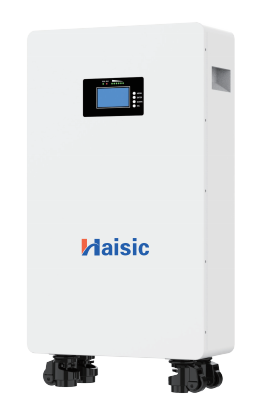
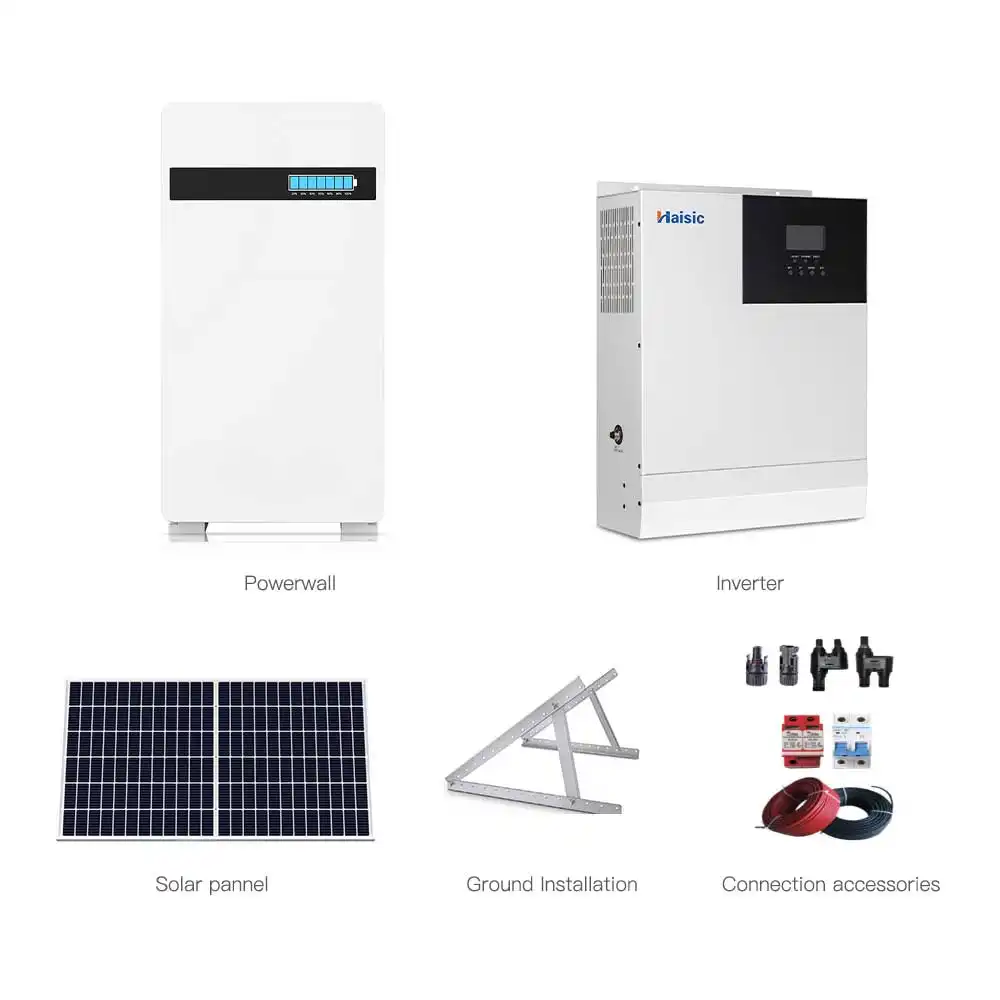
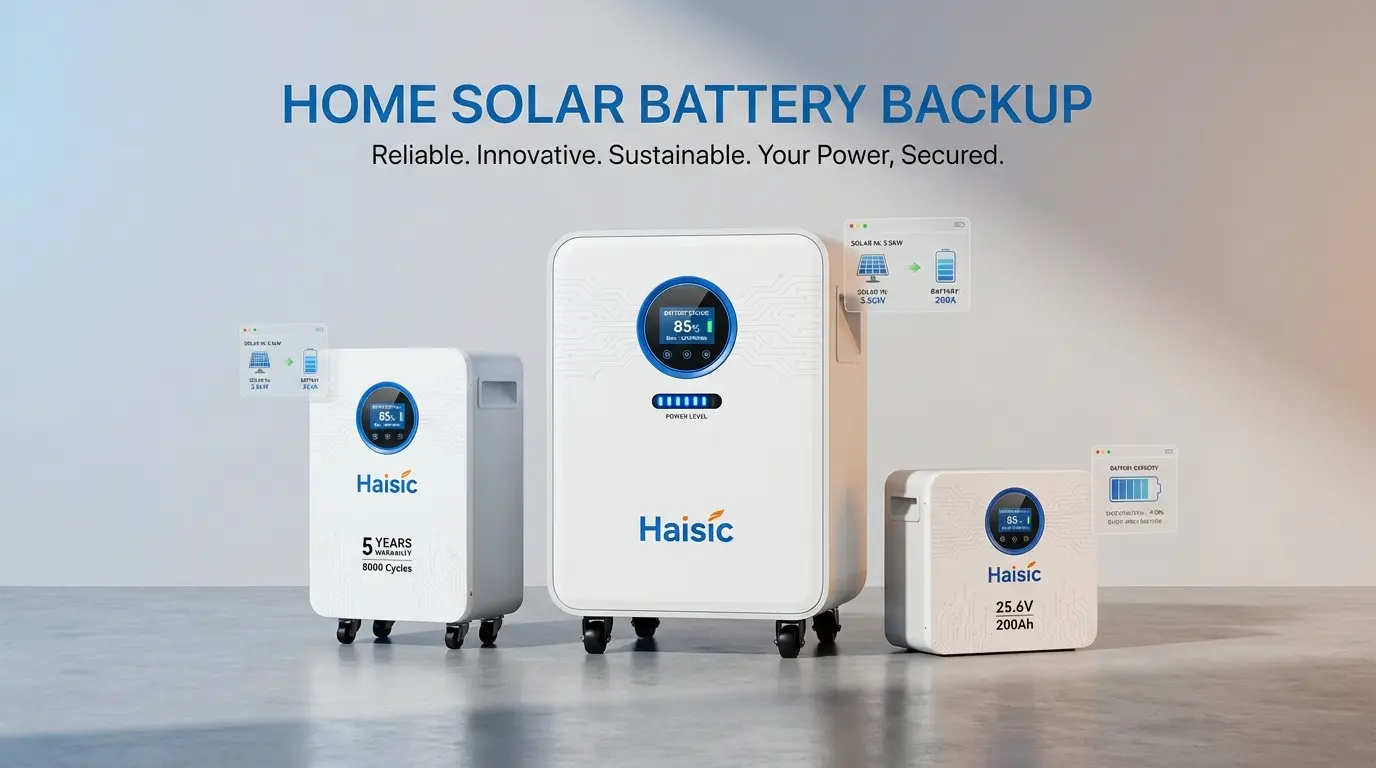
- Wall-Mounted \”Powerwall\” Units: These 5.12kWh or 10kWh units are perfect for residential homes with limited floor space. They are sleek, compact, and designed for easy installation, making them an ideal entry point for solar backup systems.
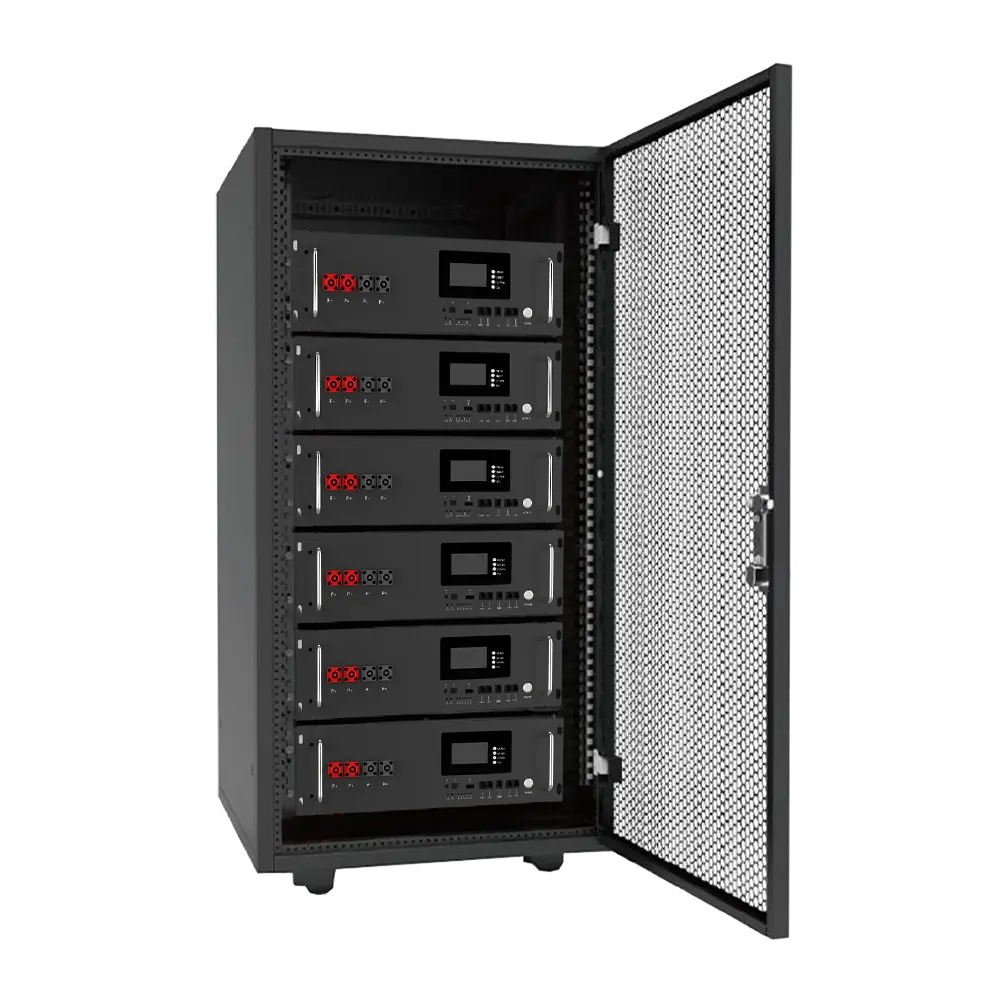
- Stackable Modular Systems: For those needing more power, the stackable low-voltage and high-voltage series allow you to expand capacity easily. You can start with a single module and stack more as your energy needs grow, without complex rewiring.
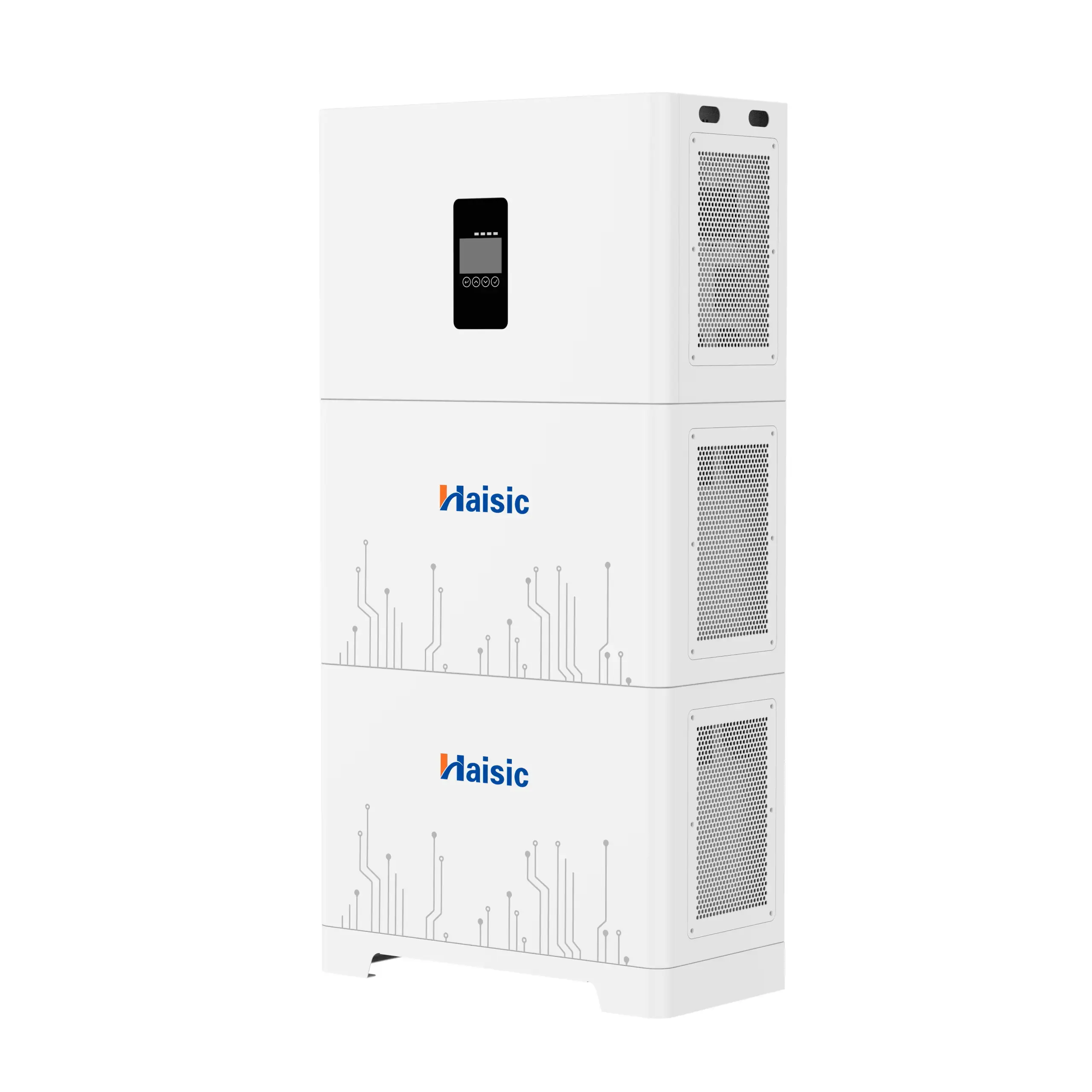
- All-in-One ESS: The 32kWh and high-voltage models integrate the hybrid inverter and battery into one cabinet, simplifying the setup for a truly seamless solar battery backup system for home use.
If you are unsure which configuration fits your specific load requirements, check out our guide on finding the best battery storage for solar to compare these models in detail.
FAQs About Home Solar Battery Backup
Investing in a home solar battery backup is a big decision, and it’s normal to have questions before pulling the trigger. Here are the answers to the three most common questions we get from homeowners looking to secure their energy future.
Can I Retrofit a Battery to My Existing Solar Panels?
Absolutely. This is one of the most popular ways to upgrade a system. You don\’t need to rip out your old panels to get storage. We call this \”AC coupling.\” Essentially, we add a battery inverter next to your existing solar setup. It takes the energy your panels are already producing and stores it instead of sending it all back to the grid.
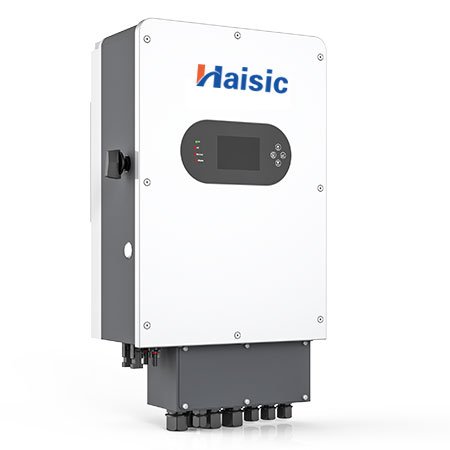
However, if your current inverter is aging, it might be smarter to swap it out for a modern hybrid unit. A high-quality hybrid solar inverter manages both your solar panels and your battery storage in one device, making the system more efficient and easier to monitor.
How Long Will a 10kWh Battery Actually Last During an Outage?
This is the million-dollar question. The honest answer depends entirely on what you turn on. A 10kWh battery holds a specific amount of energy, similar to a fuel tank.
Here is a realistic breakdown for a typical home during a blackout:
- Conservative Mode (Essentials Only): If you only run LED lights, the fridge, Wi-Fi, and charge phones, a 10kWh battery can easily last 24 to 36 hours.
- Comfort Mode (Moderate Use): If you add a TV, a computer, and use the microwave occasionally, expect about 10 to 12 hours of runtime.
- Heavy Load (AC/Heating): Running a central air conditioner or electric heater is a huge power drain. A 10kWh battery might only last 2 to 4 hours under these heavy loads.
For most families, 10kWh is the \”sweet spot\” to get through the night until the sun comes up to recharge the system.
Is LiFePO4 Safer Than Other Lithium Batteries?
Yes, without a doubt. We exclusively use LiFePO4 (Lithium Iron Phosphate) chemistry because safety is non-negotiable for residential energy storage.
Older lithium batteries (like NMC, used in phones and some EVs) are prone to thermal runaway—meaning if they get too hot, they can catch fire. LiFePO4 has a much stronger chemical bond. It is incredibly stable and resistant to high temperatures and physical impact. It essentially eliminates the risk of fire in your home, which is why it is the gold standard for a solar battery backup system.