










Understanding Solar Lithium Battery Banks
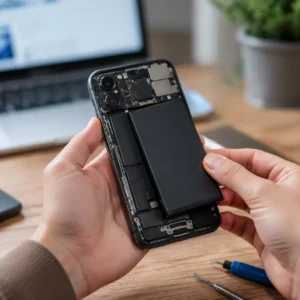
Are you tired of losing power when the grid goes down, or just want to stop wasting the excess energy your panels produce? That is exactly where a solar lithium battery bank comes into play. It is the heart of any modern energy system, bridging the gap between generation and usage.
What is a Lithium Solar Battery Bank?
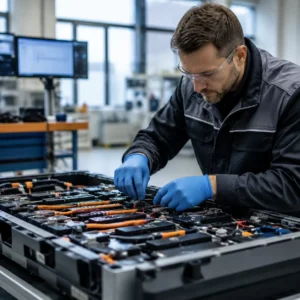
Simply put, a battery bank is a modular system. It combines multiple cells to achieve higher capacity and specific voltages to match your inverter. While we still see some small 12V setups, the industry is rapidly shifting toward 24V and robust 48V solar battery bank configurations for higher efficiency.
LiFePO4 vs. Generic Lithium-Ion
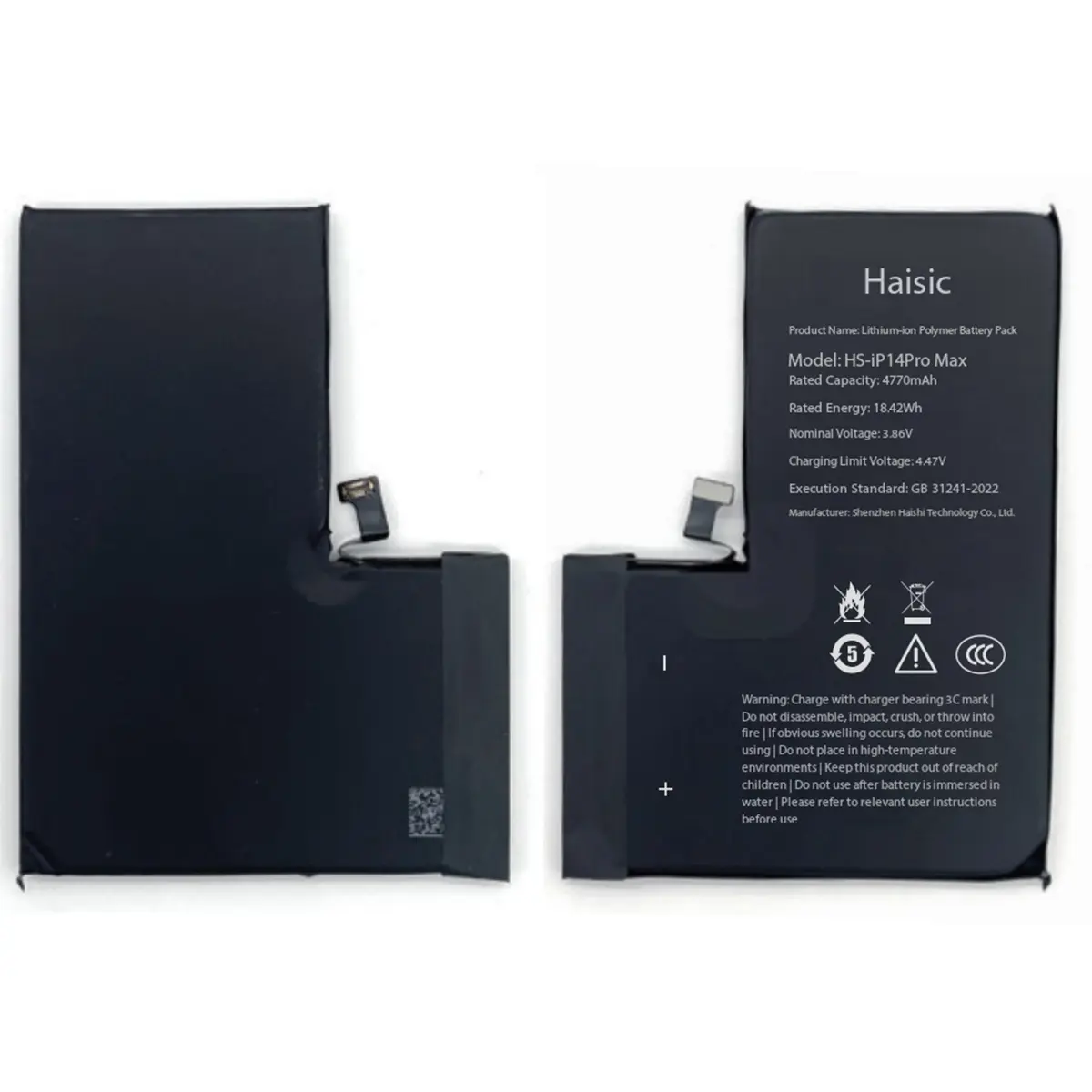
Not all lithium is created equal. When we talk about a lithium battery bank for solar, we focus on LiFePO4 solar battery (Lithium Iron Phosphate) technology. Unlike the volatile lithium-ion chemistry found in cell phones, Lithium iron phosphate storage is chemically stable, non-toxic, and built for the long haul. It is safer and lasts significantly longer than other lithium variants.
Where Can You Use Them?
We design these systems to be versatile. A lithium-ion battery bank for solar is perfect for:
- Home solar energy storage: Storing excess day power for night use.
- Whole-home backup: Keeping the lights on during grid outages.
- Off-grid lithium bank: Powering remote cabins completely independent of utility lines.
- Mobile Power: Reliable energy for RVs and marine applications.
- Hybrid Setups: seamlessly blending grid power with solar.
Would you like me to detail the specific safety features that make LiFePO4 superior to Lead-Acid in the next section?
Why Choose LiFePO4 Lithium Batteries for Solar Storage?
When building a robust solar lithium battery bank, the specific chemistry you choose dictates the system\’s longevity and safety. We advocate for Lithium Iron Phosphate storage (LiFePO4) as the gold standard for modern energy systems. Unlike older lithium-ion variants (like NMC used in electronics), LiFePO4 is engineered specifically for stationary power resilience.
Here is why LiFePO4 is the superior choice for your home or off-grid setup:
- Superior Safety: Safety is non-negotiable. LiFePO4 solar battery cells possess high thermal stability. They are chemically resistant to \”thermal runaway,\” meaning they do not carry the fire risks associated with cobalt-based lithium batteries.
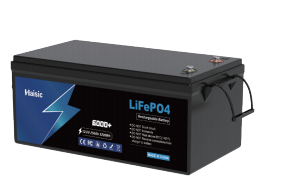
- Exceptional Cycle Life: This is where the long-term value lies. A high cycle life solar battery typically offers 4,000 to 8,000+ cycles. In real-world terms, that is 10 to 15 years of daily use. For instance, our 12.8V LiFePO4 battery packs with 6000+ cycle life are designed to perform reliably for over a decade.
- High Depth of Discharge (DoD): You get to use the capacity you paid for. While lead-acid batteries fail if drained below 50%, a deep cycle lithium battery allows for 90–100% depth of discharge without degrading the cell\’s health.
- Maximum Efficiency: These batteries boast a round-trip efficiency of 95% or higher. They charge faster and waste significantly less energy during the storage process compared to traditional options.
- Eco-Friendly and Maintenance-Free: LiFePO4 technology requires zero maintenance—no watering, no corrosion, and no hazardous gas venting. They are also free from toxic heavy metals like lead and cadmium.
Lithium vs. Lead-Acid Battery Banks: A Direct Comparison
When you are designing a storage system, the upfront price tag on old-school lead-acid batteries can look tempting. However, experienced solar users know that the initial cost is deceptive. A solar lithium battery bank is almost always the smarter financial move when you look at the total cost of ownership.
While lead-acid technology has been around for over a century, modern LiFePO4 solar battery technology blows it out of the water in terms of efficiency and longevity. You aren\’t just buying a battery; you are buying usable energy over time.
The Breakdown: Lead-Acid vs. Lithium
Here is how the numbers stack up when you compare a traditional setup against a modern lithium-ion battery bank for solar:
| Feature | Lead-Acid (AGM/Flooded) | Lithium (LiFePO4) |
|---|---|---|
| Lifespan | 300–500 cycles (3–5 years) | 4,000–8,000+ cycles (10–15+ years) |
| Usable Capacity (DoD) | Only 50% (to prevent damage) | 90–100% Usable |
| Weight & Size | Heavy, bulky, hard to move | Lightweight (1/3 the weight), compact |
| Maintenance | Requires water checks (flooded) | Zero Maintenance |
| Cost Efficiency | Low upfront, high replacement cost | Lowest cost per kWh over lifetime |
Why Lithium Wins on Long-Term Value
The math is simple. You would likely need to replace a lead-acid bank 3 to 4 times within the lifespan of a single solar lithium battery bank. With lead-acid, you are also dragging around dead weight—literally. Because you can only discharge lead-acid batteries to 50%, you need to buy twice the rated capacity to get the same usable energy as a lithium solar battery.
For homeowners and off-grid enthusiasts, switching to lithium means you stop worrying about maintenance schedules or voltage sag. You get a \”set it and forget it\” system that handles deep discharges daily without complaining. Whether you are upgrading a 12V system or building a massive 48V bank, a high-quality 12V lithium solar battery offers superior reliability in a much smaller footprint.
Key Features to Look for in a 2026 Solar Lithium Battery Bank
As we move into 2026, buying a battery isn\’t just about capacity; it\’s about intelligence and build quality. When I evaluate a solar lithium battery bank, I focus on features that ensure safety, ease of use, and long-term value. You shouldn\’t settle for basic storage when modern technology offers so much more.
The \”Brain\” of the System: Advanced BMS
The Battery Management System (BMS) is non-negotiable. A high-quality BMS protected lithium bank monitors every single cell. It prevents overcharging, over-discharging, and critically, it balances the cells to ensure the battery lasts for thousands of cycles. If the BMS isn\’t smart, the battery isn\’t safe.
Form Factors and Expandability
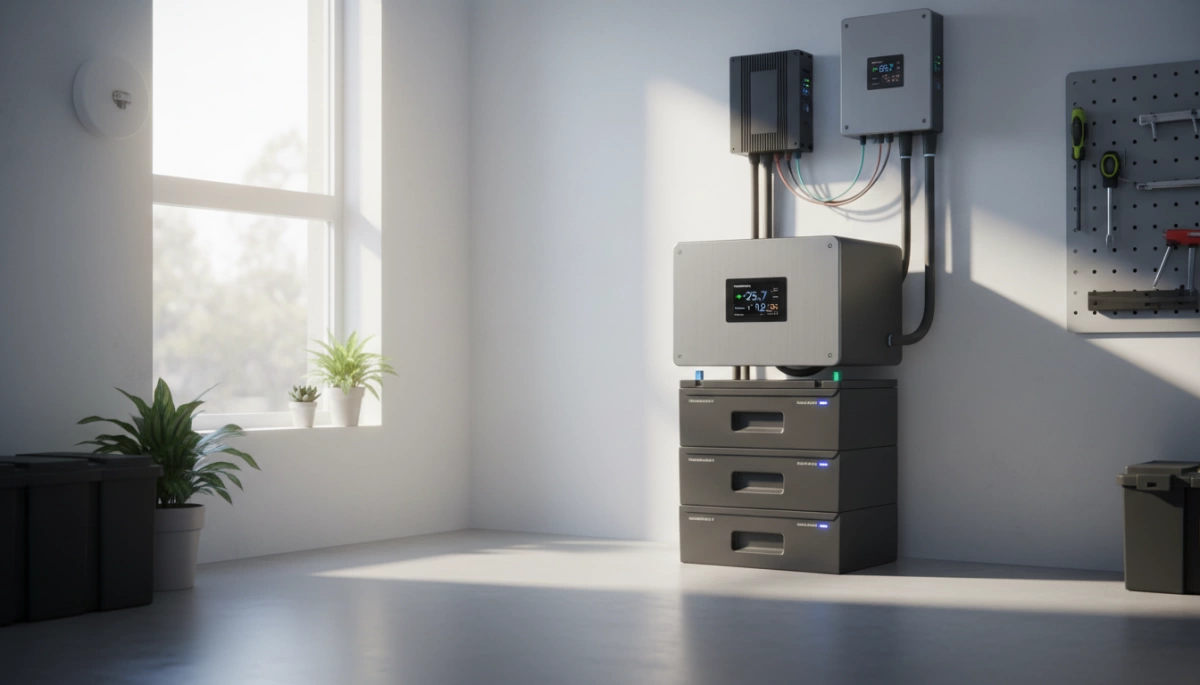
Your energy needs today might not match your needs in five years. I always recommend a modular solar storage system that allows you to start small and grow.
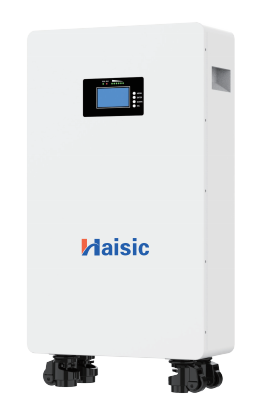
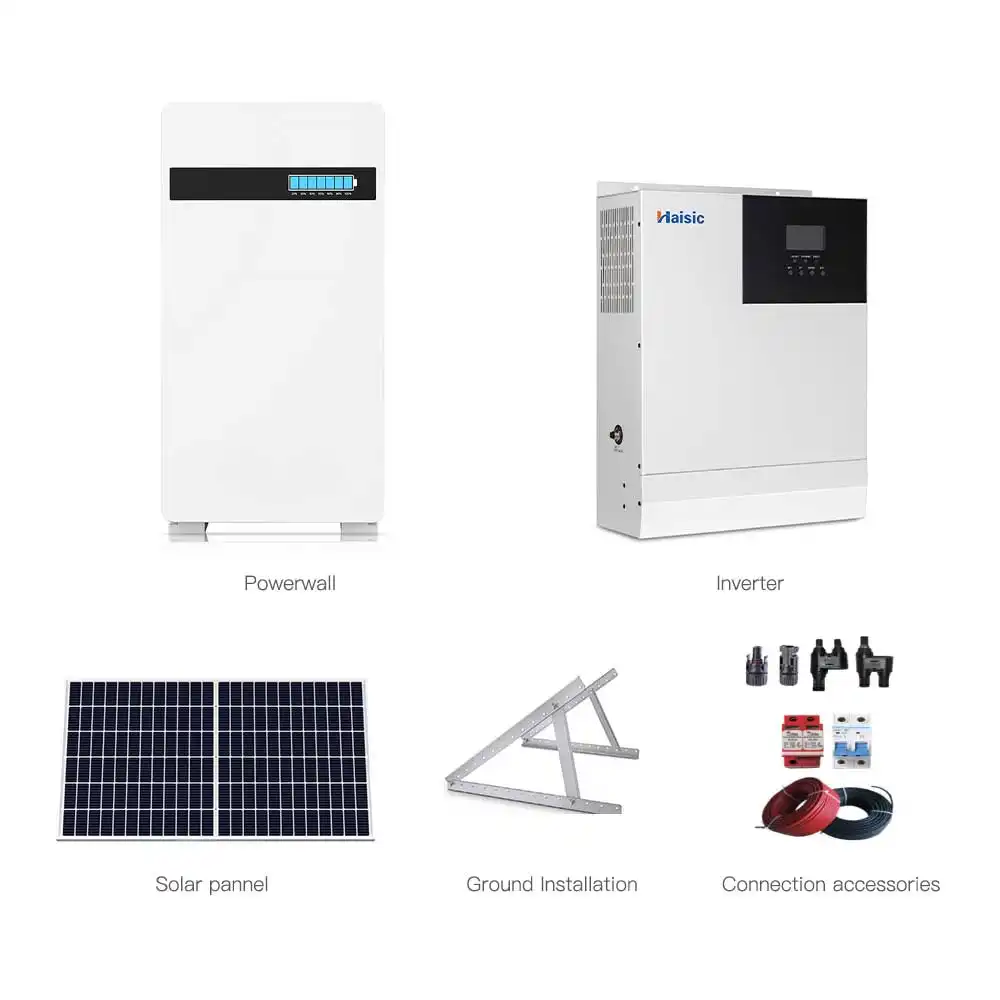
- Wall Mount: Great for saving floor space in garages (similar to a Powerwall).
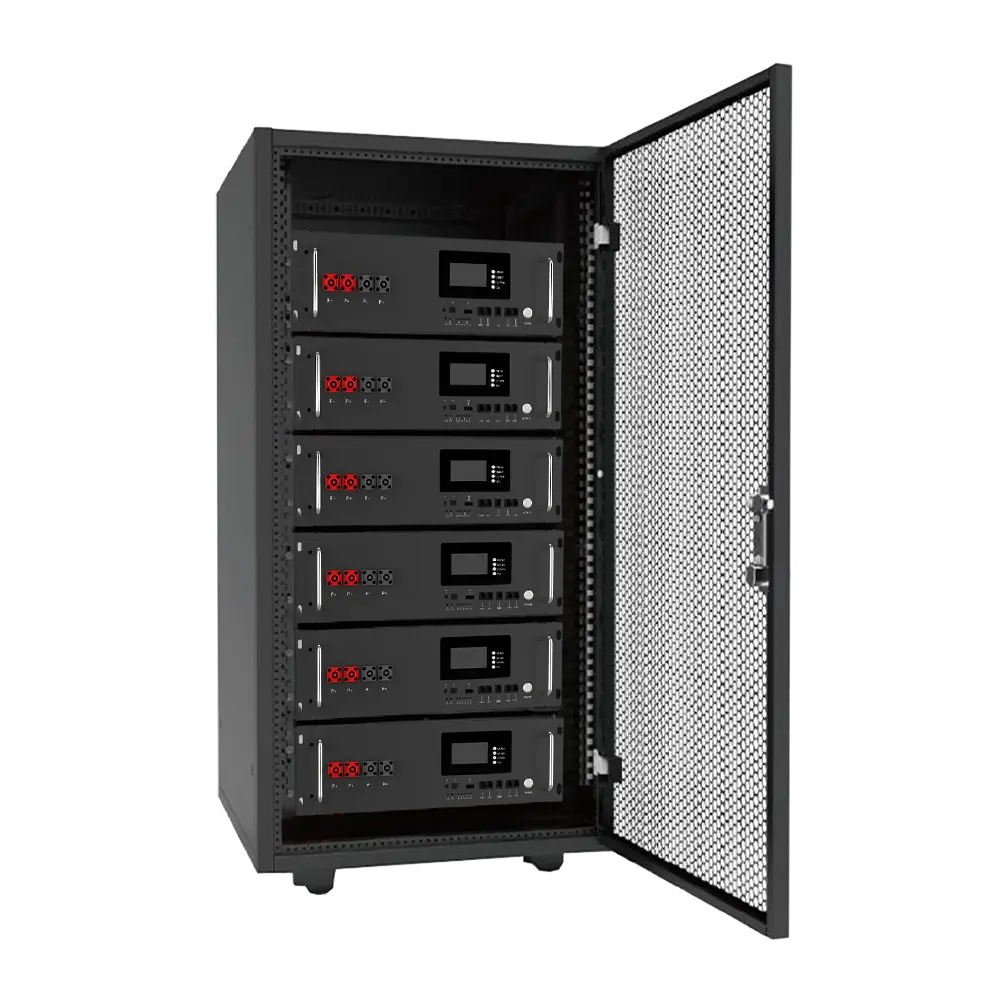
- Server Rack: The standard for off-grid enthusiasts. A server rack lithium battery is easily stackable and keeps wiring clean.
Seamless Inverter Compatibility
Hardware needs to communicate. The best lithium units feature closed-loop communication (CAN/RS485) with major inverter brands like Victron, Growatt, or Sol-Ark. When your battery talks directly to a modern hybrid solar inverter, charging is more efficient, and monitoring becomes effortless.
Essential Specs for 2026
Here is a quick checklist of what your next LiFePO4 solar battery must have:
| Feature | Why It Matters |
|---|---|
| Self-Heating Function | Allows charging in freezing temperatures (essential for cold climates). |
| IP65/IP67 Rating | Dust and water resistance for installation versatility. |
| 10+ Year Warranty | signals high-grade cells and manufacturer confidence. |
| Smart Monitoring | Bluetooth or WiFi apps to check state-of-charge (SoC) instantly. |
Choosing a lithium solar battery bank with these specs ensures you aren\’t just buying a battery, but a reliable energy asset for your home.
Would you like me to help you calculate the exact capacity needed for your specific daily energy load?
How to Size Your Solar Lithium Battery Bank
Getting the size right is the most critical step in building a reliable energy system. If your solar lithium battery bank is too small, you will face power cuts; if it\’s too big, you are wasting money on unused capacity. To find that sweet spot, we need to look at your consumption, your goals, and the unique efficiency of lithium technology.
Step-by-Step Sizing Guide
To calculate the perfect capacity, follow this logical flow:
- Calculate Daily Energy Needs: Check your electricity bill or use a watt meter to determine how many kilowatt-hours (kWh) you consume in 24 hours.
- Determine Days of Autonomy: How many days do you need to run without any sun? For a grid-tied home, 1 day might be enough. For an off-grid lithium bank, we usually recommend 2–3 days to weather a storm.
- Factor in Depth of Discharge (DoD): Unlike lead-acid batteries, a LiFePO4 solar battery allows you to use 80% to 100% of its rated capacity safely.
The Sizing Formula
Use this simple formula to determine the total battery capacity you need:
Required Capacity (kWh) = (Daily Load × Days of Autonomy) ÷ Depth of Discharge (0.9)
For example: If you use 10 kWh a day and want 2 days of autonomy with a lithium bank (90% DoD):
$$(10 times 2) div 0.9 = 22.2 text{ kWh}$$
Common System Setups
We see a few standard configurations that work for most users:
- Partial Home Backup (10–20 kWh): Ideal for keeping lights, internet, and fridges running during an outage. A robust 5kW power energy storage solar system for home paired with a modular battery bank is often the perfect entry point for residential resilience.
- Full Off-Grid (30–50+ kWh): Required for complete independence, powering HVAC systems, pumps, and appliances.
- Commercial/Large Scale: Systems exceeding 100 kWh for business operations.
Tools and Seasonal Factors
Always check your local \”peak sun hours\” for winter. In December, you generate significantly less power, so your lithium battery bank for solar needs to be large enough to bridge those longer gaps in production. Using online PV calculators can help verify if your solar array is large enough to actually refill the battery bank you are planning to build.
Installation and Integration of Your Solar Lithium Battery Bank
Getting the best performance out of your solar lithium battery bank isn\’t just about picking the right cells; it’s about how they connect to the rest of your system. Whether you are retrofitting an existing solar array or building a new off-grid sanctuary, the installation strategy dictates your efficiency and reliability.
DC vs. AC Coupling
The first major decision is how your battery interacts with your solar panels.
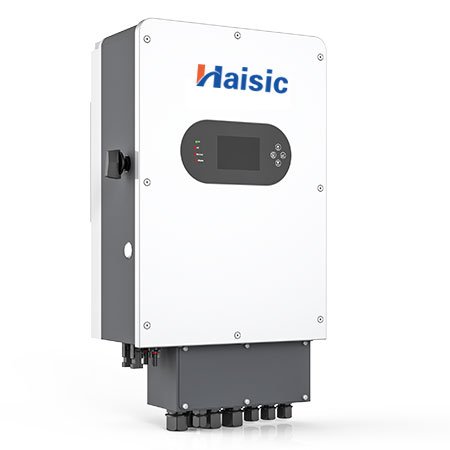
- DC Coupling: This is generally more efficient for off-grid and hybrid setups. The DC power from your panels goes directly to the battery via a charge controller before being converted to AC for your home. Using a modern 6-12kW IP65 hybrid solar inverter simplifies this by managing solar input, battery charging, and grid connection in a single unit.
- AC Coupling: If you already have a grid-tied solar system, AC coupling is often the standard path. It involves adding a separate battery inverter to your existing setup. While flexible, it is slightly less efficient due to multiple power conversions.
Scalability and Future-Proofing
One of the best features of a scalable LiFePO4 system is modularity. You don\’t always need to buy your ultimate capacity on day one.
- Parallel Connections: Most homeowners connect batteries in parallel to increase the total amp-hour (Ah) capacity—and therefore energy storage—while keeping the voltage (e.g., 48V) the same.
- Series Connections: Used less frequently for pre-built packs, this increases voltage. Always check the manufacturer\’s BMS ratings before attempting this.
- Growth Plan: Ensure your inverter and rack space can handle additional units later. A modular solar storage system allows you to start with 10kWh and expand to 30kWh+ as your energy needs grow.
Safety and Wiring Best Practices
While an off-grid lithium bank is significantly safer and requires less maintenance than lead-acid (no venting required), installation standards must remain high.
- Proper Wiring: Undersized cables create resistance and heat. Always use heavy-gauge battery cables appropriate for your system\’s current amperage.
- Protection: Every home solar energy storage setup needs proper fusing and circuit breakers between the battery bank and the inverter to prevent overcurrent damage.
- DIY vs. Pro: Plug-and-play server rack batteries are DIY-friendly, but high-voltage wiring should be handled or inspected by a professional to ensure code compliance.
Real-World Performance
Correct integration creates seamless power continuity. In a real-world scenario, such as a grid outage, a well-integrated system switches to battery power in milliseconds. For those living remotely and relying on a complete 10kW off-grid solar power system, this reliability means the difference between a functioning home and a blackout. Whether it is keeping the fridge running during a storm or powering a remote cabin, the installation quality is what guarantees that power is there when you flip the switch.
Haisic Solar Lithium Battery Banks: Built for Performance and Reliability
At Haisic, we don\’t just assemble batteries; we engineer complete energy solutions. Our solar lithium battery bank lineup is designed specifically to meet the rigorous demands of modern energy storage, using high-grade LiFePO4 (Lithium Iron Phosphate) prismatic cells. We know that when you go off-grid or need backup power, you aren\’t looking for a science experiment—you need equipment that works every single time.
Engineered for the Long Haul
We focus on durability and safety above all else. Unlike generic options, every Haisic battery includes a robust, intelligent BMS (Battery Management System) that actively monitors cell voltage and temperature to prevent overcharging or thermal issues.
Here is what sets our LiFePO4 solar battery systems apart:
- Modular Design: Our systems are scalable. You can easily expand your capacity with a 51.2V 100Ah LiFePO4 stackable energy storage battery, allowing your bank to grow alongside your energy needs.
- Seamless Integration: We ensure our units communicate effectively with popular inverters, making installation a breeze.
- Direct Support: As the manufacturer, we stand behind our products with long warranties and direct technical support.
Real-World Power Applications
Whether you are running a remote cabin or managing a suburban home with solar, efficiency matters. Our systems are built to handle deep discharge cycles daily without degrading quickly. For households with higher consumption demands, our 15kWh LiFePO4 solar battery pack provides the substantial energy density required for reliable whole-home backup, ensuring your lights stay on even when the grid goes down.
Cost Analysis: Is a Solar Lithium Battery Bank Worth It?

When you first look at the price tag of a modern solar lithium battery bank, it might seem steep compared to traditional lead-acid options. However, focusing solely on the initial purchase price is a financial mistake. As an industry insider, I always tell my clients to calculate the \”Levelized Cost of Storage\” (LCOS). While a LiFePO4 solar battery costs more upfront, its superior lifespan transforms that cost into significant long-term savings.
Here is the reality of the investment:
- Longevity: You would likely need to buy 3 to 4 sets of lead-acid batteries to match the lifespan of a single Lithium iron phosphate storage system.
- Usable Capacity: Lithium allows you to use nearly 100% of the rated capacity, whereas lead-acid limits you to 50%. You are effectively buying double the usable energy.
- Efficiency: With higher round-trip efficiency, you waste less of the solar power you generate.
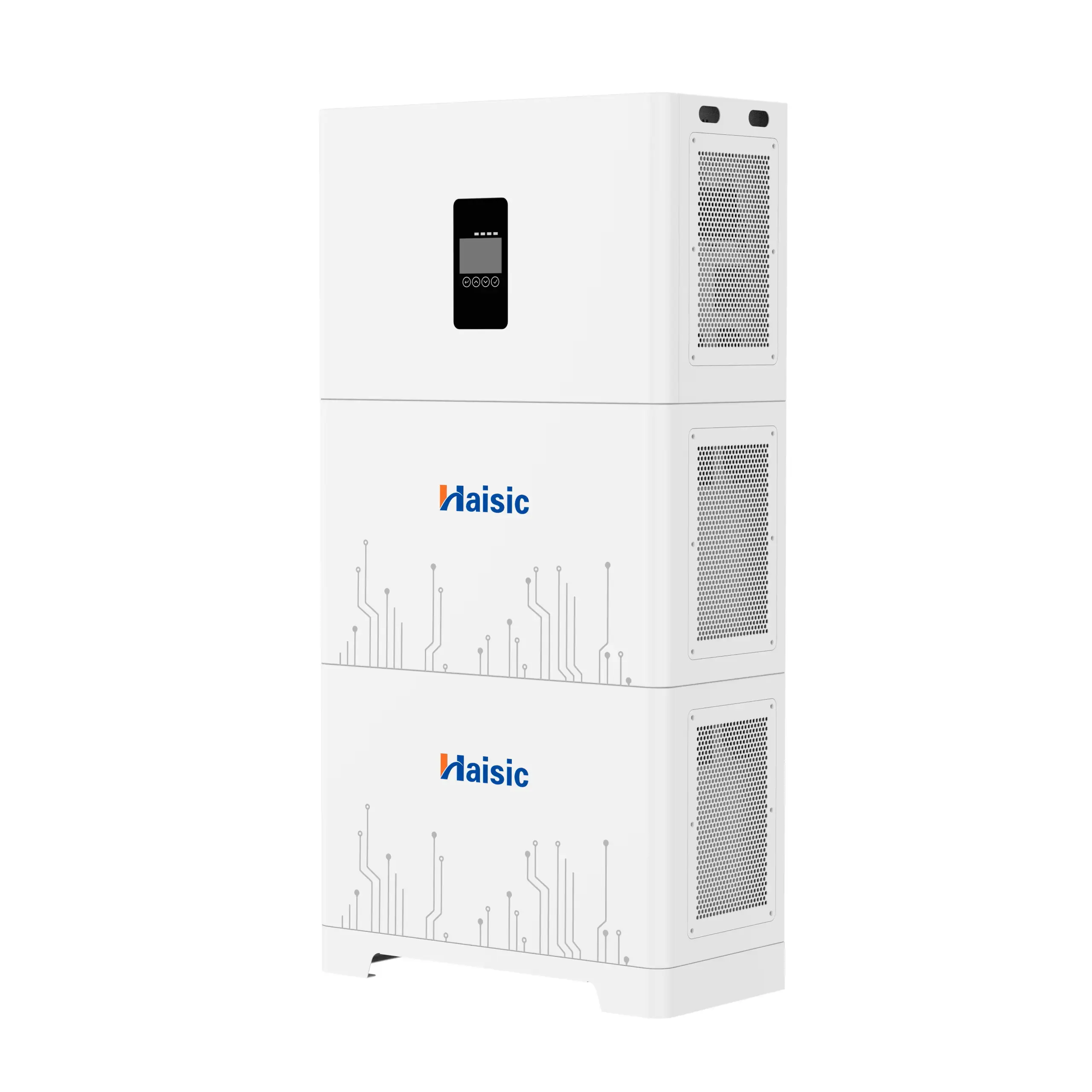
Investing in a robust unit, such as our 10240Wh touchscreen energy storage system, ensures you have a durable asset that outlasts its payback period, providing free energy storage for years after the system has paid for itself.
ROI and Financial Incentives
The Return on Investment (ROI) for home solar energy storage is accelerating. In many regions, the gap between what utilities charge for electricity and what they pay you for solar exports is widening. Storing your own power avoids peak grid rates. Furthermore, governments globally are offering substantial incentives.
Common Financial Perks:
- Federal Tax Credits: Many countries offer credits (like the 30% ITC in the US) that directly reduce the cost of the hardware.
- State/Local Rebates: Cash-back programs for installing off-grid lithium bank systems or grid-tied storage.
- Property Value Increase: Homes equipped with a reliable solar backup battery bank often see an increase in resale value.
Lifetime Cost Comparison
To visualize the savings, look at the total cost over a 10-year period for a typical residential setup:
| Feature | Lead-Acid AGM Bank | Solar Lithium Battery Bank (LiFePO4) |
|---|---|---|
| Initial Cost | Low | High |
| Replacements (10 Years) | 2-3 Times | None |
| Maintenance Cost | Moderate | Zero |
| Usable Energy | ~50% | ~95% |
| Total 10-Year Cost | Higher (due to replacements) | Lower (One-time investment) |
By choosing a lithium battery bank for solar, you are essentially prepaying for a decade of reliable energy at a fixed rate, protecting yourself from rising utility costs.
Would you like me to draft the \”Frequently Asked Questions\” section next to address common concerns about lifespan and safety?
Frequently Asked Questions About Solar Lithium Battery Banks
We know that investing in energy storage is a big decision. Over the years, we have fielded countless questions from homeowners and off-grid enthusiasts. Here are the answers to the most common inquiries regarding solar lithium battery banks.
How long do solar lithium battery banks last?
Unlike older lead-acid units that might struggle to hit 5 years, a high-quality LiFePO4 solar battery is built for the long haul. You can typically expect a lifespan of 10 to 15 years, depending on usage.
- Cycle Life: Most of our units offer 4,000 to 8,000+ cycles at 80% Depth of Discharge (DoD).
- Daily Use: Even if you cycle the battery daily, that mathematical lifespan extends well over a decade.
- Degradation: After those cycles, the battery doesn\’t just die; it simply holds slightly less charge (usually around 80% of original capacity).
Can I expand my bank later?
Absolutely. One of the biggest advantages of a scalable LiFePO4 system is modularity. You don\’t need to buy your entire lifetime capacity upfront.
- Parallel Connection: You can add more batteries in parallel to increase your total amp-hour capacity (storage size) while keeping the voltage the same.
- Matching: For the best performance, we recommend adding batteries of the same brand, voltage, and capacity within a reasonable timeframe (usually 6-12 months) to ensure the cells age together evenly.
Are LiFePO4 batteries safe for home use?
Safety is the number one priority when we design lithium iron phosphate storage. LiFePO4 chemistry is chemically stable and inherently safer than other lithium-ion variants (like Lithium Cobalt Oxide).
- No Thermal Runaway: These batteries are extremely resistant to overheating and do not catch fire or explode under normal operating conditions.
- BMS Protection: Every BMS protected lithium bank we offer includes a Battery Management System that actively monitors temperature, voltage, and current to prevent issues before they happen. This makes them ideal when installing comprehensive battery storage for home systems.
What is the best voltage for solar systems?
The \”best\” voltage depends on your energy requirements.
- 12V: Good for small RVs, boats, or very small cabins.
- 24V: A sweet spot for medium-sized off-grid setups. If you have moderate power needs, a 25.6V 200Ah lithium battery is highly efficient and keeps wiring costs down compared to 12V.
- 48V: The industry standard for a whole-home solar lithium battery bank. A 48V solar battery bank is more efficient for running high-power appliances (AC, dryers, pumps) because it requires less current (amps) to deliver the same amount of power, reducing heat and wiring size.
How do I maintain a lithium battery bank?
This is the best part: you mostly don\’t. A deep cycle lithium battery requires virtually no active maintenance.
- No Watering: Unlike flooded lead-acid, there are no fluids to top up.
- No Equalization: The BMS handles cell balancing automatically.
- Simple Check: Just ensure your terminal connections remain tight and clean, and check the state of charge occasionally via your monitoring app.