
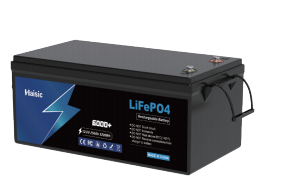

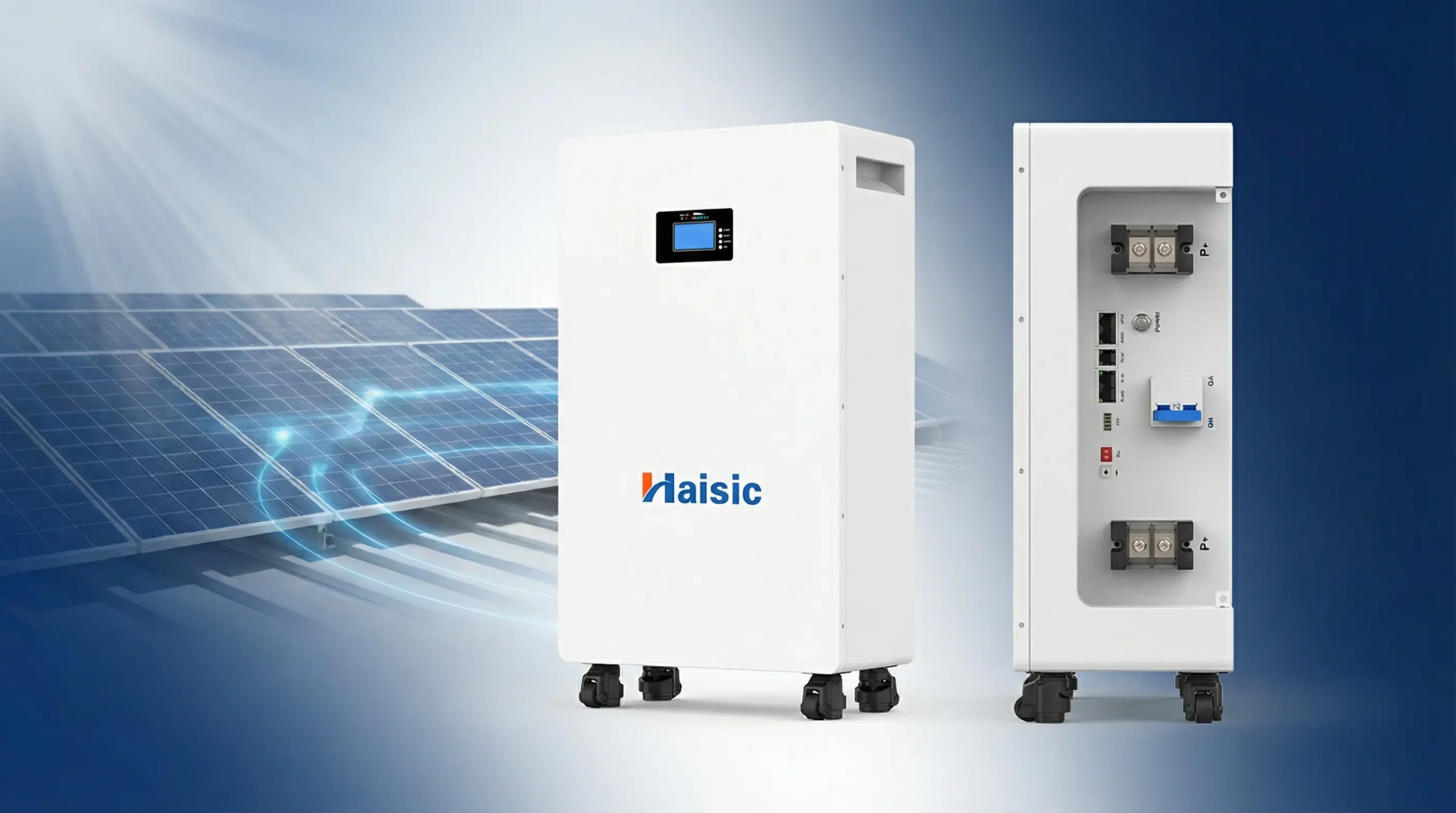
Why LiFePO4 is the Best Lithium Ion Battery for Solar Power Storage
Choosing the right chemistry for your home isn\’t just about price; it\’s about sleeping soundly while your house runs on stored sun. While various lithium technologies exist, LiFePO4 (Lithium Iron Phosphate) has emerged as the undisputed gold standard for stationary solar storage.
LiFePO4 vs. NMC: Prioritizing Home Safety
Most electric vehicles use NMC (Nickel Manganese Cobalt) because it’s lightweight. However, for a lithium ion battery for solar storage fixed in your garage or basement, weight matters less than thermal stability.
- Thermal Runaway: LiFePO4 has a significantly higher thermal runaway threshold. It is inherently non-combustible, making it the safest choice for indoor installations.
- Chemical Stability: The phosphate-based cathode is physically sturdier, resisting the structural degradation that occurs during repeated charging.
| Feature | LiFePO4 (Our Standard) | NMC (Standard EV Battery) |
|---|---|---|
| Safety Profile | Extremely Stable | Risk of Thermal Runaway |
| Cycle Life | 6,000 – 8,000+ | 1,000 – 2,000 |
| Toxicity | Non-toxic / Cobalt-free | Contains heavy metals |
8,000 Cycles: The 15-Year Longevity Breakdown
The most significant advantage of our lithium battery for solar power storage is the lifespan. While traditional lead-acid batteries fail after 500–1,000 cycles, our LiFePO4 cells are engineered for 6,000 to 8,000 cycles.
- Daily Service: At one full cycle per day, 8,000 cycles represent over 20 years of potential service.
- The Haisic Advantage: We optimize our BMS to ensure that even after 15 years of daily use, your system maintains roughly 80% of its original capacity.
- True ROI: By eliminating the need for replacements every few years, the cost per kWh over the battery\’s life is lower than any other technology on the market.
By focusing on LiFePO4 chemistry, we provide a lithium ion battery for solar energy storage that balances high-end performance with the peace of mind that your home energy system is built to last decades.
Essential Specs for Your Lithium Ion Battery for Solar Power Storage
When you’re investing in a lithium ion battery for solar power storage, the spec sheet can look like alphabet soup. To get the best ROI, I focus on three \”make or break\” metrics that determine how much power you actually get to use and how well it handles your home\’s heavy hitters.
Depth of Discharge (DoD): The \”Usable Power\” King
Most people buy a 10kWh battery and assume they get 10kWh of power. With old-school tech, that\’s a mistake. Lead-acid usually limits you to 50% to avoid damage. Our LiFePO4 systems offer a 90%–100% DoD. This means if you buy 10kWh, you actually use 10kWh. Understanding whether li-ion or lead-acid batteries are better for home energy storage comes down to this usable capacity; lithium wins every time by providing more energy in a smaller footprint.
| Metric | Why It Matters | Our Standard |
|---|---|---|
| Depth of Discharge | Total energy you can safely drain | 90% – 100% |
| Round-Trip Efficiency | Energy kept after charging/discharging | 95%+ |
| C-Rating | Ability to power high-surge appliances | 0.5C – 1.0C |
Efficiency and Surge Performance
- Round-Trip Efficiency: Think of this as the \”tax\” you pay to store energy. Every time you move power into and out of a lithium ion battery for solar storage, you lose a little. I ensure our units hit 95%+ efficiency, so you aren\’t wasting the free sun power you worked hard to collect.
- C-Rating: This is about speed. If you want to run a heavy AC unit or a well pump, you need a battery that can discharge quickly without tripping. A 1C rating means the battery can discharge its full capacity in one hour—essential for handling those high-surge moments.
When calculating the cost of a backup battery for a residential solar system, these technical metrics are what separate a cheap toy from a professional-grade energy solution. Don\’t just look at the price tag; look at the Energy Density and discharge capabilities to ensure your home stays powered when the grid fails.
Modular and Stackable Lithium Ion Battery for Solar Power Storage
Choosing the right architecture is just as important as the chemistry itself. We design our systems to be flexible, whether you are a DIY enthusiast building a custom setup or a homeowner looking for a plug-and-play solution. A modern lithium ion battery for solar power storage should adapt to your life, not the other way around.
Server Rack Batteries: The Professional Choice
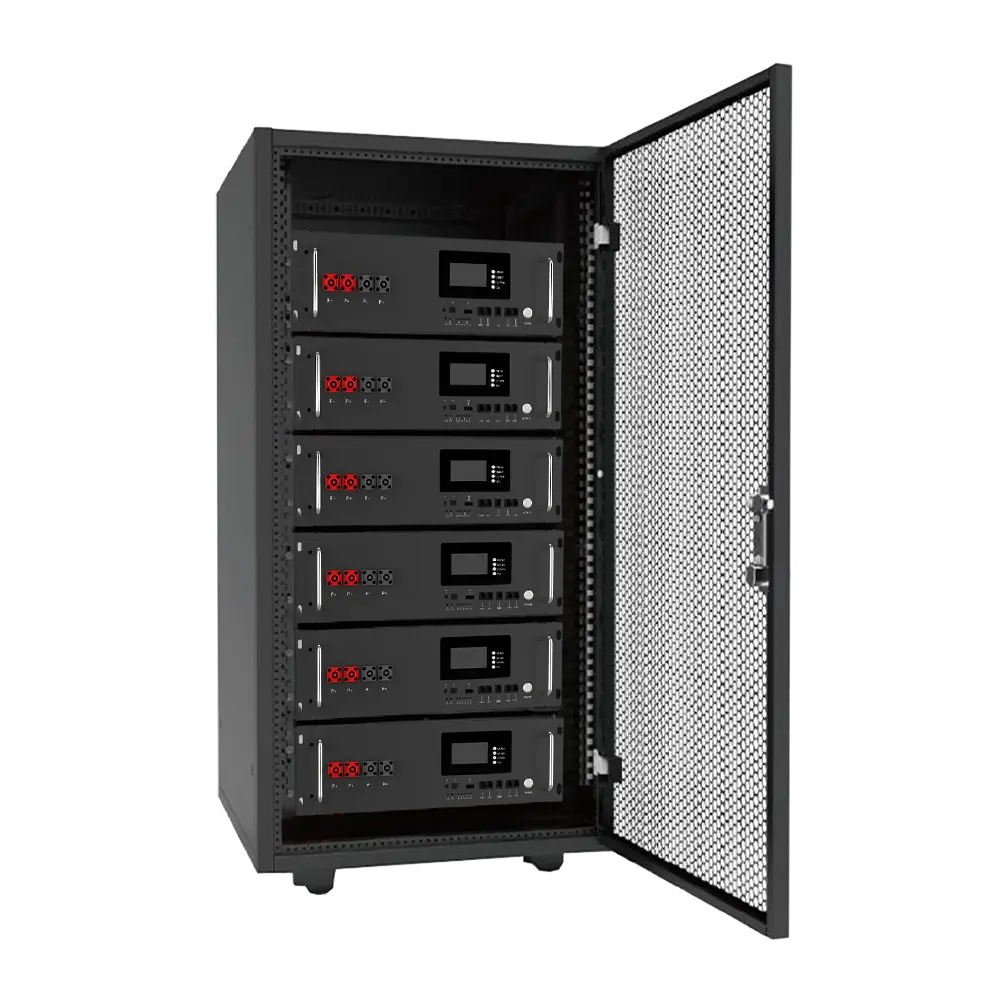
For those who prioritize organization and scalability, server rack batteries are the industry gold standard. These units slide into standard 19-inch racks, making them the preferred off-grid energy storage solution for tidy, professional-grade installs. When you build a home battery backup system using our rack-mounted modules, you gain a centralized hub that is easy to cool, maintain, and expand without messy wiring.
High-Voltage vs. 48V Low-Voltage
The architecture you choose depends heavily on your specific power needs and your existing equipment:
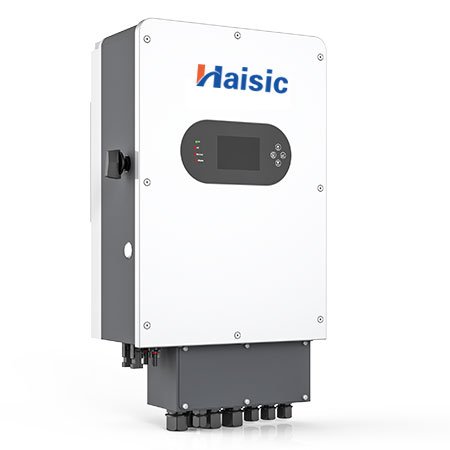
- 48V Low-Voltage (LV): The most common choice for residential solar. It is safer to handle for DIYers and offers massive compatibility. If you are using a 5kW-6kW off-grid solar inverter, a 48V system is usually the most seamless fit.
- High-Voltage (HV): Ideal for large-scale properties or rapid charging/discharging. HV systems reduce current flow, which allows for thinner wiring and higher efficiency over long distances, though they require specialized installation.
Stackable ESS: Start Small, Grow Big
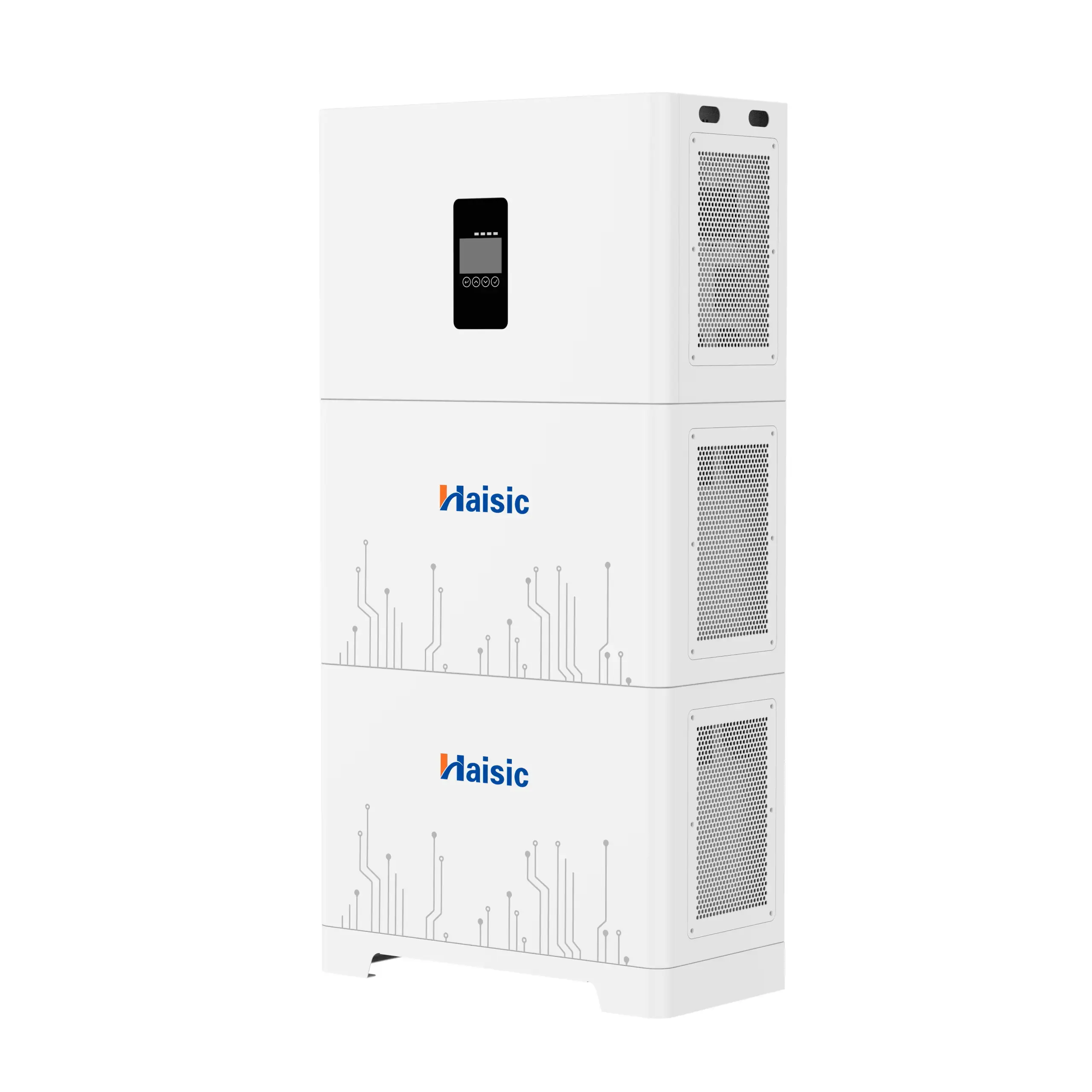
Our Scalable Energy ESS (Energy Storage System) is built for the \”start small\” philosophy. You don\’t need to pay for 30kWh of storage upfront if your current needs only demand 5kWh.
| Feature | Stackable Battery Modules | Traditional Fixed Systems |
|---|---|---|
| Initial Investment | Low (Start with 1 module) | High (Fixed capacity) |
| Installation | Tool-free \”Click\” stacking | Complex wiring |
| Expansion | Up to 30kWh+ | Often impossible |
| Footprint | Vertical and compact | Bulky and wide |
By using modular designs, we ensure that as your energy consumption grows—perhaps by adding an EV charger or more solar panels—your lithium ion battery for solar storage grows with you. Simply stack a new module on top of the existing ones to increase your capacity instantly.
The Intelligence Factor: Smart BMS & Integration
I believe a lithium ion battery for solar power storage is only as reliable as the brain managing it. To ensure your system runs at peak performance without constant manual oversight, I\’ve integrated advanced intelligence into every unit.
The Role of the Smart BMS
The Battery Management System (BMS) is the heartbeat of the unit, acting as the ultimate safeguard for your investment. It provides real-time protection by monitoring:
- Overcharge & Over-discharge: It stops the flow before voltage levels can cause permanent cell damage.
- Thermal Protection: It automatically regulates or shuts down the system during dangerous temperature spikes.
- Cell Balancing: It ensures every cell in the pack charges and discharges evenly, which is crucial for maximizing your total cycle life.
Seamless Inverter Synergy
A lithium battery for solar power storage must communicate perfectly with your power electronics. Our technology is designed for plug-and-play Solar Inverter Compatibility with industry leaders to ensure a \”set it and forget it\” experience.
| Brand | Communication Protocol | Status |
|---|---|---|
| Victron Energy | CAN / RS485 | Fully Integrated |
| Sol-Ark | CAN Bus | Plug & Play |
| Growatt / Deye | RS485 / CAN | Seamless Sync |
Remote Monitoring & Real-Time Data
I’ve prioritized visibility so you are never in the dark about your energy levels. By utilizing Bluetooth connectivity and Cloud-based apps, you can track your lithium ion battery for solar storage directly from your smartphone.
- Live Metrics: Check your State of Charge (SoC) and voltage in real-time.
- Health Alerts: Receive instant notifications if the BMS detects an anomaly.
- History Logs: Review your energy usage patterns to optimize your off-grid performance.
Beating the Cold: Lithium Performance in Freezing Climates
Why Standard Lithium Fails in the Cold
Standard lithium ion battery for solar power storage systems often struggle when the mercury drops. The physics is simple: charging a LiFePO4 battery below $0^circtext{C}$ ($32^circtext{F}$) causes \”lithium plating\” on the anode. This doesn\’t just reduce efficiency; it can cause permanent internal damage and drastically shorten the battery\’s lifespan. For homeowners in northern climates, this used to mean bulky insulation or expensive heated enclosures.
Haisic’s Innovation: Integrated Self-Heating
We have eliminated the cold-weather headache by building intelligent self-heating technology directly into our battery architecture. Instead of the battery simply shutting down when it gets cold, our system uses the incoming solar current to warm the cells to a safe operating temperature before allowing the charging process to begin.
- Automatic Thermal Management: The Smart BMS detects when the internal temperature is too low and activates the heating pads using minimal energy.
- Operating Range: Our batteries maintain peak performance and can safely charge even in ambient temperatures as low as $-20^circtext{C}$.
- True Winter Resilience: This ensures your battery to run a house remains fully operational during winter storms and prolonged freezing spells.
By solving the temperature bottleneck, we’ve made the lithium ion battery for solar energy storage a viable year-round solution for any geographic location. Whether you are installing a 25.6V 100Ah powerwall in a garage or an off-grid cabin, our self-heating modules guarantee that your power stays on when the temperature drops.
Economic Analysis: Total Cost of Ownership (TCO)
When you look at the price tag of a lithium ion battery for solar power storage, it’s easy to focus only on the upfront cost. But as a manufacturer, I always tell our clients to look at the \”Cost per kWh\” over the battery\’s entire life. This is where the real savings happen.
Upfront Cost vs. Lifetime Value
While lead-acid batteries seem cheaper on day one, they are a financial trap for long-term users. Lead-acid typically lasts 2–3 years and only allows a 50% depth of discharge. In contrast, our LiFePO4 systems provide 10–15 years of daily use. Over a 10-year horizon, you would replace a lead-acid bank at least three times, making the Lead-Acid vs. Lithium ROI clearly favor lithium.
| Feature | Lead-Acid | Haisic Lithium (LiFePO4) |
|---|---|---|
| Service Life | 2–3 Years | 15+ Years (6,000+ Cycles) |
| Usable Capacity | 50% | 90%–100% |
| Maintenance | High (Venting/Watering) | Zero |
| 10-Year Total Cost | High (Multiple Replacements) | Lowest (One-time Investment) |
The Manufacturer-Direct Advantage
We’ve structured our business to eliminate the \”middleman markup.\” When you source directly from Haisic, you aren\’t paying for a distributor\’s warehouse or a retailer\’s marketing budget. You are paying for the cells, the Smart BMS, and the engineering. This direct access makes high-end off-grid solar power systems affordable for homeowners who want professional-grade gear without the retail inflation.
2026 Incentives and Tax Credits
The economic Case for a lithium ion battery for solar storage is even stronger this year. In 2026, federal tax credits and local rebates continue to offset a massive chunk of the initial investment.
- Federal Investment Tax Credit (ITC): Currently allows you to deduct a significant percentage of your battery system cost from your taxes.
- Grid Services: Many regions now offer \”peak shaving\” incentives, where the utility pays you to use your stored energy during high-demand hours.
Investing in a high-quality 48-volt lithium battery isn\’t just about going green; it’s a calculated move to lock in your energy costs for the next decade and a half.
FAQ: Common Questions About Lithium Ion Battery for Solar Power Storage
How long do lithium solar batteries last in real-world conditions?
In a typical home setup, a high-quality lithium ion battery for solar power storage will last between 10 to 15 years. While traditional lead-acid options often fail after 3 years, our LiFePO4 chemistry is rated for 6,000–8,000 cycles. Even after a decade of daily charging and discharging, the system will typically still hold 80% of its original capacity.
Can I mix old and new lithium batteries in a stackable system?
While it is technically possible with a smart BMS, I generally advise against mixing batteries with a large age gap. New cells have lower internal resistance than older ones, which can lead to uneven loading. If you are planning a diy home battery backup, it is best to expand your capacity within the first year or ensure the BMS is specifically designed to balance modules of different states of health.
Is LiFePO4 safer than other lithium types for indoor use?
Yes. LiFePO4 is the gold standard for home safety. Unlike the NMC (Nickel Manganese Cobalt) batteries used in some electric vehicles, LiFePO4 is incredibly stable. It is highly resistant to thermal runaway and will not catch fire or explode even if subjected to extreme heat or physical damage. This makes it the superior lithium ion battery for solar energy storage in residential living spaces.
What size battery bank do I need to run a house off-grid overnight?
Most modern homes require between 10kWh and 20kWh of usable capacity to bridge the gap from sunset to sunrise. This covers essential loads like refrigeration, lighting, and climate control.
- Small homes: 5kWh – 10kWh
- Average family homes: 15kWh – 20kWh
- Large luxury homes: 30kWh+
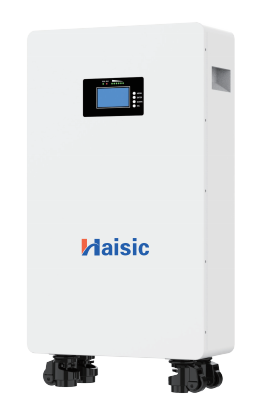
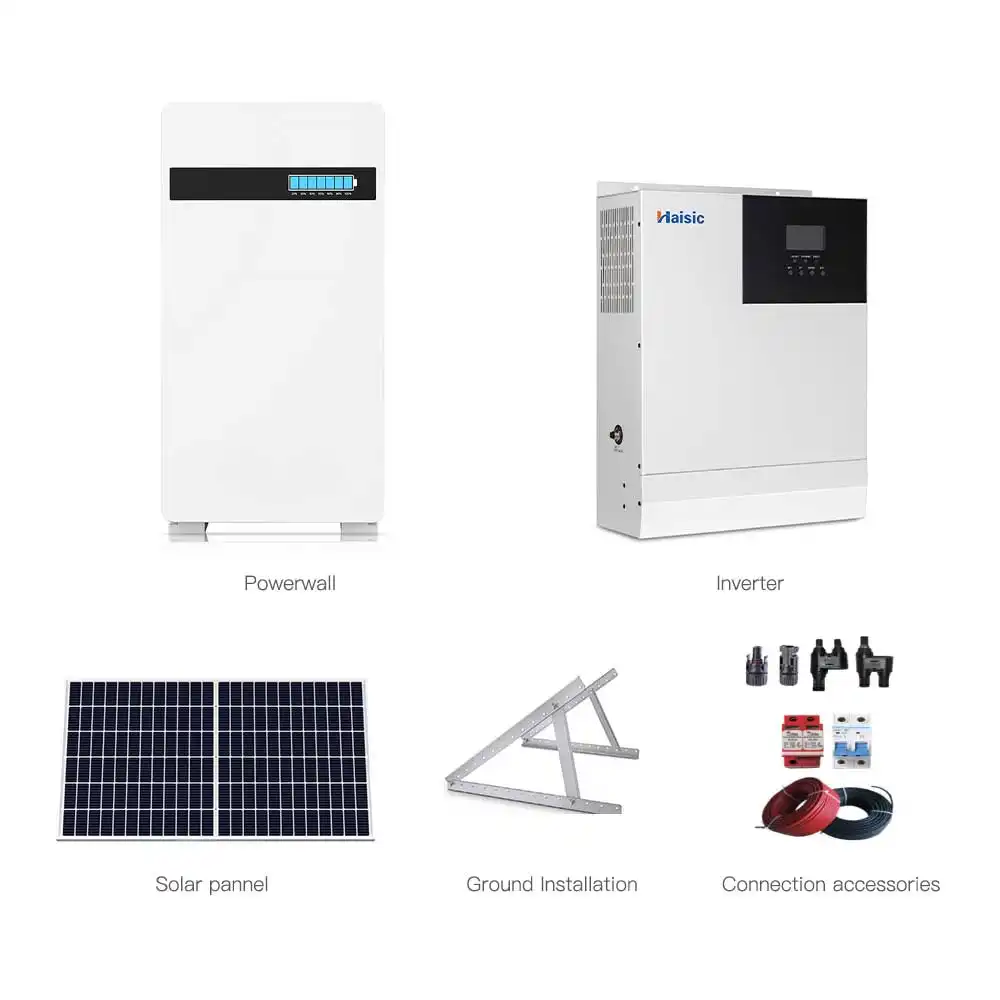
For those looking for a robust, all-in-one solution, a touchscreen 20480wh home energy storage battery provides enough density to handle heavy appliances overnight without breaking a sweat. Always aim for a 20% \”buffer\” in your calculations to account for unexpected heavy usage days.