









What Custom Energy Storage System Really Means
When you talk to a custom Energy Storage System manufacturer, you’re not just buying a “battery in a box”. You’re choosing how your project will perform, earn, and stay bankable for the next 10–20 years.
A custom Energy Storage System (ESS) simply means the system is engineered around your grid code, load profile, and business model – not the other way around. That can be as light as tuning settings, or as deep as a full turnkey energy storage solution built from the cell up.
From Small Tweaks To Turnkey ESS Design
A real custom BESS manufacturer can support different levels of customization:
- Configuration tweaks – change capacity, power, DC/AC ratio, EMS logic, protections
- Mechanical changes – different containerized ESS layouts, doors, cable entry, walk-in vs non-walk-in
- Electrical tailoring – 1000V or 1500V energy storage system, custom PCS + battery integrated system, medium-voltage options
- Full bespoke ESS design – complete battery energy storage system factory design, from lithium LFP cell selection to PCS, EMS, HVAC, and fire safety
You decide how far you need to go, based on project value and risk.
Key Customization Parameters That Actually Matter
For most C&I and utility projects, “custom” means dialing in these critical parameters:
- Energy & power – usable kWh/MWh, MW, discharge hours, and C‑rate
- Voltage window – HV string design, DC bus, PCS matching
- Thermal & safety – air or liquid cooling battery system, ESS fire suppression system, compartment design
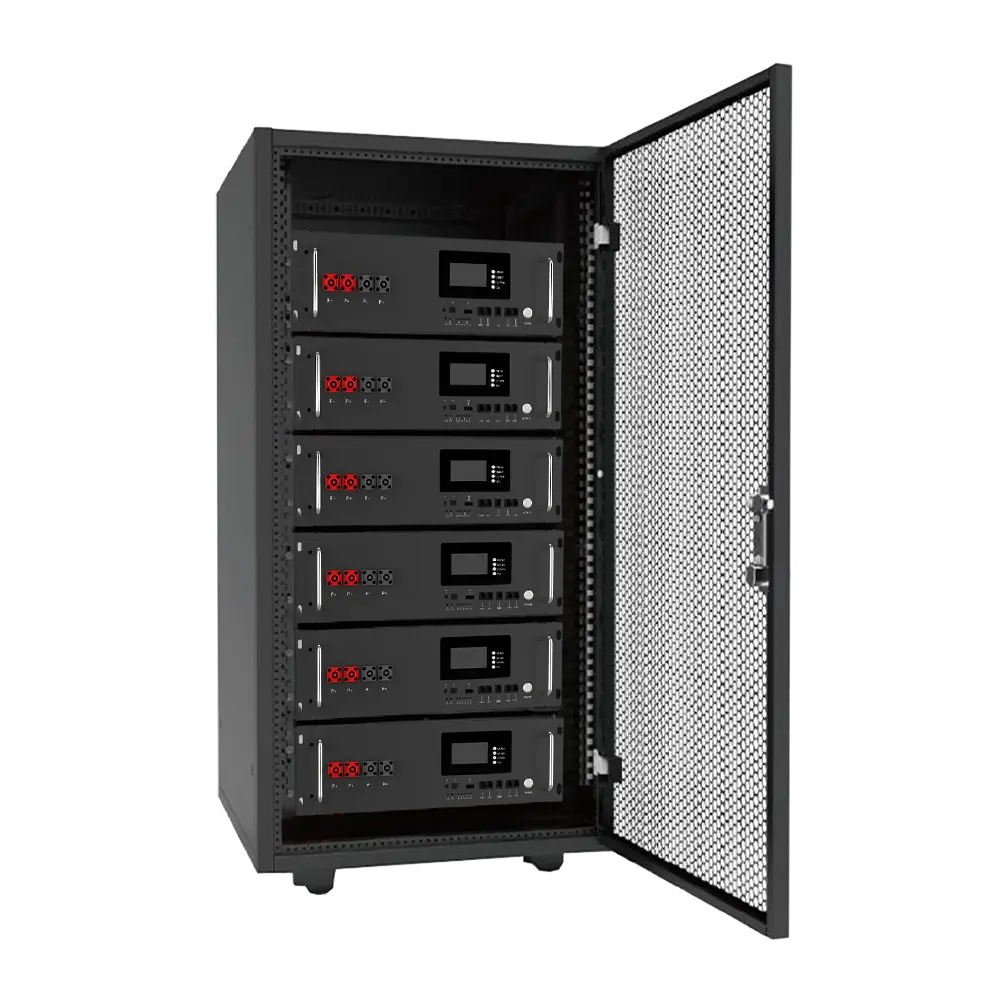
- Form factor – modular containerized ESS, skid or rack-based C&I system
- Integration – PCS brand, OEM energy storage system interfaces, SCADA/EMS protocols, solar plus storage or microgrid logic
Get these wrong, and your LCOE, degradation, and O&M costs suffer for years.
OEM, ODM, And Private Label: What’s The Difference?
When you source from a custom Energy Storage System factory, you’ll usually see three models:
- OEM energy storage system – we build to your exact spec and brand, with your technical lead
- ODM battery energy storage – we provide the core design; you customize options and put your label on it
- Private label energy storage – you focus on sales; we deliver a proven, standardized platform under your brand
A serious custom Energy Storage System OEM factory can support all three, with documentation, certifications, and warranty backing your name.
When You Really Need Custom BESS (And When You Don’t)
You truly need a custom Energy Storage System supplier when:
- You have strict grid-code or UL9540A / IEC / regional requirements
- You’re developing utility scale energy storage or complex microgrid energy storage
- You need special liquid cooled BESS for high density or harsh climates
- You’re combining solar plus storage integration with tricky use cases (arbitrage, peak shaving, FFR, black start)
If your project is small, standard grid-tied, and in a mature market, a near-standard product from a capable custom Energy Storage System company might be enough. The key is choosing a custom Energy Storage System manufacturer or distributor that can adapt when your next project isn’t standard anymore.
Why the Wrong Custom Energy Storage System Manufacturer Costs You Millions
Choosing the wrong custom Energy Storage System manufacturer isn’t a small mistake – it’s how projects lose years and millions in value.
Hidden risks with the wrong ESS supplier
When a “custom” ESS factory is really just a trading company or low-end assembler, you take on risks they quietly push onto you:
- Unclear responsibility between cell maker, pack assembler, and system integrator
- No real engineering support when you hit grid code, EMS, or PCS problems
- Weak documentation for banks, insurers, and regulators
- Inconsistent components and no long-term parts strategy
- Poor traceability, which kills warranty claims and increases downtime risk
One thing I see often: aggressive pricing from a “custom ESS supplier” that has no proven track record beyond their local market. That cheap quote quickly turns into expensive change orders and on-site rework.
Real-world failures: delays, safety, and certification problems
With the wrong custom ESS factory, “customization” usually means cutting corners, not solving your real project constraints. The results are painful:
- Project delays because containers, PCS, or EMS don’t pass local inspections
- Fire and thermal runaway risks from badly designed racks, poor BMS tuning, or untested liquid cooling systems
- UL9540A, IEC, NFPA, or CE non-compliance, forcing redesigns and re-testing
- Grid connection failures because the PCS + battery integration was never actually validated in real projects
Just one failed test campaign or rejected inspection can wipe out any cost advantage you thought you had.
How it hits LCOE, ROI, and bankability
A poor-quality custom Energy Storage System vendor doesn’t just cause headaches; it ruins your numbers:
- Higher LCOE: lower round-trip efficiency, more degradation, and more downtime
- Weaker ROI: unexpected capex changes, extra balance-of-plant, and O&M surprises
- Bad bankability: lenders push up interest, ask for additional guarantees, or simply refuse the project
Banks and investors now look closely at ESS manufacturer history, certifications, and field performance. If your supplier can’t show a real global track record, your financing terms will show it.
Poor customization = higher lifetime cost
“Custom” done wrong often means:
- Wrong C-rate and operating window → faster battery degradation
- Inflexible system design → costly upgrades when tariffs or use cases change
- Basic or mismatched cooling and fire protection → more failures and higher insurance requirements
- No standardized modular design → difficult to repair and expand
Over 10–15 years, those issues cost far more than paying a bit more upfront for a real custom energy storage system OEM that knows what they’re doing.
If you want to see what a properly engineered commercial and industrial ESS looks like in practice, check out our 215kWh 100kW C&I container ESS setup where design decisions are made around lifetime cost, not just first cost.
Core capabilities of a true custom Energy Storage System manufacturer
As a real custom Energy Storage System manufacturer and OEM/ODM factory, I focus on a few non‑negotiables that actually protect your project.
Deep in‑house R&D and integration
- Dedicated ESS engineers for pack, rack, container, PCS and EMS design
- Complete system integration for turnkey energy storage solutions, from LV C&I to 1500V utility‑scale BESS
- Bespoke ESS design services instead of “one‑size‑fits‑all” catalogs
Vertical integration from cell to system
- Tier‑1 lithium LFP cell partnerships with full batch traceability
- In‑house pack, rack, containerized energy storage assembly and FAT at our battery energy storage system factory
- Strong control of quality, cost and delivery for OEM energy storage system and private label projects
Scalable production for C&I and utility
- Flexible lines for commercial and industrial energy storage solutions and grid‑scale BESS
- Custom PCS + battery integrated systems for microgrids, solar‑plus‑storage and backup power
- Stable supply for multi‑MW / MWh roll‑outs across global markets
Safety, cooling and certifications
- Advanced liquid cooling battery systems and ESS fire suppression systems for high‑density, containerized BESS
- Design to meet UL9540A, IEC, CE and regional grid‑connection codes
- Robust testing and 24/7 monitoring options from a proven battery energy storage system company
Prototyping speed and long‑term support
- Fast prototypes, third‑party testing, and bankable documentation
- Long warranties backed by real after‑sales service, not traders or sourcing agents pretending to be custom Energy Storage System suppliers.
4. Red Flags When Vetting Custom Energy Storage System Manufacturers
Spotting traders vs real custom ESS factories
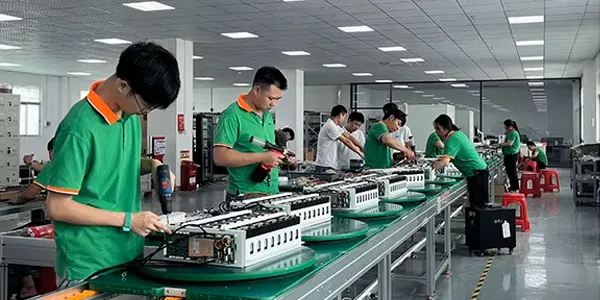
A real custom Energy Storage System manufacturer owns production lines, test labs, and engineering teams. Traders don’t. Watch for:
- No factory address, only an office or “business center”
- No real-time video/factory tour, only polished photos
- Sales team can’t answer detailed questions on PCS integration, EMS, LFP cells, or UL9540A
- Contract is signed with a “trading company” instead of a battery energy storage system factory
If they can’t show you racks, container lines, and test benches, you’re not dealing with a real custom BESS manufacturer.
Documentation, test reports, and traceability gaps
For bankable projects, paperwork matters more than brochures. Red flags:
- No complete BoM with cell brand, BMS brand, PCS brand
- Missing or partial UL9540A, IEC, UN38.3, CE test reports
- No batch traceability for lithium iron phosphate (LFP) cells
- Refusal to share typical FAT/SAT reports or type test records
A serious custom energy storage system OEM factory will show full documentation, serial tracking, and third‑party test reports up front.
Pricing that screams shortcuts
If one quote is 20–30% cheaper than every other custom Energy Storage System supplier, assume something is missing:
- Unbranded or low-grade cells instead of tier‑1 LFP
- No genuine fire suppression system or reduced safety layers
- Undersized cooling, cables, or contactors
- No realistic budget for on‑site commissioning and after-sales
Low price from a custom Energy Storage System wholesaler usually means higher lifetime risk and hidden costs.
Lack of overseas projects, service, or insurance
For global C&I and utility projects, avoid custom Energy Storage System vendors that:
- Have zero proven references in your region
- Offer no local service partners or remote monitoring support
- Can’t provide product liability insurance or performance guarantees
- Have no experience with USA, EU, Australia, Middle East, or Africa grid codes
If they’ve never delivered outside their own country, don’t let your project be their first experiment.
Sales promises that should worry you
Be careful when a custom Energy Storage System company says:
- “We can use any cell, any brand, no problem” – usually no real engineering control
- “Certification is in process, we’ll get it before shipment” – massive schedule risk
- “Delivery in 30 days for fully custom 20/40ft containerized ESS” – not realistic for true customization
- “Lifetime warranty” with no clear terms, no SoH thresholds, no cycles defined
A reliable custom Energy Storage System manufacturer talks about constraints, risks, and technical limits—not just “yes” to everything.
If you want to see how a real ESS partner structures services, check our project support and engineering approach on the Haisic energy storage services page.
How Working With a Real Custom Energy Storage System Manufacturer Actually Works

Clarify Technical And Project Requirements
When you talk with a real custom Energy Storage System manufacturer, we start by locking in the basics so there’s no guesswork later.
We map out:
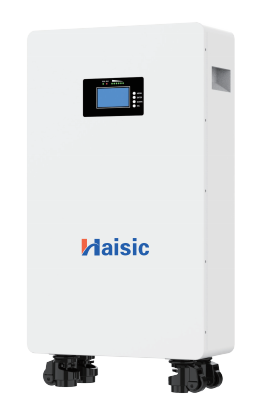
- Project type: C&I, utility‑scale, microgrid, or residential (for example, our wall‑mounted home energy storage batteries follow the same process, just scaled down).
- Key specs: energy (MWh), power (MW), voltage level (up to 1500V), C‑rate, cycle life, and operating temperature.
- Site constraints: footprint, noise limits, access, local grid codes, and permitting.
- Commercial targets: CAPEX/LCOE goals, payback period, financing and bankability needs.
Design, Engineering And BOM Optimization
As an OEM/ODM battery energy storage system factory, we engineer around your targets, not around a fixed catalog:
- Choose cell chemistry (lithium LFP), rack layout, and containerized BESS configuration.
- Size PCS, transformers, LV/MV switchgear, and protections as a single integrated system.
- Optimize the BOM for performance, safety, and supply stability—not just the lowest line‑item price.
3D Layout, Electrical Design And Simulation
Next we turn the concept into a fully engineered solution you can evaluate and finance:
- 3D container, rack, and cable routing layouts for real space planning.
- Single‑line diagrams, grounding, and protection coordination studies.
- Thermal, load, and grid simulations to validate performance, round‑trip efficiency, and grid‑code compliance before we build.
Prototype Build, FAT And Third‑Party Testing
Before mass production, a serious custom Energy Storage System supplier proves the design:
- Build a prototype or pilot system using the final BOM.
- Run Factory Acceptance Tests (FAT) on safety, performance, controls, and communication.
- Support UL9540A and other third‑party tests where required for your region and insurer.
Mass Production, SAT And Grid Integration
Once the prototype passes, we move to repeatable production as a real battery energy storage system factory:
- Scale manufacturing for your batch size, with full traceability from cell to finished ESS.
- Perform Site Acceptance Tests (SAT), commissioning, and PCS + EMS integration on‑site.
- Support grid interconnection, utility witnessing, and performance guarantee documentation.
Logistics, On‑Site Support And Long‑Term O&M
A real custom Energy Storage System OEM factory doesn’t disappear after shipment:
- Global shipping, customs support, and supervision of offloading and installation.
- Training for your EPC/O&M teams plus remote monitoring setup.
- Long‑term service, troubleshooting, and spare‑parts planning to keep lifetime costs down and ESS project bankability strong.
6. Custom Energy Storage Solutions Haisic Can Build for You
As a custom Energy Storage System manufacturer, I don’t push “one-size-fits-all” cabinets. I build ESS around your project, grid code, and business model.
Containerized BESS Manufacturer (20ft / 40ft / Skid)
I design modular, containerized energy storage systems for C&I and utility scale projects:
- 20ft / 40ft containerized BESS with flexible capacity, 600V–1500V DC
- Air‑cooled or liquid‑cooled options, full fire suppression, HVAC, auxiliaries
- Turnkey solar-plus-storage and microgrid integration with PCS and MV transformer
- Custom layouts for tight sites, harsh climates, or fast deployment
Rack-Based C&I Energy Storage Systems
For commercial and industrial users (factories, data centers, buildings), I supply:
- High-voltage rack-based lithium iron phosphate BESS for peak shaving and backup
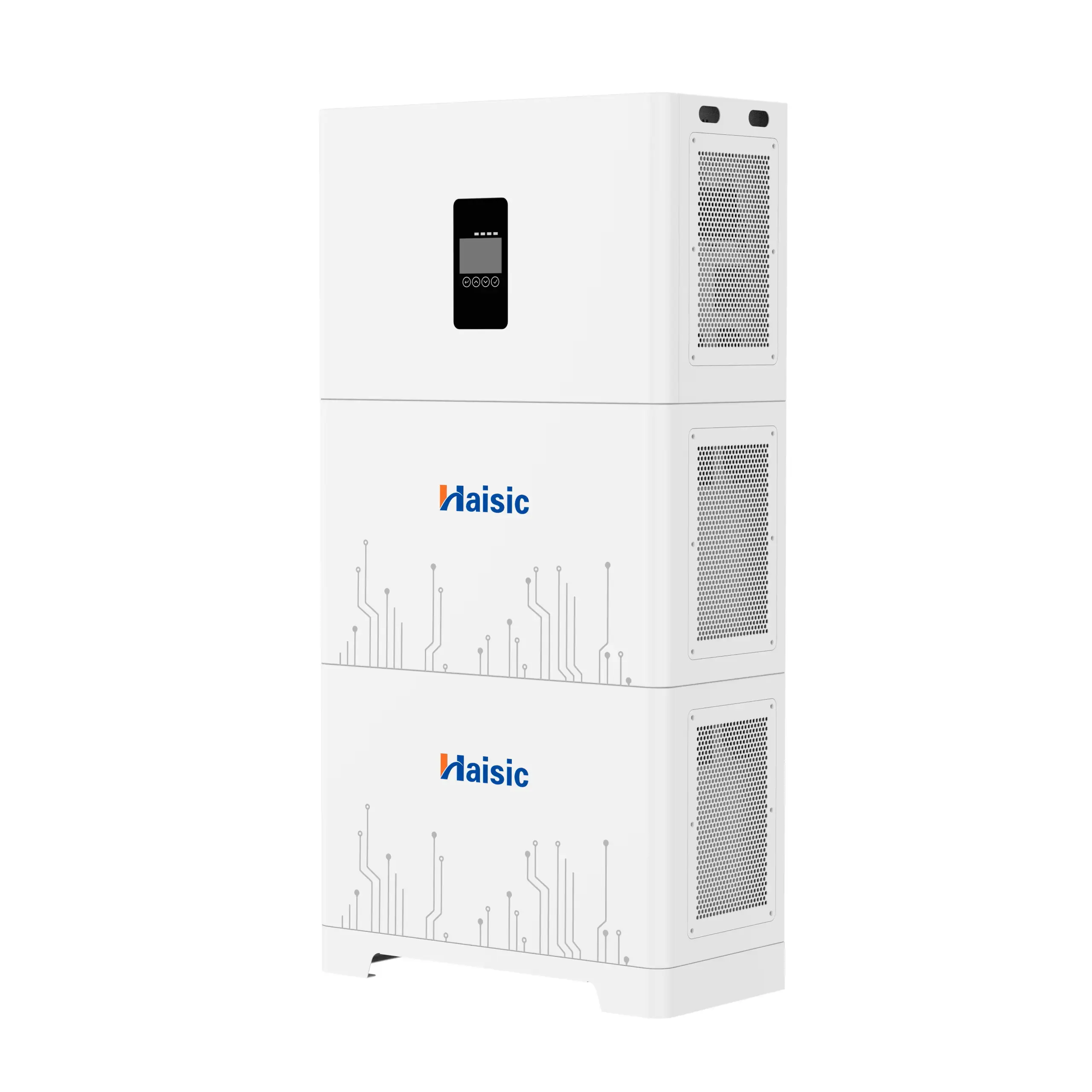
- Floor‑mounted and wall‑mounted cabinets, scalable by rack or string
- Custom EMS strategies for TOU shifting, demand charge reduction, and backup power
- Matching home / small C&I products like our floor‑mounted 51.2V 100Ah system when you need a full portfolio
Liquid-Cooled Utility-Scale ESS
For grid-scale and large solar/wind projects, I build:
- High-density liquid cooled BESS containers with long cycle life and tight temperature control
- 1500V energy storage system factory solutions with optimized LCOE
- Integrated fire safety, off‑gas detection, fast shut‑down, and segmented protection
- Designs ready for long-duration storage, frequent cycling, and harsh climates
PCS, EMS and Monitoring Integration
I act as both battery energy storage system factory and system integrator:
- Custom PCS + battery integrated system (AC or DC coupled)
- Open protocol EMS integration (Modbus, TCP/IP, IEC 61850, etc.)
- Cloud monitoring, remote diagnostics, and API access for fleet management
- OEM energy storage system versions that plug into your own platform or brand
Global Compliance and Grid Codes
Every custom ESS is engineered to meet local codes and bankability requirements:
- USA: UL9540 / UL9540A capable designs, NFPA standards, utility interconnection rules
- Europe: CE, IEC standards, and local DNO/grid-code requirements
- Australia: AS/NZS standards, fire and installation compliance
- Middle East & Africa: desert-ready designs, derating, and local utility needs
OEM / ODM / Private Label ESS Partnerships
As a custom Energy Storage System OEM factory, I support:
- ODM battery energy storage design under your spec and roadmap
- Private label energy storage for developers, EPCs, and distributors
- Custom branding, enclosures, communication protocols, and documentation packs
- Long-term contract manufacturing for C&I energy storage suppliers and grid-scale developers
If you need a real custom Energy Storage System supplier who can move from concept to certified hardware that your investors and utilities will actually approve, this is exactly what I build.
7. Custom ESS Evaluation Checklist and RFQ Essentials
When you talk to any custom Energy Storage System manufacturer, the quality of your RFQ decides the quality of the offer you get back. Here’s the minimum I’d always prepare and demand.
Key technical data to prepare
Have these numbers clear before you send an RFQ to any custom Energy Storage System supplier or factory:
- Application & use-case: peak shaving, arbitrage, backup, microgrid, solar-plus-storage, EV charging, frequency regulation, etc.
- Power & energy: rated power (kW / MW), usable capacity (kWh / MWh), discharge duration (e.g. 2h / 4h / 8h).
- Grid & voltage: grid voltage and frequency, 1000V / 1500V DC system, connection point (LV / MV / HV).
- C‑rate & cycling: charge/discharge rate (e.g. 0.5C, 1C), cycles per day, expected lifetime (years / cycles).
- Environment: indoor/outdoor, ambient temp range, altitude, humidity, corrosion level, noise limits.
- Footprint & layout: site space, height limits, container vs indoor racks, crane/forklift constraints.
- Compliance: target markets (US, EU, UK, AU, Middle East, Africa), required standards (UL9540/9540A, IEC, CE, grid codes).
- Integration needs: with solar, gensets, microgrid controller, SCADA, BMS/EMS preference, PCS included or battery‑only.
- Timeline & budget range: target delivery date, phased rollout, budget band per kWh.
If you’re still defining use-case and capacity, start with a quick pre-screen using resources like our practical guide on whether you actually need battery storage.
Questions to ask any custom ESS manufacturer
Use these questions to separate real custom Energy Storage System factories from traders or low-end vendors:
- Are you an OEM/ODM Energy Storage System manufacturer, or just an integrator/trading company?
- Where are your production lines, and can you share photos/videos and factory certifications?
- Which cell brands and chemistries do you use (LFP, NMC), and can you provide traceability?
- What standards and certifications do your systems already have (UL9540A, UL1973, IEC 62619, CE, UN38.3, etc.)?
- Can you share reference projects in my region and similar system size (C&I / utility-scale)?
- How do you handle fire safety and thermal management (air cooling vs liquid cooling, fire suppression type)?
- What is your standard warranty (product + performance), and what’s extendable?
- Who provides local service, spare parts, and remote monitoring?
- How do you manage grid integration support and commissioning?
- What’s the typical lead time for prototypes and for mass production?
Specs and documents to request with every quote
For each quote from a custom Energy Storage System company or distributor, insist on:
- System datasheets: full specs for battery racks/containers, PCS, EMS.
- Detailed BOM list: key components, brands, and model numbers.
- Single-line diagram & layout: electrical SLD, 3D layout or GA drawings, connection points.
- Performance curves: efficiency, temperature derating, cycle life vs DOD and temperature.
- Safety documentation: UL9540A fire test reports, cell/module test reports, safety concept.
- Certifications: copies of UL/IEC/CE/grid code certificates and test reports, not just “will be”.
- Warranty terms: in writing – conditions, exclusions, energy throughput limits, response times.
- After-sales scope: O&M options, remote monitoring platform, training, spare parts strategy.
- Incoterms & delivery: packing, shipping, insurance responsibilities.
How to compare bids beyond just price
Don’t let the cheapest number win. Compare custom Energy Storage System vendors on:
- Bankability: track record, references, international certifications, insurance, and compliance.
- True usable kWh: usable vs nominal capacity, degradation assumptions, real cycle life.
- Round‑trip efficiency: at your expected operating conditions (C‑rate, temperature).
- Thermal & safety design: liquid cooling vs air cooling, compartmentalization, suppression, detection.
- Service & uptime: SLAs, response times, remote support, spare parts stock, local partners.
- Delivery & risk: lead time, production capacity, supply chain stability, penalty clauses.
- Total cost of ownership: capex + replacement + O&M + downtime risk over 10–15 years.
Put the offers side‑by‑side in a simple table: specs, warranties, certifications, service, TCO – not just $/kWh.
Downloadable checklist and RFQ template
To make this easier, I typically use a standard Custom ESS RFQ pack that includes:
- A technical data checklist (everything above in a ready-to-fill sheet).
- A structured RFQ template for custom BESS manufacturers, dealers, and wholesalers.
- A bid comparison matrix to rank offers on more than just price.
If you’d like that RFQ pack, you can request it when you leave your project details through our online energy storage quote form, and I’ll share the templates we actually use with developers, EPCs, and integrators worldwide.