










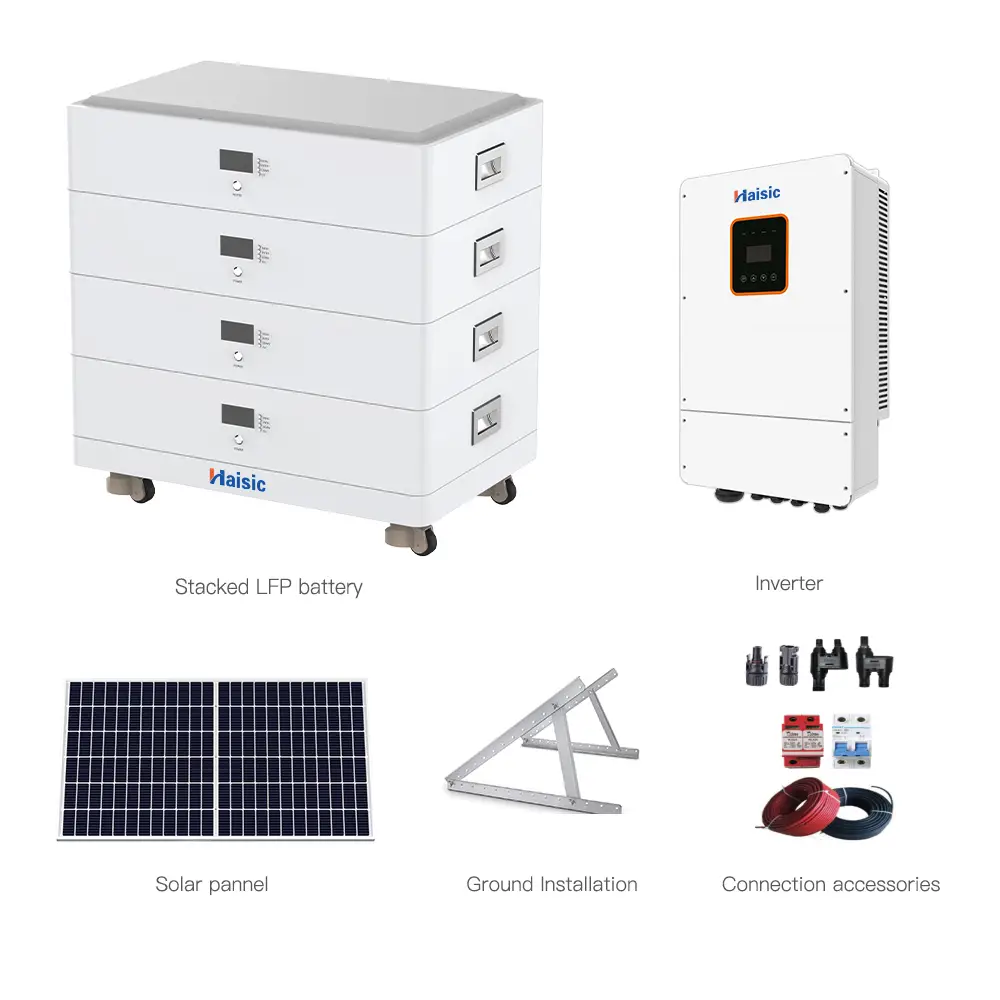
What Is a 20kW Solar System With Battery Storage?
A 20kW solar system with battery storage is a complete power solution that uses solar panels plus high-capacity batteries to run a home, farm, or business while cutting grid dependence and protecting you from outages.
Core Components (Simple Breakdown)
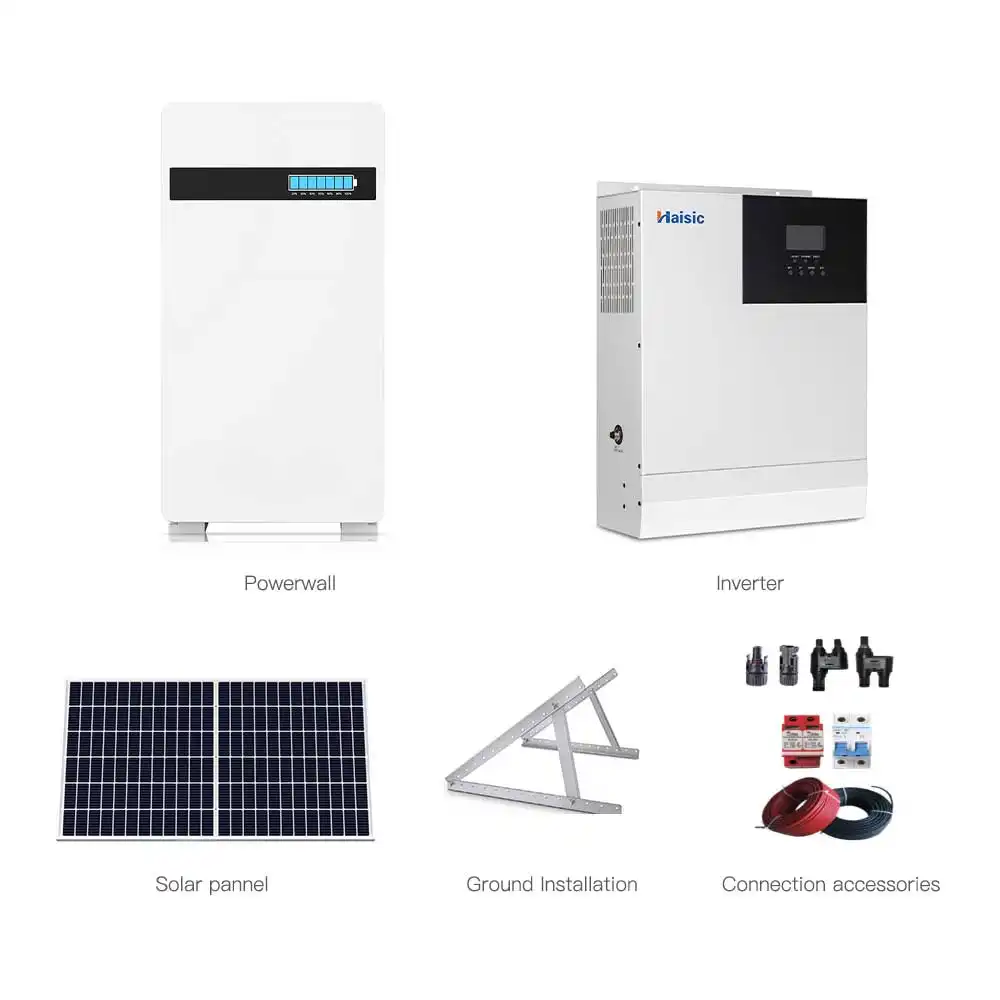
| Component | What it does |
|---|---|
| 20kW solar panel system | Roof/ground panels that convert sunlight into electricity |
| Hybrid solar inverter 20kW | Converts DC to AC, manages grid, solar, and batteries |
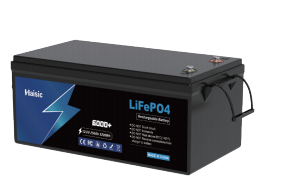
| Home solar battery storage (LiFePO4) | Stores excess solar power for night and outages |
| Mounting & wiring | Fixes panels securely and connects the whole system |
| Monitoring system | App/portal to track production, usage, and battery status |
I prefer LiFePO4 batteries for solar because they’re safer, last longer, and handle daily cycling better than typical lithium-ion solar batteries.
System Types: Hybrid, Off-Grid, Grid-Tied With Storage
| Type | How it works | Best for |
|---|---|---|
| Hybrid solar system 20kW | Connected to the grid + batteries. Uses solar first, stores extra, pulls grid as backup. | Most homes & small businesses |
| Off-grid solar system 20kW | No grid connection. Larger battery bank + sometimes generator backup. | Remote sites, full independence |
| Grid-tied solar with storage | Primarily grid-connected; batteries used for backup and peak shaving. | Areas with incentives & net metering |
In all versions, the solar energy storage system turns your 20kW photovoltaic system from “solar only when the sun shines” into a 24/7 power solution with strong backup and better control over energy costs.
Who Needs a 20kW Solar System with Battery Storage?
A 20kW solar system with battery storage is built for users with high and steady power demand, not small apartments or light-use homes. It fits you if:
Large Homes with Heavy Loads
If your home is 2500–5000+ sq ft and you run:
- Multiple AC units or heat pumps
- Electric water heating or pool pumps
- Always-on fridges, freezers, servers
- EV charging (one or two electric cars)
then a 20kW solar panel system can cover most or all of your daytime use, with home solar battery storage handling nights and outages.
Farms and Rural Properties
For farms, homesteads, and rural homes where the grid is weak or expensive to extend, a 20kW off-grid solar system or hybrid solar inverter 20kW setup can support:
- Irrigation pumps
- Cold rooms and storage
- Workshop tools and machinery
- House plus farm buildings
The battery bank smooths out cloudy days and gives you a reliable solar power backup for home and farm.
Small Businesses and Commercial Users
If you run a:
- Small workshop or fabrication shop
- Retail store, café, or restaurant
- Small office with servers and AC
then a 20kW photovoltaic system with lithium solar battery helps you cut daytime bills and keep critical loads running during blackouts. Many owners use a complete 20kW solar kit as a hedge against rising electricity prices.
If you’re unsure whether you need 10kW or 20kW, you can compare with our existing 10kW off‑grid solar power system setups and then scale battery capacity based on your real usage.
How Much Power Does a 20kW Solar System with Battery Storage Produce?
A 20kW solar system with battery storage can easily cover the needs of a large home or small business, but the real output depends a lot on your location and setup.
Average 20kW solar daily output
On average, a 20kW solar panel system will generate roughly:
- Low-sun areas (cloudy / northern regions):
60–80 kWh per day (1,800–2,400 kWh per month) - Medium-sun areas (most of Europe / parts of US, Asia):
80–100 kWh per day (2,400–3,000 kWh per month) - High-sun areas (Australia, Middle East, Southwest US, parts of Africa):
100–130 kWh per day (3,000–3,900 kWh per month)
This is usually enough to run:
- A large home with AC, pool pump, appliances, and EV charging
- A small business, workshop, or farm loads during the day
Key factors that change your 20kW solar daily output
To get the most from a 20kW photovoltaic system, I always focus on these:
Location & solar irradiation
More sun hours = more kWh. A 20kW system in Sydney or Dubai will produce far more than the same setup in London or Berlin.Roof orientation & tilt
- Best: South-facing in the Northern Hemisphere, North-facing in the Southern Hemisphere
- Near-ideal tilt: usually 20°–35° depending on your latitude
Poor angles can cut output by 10–25%.
Shading
Trees, nearby buildings, chimneys, and antennas kill production. Even partial shading on a string can drag down the whole array unless optimizers or microinverters are used.Panel efficiency & temperature
- Higher-efficiency panels mean more power per m²
- Hot climates reduce performance slightly, so good ventilation and quality modules matter.
Seasonal changes
- Summer: longest days, highest output
- Winter: often 30–60% less, depending on latitude and weather
That’s where a solar energy storage system helps smooth out usage.
Why batteries change the usable power
With a home solar battery storage setup, you’re not just looking at how much the panels produce, but how much you can actually use when you need it:
- Daytime: panels run loads first, then charge batteries.
- Evening / night: batteries cover home loads, EV charging, backup power instead of pulling from the grid.
- Outages: with a hybrid solar inverter 20kW, critical circuits can stay on while the grid is down.
A well-sized LiFePO4 battery for solar lets you capture more of that 20kW system’s production instead of exporting it cheaply to the grid, which is a big part of the financial benefit of a residential solar plus battery setup.
Battery Storage Options for a 20kW Solar System with Battery Storage
If you’re running a 20kW solar system with battery storage, the battery is the heart of the setup. It decides how long you can run at night, during outages, or on cloudy days.
Why Battery Storage Matters
For a 20kW solar panel system, storage gives you:
- Backup power when the grid fails
- Night-time usage of your daytime solar production
- Peak shaving to avoid high tariff hours
- More energy independence for homes, farms, and small businesses
Why I Use LiFePO4 for 20kW Solar Systems
For a 20kW photovoltaic system, LiFePO4 (Lithium Iron Phosphate) is the best fit right now:
| Feature | LiFePO4 Solar Battery Advantage |
|---|---|
| Safety | Very stable chemistry, low fire risk |
| Cycle life | 6,000+ cycles possible with proper use |
| Depth of discharge (DoD) | Typically 90–100% usable capacity |
| Efficiency | ~95% round-trip efficiency |
| Temperature performance | Better stability vs standard lithium-ion |
| Maintenance | Virtually maintenance-free |
This makes LiFePO4 the ideal home solar battery storage option for high-demand systems like off-grid solar system 20kW or large hybrid setups.
Haisic LiFePO4 Batteries for 20kW Systems
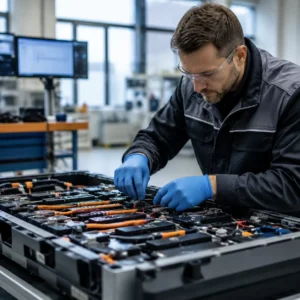
As a storage manufacturer, I design our Haisic LiFePO4 battery for solar around four priorities: safety, cycle life, modularity, and inverter integration.
Key strengths:
Safety first
- Premium LiFePO4 cells
- Multi-layer BMS protection (over/under voltage, current, temp, short circuit)
Long cycle life
- Built for daily cycling in residential solar plus battery use
- Strong performance in both hybrid and off-grid applications
Modular & scalable
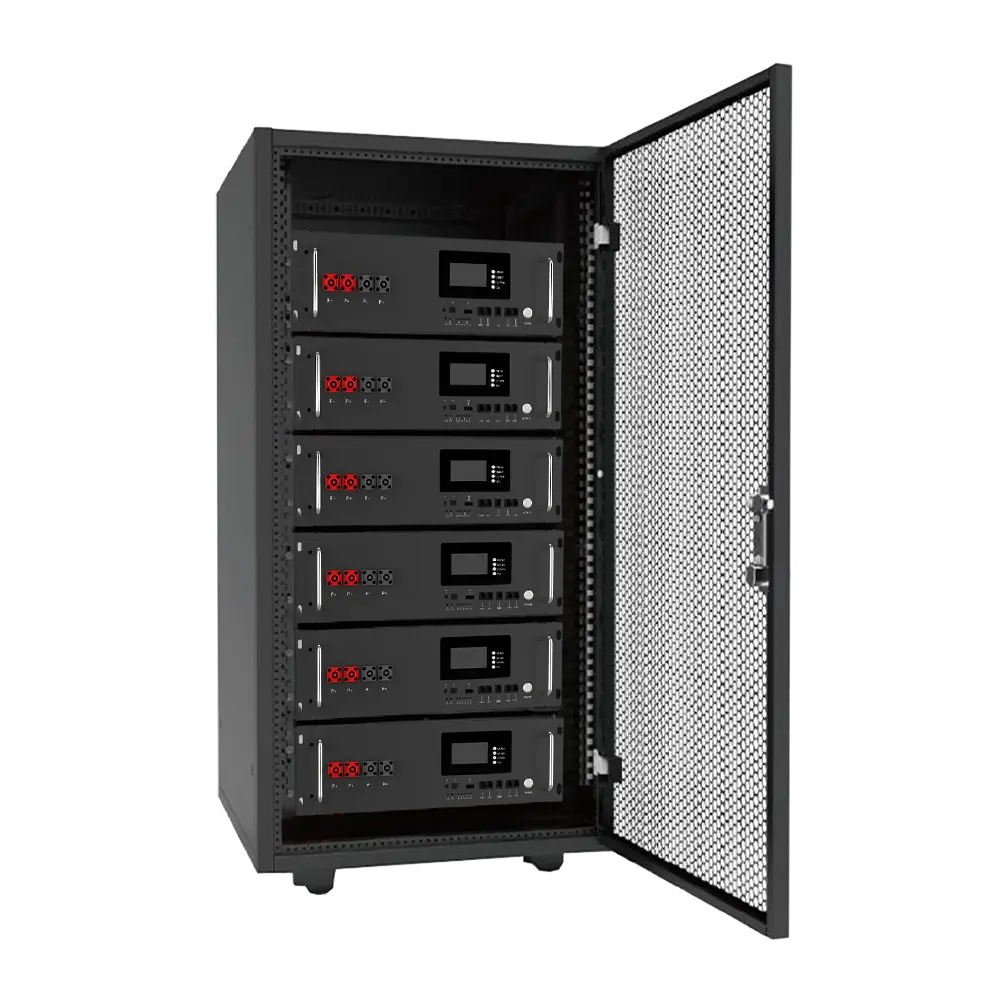
- Stackable, rack-mounted designs let you start small and expand as needed
- Easy to size from ~10–20 kWh up to 100+ kWh for a solar energy storage system
Easy inverter integration
- Designed to work with hybrid solar inverter 20kW solutions
- CAN/RS485 communication with mainstream inverter brands
For a typical 20kW system, many of my customers choose a 20–40 kWh bank using modular units like our 512V LiFePO4 stackable energy storage battery or a pre-configured 20kWh LiFePO4 energy storage system for a clean, compact install.
Picking the Right Size for Your 20kW Setup
As a quick rule of thumb:
- Daytime-only backup / light storage: 10–20 kWh
- Strong backup + EV + appliances: 20–40 kWh
- Off-grid / heavy business use: 40–100 kWh+
Once you know your daily kWh usage and backup hours needed, it’s straightforward to size a high capacity solar battery bank that matches your 20kW solar power backup for home or business.
Key Components of a Complete 20kW Solar + Storage Setup
A solid 20kW solar system with battery storage is only as strong as its core components. Here’s what I always focus on when designing a reliable, scalable setup.
High-Efficiency Solar Panels (20kW Solar Panel System)
For a 20kW photovoltaic system, panel choice matters:
- Monocrystalline panels – Higher efficiency, smaller footprint, ideal when roof or ground space is limited.
- Bifacial or half-cut cell panels – Better low-light performance and higher real-world yield.
- Target efficiency – I usually aim for 20%+ efficiency modules for residential and small commercial installs.
Hybrid Solar Inverter 20kW
For solar plus battery, a hybrid solar inverter is the brains of the system:
- Manages solar, batteries, and grid in one unit.
- Supports on-grid, backup, and limited off-grid operation.
- Works seamlessly with LiFePO4 battery for solar and supports smart energy modes (self-consumption, peak shaving, backup).
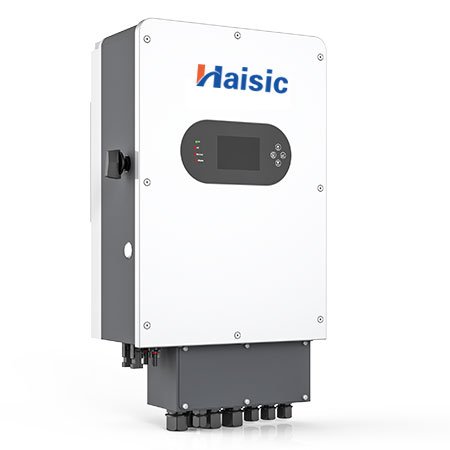
For larger or three-phase loads, I often match systems with high-end gear like a 36kVA hybrid solar inverter, similar to the setup shown in Haisic’s hybrid solar inverter system.
Home Solar Battery Storage (LiFePO4 with BMS)
For a 20kW solar power backup for home or business, battery quality is non‑negotiable:
- LiFePO4 batteries – Safer, longer cycle life, better for daily cycling than standard lithium-ion.
- Built-in BMS (Battery Management System) – Protects against overcharge, over-discharge, temperature, and balancing issues.
- Modular design – Stackable high capacity solar battery packs to meet current and future needs.
Mounting, Wiring, and Protection
A complete off-grid or grid-tied solar with storage system must be physically and electrically solid:
- Racking & mounting – Wind-rated, corrosion-resistant structures for roof or ground-mount.
- Cabling & breakers – Correct DC/AC cable sizing, DC isolators, fuses, surge protection.
- Combiner boxes & disconnects – Clean, safe wiring layout for easier servicing.
Monitoring and Smart Control
You can’t manage what you can’t see:
- App or web-based monitoring for solar generation, battery SOC, and grid usage.
- Smart meters / CT clamps to track import/export and adjust self-consumption.
- Remote monitoring is key for both residential solar plus battery and commercial users.
Optional Add-Ons for a Complete 20kW Solar Kit
Depending on the site and usage:
- Automatic transfer switch (ATS) for seamless backup during outages.
- EV charger integration to use surplus 20kW solar daily output for charging.
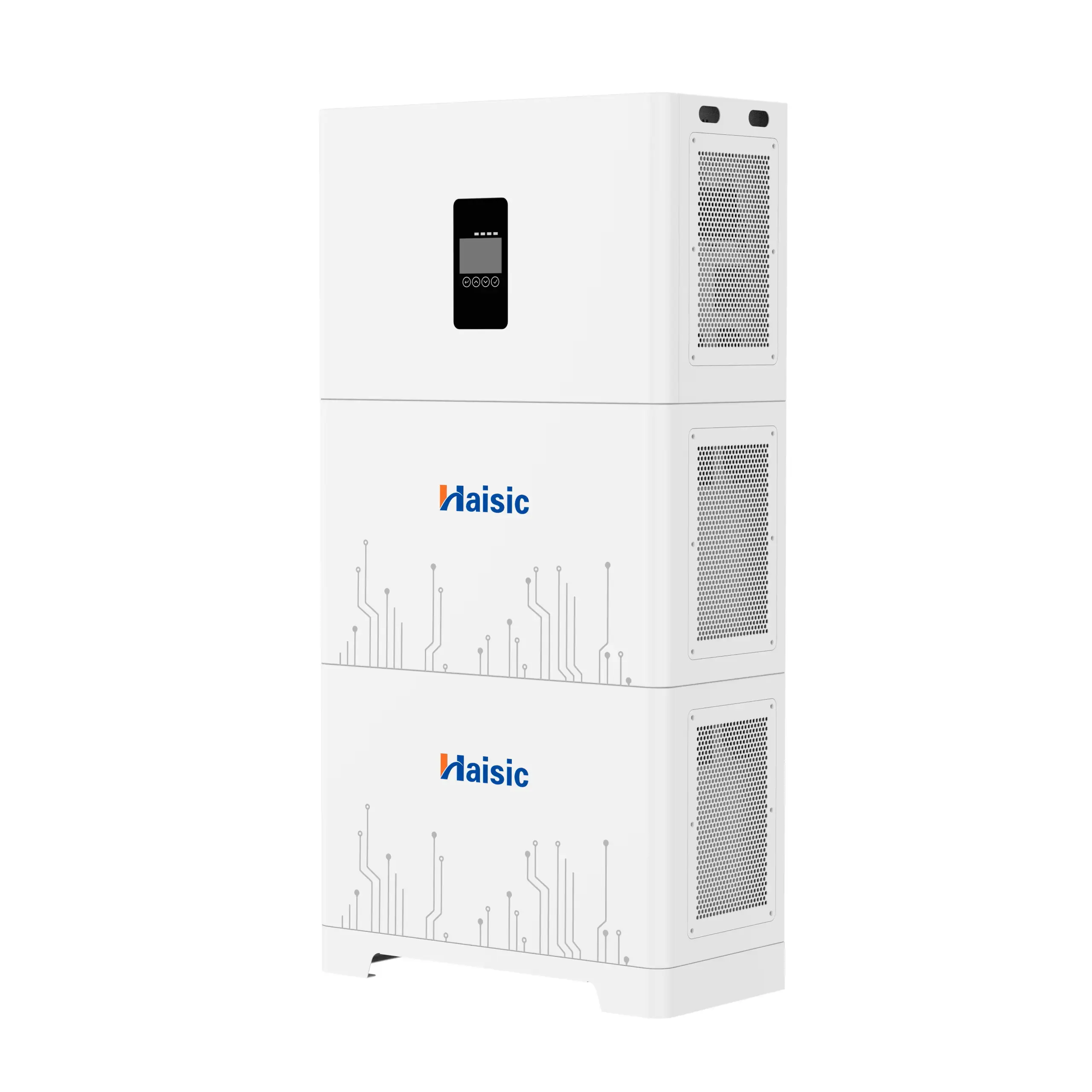
- Energy storage cabinets or all‑in‑one ESS for clean, scalable installs, similar to integrated systems like Haisic’s all‑in‑one solar energy storage system.
Put together correctly, these components create a robust 20kW solar panel system with dependable solar energy storage that runs your home, farm, or small business with minimal headache and maximum uptime.
Cost Breakdown and ROI for a 20kW Solar System with Battery Storage
A 20kW solar system with battery storage is a serious investment, but for the right home or business it pays back fast and keeps paying for 10–15+ years.
Typical 20kW Solar + Battery Costs
Exact pricing depends on your country, brand choices, and roof type, but here’s a realistic ballpark for a complete 20kW solar panel system with home solar battery storage:
- Solar panels (20kW):
- Approx. $12,000–$20,000 (mono PERC / half-cut high-efficiency)
- Hybrid solar inverter 20kW:
- Approx. $2,000–$5,000 depending on brand and features
- LiFePO4 battery for solar (15–40kWh usable):
- Approx. $5,000–$15,000+ depending on capacity and configuration
- Mounting, wiring, protection, monitoring:
- Approx. $3,000–$6,000
- Professional installation & permits:
- Approx. $4,000–$8,000
In many markets, a complete 20kW photovoltaic system with high‑capacity solar battery ends up around $26,000–$50,000 fully installed.
Incentives, Tax Credits, and Rebates
Your actual 20kW solar installation cost often drops sharply once incentives are applied:
- Tax credits (e.g., 20–30% of system cost in some countries)
- Upfront rebates from local or national programs
- Feed‑in tariffs or net metering for exporting excess power
- Battery‑specific incentives in regions encouraging solar power backup for home
In some regions, customers recover 25–40% of the initial cost on day one through incentives alone. If you want a quick overview of whether battery storage makes sense in your area, I suggest checking a simple guide like this one on whether you need battery storage.
Payback Period and Savings
For a 20kW solar system with battery storage, here’s what I normally see:
- Typical bill reduction:
- Large homes, farms, or small businesses: 60–95% cut in grid use
- With EV charging and heavy appliances, self‑consumption can be very high
- Yearly savings:
- Often $3,000–$7,000+ per year, depending on power prices and usage
- Payback period:
- With incentives: often 4–8 years
- Without incentives: typically 7–12 years
After payback, your residential solar plus battery setup keeps generating mostly free power for years, protecting you from rising electricity prices and outages.
The Haisic Pricing Advantage
Because I manufacture and supply lithium solar batteries directly, I cut out multiple middlemen and keep price per kWh very competitive:
- LiFePO4 chemistry with long cycle life = lower cost per kWh over 10–15 years
- Modular high‑capacity solar battery design = start smaller, scale later instead of overpaying up front
- Direct support and system matching = fewer sizing mistakes, better ROI
If you’re planning a complete 20kW solar kit or upgrading an existing system with storage, our home lithium battery storage solutions are built specifically to hit that sweet spot of cost, safety, and long‑term value.
Hybrid vs. Off‑Grid 20kW Solar System: Which Fits You?
Choosing between a 20kW hybrid solar system with battery storage and a 20kW off‑grid solar system comes down to how much independence you want from the grid, and how reliable your local grid is.
What is a Hybrid 20kW Solar System?
A hybrid solar inverter 20kW setup connects to the grid, your solar panels, and your battery bank at the same time.
How it works:
- Daytime: solar runs your loads, excess charges the battery and can export to the grid
- Night / cloudy: battery discharges first, then grid steps in as backup
- Grid outage: essential loads are powered from your home solar battery storage
Pros:
- Strong bill savings + backup power
- Smaller battery bank needed vs full off‑grid
- Can still use grid for peak loads (EV charging, heat pumps, big appliances)
- Best ROI in most residential and small business cases
Cons:
- Still depends partly on the grid
- Needs proper setup and permissions from your utility
If you’re looking at hybrid, a three‑phase hybrid solar inverter like our Haisic 8kW/10kW/12kW three‑phase hybrid inverter can be combined to support a 20kW solar panel system with high efficiency and smart battery management.
What is an Off‑Grid 20kW Solar System?
An off‑grid solar system 20kW is completely independent. No grid. Solar + batteries (and often a backup generator) run everything.
Pros:
- Total energy independence
- No utility bills, no grid outages
- Ideal for remote farms, cabins, and sites with poor or no grid access
Cons:
- Needs a larger, higher‑capacity LiFePO4 battery for solar
- Higher upfront cost for batteries and backup generator
- System must be carefully sized to handle worst‑case weather and load
Outage Performance: Real‑World Examples
Hybrid example:
Grid fails at 7 pm. Your 20kW photovoltaic system was charging the battery all day. The hybrid inverter instantly switches to battery, keeping lights, fridge, Wi‑Fi, and key circuits running. You may not even notice the outage.Off‑grid example:
Grid outage means nothing to you. Your high capacity solar battery runs the house all night. If there’s a long stretch of bad weather, an auto‑start generator kicks in to protect your battery.
How to Choose
Go hybrid if:
- You have grid access but want backup + strong bill reduction
- You run high loads (AC, pool pump, EV) and want flexibility
- You want the best mix of savings, resilience, and lower battery cost
Go off‑grid if:
- The grid is unreliable or unavailable
- You’re willing to invest more upfront for full independence
- Remote property, farm, or business needs 24/7 power without utility
Both setups work perfectly with modular solar energy storage systems using LiFePO4 batteries and smart hybrid inverters. The key is matching your energy habits, outage risk, and budget to the right 20kW solar solution.
Installation Considerations and Best Practices for a 20kW Solar System with Battery Storage
Installing a 20kW solar system with battery storage isn’t a small weekend project. Done right, it runs safely for 20+ years. Done wrong, it becomes a headache. Here’s how I look at it.
Site Assessment Comes First
Before anything gets ordered, you need a proper site check:
- Roof or ground check: Roof age, structure, available area, tilt, and orientation (south-facing in the northern hemisphere is ideal).
- Shading analysis: Trees, nearby buildings, chimneys – even a bit of shade can cut output on a 20kW solar panel system.
- Battery location: Cool, dry, well‑ventilated spot for your home solar battery storage – garage or utility room is usually best.
- Main panel capacity: Your existing electrical panel and wiring must be able to handle a 20kW photovoltaic system plus inverter.
Permitting and Approvals
Large systems like a 20kW solar plus battery setup almost always need paperwork:
- Local permits: Electrical + building permits, sometimes fire code approvals.
- Grid connection: For grid-tied solar with storage, you’ll likely need utility interconnection approval and possibly a net-metering agreement.
- Inspections: Expect at least one final inspection before switch‑on.
Pro Install vs DIY on a 20kW System
A 20kW solar installation is usually not DIY‑friendly:
- Go pro when:
- You’re tying into the grid.
- You’re using a hybrid solar inverter 20kW and high‑voltage LiFePO4 battery for solar.
- You want warranties and insurance to stay valid.
- DIY only makes sense if:
- You’re highly experienced with electrical work.
- You’re comfortable working with high DC voltage and following code to the letter.
For most homes, farms, and small businesses, I strongly recommend a certified installer for a complete 20kW solar kit.
Safety and Certified Installers
Safety is non‑negotiable with high‑capacity systems:
- Use certified components: Tier‑1 panels, certified inverters, and tested lithium ion solar batteries (LiFePO4 preferred).
- Qualified installers: Look for licensed electricians, solar certifications, and proven 20kW solar project experience.
- Proper protection: Correct cable sizing, DC/AC breakers, surge protection, grounding, and clear labeling.
If you’re pairing a 20kW system with high‑voltage batteries, consider modular LiFePO4 solutions like our high‑volt stacked 30kWh energy storage system or the 10.24kWh touchscreen energy storage system. These are designed for clean integration with hybrid inverters and professional installs, which makes the entire solar energy storage system safer and easier to maintain long‑term.
Maintenance and Longevity of a 20kW Solar System with Battery Storage
If you take basic care of a 20kW solar system with battery storage, it should run smoothly for years with very little hassle. Here’s what matters.
Solar panel cleaning and checks
For most homes and small businesses, panels only need light maintenance:
- Clean 1–2 times per year (more often in dusty, coastal, or polluted areas)
- Use soft brush + water or a low‑pressure hose — no harsh chemicals
- Check for visible cracks, hotspots, bird droppings, shade from new trees
- Watch your monitoring app: if output suddenly drops vs. similar sunny days, it’s a flag to inspect
With normal care, a quality 20kW solar panel system typically keeps 80–85%+ of original output after 25 years.
Battery monitoring and care (LiFePO4)
For a 20kW solar system with battery storage, the batteries are the heart of reliability. With LiFePO4, daily work is simple:
- Use the app / portal to track:
- State of charge (SOC)
- Charge/discharge power
- Temperature and warnings
- Avoid letting the battery sit at 0% or 100% for long periods
- Keep batteries in a cool, dry place, away from direct sun or heat sources
- Make sure firmware for the hybrid inverter and battery BMS stays up to date
A quality LiFePO4 battery for solar can deliver 6,000+ cycles (10–15 years in typical home use) if not abused.
Warranties and realistic lifespan
For a complete 20kW photovoltaic system with storage, this is what I usually design around:
- Solar panels: 10–15 years product warranty, 25-year performance warranty
- Hybrid solar inverter 20kW: 5–10 years, depending on brand and model
- Home solar battery storage (LiFePO4): 10-year warranty is the global standard now
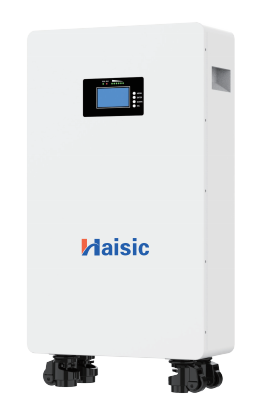
Our own wall-mounted LiFePO4 units, such as the 10kWh home energy storage battery, are built around premium cells and advanced BMS, so they’re sized for long-term daily cycling in a 20kW solar plus battery setup.
Simple troubleshooting tips
If something feels off with your solar power backup for home, check:
- System offline / no output
- Check main breakers and DC disconnects
- Confirm the inverter screen is on and not in fault mode
- Battery not charging / draining too fast
- Look at SOC in the app and inverter settings (charge limits, priority modes)
- Make sure there are no BMS alarms (over‑temperature, over‑current, etc.)
- Lower-than-normal solar output
- Compare with previous same-season days
- Inspect panels for shade, dirt, or physical damage
Any time there’s a persistent error code or warning, I always recommend contacting a certified installer or manufacturer support instead of guessing. A well-installed 20kW solar panel system with LiFePO4 storage should run quietly in the background — your job is mainly to keep an eye on the app and schedule a quick checkup once a year.
Real-World Case Studies and Performance

1. Large Home with EV + 20kW Solar System with Battery Storage
A customer running a 20kW solar panel system plus 40kWh of Haisic LiFePO4 home solar battery storage cut their power bill by over 70% in the first year.
- Daytime loads: AC, pool pump, 2 EVs, kitchen appliances
- Night-time loads: lighting, fridges, servers, EV top‑ups
- Result:
- Grid use pushed to off‑peak only
- Backup power during 3–4 hour outages, no interruptions
- Battery SOC stayed between 20–90% thanks to smart BMS scheduling
2. Small Business / Farm with Off-Grid Solar System 20kW
A remote farm installed a 20kW photovoltaic system with 60kWh of LiFePO4 battery for solar, using a hybrid solar inverter 20kW.
- Loads: cold storage, water pumps, workshop tools, office
- Result:
- Diesel usage cut by ~90%
- Stable power 24/7 even in cloudy weeks
- Payback projected in 5–7 years from fuel and maintenance savings
3. Haisic Battery Reliability in Real Use
Across residential solar plus battery projects, we see:
- >6,000–8,000 cycles real-world performance from our LiFePO4 packs
- Stable output in high-heat regions and cold climates
- Seamless integration with hybrid and off-grid inverters
For example, homeowners using our rack-mounted 51.2V 100Ah LiFePO4 battery modules report:
- Consistent 90–95% usable capacity
- Very low failure rate in multi-year operation
- Easy expansion when adding more solar energy storage system capacity
These real projects prove a properly designed 20kW solar system with battery storage can protect against outages, slash monthly bills, and deliver long-term, low-maintenance performance.
Why Choose Haisic for Your Battery Storage?
If you’re building a 20kW solar system with battery storage, you need batteries that are safe, scalable, and built to last. That’s exactly what I focus on with Haisic.
Premium LiFePO4 Cells
I only use Grade-A LiFePO4 cells because they’re:
- Safer: Very stable, low fire risk vs typical lithium-ion
- Long-lasting: 6,000+ cycles in most setups
- Deep usable capacity: Ideal for daily cycling in a 20kW solar panel system
For example, our 48V 100Ah rack-mounted LiFePO4 battery pack is built for residential solar plus battery projects and cabinet installations:
Advanced BMS and Smart Protection
Every Haisic LiFePO4 battery for solar includes a smart Battery Management System (BMS):
- Protects against overcharge, over-discharge, short circuit, and over-current
- Balances cells for longer life and stable performance
- Communicates with most hybrid solar inverters (20kW and below)
Scalable for 20kW and Beyond
You can scale Haisic batteries to match your 20kW solar plus battery setup:
- Modular design: Parallel and series options
- Supports off-grid solar system 20kW, hybrid, or grid-tied with storage
- Easy to expand later if you add EV charging or more loads
For high-voltage stacks, our 256V 280Ah LiFePO4 battery pack is designed for larger solar energy storage systems:
Certifications and Global Support
I build for global users, so we focus on:
- International safety and quality certifications (for key markets)
- Clear documentation for installers and integrators
- Technical support for system design, inverter matching, and commissioning
Quick Quote and Custom Design
If you’re planning a complete 20kW solar kit with battery storage, I can:
- Size the battery capacity based on your kWh usage and backup time
- Match the right voltage (48V / 72V / 128V / 256V) for your inverter
- Provide factory-direct pricing for installers and end users
Send your:
- Country/region
- Daily kWh usage
- Grid/hybrid/off-grid preference
and I’ll propose a clean, practical solar power backup for home or business with a matching Haisic battery pack.