
Are you struggling to find the best home battery for solar but feeling overwhelmed by technical specs and marketing hype? Choosing the right residential energy storage battery is no longer just a luxury—it’s the key to achieving true energy independence in 2026.
With utility rates skyrocketing and grid outages becoming the new normal, a whole home backup battery is what turns a standard solar array into a 24/7 power plant.
But which lithium iron phosphate solar battery actually delivers the best ROI? And how do you navigate the shift toward scalable solar battery system designs?
At Haisic, we’ve spent years manufacturing advanced LiFePO4 home battery solutions. I’ve put together this guide to go beyond the basics, offering a complete look at the best solar battery 2026 options based on real-world performance and manufacturing expertise.
Whether you\’re comparing an AC coupled vs DC coupled battery for a retrofit or looking for the ultimate solar battery backup power, this guide is for you.
Let’s dive right in.
How Home Solar Batteries Work
A solar battery storage system acts as a reservoir for your home’s energy. During the day, your solar panels often produce more electricity than your household consumes. Instead of sending that excess power back to the grid for a minimal credit, we design our systems to capture it. This stored energy is then available for use during the evening or during a grid outage, maximizing your energy independence and lowering utility costs.
AC-Coupled vs. DC-Coupled Systems
Choosing the best home battery for solar depends heavily on whether you are installing a new system or retrofitting an existing one. We categorize these into two primary architectures:
- DC-Coupled Systems: Energy flows directly from the panels to the battery. This is highly efficient for new installations because it avoids multiple power conversions.
- AC-Coupled Systems: These are the gold standard for retrofitting. If you already have solar panels, an AC-coupled residential energy storage battery can be added easily without replacing your existing inverter.
The Critical Role of the BMS
Every high-quality LiFePO4 home battery we provide is equipped with a sophisticated Battery Management System (BMS). The BMS is the \”brain\” of the unit, constantly monitoring voltage, temperature, and current. It ensures the system operates within safe limits, prevents overcharging, and balances the cells to extend the overall lifespan of your investment.
Why LiFePO4 is the 2026 Chemistry Standard
By 2026, Lithium Iron Phosphate (LiFePO4) has officially surpassed older lithium-ion chemistries (like NMC) as the industry benchmark. We prioritize LiFePO4 for several reasons:
- Superior Safety: It is significantly more thermally stable, virtually eliminating the risk of \”thermal runaway\” or fires.
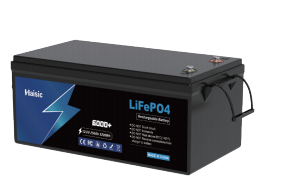
- Longer Lifespan: These batteries typically handle 6,000+ cycles, meaning they can last 15 years or more with daily use.
- Eco-Friendly: LiFePO4 does not require cobalt or nickel, making it a more sustainable choice for the modern homeowner.
- High Efficiency: It offers excellent round-trip efficiency, ensuring very little energy is lost during the charging and discharging process.
Key Factors to Consider When Choosing the Best Home Battery for Solar
Choosing the right storage isn\’t just about picking a famous brand; it’s about matching technical specs to your home’s specific energy profile. I always advise focusing on these core metrics to ensure you are getting the best home battery for solar that actually meets your needs.
- Usable Capacity (kWh): This is the total energy your battery can store. To get this right, calculate your typical evening consumption. Most modern homes require a residential energy storage battery with at least 10kWh to 15kWh to bridge the gap between sunset and sunrise.
- Continuous vs. Peak Power (kW): Continuous power is what keeps your lights and fridge running. Peak power handles the \”surge\” when heavy appliances like the AC or a well pump kick in. For whole-home backup, high peak power is a must.
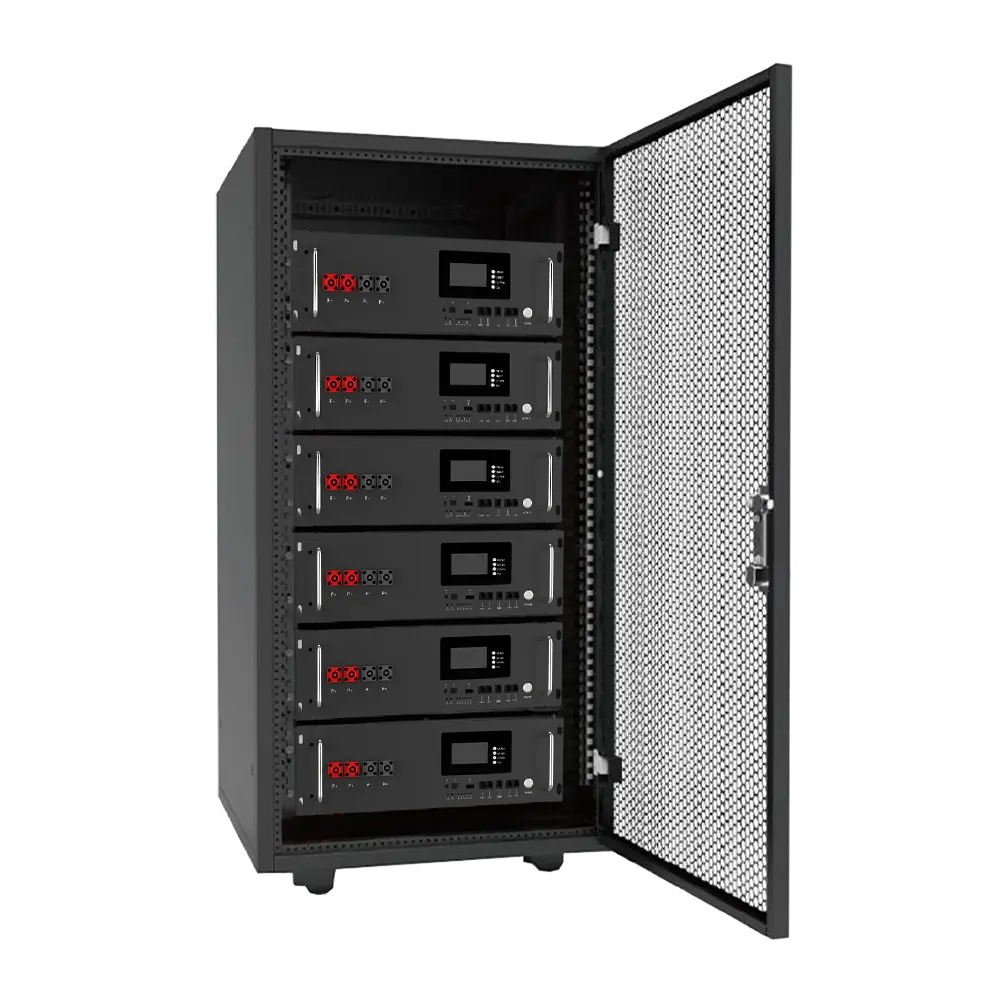
- Scalability and Modularity: Don\’t get locked into a static system. A scalable solar battery system allows you to start small and add modules as your energy needs or budget grow. This is the most effective way to manage the cost of solar battery storage over time.
- Round-Trip Efficiency and DoD: Look for a Depth of Discharge (DoD) of 100% and round-trip efficiency above 90%. This means you can use all the power you store without significant energy loss during the conversion process.
Performance and Safety Standards for 2026
| Feature | Industry Standard Requirement |
|---|---|
| Battery Chemistry | LiFePO4 (Lithium Iron Phosphate) |
| Cycle Life | 6,000+ cycles at 80% capacity |
| Warranty | 10–15 years with performance guarantees |
| Thermal Management | Active cooling or advanced passive heat dissipation |
Safety and longevity are non-negotiable. I prioritize the LiFePO4 home battery chemistry because it is chemically stable and significantly reduces fire risks compared to older lithium-ion types. When you invest in a high-quality lithium solar battery, you are looking at a solar battery warranty lifespan of roughly 15 years.
Finally, consider the smart features. The best systems today include integrated apps for real-time monitoring and time-of-use optimization, which automatically discharges your battery when grid prices are highest, slashing your monthly bills and accelerating your payback period.
Top Home Solar Batteries Compared for 2026
The market for residential energy storage has shifted toward high-density, long-life chemistry. When evaluating the best home battery for solar, we focus on real-world reliability and the total cost of ownership rather than just the sticker price. In 2026, the industry standard has moved away from older lithium-ion blends toward Lithium Iron Phosphate (LiFePO4) due to its superior safety profile and ability to handle thousands of charge cycles without significant degradation.
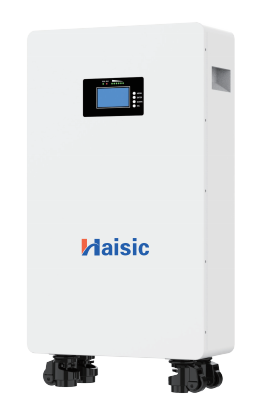
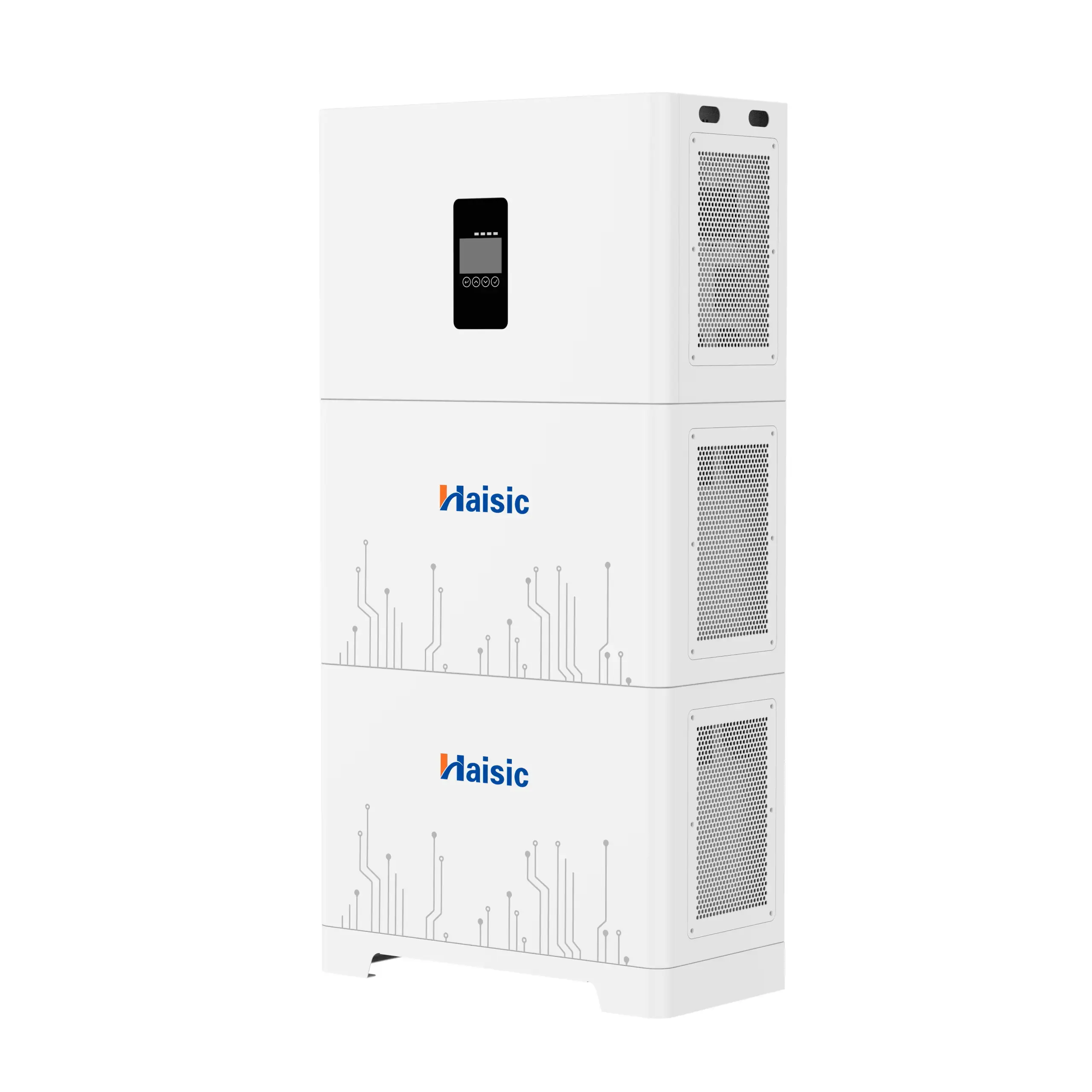
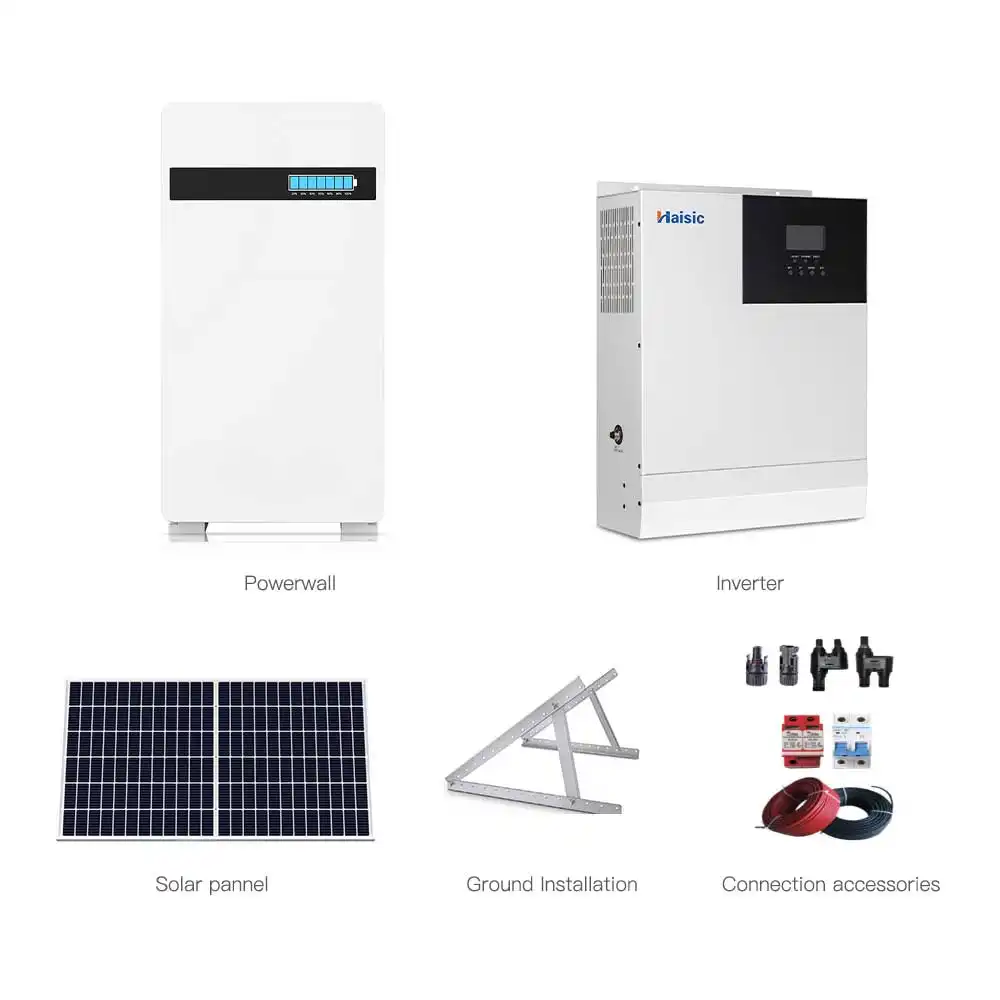
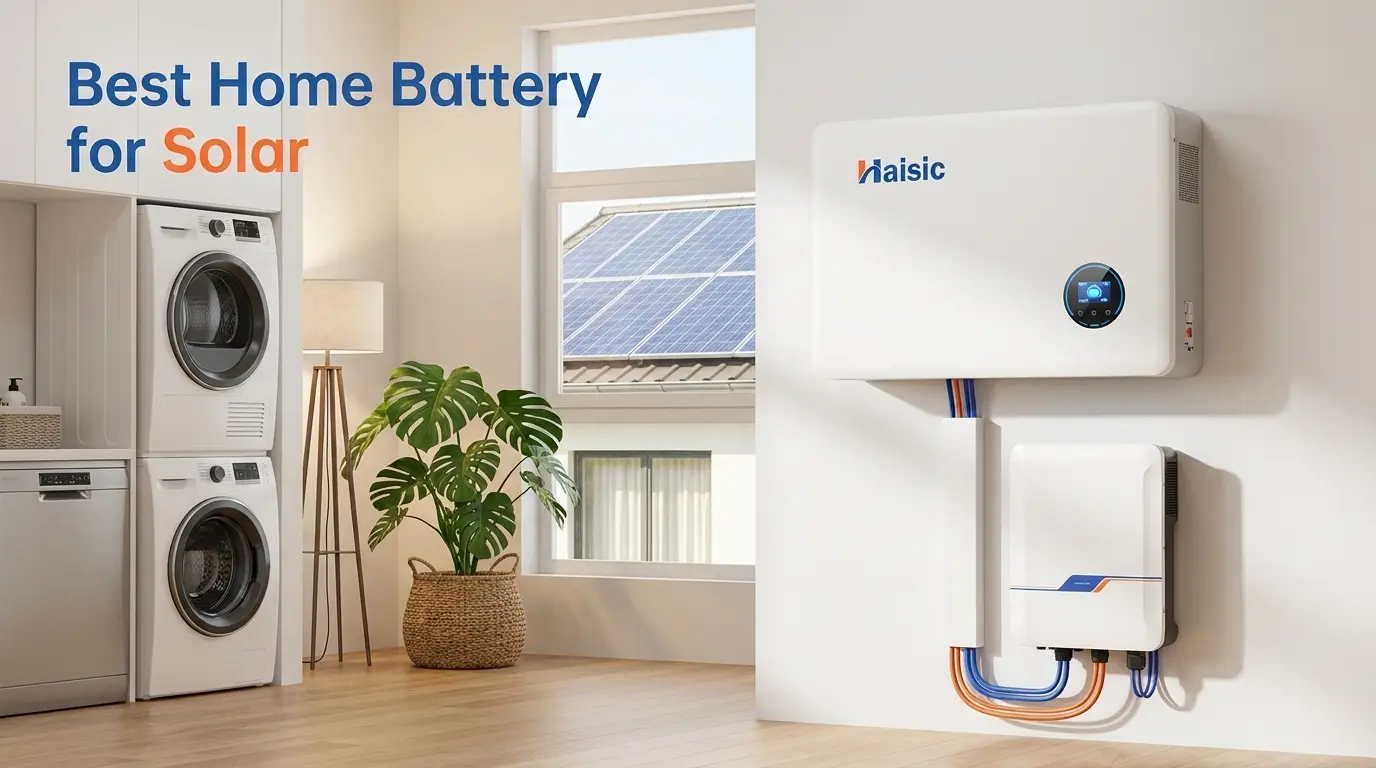
Our Haisic residential LiFePO4 powerwall and stackable systems are designed to bridge the gap between high-end performance and affordable scalability. As leading battery storage manufacturers, we prioritize modularity, allowing homeowners to start with a single 5kWh or 10kWh unit and expand as their energy needs grow. This flexibility is essential for achieving true energy independence and maximizing the ROI of a solar battery storage system.
2026 Comparison Table: Leading Storage Systems
| Feature | Haisic Stackable Series | Standard Powerwall | Budget Lithium Options |
|---|---|---|---|
| Chemistry | LiFePO4 (LFP) | NMC / LFP | Various Lithium |
| Usable Capacity | 5kWh – 30kWh (Modular) | 13.5kWh (Fixed) | 5kWh – 10kWh |
| Peak Power | 7kW – 12kW | 7kW | 3kW – 5kW |
| Cycle Life | 6,000+ Cycles | 3,000 – 5,000 Cycles | 2,000 – 3,000 Cycles |
| Best For | Scalability & Longevity | Brand Recognition | Entry-level Backup |
Matching Batteries to Your Solar Array
Choosing the best solar battery for home use depends heavily on your existing or planned solar PV capacity. A mismatched system leads to either wasted solar energy or a battery that never reaches a full charge.
- 3kW Solar Array: For smaller setups, a 5kWh to 10kWh LiFePO4 home battery is the sweet spot. This capacity typically covers essential loads like lighting, refrigeration, and electronics during the evening, ensuring you don\’t pull expensive power from the grid.
- 5kW Solar Array: A 10kWh to 15kWh residential energy storage battery is ideal here. This size allows for \”load shifting,\” where you store enough energy during the day to run heavy appliances or even a small HVAC unit through the night.
- Off-Grid or Large Arrays: If you are running 8kW+ of solar, a scalable solar battery system is mandatory. Our stackable units allow you to reach 20kWh or 30kWh, providing a whole home backup battery solution that can sustain a household through multiple cloudy days.
The best battery for home solar power in the current market is one that offers a high round-trip efficiency and a depth of discharge (DoD) of at least 90%. By choosing LiFePO4 technology, you ensure that your investment remains functional for 15 years or more, outlasting older technologies and providing a much lower levelized cost of energy.
Installing and Integrating the Best Home Battery for Solar
Getting the best home battery for solar into your house involves more than just plugging it in. In the 2026 market, the focus has shifted toward seamless integration and \”smart\” commissioning. Whether you are adding storage to an existing array or building a new system from scratch, the installation process dictates your long-term ROI.
Professional Installation vs. DIY
While the DIY movement is growing, I always recommend professional installation for high-voltage residential systems. A certified installer ensures that the solar battery installation guide is followed to the letter, which is often a requirement for maintaining your warranty and qualifying for local incentives.
- Professional Commissioning: Experts handle the complex wiring between the inverter, battery, and main panel.
- Permitting: Most jurisdictions require electrical permits and fire safety inspections.
- Safety: Proper grounding and thermal management setup are non-negotiable for indoor or garage installs.
Pairing with New or Existing Solar
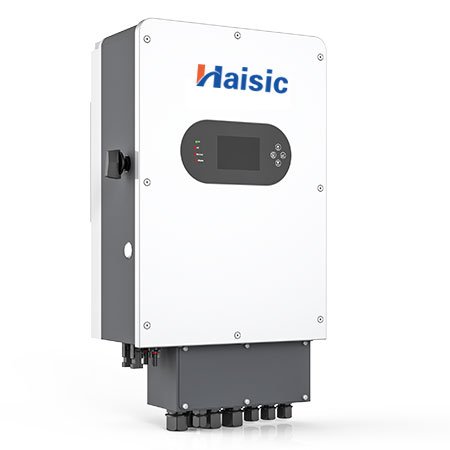
If you already have panels, we typically look at AC-coupled solutions to avoid replacing your current inverter. For new installations, a DC-coupled setup is often more efficient. As a leading battery energy storage system company, we design our units to be compatible with the majority of hybrid inverters on the market, ensuring your residential energy storage battery communicates perfectly with your solar production software.
2026 Incentives and Financing
The financial landscape for energy storage has never been better. In 2026, many regions offer 30% tax credits and performance-based rebates.
- Financing: Many homeowners now opt for \”Solar + Storage\” loans that wrap the battery cost into a single monthly payment lower than their previous utility bill.
- Net Metering 3.0: In areas with reduced export rates, the best home battery for solar pays for itself faster by storing energy instead of selling it back to the grid for pennies.
Maintenance and Long-Term Performance
One of the biggest wins for modern LiFePO4 technology, like our low-volt 51.2V powerwall, is that it is virtually maintenance-free. Unlike old lead-acid banks, there is no watering or terminal cleaning required.
- Remote Monitoring: Use our app to check state-of-charge and health metrics.
- Firmware Updates: Most systems now update over Wi-Fi to optimize charging algorithms.
- Durability: Expect a 15-year lifespan with minimal capacity degradation, provided the unit is kept within standard operating temperatures.
Cost Analysis and Return on Investment
When evaluating the best home battery for solar, understanding the financial breakdown is just as important as the technology itself. The current pricing landscape for residential energy storage batteries varies, but investing in a high-quality system pays off significantly over time.
Here is how the numbers break down for a typical solar battery storage system:
- Current Pricing Landscape: Upfront costs cover the battery unit, installation, and supporting hardware. While initial prices can seem high, choosing a durable 51.2V 100Ah powerwall energy storage system ensures you get maximum value and cycle life without the need for early replacements.
- Incentives and Net Metering: With many regions phasing out favorable net metering policies, storing your own daytime solar production is more critical than ever. Local tax credits, government rebates, and time-of-use optimization can drastically reduce your initial home battery cost and shorten your payback timeline.
- Levelized Cost of Stored Energy (LCOE): I always recommend looking at the LCOE to measure true return on investment. By dividing the total cost of the system by the lifetime energy it stores and discharges, you see the real savings. A solid LiFePO4 home battery easily lasts 10 to 15 years, effectively locking in low energy rates and protecting your household from unpredictable utility price hikes.
Ultimately, the best battery for home solar power is one that balances a reasonable upfront investment with long-term, reliable lifetime savings.
Frequently Asked Questions About the Best Home Battery for Solar
Choosing the best home battery for solar involves navigating a lot of technical details. I have compiled the most common questions we hear from homeowners to help you make an informed decision for your 2026 energy strategy.
How long will a battery power my home during an outage?
It depends on your \”critical loads.\” A standard 10kWh residential energy storage battery typically powers essentials like lights, a refrigerator, and Wi-Fi for 15 to 24 hours. If you run heavy appliances like air conditioning, that time drops significantly. For extended protection, many customers invest in emergency solar power setups that prioritize high-capacity storage.
Is LiFePO4 worth the investment compared to lead-acid?
Absolutely. While lead-acid is cheaper upfront, LiFePO4 home batteries offer a much lower total cost of ownership.
- Lifespan: 10–15 years vs. 3–5 years.
- Efficiency: 95% round-trip efficiency vs. 80%.
- Safety: LiFePO4 is chemically stable and non-combustible.
Can I add a battery to my existing solar system later?
Yes. If you already have panels, we recommend an AC-coupled solar battery storage system. This allows the battery to communicate with your existing inverter without needing to rewire your entire array.
What is the difference between peak and continuous power?
- Continuous Power: The amount of electricity the battery can deliver steadily (e.g., keeping the lights on).
- Peak Power: The short burst of energy needed to start heavy motors, such as a well pump or a central AC unit.
How many batteries do I need for a typical 5kW solar setup?
For a 5kW solar array, I usually recommend 10kWh to 15kWh of storage. This capacity ensures you can capture most of your daytime excess and have enough solar power storage system capacity to last through the night.
Do solar batteries work during a grid-wide blackout?
Only if your system has \”islanding\” capabilities. The best solar battery for home use includes an automatic transfer switch that disconnects your house from the grid during a failure, allowing your backup power to kick in safely without back-feeding the lines.
What maintenance does a home battery require?
Modern lithium systems are virtually maintenance-free. Unlike lead-acid, there is no watering or venting required. You simply need to keep the area around the unit clear of debris and ensure the firmware stays updated via the manufacturer’s app.
Are there tax credits available for solar batteries in 2026?
Yes, most regions continue to offer significant incentives. In the US, the Federal Investment Tax Credit (ITC) remains a primary driver, often covering up to 30% of the installation cost. Local utility rebates for \”demand response\” programs can also help offset the initial price.
Can I go completely off-grid with a home battery?
It is possible but requires a massive investment in both panels and storage to account for consecutive cloudy days. Most homeowners find that a \”grid-tied with backup\” setup offers the best balance of security and cost-effectiveness.
How does temperature affect battery performance?
Batteries prefer room temperature. Extreme cold can temporarily reduce discharge capacity, while extreme heat can accelerate the degradation of the cells. We design our units with advanced thermal management to ensure the best home solar battery performance in diverse climates.