











Decoding LFP Battery Degradation in B2B Applications
To maximize LFP battery cycle life in commercial and industrial (C&I) projects, we must first understand what causes capacity fade. In stationary storage durability, asset degradation isn\’t caused by just one factor. It is driven by two distinct, simultaneous forces: cycling aging and calendar aging.
- Cycling Aging: The physical and chemical wear that occurs while the battery is actively charging and discharging.
- Calendar Aging: The inevitable degradation that happens over time while the battery is at rest, heavily influenced by temperature and storage State of Charge (SoC).
The Microstructure Advantage of LiFePO4
The reason Lithium Iron Phosphate ($LiFePO_4$) is the premier choice for long-term B2B infrastructure lies in its chemical architecture. Unlike the layered structure of NMC (Nickel Manganese Cobalt) chemistry which expands and contracts significantly during operation, LFP features a highly stable olivine crystal structure.
This rigid structural framework minimizes mechanical stress and micro-cracking during repeated lithium-ion insertion and extraction. Because the structural integrity remains intact, the cells experience significantly less physical wear, unlocking a fundamentally superior baseline for asset longevity.
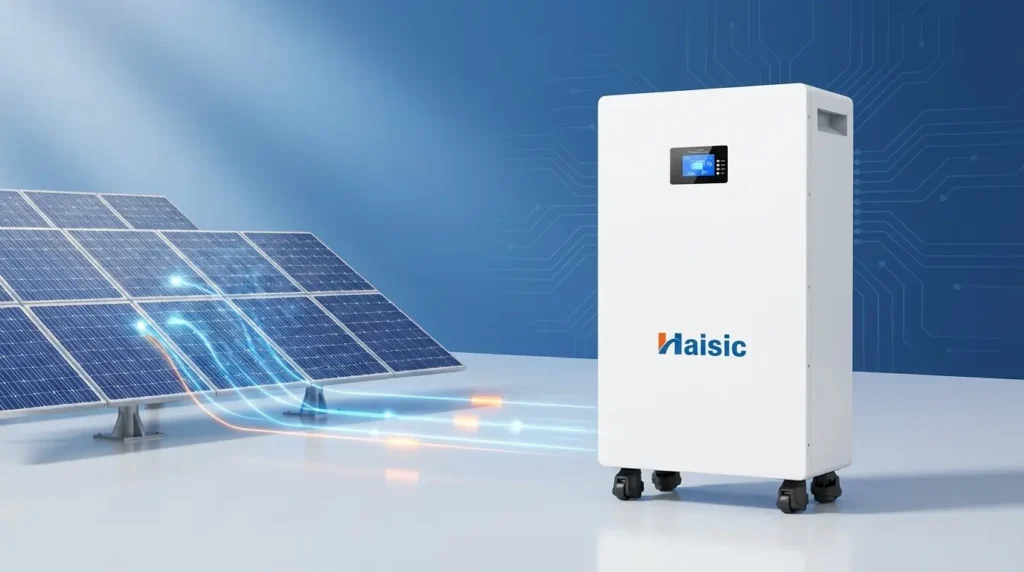
The \”Big Three\” Stressors
While the molecular structure gives LFP a major head start, three operational variables ultimately dictate the lifespan curve of your energy storage system:
- Temperature: Excessive heat accelerates parasitic chemical reactions, while extreme cold risks permanent internal damage.
- Depth of Discharge (DoD): Deeper cycles strain the active materials faster than shallow cycles.
- C-Rate: High charge and discharge currents create localized thermal spikes and speed up mechanical wear.
By understanding and actively managing these three core stressors, B2B operators can actively mitigate capacity fade and protect their financial return on investment.
The Core Strategy: Depth of Discharge (DoD) & SoC Window Optimization
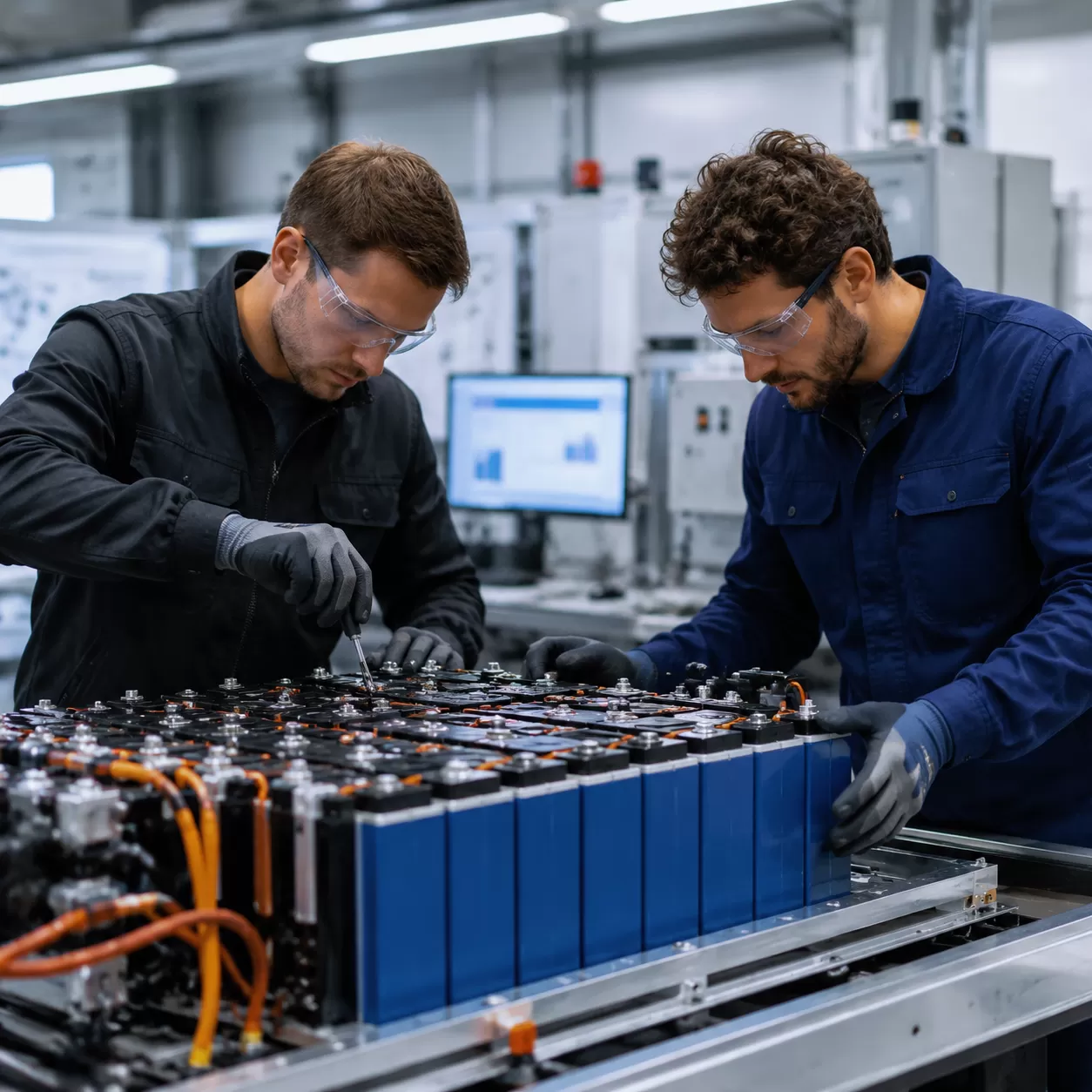
The Mathematical Reality of DoD
How deeply you drain a battery directly dictates its operational lifespan. In commercial applications, running a battery to empty every cycle drastically accelerates capacity fade. Restricting the Depth of Discharge (DoD) yields a massive dividend in 6000+ cycle performance and overall stationary storage durability.
The lifetime yields scale as follows:
| Depth of Discharge (DoD) | Expected Lifespan (Cycles) | Impact on Battery ROI |
|---|---|---|
| 100% DoD | ~3,000 cycles | High mechanical stress, accelerated capacity fade |
| 80% DoD | 6,000+ cycles | Optimal balance between usable capacity and longevity |
| 50% DoD | ~8,500+ cycles | Maximum cell life, requires larger initial footprint |
Defining the Optimal State of Charge (SoC) Window
To mitigate internal cell strain, avoid the extreme ends of the charge cycle. Operating continuously within a 20% to 80% or 10% to 90% SoC window drastically lowers electrode mechanical stress.
Lithium iron phosphate cells experience the most physical expansion and contraction at 0% and 100% charge states. Keeping the battery within this sweet spot stops the microscopic cracking of the active materials, preserving your LFP Battery Cycle Life over years of heavy cycling.
B2B System Sizing Strategy
To implement this without sacrificing daily runtime, proper sizing is crucial. Slightly oversizing the initial commercial and industrial (C&I) energy storage capacity protects cells from deep discharge penalties without hurting operational efficiency.
By installing a marginally larger hardware footprint, the system delivers the required daily energy yield while keeping the individual cells within their ideal SoC comfort zone. This upfront strategy significantly reduces the long-term battery storage price per kilowatt-hour by delaying expensive cell replacements.
Smart Charge-Discharge Optimization & C-Rate Management
Managing how fast energy moves in and out of a battery system directly determines its operational lifespan. In commercial and industrial (C&I) energy storage, controlling current rates is a foundational pillar of charge-discharge optimization.
C-Rate Dynamics and Thermal Stress
High charge and discharge currents create localized thermal spikes and accelerate chemical wear inside the cells. When a system operates at an aggressive C-rate, the internal resistance of the Lithium Iron Phosphate (LFP) cells generates excessive heat. This thermal stress speeds up capacity fade mitigation challenges, breaking down the active materials and shortening the overall LFP battery cycle life.
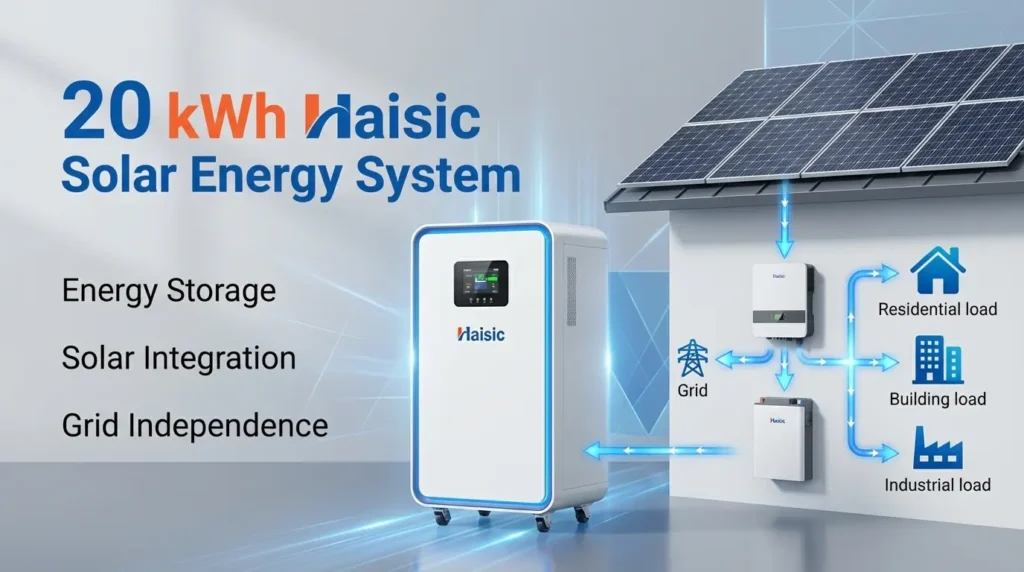
The Sweet Spot for Stationary Assets
For maximizing stationary storage durability, running assets within a specific operational window is highly effective:
- The 0.25C to 0.5C Profile: Implementing a conservative 0.25C to 0.5C charging and discharging profile cuts cumulative capacity loss by up to 60%.
- The Business Impact: Lowering the operational strain ensures the system reliably delivers 6000+ cycle performance, protecting the initial capital investment and stabilizing the long-term battery energy storage system (BESS) ROI.
Two-Phase Charging Protocols
Safely reaching capacity ceilings without stressing the battery chemistry requires a disciplined, two-phase charging approach.
| Charging Phase | Operational Mechanism | Impact on Cell Longevity |
|---|---|---|
| Constant Current (CC) | Delivers a steady, optimized current up to a predetermined voltage threshold. | Prevents early thermal spikes and controls initial heat generation. |
| Constant Voltage (CV) | Holds the voltage steady while the current naturally tapers down. | Safely tops off the cell capacity without risking overvoltage stress or lithium plating. |
Transitioning smoothly between Constant Current and Constant Voltage minimizes mechanical strain on the electrodes. This protocol keeps the internal cell structure stable, ensuring long-term reliability for demanding commercial applications.
The Role of Intelligent BMS Configuration in Longevity
A robust Battery Management System (BMS) configuration serves as the primary line of defense for safeguarding stationary storage durability. Without smart, active intervention at the firmware level, even the highest-quality cells will suffer premature capacity fade due to localized operating stresses.
Active vs. Passive Cell Balancing
Multi-cell modules naturally develop minor voltage deltas over time. Left unmanaged, the entire battery pack inherits the performance limitations of its weakest cell, triggering early system cut-offs during charge or discharge cycles.
- Passive Balancing: Dissipates excess energy from high-voltage cells as heat. While cost-effective, it is slow and inefficient for heavy commercial workloads.
- Active Balancing: Rapidly redistributes energy from stronger cells to weaker ones in real-time. This precise voltage alignment maximizes usable capacity and scales up LFP battery cycle life by preventing individual cell over-stress.
Enforcing Automated Protections
To guarantee sustained 6000+ cycle performance, the BMS must be programmed to actively block operation during outlier voltage events. Configuring strict automated cut-offs mitigates catastrophic chemical degradation:
- Low-Voltage Disconnect Thresholds: Prevents the cell from dropping below critical voltage levels. Dropping too low causes irreversible copper current collector corrosion, which permanently destroys cell capacity.
- High-Voltage Cutoff Limits: Actively blocks overcharging. Exceeding the upper voltage ceiling causes metallic lithium deposition (lithium plating), which triggers internal short circuits and severe safety risks.
Implementing these intelligent safety guardrails at the firmware level ensures your commercial and industrial (C&I) energy storage assets operate safely within their ideal parameters, securing long-term project ROI.
Thermal Management Systems: The Silent Life-Extender for LFP Battery Cycle Life
To hit maximum stationary storage durability, temperature control isn\’t just a feature—it\’s a requirement. Lithium iron phosphate (LFP) chemistry is highly resilient, but poor thermal regulation will quietly destroy your investment. Operating assets within the ideal temperature range is what guarantees your system achieves its promised 6000+ cycle performance.
The Ambient Sweet Spot
The ideal internal operating temperature for LFP cells is 20°C to 25°C (68°F to 77°F).
Maintaining this tight window ensures uniform internal resistance across all cells, stable chemical reactions, and minimal capacity fade mitigation overhead. When cells run in this sweet spot, the balance between high round-trip efficiency and long-term calendar aging vs. cycling aging is fully optimized.
The Cost of Thermal Extremes
Deviating from the sweet spot introduces severe physical and chemical degradation risks:
- Extreme Heat (>45°C): High temperatures accelerate the breakdown of the solid electrolyte interphase (SEI) layer. This speeds up side reactions, leading to rapid capacity fade and a permanently shortened lifespan.
- Sub-Zero Cold (<0°C): Attempting to charge LFP cells in freezing temperatures causes lithium ions to accumulate on the anode surface instead of intercalating into it. This results in permanent lithium plating, which can cause internal short circuits and catastrophic cell failure.
Liquid Cooling vs. Forced Air
Selecting the right thermal architecture depends heavily on your project\’s specific C-rate optimization and utilization demands.
| Feature | Forced Air Cooling | Liquid Cooling |
|---|---|---|
| Cooling Uniformity | Moderate (Risk of localized hot spots) | High (Uniform cell-to-cell temperature) |
| Thermal Efficiency | Lower (Best for low-utilization/low C-rates) | Higher (Best for high-throughput C&I systems) |
| System Footprint | Larger (Requires spacious air ducting) | Compact (Maximizes energy density) |
| Ideal Application | Small-scale or standby B2B storage | High-utilization 1075kWh/100kW commercial industrial container ESS projects |
For heavy-duty Commercial and Industrial (C&I) energy storage, liquid cooling is the industry standard. It handles high-current thermal spikes effectively, ensuring that the battery energy storage system (BESS) ROI stays on track by squeezing every possible cycle out of the investment.
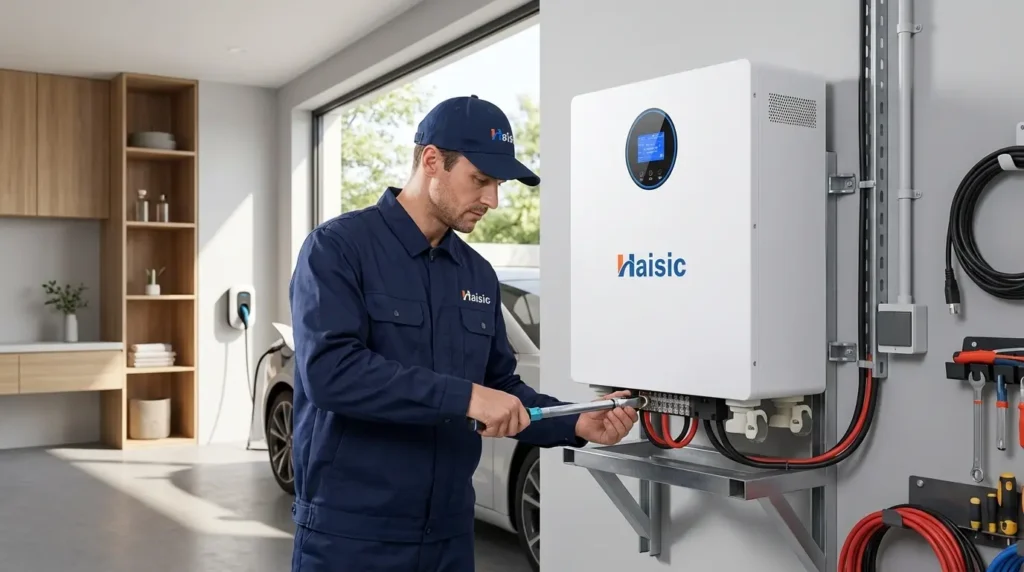
Sourcing Excellence: Why Lifecycle Begins at the Factory
Maximizing LFP battery cycle life for B2B projects is not just about operational management; it starts on the factory floor. Long-term stationary storage durability depends entirely on the initial quality of the cells integrated into the system.
The Grade A Cell Imperative
For commercial and industrial (C&I) energy storage, using Grade A LFP cells is non-negotiable. Grade A cells are manufactured to meet precise capacity, internal resistance, and voltage standards. Grade B or second-life cells often suffer from minor structural or chemical imperfections. In multi-cell B2B infrastructure, these small variations lead to cell mismatch, accelerated capacity fade, and localized thermal stress. Choosing a trusted, high-quality energy storage system manufacturer ensures that every cell behaves predictably, preventing premature system degradation.
Stringent Manufacturing Standards
As an ISO-certified energy storage system manufacturer, Haisic eliminates internal resistance deltas from day one. We enforce strict adherence to global quality and safety benchmarks to guarantee long-term asset reliability.
- ISO 9001: Guarantees strict production consistency and rigorous quality control at every phase of manufacturing.
- IEC 62619: Verifies the safety of cells and modules used in stationary industrial applications under electrical and thermal abuse conditions.
- UN38.3: Ensures the structural integrity of the battery packs during transportation and heavy operational stress.
By matching precise cell chemistry with verified production standards, we deliver the structural foundation required to achieve dependable 6000+ cycle performance in real-world B2B applications.
Frequently Asked Questions (FAQs)
What is the expected lifespan of a Grade A LFP battery in C&I storage?
In commercial and industrial (C&I) applications, a Grade A LFP battery cycle life typically spans 10 to 15 years. When operating under optimal conditions—such as a controlled temperature and managed charge profiles—these cells easily achieve 6000+ cycle performance before dropping to 80% of their original capacity. This makes them the most reliable choice for long-term stationary storage durability.
How does Depth of Discharge affect LCOS?
Depth of Discharge (DoD) directly dictates your Levelized Cost of Storage (LCOS). Consistently running a battery at 100% DoD accelerates capacity fade and reduces overall lifetime energy throughput. By restricting operation to an 80% DoD, you double the cycle life, drastically lowering the cost per kilowatt-hour over the system\’s lifespan and maximizing your commercial and industrial (C&I) energy storage ROI. For those budgeting a new project, understanding these long-term operational metrics helps clarify the true price per kWh battery storage dynamics.
Why does charging LFP batteries below 0°C cause permanent damage?
Charging Lithium Iron Phosphate cells below freezing disrupts the intercalation process. Because the lithium ions cannot insert themselves into the anode quickly enough, they accumulate on the surface instead. This causes metallic lithium plating, which permanently reduces capacity, increases internal resistance, and can form dendrites that threaten the structural integrity of the cell.
How does active BMS cell balancing optimize cycle life?
An intelligent Battery Management System (BMS) configuration uses active balancing to redistribution energy from stronger cells to weaker ones during operation. This prevents individual cells from hitting early low-voltage or high-voltage cutoffs. By maintaining uniform cell voltages across the entire pack, active balancing prevents localized overstress, maximizes usable energy capacity, and prevents premature calendar aging vs. cycling aging degradation across the pack.