










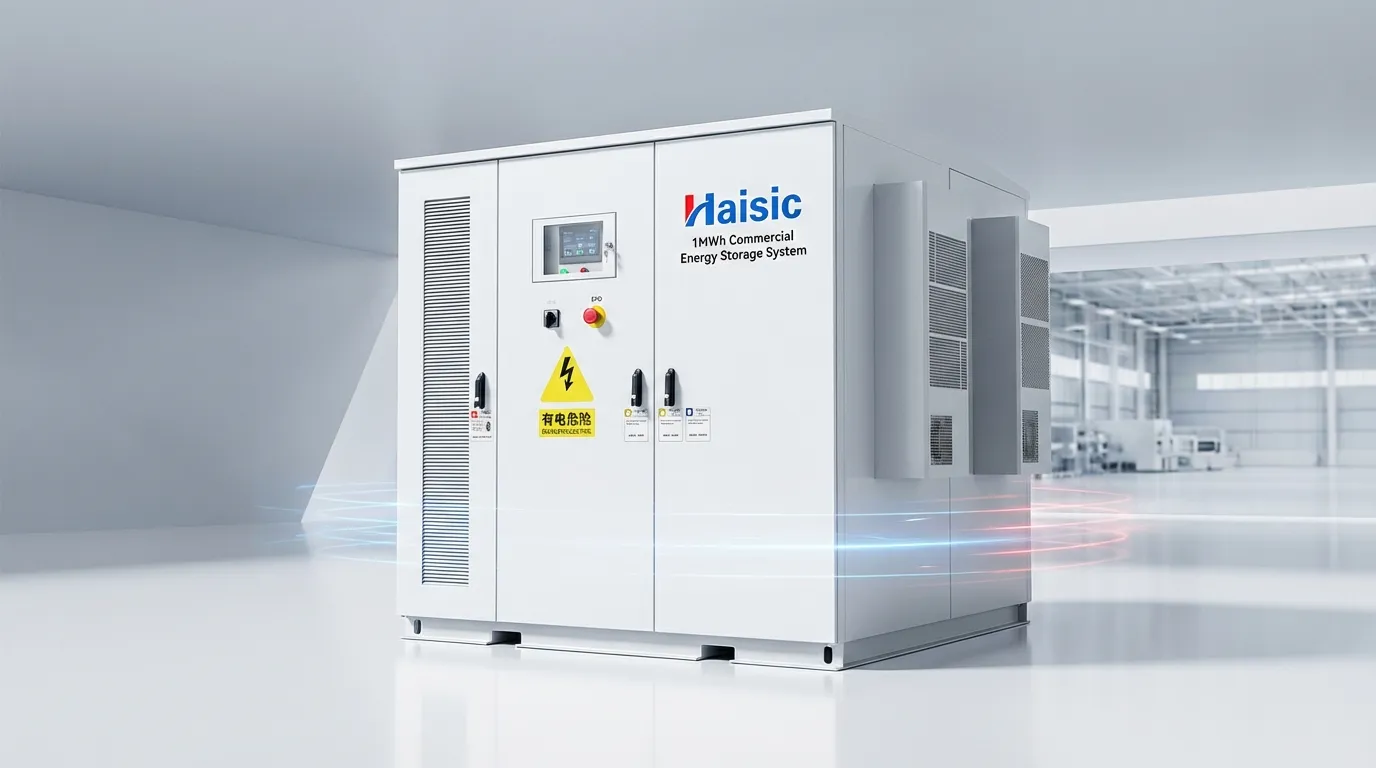
Why Businesses Are Switching to Commercial Energy Storage
We are seeing a massive shift in how industries manage power. It is no longer just about consuming electricity from the grid; it is about controlling how and when we use it. Commercial energy storage batteries have evolved from simple backup units into intelligent assets that actively reduce operational costs and secure energy independence.
For facility managers and business owners, adopting a BESS (Battery Energy Storage System) is primarily a financial decision driven by rising utility costs and the need for reliable power. Here is why the industry is making the switch.
Demand Charge Management (Peak Shaving)
For many commercial and industrial facilities, a significant portion of the monthly electricity bill isn\’t just for the total energy used, but for the highest amount of power drawn at a single time—known as demand charges.
Peak shaving strategies are the most effective way to combat these costs.
- Monitoring: The system tracks facility usage in real-time.
- Discharging: When energy consumption spikes (during equipment startup or high operational hours), the battery discharges stored power.
- Savings: This reduces the draw from the grid, keeping the facility in a lower demand tier and significantly lowering monthly expenses.
Energy Arbitrage (Load Shifting)
Electricity prices often fluctuate throughout the day based on demand, a structure known as Time-of-Use (TOU) rates. Energy arbitrage allows businesses to take advantage of these price differences.
- Buy Low: We charge the batteries during off-peak hours (like overnight) when grid electricity is cheapest.
- Sell High (Internally): When utility rates skyrocket during the day, the facility switches to battery power.
- Result: You effectively run your operations on cheap nighttime energy, bypassing expensive daytime rates.
Business Continuity & Resilience
Grid instability and weather-related outages pose a severe risk to operations, especially for hospitals, data centers, and manufacturing plants. Industrial battery backup provides a layer of security that traditional generators cannot match in terms of response time.
A commercial BESS offers:
- Instant Switchover: Uninterruptible power supply during grid failures.
- Critical Load Support: Keeps essential systems running without downtime.
- Grid Independence: Reduces reliance on aging utility infrastructure.
Renewable Integration (Solar + Storage)
While solar power is an excellent investment, it is intermittent—the sun doesn\’t always shine when you need power the most. Renewable energy integration is the key to maximizing the value of onsite generation.
By pairing solar with storage, businesses can:
- Store Excess Power: Capture energy generated during peak sun hours that would otherwise be sent back to the grid.
- Firm Generation: Smooth out fluctuations caused by cloud cover or weather changes.
- Extend Solar Usage: Utilize clean solar energy well into the evening after the sun has set.
Inside a Commercial BESS: The Technical Core
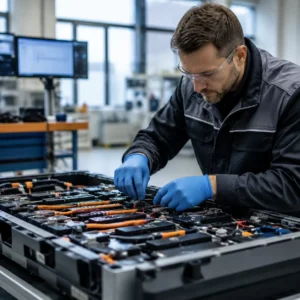
When you look past the metal enclosure, commercial energy storage batteries are sophisticated ecosystems of chemistry, software, and thermal engineering. We don\’t just stack batteries in a box; we engineer a cohesive system designed to withstand heavy industrial loads for decades. Understanding these components helps you see exactly what you are paying for.
Battery Chemistry: Why LFP Wins
In the world of C&I energy storage, Lithium Iron Phosphate (LFP) has effectively won the war against NMC (Nickel Manganese Cobalt). We prioritize LFP for one simple reason: safety.
LFP chemistry is chemically stable and significantly less prone to thermal runaway compared to other lithium variants. Beyond safety, it offers a superior cycle life. While an NMC battery might degrade after 2,000 cycles, a high-quality LFP system can deliver 6,000 to 10,000 cycles before significant capacity loss. For a business looking for a long-term asset, LFP is the only logical choice.
| Feature | LFP (Lithium Iron Phosphate) | NMC (Nickel Manganese Cobalt) |
|---|---|---|
| Safety | Extremely High (Stable) | Moderate (Risk of thermal runaway) |
| Cycle Life | 6,000+ Cycles | ~2,000 – 3,000 Cycles |
| Cost | Lower raw material cost | Higher (uses Cobalt/Nickel) |
| Lifespan | 15+ Years | 7-10 Years |
The \”Brain\”: Battery Management System (BMS)
Raw battery cells are useless without intelligence. The Battery Management System (BMS) is the brain that dictates every move the system makes. It monitors individual cell voltage, current, and temperature in real-time.
A robust BMS balances the charge across thousands of cells to ensure no single cell is overstressed, which maximizes the total lifespan of the unit. If you are evaluating a battery energy storage system company, their BMS architecture is the most critical differentiator. It is the first line of defense, instantly disconnecting the circuit if it detects a short or overheating event.
Power (kW) vs. Energy (kWh)
Sizing a commercial solar battery system requires understanding two distinct metrics. Confusing these can lead to buying the wrong equipment for your facility.
- Power (kW): Think of this as the \”horsepower\” or the size of the pipe. It determines how much electricity can be discharged at once. High kW is essential for starting heavy machinery or rapid peak shaving.
- Energy (kWh): This is the size of the fuel tank. It determines how long you can sustain that power.
For example, a 100kWh battery storage system with a 50kW output can run at full power for two hours. If your goal is long-duration backup, you prioritize kWh. If your goal is crushing short, high-intensity demand spikes, you prioritize kW.
Thermal Management Systems
High-performance batteries generate heat, and heat is the enemy of longevity. In a dense industrial battery backup setup, passive air cooling often isn\’t enough.
We utilize advanced thermal management systems—frequently liquid cooling technology—to keep cells within a tight optimal temperature range (usually between 20°C and 30°C). This active climate control ensures that the battery performs consistently whether the external environment is freezing or scorching, preventing premature degradation and maintaining warranty compliance.
Key Applications by Industry
Commercial energy storage batteries aren\’t a one-size-fits-all solution. Different sectors face unique power challenges, from managing massive inductive loads to ensuring 99.999% uptime. Here is how we see BESS technology delivering value across key industries.
Manufacturing & Industrial Plants
Factories are notorious for having \”spiky\” energy profiles. When heavy machinery or large motors start up, they pull a massive surge of current. This triggers high demand charges from utility providers.
- Peak Shaving: The battery discharges during equipment startup to flatten the load curve.
- Power Quality: Filters out voltage sags that can trip sensitive automation controllers.
For facilities dealing with these heavy loads, deploying a robust 200kW industrial and commercial energy storage battery ensures that production lines keep moving without incurring penalty rates from the grid.
EV Charging Stations
As electric vehicle fleets grow, the strain on the local grid increases. Level 3 DC fast chargers require huge amounts of power instantly. C&I energy storage acts as a buffer here. The system charges slowly from the grid (or solar panels) and releases that energy quickly when a car plugs in. This avoids expensive grid infrastructure upgrades and keeps demand charges low for station operators.
Office Buildings & Data Centers
For data centers and corporate HQs, power reliability is the primary asset. A split-second outage can corrupt data or disrupt global operations.
- Instant Backup: Unlike diesel generators which take time to spool up, batteries provide immediate power.
- Load Shifting: Offices can use stored energy during the day when electricity rates are highest (Time-of-Use optimization).
Microgrid Solutions
Remote operations, such as mining sites, island resorts, or resilient university campuses, are increasingly adopting microgrid solutions. By pairing commercial energy storage batteries with renewable generation, these sites can operate independently of the main utility grid. This provides energy security in areas where the central grid is unstable or nonexistent.
Safety Standards and Certifications
When dealing with high-voltage commercial energy storage batteries, safety isn\’t just a feature—it is the absolute foundation. We know that installing a large-scale energy system in a factory, office building, or warehouse requires total confidence that the equipment will operate without risk to personnel or property.
At Haisic, we prioritize compliance with the strictest global safety protocols. Understanding these certifications helps you distinguish between reliable hardware and risky alternatives.
UL 9540 & UL 9540A Compliance
If you are looking at a BESS for your business, UL 9540 is the gold standard you need to look for. This is the system-level certification. It doesn\’t just look at the battery cells; it evaluates how the entire battery energy storage system functions as a whole, including the inverter, the enclosure, and the software.
UL 9540A is equally critical but different. It is a test method specifically designed to evaluate fire safety hazards. It tests for thermal runaway propagation—essentially checking that if one cell fails, it won\’t cause a chain reaction that burns down the whole unit.
- UL 9540: Certifies the complete system safety and integration.
- UL 9540A: Provides data on fire characteristics and thermal runaway risks.
UL 1973 Standard for Battery Packs
Before a full system can be certified, the individual building blocks must be proven safe. UL 1973 is the standard for the battery packs themselves (stationary applications).
This certification subjects the battery modules to extreme stress tests, including:
- Overcharging and over-discharging
- External short circuits
- Drop tests and impact resistance
We ensure our modules meet these rigorous criteria so that the core of your energy storage is mechanically and electrically sound before it ever enters a cabinet.
Haisic’s Commitment to Safety
We don\’t cut corners when it comes to safety. As a manufacturer, Haisic is committed to delivering industrial energy storage solutions that business owners can trust implicitly. We utilize Lithium Iron Phosphate (LFP) chemistry specifically because it is chemically stable and far less prone to thermal issues than other lithium variants.
Our engineering team integrates multi-layer protection into every unit, from the Battery Management System (BMS) to physical fire suppression systems. When you choose Haisic, you aren\’t just buying a battery; you are investing in a certified, secure power asset designed to protect your business continuity.
Financial Analysis: ROI and Incentives
Let’s talk numbers. The decision to invest in commercial energy storage batteries rarely comes down to just \”wanting\” backup power; it’s about the bottom line. For most business owners I talk to, the goal is turning energy from an operational expense into a predictable asset. When you crunch the numbers correctly, the Return on Investment (ROI) for a BESS often looks much better than expected, thanks to a mix of savings and subsidies.
The Investment Tax Credit (ITC)
Government incentives are the biggest accelerator for adoption right now. In the United States, the Investment Tax Credit (ITC) allows businesses to deduct a significant percentage (often 30% or more) of the cost of installing energy storage from their federal taxes. Similar \”green energy\” subsidies exist globally to encourage carbon-free operations. These incentives effectively discount the upfront price of hardware, making premium industrial energy storage solutions far more accessible to small and medium enterprises.
Calculating Payback Period
How fast will the system pay for itself? The payback period depends heavily on how you use the battery. If you are strictly using it for backup, the ROI is hard to quantify until a blackout hits. However, if you use the battery for demand charge management (peak shaving), the savings appear on every monthly utility bill.
To get an accurate calculation, you need to factor in:
- Utility Rate Structure: The difference between peak and off-peak pricing.
- System Size: Larger, high-voltage commercial battery packs often offer better economies of scale.
- Operational Savings: Money saved by avoiding grid power during expensive windows.
Levelized Cost of Storage (LCOS)
While the sticker price matters, the Levelized Cost of Storage (LCOS) is the true metric of value. LCOS calculates the total cost of the system over its entire life divided by the total energy it will discharge.
This is where Lithium Iron Phosphate (LFP) chemistry shines. Because LFP batteries last for 6,000+ cycles, their LCOS is significantly lower than older lead-acid or NMC alternatives. You might pay a bit more upfront, but the cost per kWh stored over 10 or 15 years is incredibly low. When pairing storage with solar PV systems, the LCOS drops even further since your \”fuel\” (sunlight) is free.
How to Select the Right Manufacturer
Choosing the right partner for commercial energy storage batteries is just as critical as the hardware itself. The market is flooded with options, but for a BESS that delivers reliable ROI over a decade or more, you need a manufacturer that understands the intricacies of grid interaction and industrial loads.
Factory Direct vs. Middlemen
When you source C&I energy storage, dealing directly with the factory eliminates unnecessary layers. Middlemen often add markups and can delay critical technical communication. By working with a factory-direct partner, you gain access to the engineering team responsible for the Battery Management System (BMS) and cell integration. This ensures that if you have a unique load profile or site constraint, we can adjust the configuration immediately rather than waiting on a third party. It streamlines the supply chain and secures better pricing for your project.
Scalability and Modular Designs
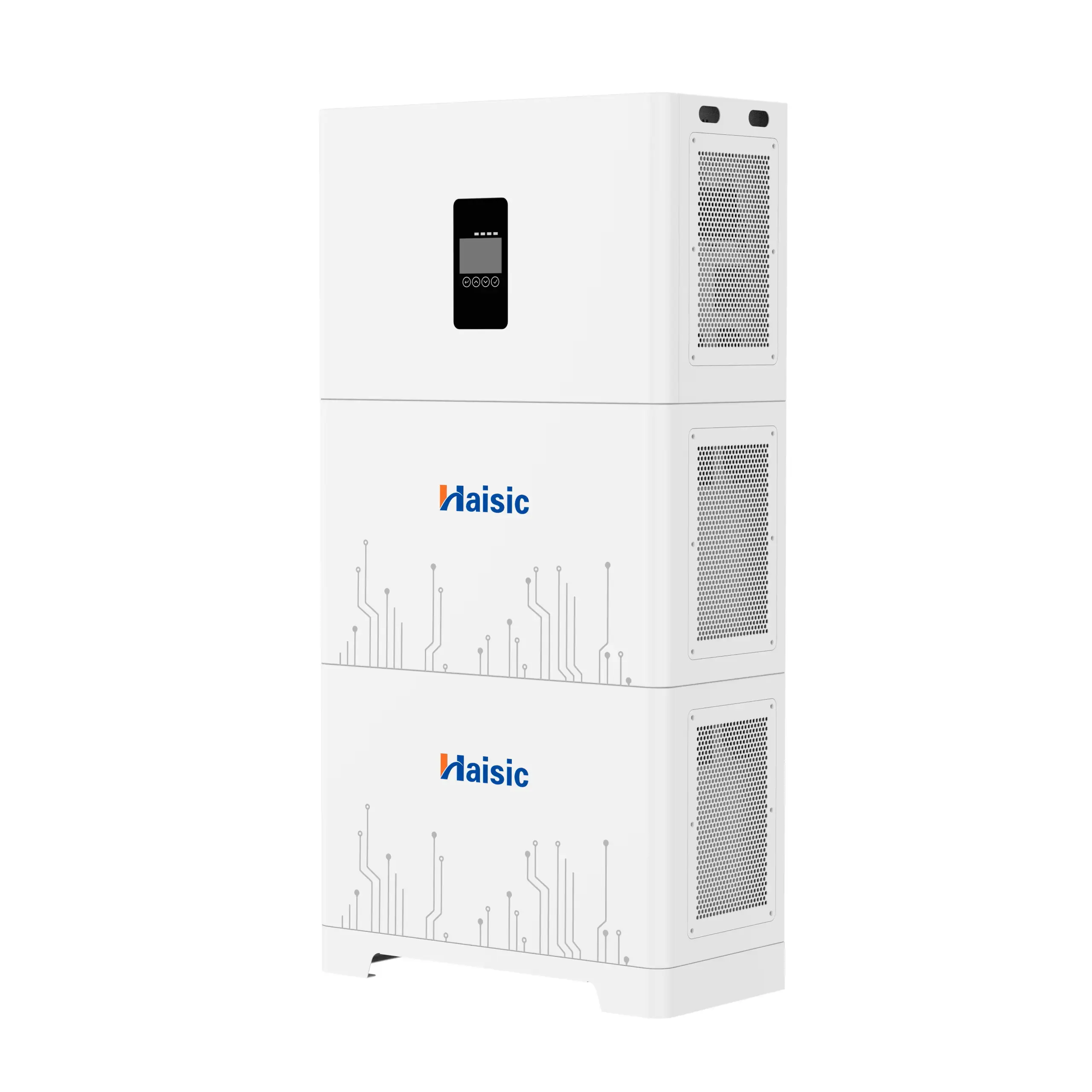
Business energy needs rarely stay static. A manufacturing facility might expand its production lines, or an office building might add EV charging stations. A rigid system will become a bottleneck. We prioritize modular architectures that allow you to start with the capacity you need today and expand later.
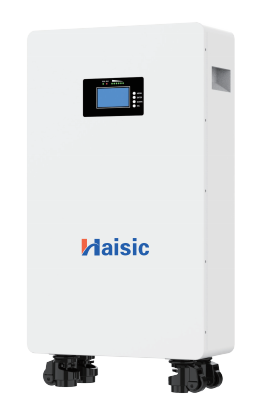
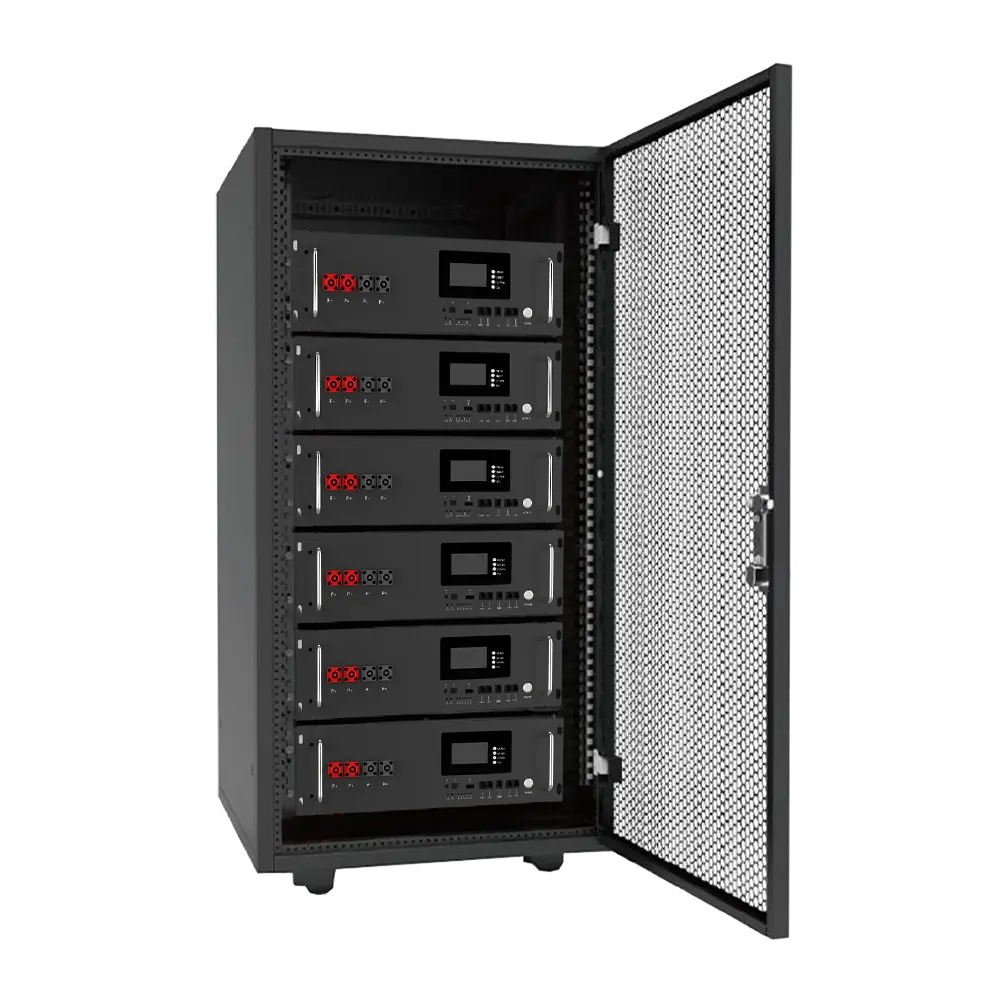
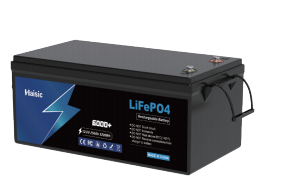
For example, high-voltage systems like the Haisic 256V 280Ah LiFePO4 battery pack are designed to be stacked or paralleled. This modularity means you can increase your energy storage capacity (kWh) or power output (kW) without ripping out existing infrastructure. It future-proofs your investment against rising energy demands.
Warranty & Support Essentials
A spec sheet tells you what a battery can do on day one; a warranty tells you what the manufacturer stands behind for the next ten years. In the commercial energy storage sector, look for performance warranties that guarantee a specific retention of capacity over time, not just a defect warranty.
Support goes beyond replacing a fuse. It involves ongoing monitoring and maintenance to ensure the system operates safely and efficiently. Proper solar battery storage installation and commissioning support are vital to ensure the warranty remains valid and the system integrates seamlessly with your existing electrical setup. Always verify that the manufacturer provides local technical support or has a certified partner network to handle on-site requirements quickly.
Frequently Asked Questions (FAQ)
How long do commercial storage batteries last?
Most modern commercial energy storage batteries, particularly those utilizing Lithium Iron Phosphate (LFP) chemistry, are built for long-term durability. generally, you can expect a lifespan of 10 to 15 years, which translates to roughly 6,000 to 8,000 cycles depending on usage patterns.
Factors influencing longevity include:
- Depth of Discharge (DoD): How deeply the battery is drained each cycle.
- Temperature Control: Proper thermal management preserves cell health.
- Cycle Frequency: Daily cycling for peak shaving strategies vs. occasional backup use.
Can I install battery storage without solar?
Absolutely. You do not need a solar PV array to deploy a BESS (Battery Energy Storage System). Many businesses utilize standalone grid-tied energy storage strictly for demand charge management and energy arbitrage.
The strategy is simple:
- Charge the battery from the grid during off-peak hours (low rates).
- Discharge the battery during peak demand times (high rates).
This allows facilities to reduce operating costs significantly without generating their own power. If you are considering this route, planning a comprehensive BESS installation ensures the system is sized correctly for your specific load profile.
What is the difference between residential and commercial batteries?
While the underlying chemistry might be similar, the scale and complexity differ massively. Residential units are typically smaller (5–20 kWh) and designed for basic home backup. C&I energy storage (Commercial & Industrial) is engineered for much higher power demands.
Key differences include:
- Capacity: Commercial systems often start at 100kWh battery storage and scale into the MWh range.
- Voltage: Industrial battery backup systems operate at high voltages (often 480V to 1000V+) to support heavy machinery.
- Thermal Management: Commercial units use advanced liquid cooling systems to handle the heat generated by rapid charging and discharging.