


Understanding Battery Pack Basics
When you ask “how to build a battery pack”, the first step is understanding a few core ideas: voltage, capacity, energy, C‑rate, cell types, and series/parallel configuration. Once you get these, every DIY lithium battery pack build becomes much easier.
Core Concepts: Voltage, Capacity, Energy, C‑Rate
-
Voltage (V)
Voltage is the “pressure” that pushes current.- A single Li‑ion (18650/21700) cell: ~3.6–3.7 V nominal, 4.2 V full, ~3.0 V empty
- A LiFePO4 cell: ~3.2 V nominal, 3.65 V full, ~2.5 V empty
-
Capacity (Ah or mAh)
Capacity tells you how long the battery can deliver current.- Example: 3,000 mAh (3 Ah) cell can provide 3 A for 1 hour (in theory).
-
Energy (Wh)
Energy is what really matters for range and runtime.- Formula: Wh = Voltage × Ah
- Example: 36 V, 10 Ah pack → 360 Wh
-
C‑Rate
C‑rate is the safe charge or discharge rate.- 1C on a 3 Ah cell = 3 A
- 2C on a 3 Ah cell = 6 A
For high‑current DIY e‑bike, RC, or power tools, choose cells with higher C‑rate and design a high current battery pack with enough parallel cells.
Common Lithium Cell Types (18650, 21700, LiFePO4)
Most DIY lithium battery packs use these formats:
-
18650 cells
- Size: 18 mm × 65 mm
- Common in: DIY e‑bike battery, powerwall, portable power station
- Huge variety, tons of tutorials (e.g., “18650 battery pack tutorial”).
-
21700 cells
- Slightly larger: 21 mm × 70 mm
- Higher capacity and current than most 18650s
- Great for high current battery pack design.
-
LiFePO4 prismatic/cylindrical cells
- Lower voltage per cell (3.2 V), but very safe, long cycle life
- Popular for solar powerwall battery build and portable power station battery pack.
Series vs Parallel Battery Pack Configuration
To build a lithium ion battery configuration that matches your project, you combine cells in series and parallel:
-
Series (S) – increases voltage, capacity stays the same
- Example: 10 cells in series (10S) of 3.6 V → 36 V pack
-
Parallel (P) – increases capacity and current, voltage stays the same
- Example: 4 cells in parallel (4P) of 3 Ah → 12 Ah group
You’ll often see packs described as 10S4P, 13S5P, etc. That’s the backbone of any series parallel battery pack.
How to Size a DIY Battery Pack for Your Project
To size a custom lithium battery pack build for an e‑bike, solar system, or RC vehicle, follow this simple process:
-
Pick your system voltage (Series count)
- E‑bike: 36 V, 48 V, 52 V (10S, 13S, 14S Li‑ion)
- Solar / backup: 12 V, 24 V, 48 V (4S, 8S, 16S LiFePO4)
-
Estimate your required energy (Wh)
- E‑bike:
- Short trips: 400–600 Wh
- Longer range: 700–1,000+ Wh
- Solar / powerwall: size in kWh based on daily usage.
- E‑bike:
-
Calculate required capacity (Ah)
- Ah = Wh ÷ Pack Voltage
- Example: Want 700 Wh at 48 V → 700 ÷ 48 ≈ 14.6 Ah
-
Decide parallel count (P)
- If each cell is 3 Ah and you need ~15 Ah: 15 ÷ 3 = 5P → 13S5P 18650 battery pack
This is the core logic behind battery pack voltage and capacity calculation, no matter if it’s a DIY e‑bike battery, solar powerwall battery build, or RC vehicle battery pack DIY.
Planning How to Build a Battery Pack

Before you pick up a tool, you need a clear plan. A DIY lithium battery pack only works well if voltage, capacity, layout, and safety are decided upfront.
Define Your Voltage and Capacity Goals
Start from your load, not from the cells you found on sale.
-
Voltage (V):
- E‑bike: usually 36V, 48V or 52V
- Solar / powerwall: often 24V, 48V, or higher (48V is the sweet spot)
- Portable power: 12V–24V for DC systems, or higher with an inverter
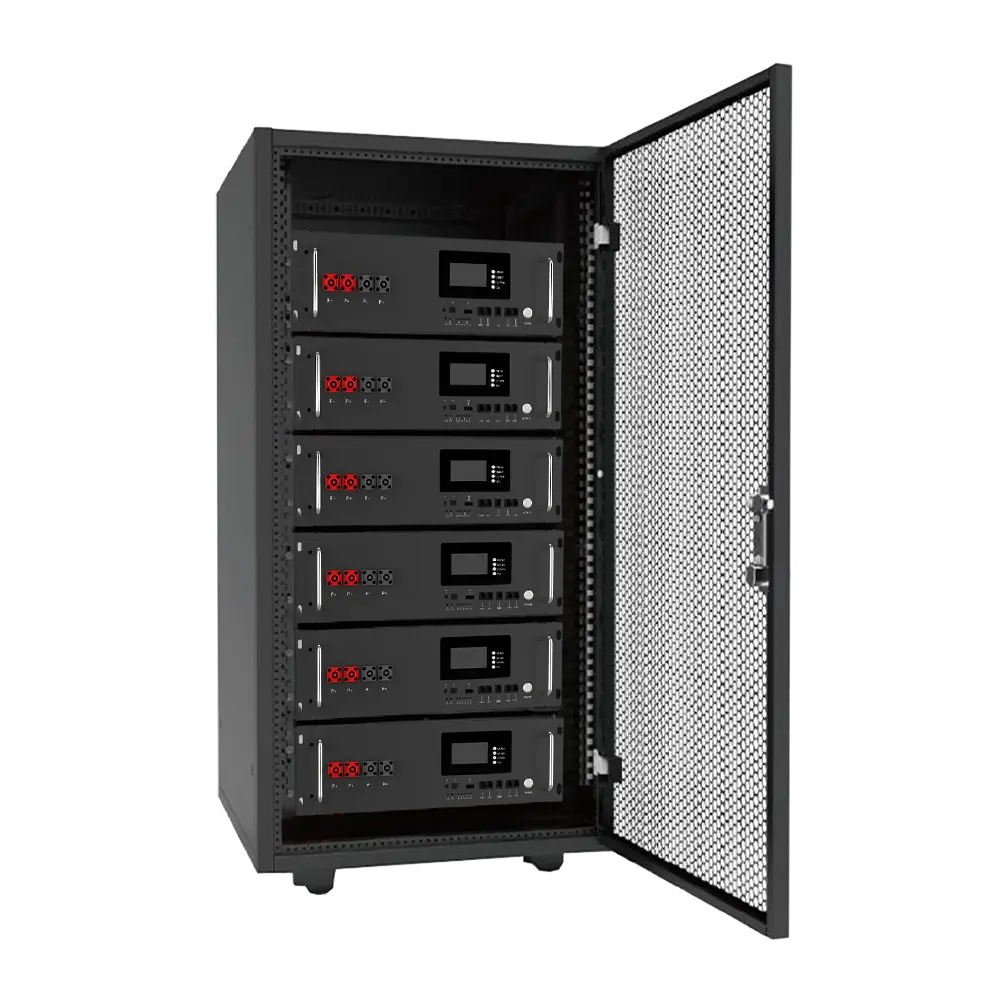
For reference, high‑capacity 48V and 51.2V LiFePO4 packs like our 48V 100Ah rack battery show what a stable, standard system voltage looks like.
-
Capacity (Ah) and Energy (Wh):
- Daily commuting e‑bike: 10–20Ah
- Home backup/solar: 100Ah+ at 24V or 48V
- Portable power station: typically 10–50Ah at 12–24V
Use: Wh = V × Ah to check if your design can actually cover your daily consumption.
Match the Battery Pack to Your Application
Dial the pack to your real‑world use:
-
E‑bike battery pack (DIY e‑bike battery):
- Needs high discharge current (high C‑rate)
- Must be compact, with strong vibration resistance
- BMS must support peak motor current
-
Solar powerwall battery build:
- Prioritize cycle life and safety (LiFePO4 is ideal)
- Needs good BMS for long‑term balance
- Think in kWh, similar to our 15kWh 51.2V LiFePO4 solar battery pack setups for home storage.
-
Portable power station battery pack:
- Focus on weight, size, and safe connectors
- Inverter startup current needs to be covered
Tools and Materials You Need to Build a Battery Pack
Get the basics ready before you start:
- Core tools:
- Spot welder (for nickel strip)
- Multimeter and, ideally, a capacity tester
- Wire stripper, crimping tool, heat gun
- Materials:
- Cells (18650, 21700, or LiFePO4)
- Nickel strip or busbars
- BMS matched to your pack (voltage + current)
- Insulation paper, fish paper rings, Kapton tape, heat‑shrink
- Proper connectors, fuse, and wiring
Safety Prep Before You Start Building
Treat every lithium cell as a potential fire source. Safety is non‑negotiable in safe battery pack assembly:
- Work on a non‑flammable surface with good ventilation
- Keep a Class D or lithium‑compatible fire extinguisher nearby
- Wear eye protection and insulated gloves
- Never work near flammable liquids, fabrics, or clutter
- Only handle undamaged, tested cells—no swollen, dented, or leaking batteries
Plan first, then build. A clear voltage target, realistic capacity, the right tools, and serious safety prep are what separate a solid custom lithium battery pack build from a risky experiment.
Choosing and testing lithium battery cells
When you’re learning how to build a battery pack, the cells you pick decide 80% of the final result. Cheap or badly matched cells will kill performance and safety, no matter how good your wiring and BMS are.
New vs recycled 18650 and LiFePO4 cells
For most DIY lithium battery pack builds, I strongly prefer new, grade‑A cells:
-
New 18650 / 21700 cells
- Best for compact, high‑power builds (DIY e-bike battery, RC, portable power).
- Consistent capacity and internal resistance = easier cell matching.
-
New LiFePO4 cells
- Great for solar powerwall battery builds, golf carts, and long‑life storage.
- Safer chemistry, long cycle life, and stable voltage profile.
- If you don’t want to build from bare cells, using a ready-made module like a 12V LiFePO4 deep cycle battery (for example, a 12V 70Ah LiFePO4 battery pack) is a solid shortcut.
-
Recycled / salvaged 18650 cells
- Only worth it if you have proper test gear and time.
- Expect high rejection rate and lots of sorting.
- Never mix random laptop cells into a serious high‑current pack.
If you’re building for an e‑bike, golf cart, or off‑grid system and want reliability, new cells or pre-built LiFePO4 packs (like a 12V 23Ah LiFePO4 battery for carts and light mobility) are simply the safer business decision.
How to test battery cells: voltage, capacity, internal resistance
Never trust only the label. For a DIY lithium battery pack, I test every cell:
-
Voltage check
- New Li-ion: typically 3.4–3.7V from the box.
- Reject cells below ~3.0V (unless you know they were stored that way on purpose).
-
Capacity test (must-have for cell matching)
- Use a hobby charger or dedicated cell tester.
- Charge to full, discharge at 0.5C–1C, log mAh/Wh.
- Keep only cells within a tight window (usually ±3–5% of each other).
-
Internal resistance (IR)
- Lower IR = better performance, less heat, less voltage sag.
- Use a tester that reports IR in milliohms (mΩ).
- Reject any cell with much higher IR than the group average.
Label everything. I mark each cell with measured capacity and IR, then group them by numbers, not by luck.
Cell matching for a safe, balanced DIY lithium battery pack
Balanced groups give you a stable series parallel battery pack that stays in sync and works well with the BMS.
Basic cell matching rules:
- Put similar capacity cells in the same parallel group.
- Keep IR as close as possible inside each group.
- Don’t mix different brands, ages, or chemistries in the same pack.
- If a cell looks damaged, runs hotter, or tests weird: do not use it.
This kind of battery cell matching makes your BMS’s job easier and reduces stress on individual cells, which helps prevent early failures.
Picking quality cells for long cycle life
If you want a custom lithium battery pack build that lasts:
- Stick to recognized cell brands or proven LiFePO4 modules.
- Buy from reliable suppliers, not random “ultra-mega 9000mAh” deals.
- Check real test data (capacity, IR, cycle life), not just marketing specs.
- For stationary or mobility applications, LiFePO4 is hard to beat on cycle life per dollar.
In short: good cells + proper testing = a safe, balanced DIY lithium battery pack that actually delivers the voltage, capacity, and lifespan you designed for.
Selecting a BMS for Your DIY Lithium Battery Pack
What a Battery Management System (BMS) Does
When you build a DIY lithium battery pack, the BMS is non‑negotiable. It quietly handles:
- Overcharge protection – cuts charging when any cell group hits max voltage
- Over‑discharge protection – shuts down load before cells are damaged
- Short‑circuit protection – kills output when a fault or wiring mistake happens
- Over‑current protection – keeps your high‑current battery pack from being abused
- Temperature protection – uses temp sensors to avoid thermal runaway and fires
- Cell balancing – keeps series groups at similar voltage for a balanced battery pack
Without a BMS, even premium lithium cells (Li‑ion or LiFePO4) will degrade fast and can become unsafe.
How to Choose BMS Size and Features
When you pick a BMS for a custom lithium battery pack build, match it to your voltage, chemistry, and current:
- Cell configuration – choose the exact series count (e.g. 4S, 7S, 13S, 16S) that matches your series parallel battery pack design
- Chemistry – Li‑ion vs LiFePO4 have different voltage limits; use the right BMS profile
- Continuous current – rate it above your real load (e.g. 30–40% margin for DIY e‑bike battery or portable power station battery pack)
- Peak current – check it can handle motor/controller surges for e‑bike, RC vehicle, or power tools
- Features to look for:
- Charge and discharge separate ports (C‑ and P‑) if you want cleaner control
- Bluetooth or UART for live pack data and logging
- Multiple temp sensors for bigger solar powerwall battery builds
If you prefer ready‑engineered packs instead of DIY, large format LiFePO4 battery systems such as a 12.8V 280Ah LiFePO4 battery pack with integrated BMS show the kind of protection and lifecycle performance you should aim to replicate in your own design.
Protection Functions You Must Have
At minimum, a safe DIY lithium battery pack BMS should offer:
- Overcharge / over‑voltage cutoff
- Over‑discharge / under‑voltage cutoff
- Over‑current and short‑circuit protection
- High and low temperature cutoff (especially for LiFePO4 battery pack DIY in cold climates)
These protections are the safety net for overcharge and over‑discharge protection and core to thermal runaway prevention.
Active vs Passive Balancing in DIY Packs
Cell balancing is key to a long‑life, balanced battery pack:
-
Passive balancing (most common)
- Bleeds off extra energy as heat from higher‑voltage cells
- Simple, cheap, good for small and mid‑size 18650 battery pack builds
- Ideal for DIY e‑bike battery and portable power station battery pack projects
-
Active balancing
- Moves energy from high cells to low cells
- Better for large solar powerwall battery build or high‑capacity LiFePO4 systems
- More expensive but improves cycle life and keeps big packs tighter balanced
For most people learning how to build a battery pack, a quality passive‑balancing BMS from a trusted supplier is the best starting point. Once you scale to bigger custom lithium battery pack builds, step up to active balancing for better efficiency and lifespan.
Designing Your DIY Battery Pack Layout and Configuration
When you’re learning how to build a battery pack, the layout matters just as much as the cells you choose. A smart layout gives you safe current paths, easy wiring, and better cooling.
Plan Series and Parallel Groups Step by Step
Start with the numbers, then design the shape.
- Define your “S” and “P”:
- Series (S) sets pack voltage
- Parallel (P) sets capacity and current
- Example: A 13S4P 18650 battery pack for an e‑bike = 13 series groups, each group has 4 cells in parallel.
- Keep every parallel group identical (same number of cells, same type, same wiring path) so the pack stays balanced and predictable.
Sketch it first:
- Draw each series group as a block.
- Decide where main positive and negative will exit the pack.
- Mark where the BMS balance wires will connect to each group.
Brick, Honeycomb and Custom Layouts
Different applications call for different shapes:
- Brick layout
- Simple rectangular blocks (common for solar powerwalls and portable power stations).
- Easy to stack, easy to strap and insulate.
- Honeycomb layout
- Cells arranged in a hex pattern, tighter packing and better impact resistance.
- Popular for DIY e‑bike batteries and compact portable power.
- Custom layout
- For tight spaces (RC vehicles, tool packs, custom frames).
- Use cell holders or 3D‑printed spacers to keep everything locked in place.
If you prefer a ready-made and safer approach for home or solar storage, it can be easier to start from a finished home lithium battery storage pack like the systems in this residential energy storage range, and add your own DC wiring around it instead of building the cell layout from scratch.
Current Paths, Nickel Strip Thickness and Busbars
High current is where DIY packs go wrong. Design the current path on paper before you weld anything.
- Keep main current paths short and wide. Avoid long skinny routes that heat up.
- Use pure nickel strip, not nickel‑plated steel. For most DIY lithium battery packs:
- 0.15–0.2 mm thick is common for 5–20 A per parallel group
- High current packs (e‑bike, power tools, inverters) may need double layers or copper busbars
- Use busbars (copper or thick nickel) for:
- Inverter or high‑power loads
- Packs over 50–60 A continuous
- Avoid “bottlenecks”: the narrowest nickel strip should not be the limiting factor.
Airflow, Cooling and Safe Spacing
Lithium cells hate heat. Even a compact series parallel battery pack needs some breathing room.
- Leave small gaps between cells (especially in brick layouts) to let air move.
- Don’t wrap the whole pack too tight in thick foam; protect it, but let heat escape.
- For higher power:
- Use cell spacers to keep rows separated
- Avoid burying the pack in closed foam-filled boxes with no vents
- Add metal plates or heat spreaders if the pack runs hot
- Make sure the layout allows air to move around the hottest zones: usually the middle of the pack and the main busbars.
Design the shape around your application, your current needs, and how you’ll cool it. A clean, planned layout is what separates a safe custom lithium battery pack build from a risky bundle of cells.
Connecting cells: spot welding and wiring
When I build a DIY lithium battery pack, strong, low‑resistance connections are non‑negotiable. How you connect 18650 or LiFePO4 cells will decide your pack’s performance, heat, and safety.
Why spot welding 18650 cells beats soldering
For a DIY lithium battery pack, spot welding nickel strip to the cell terminals is the standard method:
- No overheating the cell – spot welds are fast and local; soldering can overheat the cell, damage the separator, and shorten life.
- Lower contact resistance – good spot welds give you solid current paths for high‑current builds like DIY e‑bike batteries or portable power stations.
- More consistent results – once you dial in your settings, every weld is repeatable.
Use a proper battery tab spot welder, not a random improvised tool. Always test welds on scrap cells or dead cells first.
How to weld nickel strips for series and parallel connections
Think in terms of groups:
- Parallel groups (P): connect cell positives together and negatives together with nickel strip. This increases capacity and current capability.
- Series links (S): connect the positive side of one parallel group to the negative side of the next group to raise pack voltage.
Practical tips for nickel strip welding:
- Use pure nickel, sized for your current (e.g. 0.15–0.2 mm for mid‑power packs; busbars for high current).
- Keep strips short and direct to reduce voltage drop and heat.
- Do 2–4 welds per cell terminal so the strip can’t lift under vibration.
- Avoid stacking too many layers of strip; use a busbar if you need to carry big currents.
Building solid, low‑resistance battery pack connections
Good power connections keep your DIY lithium battery pack cool and efficient:
- Match wire gauge to your peak current and cable length (e.g. 12–8 AWG for high‑power e‑bike packs).
- Crimp lugs using a proper crimping tool; don’t rely on twisted wires or weak soldered lugs.
- Use short, thick paths for main positives and negatives.
- Add a main fuse as close as possible to the pack’s positive terminal for fault protection.
For larger systems like home or solar storage, I often recommend pre‑engineered solutions such as a 51.2V 100Ah LiFePO4 battery module when you want high current with minimal connection headaches.
Routing main power leads and balance wires cleanly
Clean wiring is about safety and easy troubleshooting:
- Run main power leads away from sharp edges and moving parts; protect them with loom or heat‑resistant sleeving.
- Keep balance wires short, neat, and labeled by cell group (P1, P2, P3…).
- Twist or bundle balance wires to reduce noise pickup and to keep the pack tidy.
- Fix everything with cable ties and adhesive mounts so nothing can rub, vibrate loose, or short out.
Done right, your custom lithium battery pack build will have robust, low‑resistance connections that carry current safely and are easy to inspect and service.
Building the battery pack enclosure
When you build a DIY lithium battery pack, the enclosure is what keeps everything safe, cool, and reliable. Don’t treat it like an afterthought – it’s the difference between a clean, pro build and a dangerous mess.
Choosing a battery pack case (plastic, metal, DIY, 3D print)
For a custom lithium battery pack, you’ve got four main options:
-
Plastic cases
- Light, cheap, easy to work with
- Good for DIY e‑bike batteries and portable power packs
- Choose flame‑retardant ABS or PC if possible
-
Metal cases (usually aluminum or steel)
- Much better heat dissipation and impact protection
- Ideal for high‑capacity or higher‑voltage packs (like home storage or small powerwall builds)
- Must be well insulated inside to avoid shorts
-
DIY boxes (plywood, tool cases, ammo cans, etc.)
- Flexible and easy to customize
- Great for solar power station battery pack projects
- You must handle all insulation and venting yourself
-
3D‑printed enclosures
- Perfect for tight spaces and custom shapes
- Use heat‑resistant materials (PETG, ABS, ASA – not basic PLA)
- Good for RC vehicle packs or compact portable power
If you’re aiming for a more serious home or small commercial system later, look at how pro systems like a 51.2V LiFePO4 home energy storage battery are packaged – rigid casing, defined terminals, and clear mounting points, very different from “loose cells in a box” builds.
Insulation, padding and vibration protection
Inside the enclosure, your job is simple: cells must never rub, crush, or short.
- Use fish paper, Kapton tape, or dedicated cell spacers between groups and against any metal wall
- Add foam padding or rubber strips anywhere the pack might see vibration (e‑bikes, scooters, RVs)
- Keep sharp edges, screws, and metal brackets away from cells and nickel strips
- Insulate the positive ends of cells carefully – that’s where most shorts start
For packs that move (e‑bike, scooter, portable station), think like an automotive engineer: the pack should survive constant vibration without anything shifting or chafing.
Heat management and spacing between cells
Lithium cells hate heat. The more current your DIY lithium battery pack pushes, the more you need to think about cooling:
- Leave small air gaps between parallel groups or use honeycomb cell holders
- Avoid wrapping the entire pack in thick foam with no way for heat to escape
- For high‑current or high‑capacity builds:
- Prefer metal cases to let heat spread and radiate
- Keep the pack away from sealed, hot spaces (like under black car panels in direct sun)
- If cells run hot during use, reduce current draw or improve airflow around the case
Look at large LiFePO4 storage systems such as a 51.2V 400Ah home energy storage battery – you’ll see they’re designed to move heat away from cells, not trap it.
Adding connectors, switches and fuses to the enclosure
Treat the outside of your enclosure like the “control panel” of your battery pack:
-
Connectors
- Use quality connectors rated above your max current (XT90, Anderson, high‑current DC plugs, etc.)
- Mount them solidly to the case so cables don’t stress the BMS or nickel
-
Main switch or contactor
- A master on/off switch (or DC breaker) is very useful for DIY e‑bike batteries, portable power stations, and bench packs
- Choose a DC‑rated switch that can actually handle your pack voltage and current
-
Fuses
- Always install a main fuse as close to the pack positive terminal as possible
- Size it slightly above your expected max current, but well below “cable‑melting” levels
- For high‑energy packs, use proper DC fuse holders or breakers, not car audio hacks
Keep all wiring in the enclosure neat, secured, and strain‑relieved. If the pack gets dropped, nothing inside should rip loose, twist, or short.
Testing your DIY battery pack
Once you’ve built your DIY lithium battery pack, testing comes before power. This is where you catch mistakes before they become smoke or fire.
Pre‑power safety checks with a multimeter
Before you plug anything in, grab a decent multimeter and run these quick checks:
-
Check total pack voltage
- Compare measured voltage to your series parallel battery pack design.
- A 13s Li-ion pack should sit around 48–52V when partly charged, a 16s LiFePO4 around 51–53V.
- If voltage is way off? Stop. You likely have a wiring or BMS issue.
-
Check each series group
- Probe every parallel group through the balance leads.
- All groups should be very close in voltage (within ~0.02–0.05V).
- A “dead” group (0V or very low) usually means a bad connection, short, or reversed cell.
-
Confirm polarity
- Triple‑check pack positive and pack negative with your meter before you connect a charger, inverter, or controller.
- Mark + and – clearly on the battery pack enclosure.
Checking pack voltage, groups and polarity
For a safe DIY lithium battery pack:
- Make a simple table or sheet:
- Group number (G1, G2, G3…)
- Voltage of each group
- Total pack voltage
- If one group is lower than the rest, note it. It may become a problem under load (voltage sag, early BMS cutoff).
- Never assume the battery management system (BMS) will “fix” wiring mistakes. It won’t.
First charge procedure
Treat the first charge like a test, not a routine:
- Use a charger matched to your pack voltage and chemistry (Li-ion vs LiFePO4).
- Charge in a safe place: non‑flammable surface, away from flammables, fire extinguisher within reach.
- Stay nearby and watch:
- Pack temperature (should stay just warm at most)
- Whether any series group climbs faster than others
- Whether the BMS cuts off correctly at full charge
If you’re building home or commercial storage later, this same discipline scales up to larger systems like a 51.2V 305Ah home energy battery or even a 100kWh containerized battery energy storage system.
First discharge procedure
Your first discharge tells you if the pack behaves under real load:
- Start with a moderate load (not full throttle on an e‑bike or full power on an inverter).
- Watch:
- Voltage drop under load (too much drop = high resistance, bad cells or thin nickel)
- Any hot spots in the pack or wiring
- BMS low‑voltage cutoff point vs what you designed
Stop the test if:
- One group drops much lower than the others
- The pack or wiring gets hot
- The BMS trips repeatedly under mild load
Logging performance and spotting early problems
Log data from day one. It’s the easiest way to keep a custom lithium battery pack build healthy:
- Record:
- Full‑charge voltage of each group
- Full‑discharge voltage of each group
- Ah or Wh delivered (if you have a watt‑meter)
- Load current during tests
Red flags to watch for:
- One group always low or always high → cell imbalance or mismatch
- Fast voltage sag under normal current → poor cells, weak connections, or undersized nickel
- BMS cutting off early → wrong BMS settings, wiring mistake, or a bad cell group
Testing is not optional. A careful battery pack testing procedure is what separates a safe, long‑life DIY e‑bike battery or portable power station battery pack from a risky one.
Charging and maintaining a lithium battery pack
Keeping a DIY lithium battery pack healthy is mostly about using the right charger, charging safely, and not abusing the pack when it’s stored.
Choosing the right charger for your pack voltage and chemistry
When you build a DIY lithium battery pack, the charger must match both voltage and chemistry:
- Match pack voltage:
- 3S Li-ion (3 × 3.6 V) → 12.6 V charger
- 4S LiFePO4 (4 × 3.2 V) → 14.6 V charger
- 13S e‑bike Li-ion → 54.6 V charger
- Match chemistry:
- Li-ion / Li‑poly: 4.2 V per cell max
- LiFePO4: 3.65 V per cell max
- Right current (amps):
- Safer rule: charger current ≤ 0.5C (e.g., 20 Ah pack → ≤10 A charger)
- Look for: CC/CV profile, short‑circuit protection, temperature protection, and reputable brand specs.
For larger home or solar setups, I usually recommend using chargers and storage units that are built as a system, like a 25.6 V LiFePO4 home energy storage battery or a 10 kWh wall‑mounted battery that includes a properly matched charger and BMS, similar to what’s used in dedicated home energy storage systems.
Safe charging habits at home or in the workshop
Treat every DIY lithium battery pack with respect:
- Charge in a safe spot: non‑flammable surface, away from beds, curtains, paper, fuel.
- Never leave charging unattended for long periods; check in regularly.
- Good ventilation: avoid closed, hot spaces.
- Use the right cables and connectors: rated for the current, no loose plugs or melted plastic.
- Stop if anything is off: strange smell, swelling, hot case, or unusual noise → unplug immediately.
Battery storage rules for long life
If you’re not using your lithium battery pack daily, how you store it makes a big difference:
- Store at 40–60% charge, not full and not empty.
- Cool, dry place: 10–25°C is ideal; avoid direct sun and freezing temps.
- No metal clutter nearby: reduce short‑circuit risk.
- Top up every 2–3 months to keep voltage in a safe range (especially for Li-ion).
Routine checks to keep your DIY pack healthy
Quick routine checks catch problems early:
- Voltage check:
- Pack voltage in expected range for stored SOC (state of charge).
- No group that’s far lower than the others (cell imbalance).
- Temperature check: after charge/discharge, pack should be warm at most, not hot.
- Visual inspection:
- No swelling, corrosion, burnt smell, or melted insulation.
- Nickel strips, busbars, and wires still tight and clean.
- Performance notes:
- Short runtime, big voltage sag, or frequent BMS cutoff = warning signs.
Follow these charging and maintenance basics, and your DIY lithium battery pack—whether it’s an 18650 e‑bike pack or a LiFePO4 powerwall—will stay safer, run longer, and give you more reliable energy every day.
Battery pack safety and risk control
Building a DIY lithium battery pack is serious business. Safety comes first, always. If you’re not confident with tools, electricity or fire safety, don’t build a pack—buy one instead.
Fire and thermal runaway basics in lithium packs
Lithium cells can go into thermal runaway if they’re:
- Overcharged or over‑discharged
- Short‑circuited
- Physically damaged or crushed
- Run too hard without cooling
When a cell fails, it can:
- Vent hot gas and flammable electrolyte
- Heat neighboring cells, causing a chain reaction
- Start a fire that’s hard to extinguish
Best prevention:
- Use a quality BMS with overcharge, over‑discharge and short‑circuit protection
- Stay within rated C‑rate and current limits
- Keep cells away from sharp edges and crushing forces
- Never charge unattended on flammable surfaces
For fixed installs like a home powerwall battery build, I pair safe pack design with stable systems such as a certified 51.2V 100Ah powerwall energy storage unit to keep risk as low as possible.
Personal protective gear and safe workspace setup
Treat your DIY lithium battery pack like any high‑energy tool.
Minimum personal protective gear:
- Safety glasses or face shield
- Heat‑resistant gloves when spot welding or handling hot cells
- Non‑flammable clothing (no loose synthetics)
Safe workspace basics:
- Work on a non‑conductive, non‑flammable surface (wood, ceramic, metal with insulation)
- Keep a Class D / lithium‑rated extinguisher or sand bucket nearby
- No loose metal tools near exposed cell terminals
- Good ventilation and no smoking, open flames or sparks
Using fuses, contactors and fire protection
Electrical protection is your second safety net after the BMS.
Smart protection choices:
- Main fuse on the pack positive, sized just above your max current
- Individual cell or group fuses (fuse wire, nickel with weak links) in high‑current packs
- Contactor or high‑current relay in large DIY lithium battery packs for safe disconnect
- Pre‑charge resistor to avoid inrush current when connecting big inverters or controllers
Fire protection add‑ons:
- Fire‑resistant enclosure (metal or high‑temp plastic)
- Cell spacing and vent paths so gas can escape
- Fire blankets or sand nearby for small pack fires
When to repair, rebuild or recycle a battery pack
Know when to stop using a pack. Risk is not worth a cheap fix.
Stop using and inspect if:
- You see swollen, dented or leaking cells
- The pack gets hot in normal use
- You smell a sweet/solvent odor from the pack
- Capacity drops suddenly or the BMS keeps cutting out
Choose the right action:
- Repair: Minor wiring/BMS issues, no physical cell damage, good IR and capacity
- Rebuild: Many weak cells, uneven cell groups, old DIY e‑bike battery packs with tired cells
- Recycle: Any sign of mechanical damage, corrosion, melting, or cells that won’t balance
Always discharge packs as low as you safely can before disposal, tape all terminals, and send them to a certified lithium battery recycling facility. Never throw a lithium battery pack in normal trash.
Troubleshooting DIY lithium battery pack problems
When you build a DIY lithium battery pack, problems will show up sooner or later. The goal isn’t to avoid every issue, it’s to know how to troubleshoot fast and safely so you don’t burn cells, BMS, or gear.
Fixing cell imbalance and poor capacity
If your series parallel battery pack loses range or sags early, you likely have cell imbalance or weak groups.
Common signs:
- One or two series groups sit at higher or lower voltage than the rest
- Pack hits low‑voltage cutoff early even though total voltage looks okay
- Capacity is way below your design number
How to check:
- Measure each parallel group with a multimeter after a full charge and after a full discharge
- Any group off by >0.05–0.10 V (for Li‑ion) needs attention
- If possible, run a capacity test on suspect cells or groups
Fix options:
- Use a smart charger or active balancer to slowly bring groups into line
- Replace obviously weak or damaged cells in that parallel group
- If several groups are low, the whole DIY lithium battery pack may be aged out – rebuilding is safer than patching
Never try to “fix” imbalance by overcharging the pack. You’ll just push stronger cells into dangerous voltage.
Tracking down overheating and voltage sag
Overheating and severe voltage sag under load usually point to high resistance somewhere:
Possible causes:
- Undersized nickel strip or busbars for the current draw
- Bad or cold spot welds on 18650 cells
- Loose connections at terminals, switches, or fuses
- Old / mismatched cells with high internal resistance
What to do:
- Use an IR thermometer or careful touch (with PPE) to find hot spots during load
- Inspect nickel strip and welds; re‑weld if needed
- Upgrade to thicker nickel or copper busbars for high‑current packs (DIY e‑bike battery, RC, power tools)
- If a cell or group gets significantly hotter than others, retire and replace that group
If the pack is for serious continuous loads (like a home solar storage setup), long term it’s often better to step up to a properly engineered system like a stackable LiFePO4 energy storage unit or an all‑in‑one home energy storage system instead of pushing DIY cells to their limit.
Diagnosing BMS cutoffs and wiring issues
A battery management system (BMS) shutting down the pack is annoying, but it’s doing its job.
Typical BMS cutoff reasons:
- Over‑current: you’re pulling more amps than the BMS rating
- Over‑voltage: wrong charger or too high charge voltage
- Under‑voltage: one weak series group hits bottom early
- Over‑temperature: probe placement or real heat problem
Steps to diagnose:
- Check pack voltage, then each series group
- Confirm BMS rating vs your controller / inverter current draw
- Review all balance leads – wrong order or loose leads confuse the BMS
- If charging issues only: confirm charger chemistry and voltage match your pack
Wiring red flags:
- Balance wires crossing or twisted randomly
- Two wires on the wrong series tap
- B‑, P‑, and C‑ terminals mis‑connected (very common failure)
If you can’t follow the lithium battery pack wiring diagram for your exact BMS model, don’t guess. Wrong BMS wiring can destroy cells in one cycle.
When to stop and get help from a pro
DIY is great until you hit the point where risk > savings. Stop and get help from a qualified builder or electrician if:
- Any cell vents gas, swells, or smells burnt
- Pack or wiring shows melted insulation, burn marks, or arcing
- The pack gets hot in storage with no load connected
- You are unsure how to safely open or disconnect a failing pack
- The pack is tied into high‑voltage solar or ESS systems above your comfort level
In those cases, isolate the pack:
- Disconnect everything
- Move it to a non‑flammable area (metal box, concrete floor)
- Never leave a suspect pack charging unattended
I treat custom lithium battery pack builds as serious electrical equipment, not a hobby toy. If something feels off and you can’t quickly explain it with a meter and basic tests, that’s your cue to stop experimenting and bring in a pro.