










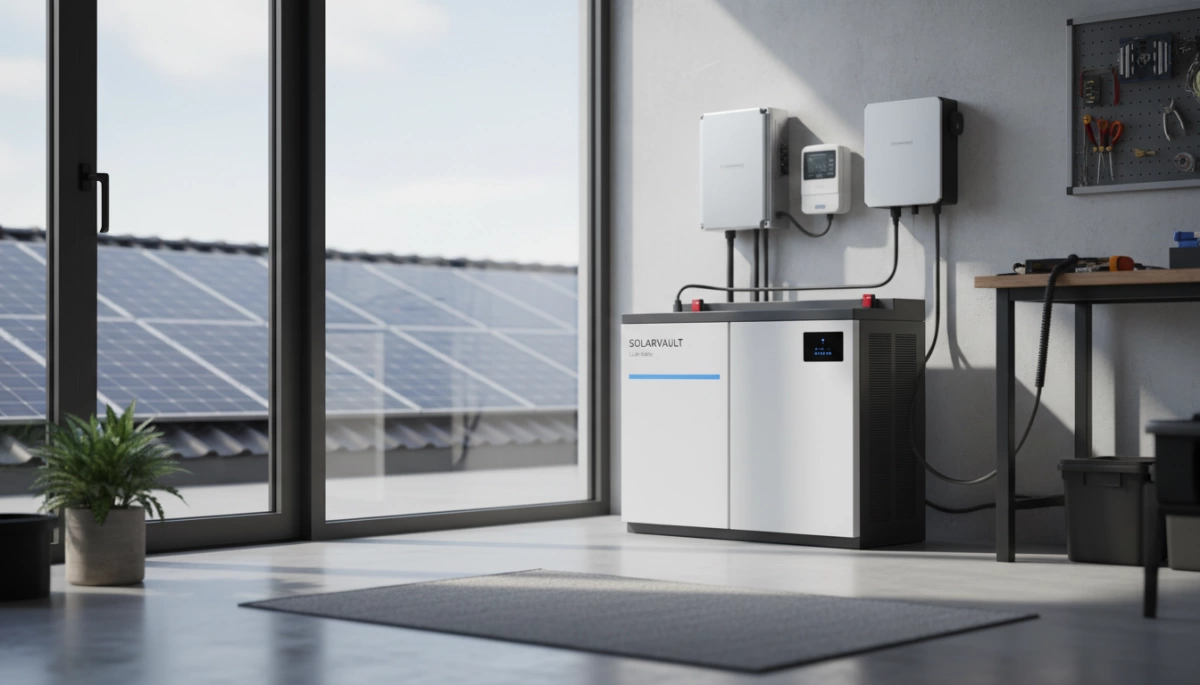
Understanding Lithium Batteries for Solar Panels
What Is a Lithium Solar Battery?
A lithium battery for solar panel systems stores the energy your panels generate so you can use it anytime—day or night, on-grid or off-grid.
Unlike car starter batteries, a lithium solar battery is built for deep, daily cycling and consistent power delivery.
In simple terms:
Solar panels = energy source.
Lithium battery = smart storage tank that keeps more of that energy usable.
You’ll see these terms used:
- Lithium-ion solar battery – broad category, includes several chemistries.
- LiFePO4 battery for solar – the most popular and safest lithium chemistry for home and off‑grid solar.
Lithium-Ion vs LiFePO4 for Solar Panel Systems
Both are “lithium-ion,” but they behave differently in solar use:
LiFePO4 (Lithium Iron Phosphate):
- Safer and more stable (very low fire risk)
- Long life: often 4,000–6,000+ cycles at 80% DoD
- Flat voltage curve for stable inverter performance
- Ideal for home solar battery systems, RVs, cabins, and off-grid lithium battery banks
NMC / NCA (common in EVs and some wall batteries):
- Higher energy density (more kWh in less space)
- Usually higher cost per kWh in stationary use
- Shorter cycle life than quality LiFePO4 in many cases
For most stationary solar energy storage systems, I strongly favor LiFePO4 for its safety, lifespan, and predictable performance.
Deep-Cycle Lithium Batteries for Solar Use
A deep cycle lithium battery for solar is designed to be charged and discharged every day without damage.
Compared to lead-acid, lithium deep-cycle batteries:
- Handle 80–100% depth of discharge (DoD) daily
- Maintain high usable capacity even at high loads
- Don’t need to be kept at 100% to stay healthy
If your panels are your main power source, deep‑cycle lithium is the difference between “it works sometimes” and “it works every day.”
Key Specs: Voltage, Ah, kWh, C-Rate, DoD
When you choose a lithium battery for solar system, focus on these specs:
Voltage (12V / 24V / 48V)
- 12V lithium battery for solar: RVs, vans, small off‑grid
- 24V lithium solar system: mid-size cabins, small homes
- 48V lithium battery solar: full home systems, higher efficiency
Ah (amp-hours)
- Capacity at a specific voltage.
- Example: 12V 200Ah ≈ 2.4 kWh of energy (12 × 200 / 1000).
kWh (kilowatt-hours)
- The practical “fuel tank” size of your solar panel battery storage.
- This is what you should compare between batteries.
C-rate (charge/discharge rate)
- 1C = charge or discharge full capacity in 1 hour.
- A 100Ah battery at 0.5C can safely charge/discharge at 50A.
- Higher C-rate = better support for big loads (AC units, pumps, inverters).
DoD (Depth of Discharge)
- How much of the battery you use before recharging.
- Lithium comfortably supports 80–100% DoD; lead-acid does not.
Cycle Life and Battery Lifespan in Solar Setups
Cycle life is how many times a battery can be charged and discharged before its capacity drops (usually measured to 80% of original).
Typical ranges in solar battery storage:
- Lead-acid / AGM: ~500–1,000 cycles at 50% DoD
- Quality LiFePO4 solar battery: 3,000–6,000+ cycles at 80% DoD
- That’s often 10–15 years of real-world solar use with daily cycling
This is where lithium crushes “cheap” alternatives.
Even if a lithium solar battery costs more up front, cost per kWh over its life is usually far lower.
How Lithium Chemistry Improves Solar Energy Storage
Lithium chemistry transforms how efficient your solar power for lithium battery setup can be:
- Higher round-trip efficiency: often 94–98% vs 75–85% for lead-acid
- More usable capacity: up to 100% vs 50% typical for lead-acid
- Fast charging from solar: ideal with an MPPT charge controller for lithium
- Minimal voltage sag: your solar inverter battery compatibility stays stable under load
- Low maintenance: no watering, no equalizing, no sulfation
The result: you capture more of what your panels produce and waste less in storage.
Common Myths About Lithium Solar Batteries and Safety
There’s a lot of confusion around lithium battery for solar power safety. Let’s clear a few myths:
Myth 1: All lithium batteries are a fire risk.
- Reality: LiFePO4 is one of the safest chemistries available.
- With a BMS protected solar battery, thermal runaway risk is extremely low.
Myth 2: Lithium batteries can be charged like lead-acid with any controller.
- Reality: you need correct solar battery compatibility and charge settings.
- Use a controller with proper lithium profiles and voltage/temperature protections.
Myth 3: Lithium can’t handle cold or heat.
- Reality: good lithium batteries have low-temperature cut-off and protection.
- You just need proper placement, ventilation, and sometimes light insulation or heating in extreme climates.
When engineered correctly, a lithium battery pack for solar panel systems is not only efficient—it’s safe, predictable, and built for long-term use.
Why Use a Lithium Battery for Solar Panels?
If you’re serious about getting the most from your solar panels, a lithium battery for solar panel setups is usually the smartest move. Here’s why.
Lithium vs Lead-Acid & AGM for Solar Storage
| Feature | Lithium Solar Battery (LiFePO4 / Li-ion) | Lead-Acid / AGM Solar Battery |
|---|---|---|
| Usable capacity | ~80–100% DoD | ~30–50% DoD |
| Cycle life (real-world) | 3,000–6,000+ cycles | 500–1,500 cycles |
| Round-trip efficiency | 92–98% | 75–85% |
| Maintenance | Zero | Needs checks, equalization (flooded) |
| Voltage stability | Very stable | Sags under load |
| Ideal for daily cycling? | Yes | Only if oversized |
Bottom line: for solar panel battery storage that cycles every day, lithium simply lasts longer, works better, and needs less attention.
Higher Round-Trip Efficiency with Solar Charging
A lithium solar battery wastes less of the energy your panels produce:
- Typical lithium round‑trip efficiency: 92–98%
- Typical lead‑acid: 75–85%
That means:
- You get more usable kWh from the same solar array
- You can often install smaller arrays or smaller battery banks for the same result
- Better ROI on every watt you install
Usable Capacity & Depth of Discharge (DoD)
With solar, DoD is everything:
- Lead-acid doesn’t like going below 50% regularly
- Lithium (especially LiFePO4 battery for solar) is fine at 80–90% DoD daily
This means you can:
- Use a smaller Ah/kWh bank for the same usable energy
- Run deeper at night without killing your batteries
- Keep performance consistent even as the battery ages
Weight, Size, and Space Savings
A deep cycle lithium battery for solar is much more energy‑dense:
- Around 50–70% lighter than lead-acid for the same kWh
- Much more compact, great for RVs, vans, boats, tiny homes, and wall‑mounted home solar battery systems
For tight spaces or mobile solar (RV solar lithium battery, off‑grid cabin, boats), lithium is almost a no‑brainer.
Total Cost of Ownership & ROI
Upfront, a lithium ion solar battery costs more. Over its life, it usually costs less per kWh delivered.
Why the ROI is better:
- 3–5x more cycles than lead-acid
- More usable capacity (higher DoD)
- Higher efficiency = more usable solar power
- No replacement every 3–5 years like cheap lead-acid
If you’re looking at long‑term numbers, check out this breakdown of best battery storage for solar and life‑cycle savings in a home system: best battery storage options for solar.
Environmental Impact of Lithium Solar Batteries
No battery is “perfect,” but lithium does a few things better:
- Lasts longer → fewer batteries manufactured and scrapped
- Higher efficiency → more clean energy actually used
- Modern LiFePO4 chemistry is more stable and safer than older lithium types
- Recycling infrastructure for lithium is growing fast in North America, Europe, and Asia
Used right, a long life lithium solar battery reduces waste compared with multiple sets of dead lead-acid batteries.
When Lead-Acid Still Makes Sense
Lead-acid isn’t dead. It still works fine when:
- Very low budget and very low usage (e.g., small cabin used a few weekends a year)
- Short-term projects where long lifespan doesn’t matter
- Backup-only systems that rarely cycle (and you’re okay with the maintenance)
If a system is small, rarely used, and every dollar counts, a cheap lead-acid or AGM can be acceptable. But for daily solar energy storage, off-grid lithium battery systems almost always pay off over time.
In most cases, if I’m designing a system for real daily use—home backup, off‑grid cabin, RV, or hybrid solar and battery system—I’ll choose a LiFePO4 lithium battery for solar system every time.
Matching a Lithium Battery for Solar Panel Systems
Getting the right lithium battery for your solar panel setup is where performance and savings really come from. If the battery bank is wrong, even the best solar panels can feel weak.
How solar panels and lithium batteries work together
Here’s the flow in a typical lithium battery for solar power system:
- Solar panels produce DC power when the sun is out
- A solar charge controller (ideally MPPT) optimizes and feeds that power into the lithium solar battery
- A solar inverter converts stored DC power to AC for your home, RV, or business loads
The better matched your panel array, controller, inverter, and lithium battery are, the higher your efficiency and usable energy each day.
Calculating your daily energy use (kWh)
To choose the best lithium battery for solar, first know your daily usage:
- List every device you want to run (fridge, lights, laptops, pump, AC, etc.)
- Note power (W) × hours per day for each
- Add everything up → this gives daily kWh
Example:
- 100W laptop × 4h = 0.4 kWh
- 150W fridge × 10h (average run) = 1.5 kWh
Total daily use ≈ 1.9 kWh
This number drives your solar panel size and your solar battery storage size.
Estimating the lithium battery capacity you need
Once you know daily kWh, convert to battery capacity:
- Battery energy (kWh) = (Daily use × autonomy days) ÷ usable DoD
For a LiFePO4 battery for solar, we usually assume 80–90% usable depth of discharge (DoD).
Example:
- Daily use: 2 kWh
- Autonomy: 2 days (no sun backup)
- DoD: 80%
Battery size ≈ (2 × 2) ÷ 0.8 = 5 kWh lithium battery pack for solar panel systems.
Choosing 12V, 24V, or 48V lithium for solar
The right system voltage depends on power level and cable runs:
- 12V lithium battery for solar – Best for small loads, RVs, vans, boats, cabins up to ~1–1.5 kW
- 24V lithium solar system – Good for medium setups, small homes, higher-efficiency inverters
- 48V lithium battery solar – Ideal for full home solar battery systems, higher power, less cable loss
As your power demand grows, go up in voltage. It keeps currents lower and wiring cheaper and safer.
Off-grid vs grid-tied battery sizing
Off-grid lithium battery:
- Needs to cover 100% of your critical loads
- Usually sized for 2–5 days of autonomy
- Battery is your main energy source at night and during bad weather
Grid-tied + lithium solar battery (hybrid system):
- Often sized to cover evenings + short outages
- You can lean on the grid, so you may only need 0.5–1.5 days of storage
- Focus is on peak shaving and backup, not full independence
For larger homes or commercial sites, modular container solutions like a 1MWh ESS solar energy storage container system or a 100–500kW solar power system in a containerized ESS can integrate directly with big PV arrays and inverters, giving scalable storage and clean backup for higher loads.
Planning autonomy days for bad weather
Autonomy days = how long your lithium solar battery can run your loads with zero sun.
- Mild climates, reliable grid: 0.5–1 day is often enough
- Unstable grid / remote cabin: 2–3 days
- Critical business loads: 3–5 days
More autonomy = bigger battery bank, but also more security and comfort.
Avoiding over-sizing and under-sizing your solar battery bank
You want the sweet spot:
Under-sized battery bank:
- Battery empties early every night
- BMS shuts down, lights go out
- Deep cycles every day → shorter lithium battery lifespan in solar use
Over-sized battery bank:
- Huge upfront cost
- Batteries rarely cycle deeply → slow ROI
- Panels may be too small to recharge a big bank quickly
To avoid both:
- Size the solar panels so they can comfortably recharge the battery in 1–2 sunny days
- Match inverter power to your real peak loads, not some random “future maybe” guess
- For most homes, aim for one full day of usage in storage, then adjust up or down based on your grid reliability and budget
When you get the match right—solar panels, lithium battery bank, inverter, and controller working in sync—you get a stable, efficient solar energy storage system that actually delivers the performance and backup you’re paying for.
Key Features to Look for in a Lithium Battery for Solar Panel Systems
When you’re picking a lithium battery for solar power, a few specs matter way more than the marketing. Here’s what I always focus on.
1. Built‑in BMS (Battery Management System)
A BMS‑protected solar battery is non‑negotiable.
A good BMS will:
- Protect against overcharge / over‑discharge
- Limit over‑current and short‑circuits
- Manage cell balancing for longer life
- Add high/low temperature cut‑off for safety
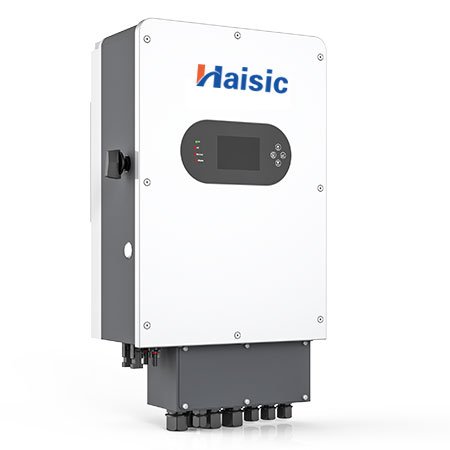
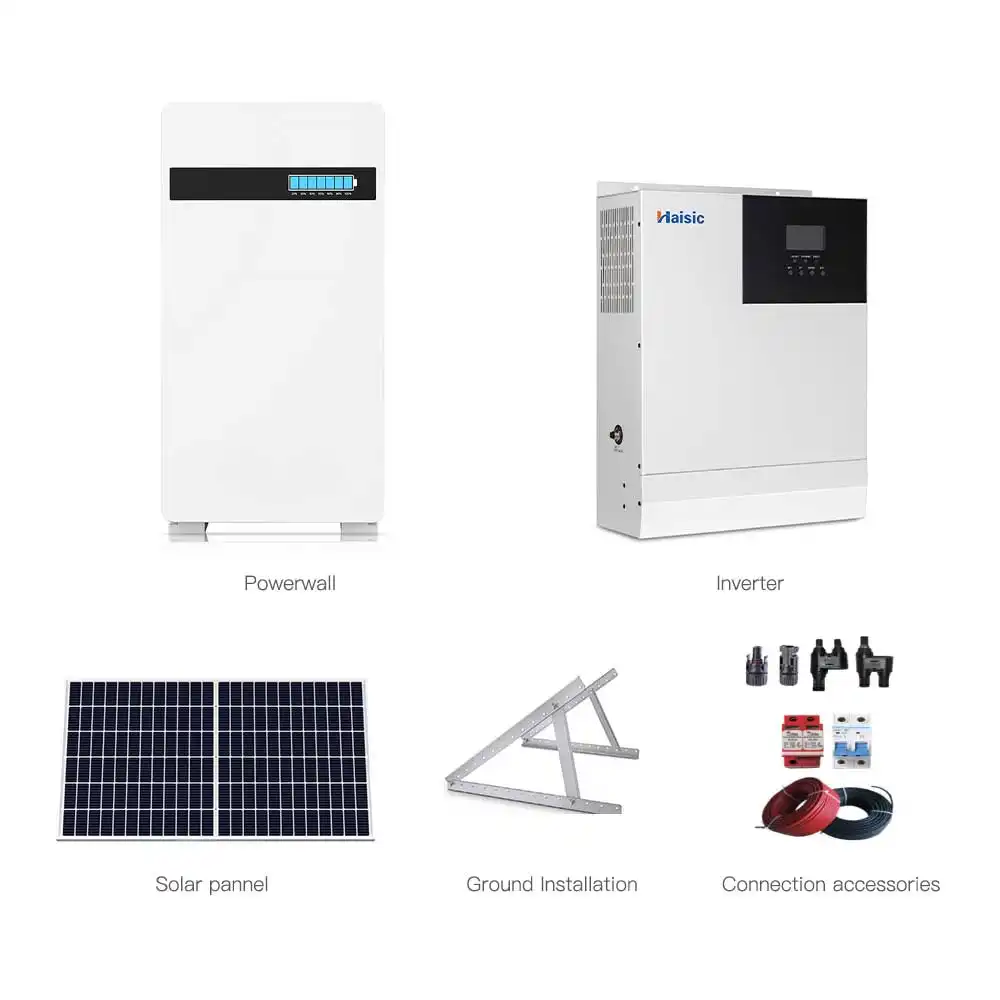
If you’re pairing with hybrid inverters like a Haisic 3kW–6kW hybrid solar inverter with MPPT, BMS communication support (CAN/RS485) is a big plus for plug‑and‑play setup.
2. Charge & Discharge Rates (C‑Rate)
You want a lithium solar battery that can comfortably handle your inverter and solar input.
Key points:
- Look for at least 0.5C continuous (e.g. 100Ah battery = 50A continuous)
- For high‑power inverters, 1C discharge is ideal
- Check max charge current matches your MPPT charge controller for lithium
| Spec | What It Means | What to Aim For |
|---|---|---|
| Continuous Discharge | How much current you can pull non‑stop | 0.5C–1C |
| Peak Discharge | Short bursts for start‑up loads | 2C+ for fridges, pumps, motors |
| Max Charge Current | How fast solar can recharge the battery | 0.3C–0.5C for daily solar cycling |
3. Temperature Range & Low‑Temp Cut‑Off
Lithium batteries hate charging when they’re too cold.
Look for:
- Operating range: around ‑20°C to 60°C (discharge)
- Charging range: typically 0°C to 45°C
- Low‑temperature charge cut‑off built into the BMS (critical for RV, van, cabin, and outdoor solar setups)
If you live in colder regions, a battery with built‑in heaters or a well‑insulated, weather‑protected box is worth the cost.
4. Cycle Life, Warranty & Real‑World Performance
Don’t just chase the highest number on paper.
Good targets for LiFePO₄ battery for solar:
- 3,000–6,000 cycles @ 80% DoD (Depth of Discharge)
- 10+ years design life in normal solar use
- 5–10 year warranty from a real, reachable company
Ask:
- Are the cycle life numbers at 25°C, 1C, and 80% DoD?
- Are there solar‑specific test conditions?
- Do users report good life in off‑grid lithium battery setups, not just lab tests?
5. Solar Inverter & Charge Controller Compatibility
Your lithium solar battery must play nice with your electronics.
Check:
- Voltage match: 12V, 24V, or 48V lithium battery solar setups
- Pre‑defined lithium profiles in your solar inverter and MPPT controller
- Support for hybrid solar systems and popular brands
If you’re going with a hybrid setup, pairing a lithium battery with a Haisic 10kW IP65 hybrid solar inverter with MPPT or similar all‑in‑one gear makes the whole system easier to configure and scale.
6. Expandable & Modular Solar Battery Design
Most people add more loads later. Design for that now.
Look for:
- Parallel support (add more batteries to increase capacity)
- Clear max number of units in series/parallel
- Rack‑mount or wall‑mount packs that can be stacked for home solar battery systems
- Smart BMS that supports multi‑battery communication
This matters a lot for home solar battery system expansion and future off‑grid solar power kit upgrades.
7. Certifications & Safety Standards
For a home solar energy storage system, safety and compliance are key.
Strong signs of quality:
- CE, UL, IEC, UN38.3 for lithium batteries
- IP rating (e.g. IP20 for indoors, higher for garages or harsher conditions)
- Clear MSDS (Material Safety Data Sheet)
- Meets local grid and building code requirements
Choose lithium batteries that are clearly marketed as solar panel battery storage, not generic packs with no documentation. This is how you avoid low‑quality or fake lithium solar batteries and keep your system safe and insurable.
Solar Compatibility: Inverters, Controllers, and Wiring
Getting a lithium battery for solar panel setups to work properly isn’t just about the battery. It’s about how the inverter, charge controller, and wiring all match and talk to each other. If you get this right, your system runs safer, more efficiently, and your lithium solar battery lasts longer.
Pairing Lithium Batteries with MPPT and PWM Controllers
For any lithium solar battery, the charge controller is critical.
- MPPT controllers are the best match for lithium battery for solar systems:
- Higher efficiency (more of your panel power becomes stored energy)
- Better for higher-voltage PV strings and larger systems
- More flexible with different panel configurations
- PWM controllers can work with lithium, but:
- Less efficient, better only for small 12V lithium battery for solar setups
- Must explicitly support
Types of Lithium Batteries for Solar Applications
LiFePO4 vs NMC vs other chemistries for solar
For most solar panel systems, LiFePO4 (lithium iron phosphate) is the smart choice:
- LiFePO4 battery for solar
- Very safe, stable, low fire risk
- 3,000–6,000+ cycles at 80% DoD
- Slightly lower energy density, but perfect for home, RV, and off‑grid solar
- NMC / NCA lithium‑ion solar battery
- Higher energy density, used in EVs and some wall batteries
- Shorter lifespan, more sensitive to heat and abuse
- Bottom line: If you want long life, safety, and daily cycling, choose a LiFePO4 lithium battery for solar system over NMC.
Rack-mounted vs wall-mounted lithium solar battery packs
When you build a solar panel battery storage system, form factor matters:
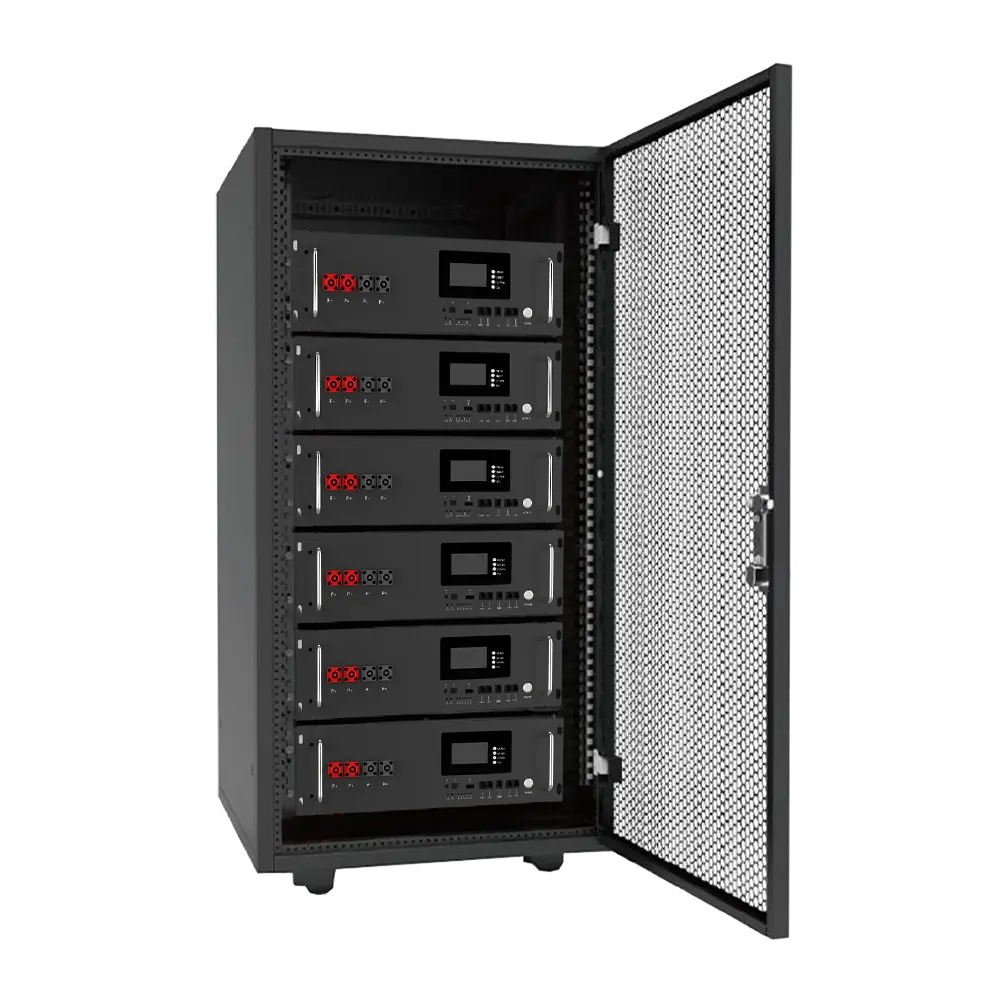
- Rack-mounted lithium solar battery
- Ideal for larger off‑grid or hybrid systems
- Easy to scale: just slide more batteries into the rack
- Clean setup for utility rooms, garages, or small server‑style closets
- Wall-mounted solar battery
- Great when floor space is tight
- Popular for home solar battery systems and small businesses
- Keep them on a solid wall, away from direct sun and moisture
Both options usually use 48V lithium battery solar modules with built‑in BMS and are designed to work with modern hybrid inverters.
All‑in‑one inverter plus battery systems for solar
If you don’t want to mix and match parts, an all‑in‑one solar inverter battery system is a simple route:
- Inverter, BMS, and lithium solar battery in one unit
- Cleaner wiring and faster installs
- App monitoring and smart controls built in
For example, pairing a modular LiFePO4 battery bank with an off‑grid pure sine wave inverter with Wi‑Fi, like the Haisic 5kW/6kW off‑grid solar inverter, gives you a tidy, ready‑to‑expand solar energy storage system.
Portable lithium power stations with solar input
For mobile users, a portable solar battery pack is often enough:
- Built‑in lithium battery pack for solar panel charging
- AC outlets, USB, DC outputs in one box
- Plug‑and‑play with folding solar panels
- Perfect for camping, van life, tailgating, job sites
Look for lithium ion battery for solar panel inputs, MPPT controllers inside, and at least 1,000+ cycles.
High‑voltage lithium batteries for larger solar homes
Big homes and small businesses benefit from high‑voltage solar battery systems:
- Typically 100–400V battery stacks
- Higher efficiency and lower current for the same power
- Designed for hybrid solar and battery systems with higher output inverters
- Better for whole‑home backup and long-duration off‑grid setups
These are usually rack or wall systems using LiFePO4 modules wired in series.
RV, marine, and cabin lithium batteries for solar use
For RV solar lithium battery, boats, and remote cabins, you usually want:
- 12V lithium battery for solar (or 24V for bigger rigs)
- LiFePO4, deep‑cycle, with built‑in BMS
- Vibration‑resistant, sealed case, good low‑temperature protection
- Light weight vs lead‑acid, so you stay within payload limits
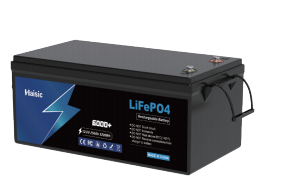
A compact 12V LiFePO4 deep cycle lithium battery for solar, like a 70Ah class unit, is a great drop‑in upgrade for many RV and cabin systems.
New vs used or refurbished lithium batteries for solar
You’ll see offers for used lithium battery for solar everywhere, especially ex‑EV packs. Be careful:
- New lithium battery for solar power
- Full warranty, known cycle life, spec‑matched BMS
- Best for home solar battery systems and critical backup
- Used or refurbished lithium ion battery for solar
- Cheaper upfront, but unknown history
- Capacity loss, weaker cells, and BMS mismatch risks
- Better suited for experimental DIY solar power kits, not essential loads
If you want reliability and long‑term savings, a BMS‑protected solar battery with a real warranty beats a cheap lithium battery for solar every time.
Best Lithium Battery Setups for Different Solar Scenarios
Small solar systems: sheds, tiny homes, RVs, vans
For small loads and mobile setups, a compact deep-cycle lithium battery for solar is usually enough:
| Scenario | Recommended Setup |
|---|---|
| Sheds / tools | 12V 100–200Ah LiFePO4 battery + 300–800W panels |
| Tiny homes | 24V 200–300Ah lithium solar battery + 1–2kW panels |
| RVs / vans | 12V 200–400Ah LiFePO4 + 600–1,200W solar + MPPT |
Tips:
- Go LiFePO4 battery for solar for safety, long life, and weight savings.
- Use a MPPT charge controller for lithium and set correct charge parameters.
Home backup solar battery systems
For home backup, the goal is to keep essentials running (fridge, lights, Wi‑Fi, some sockets):
| Home Size | Typical Solar + Lithium Setup |
|---|---|
| Small apartment | 5–7kWh lithium solar battery + 2–3kW solar |
| Typical house | 10–20kWh home solar battery system + 5–8kW solar |
A modular rack mount lithium solar battery lets you start smaller and expand later. For example, a stackable system like a modular 12.8V 280Ah lithium storage battery can be combined in series/parallel to build larger packs.
Full off-grid lithium solar setups
Off‑grid homes need bigger storage and higher system voltage:
| Use Case | Recommended Battery Bank |
|---|---|
| Small off‑grid cabin | 24V 200–400Ah (≈5–10kWh) LiFePO4 |
| Full off‑grid home | 48V 400–800Ah (≈20–40kWh) lithium battery solar |
Key points:
- Use 48V lithium battery for solar to keep currents and cable sizes down.
- Design for at least 2–3 days of autonomy based on your kWh use.
Hybrid solar systems with grid and battery
Hybrid systems use grid plus a lithium battery for solar panel backup:
- 5–15kWh lithium ion solar battery connected to a hybrid inverter.
- Ideal if you want time-of-use shifting and backup during outages.
- Choose a solar inverter battery compatibility pair (same brand or tested combo).
Lithium batteries for camping and portable solar kits
For camping and mobile work:
| Portable Use | Setup |
|---|---|
| Short trips | 500–1,000Wh portable solar battery pack |
| Longer off-grid | 1,000–2,000Wh power station + 200–400W panels |
Look for:
- Integrated inverter + MPPT + lithium battery pack for solar panel.
- Multiple DC/AC outputs and fast charging from solar + grid.
Commercial and small business solar storage use
Business loads need higher voltage and scalable storage:
| Business Type | Typical Solar + Storage |
|---|---|
| Small office / shop | 20–50kWh high-capacity solar battery |
| Warehouse / workshop | 50–200kWh lithium solar battery system |
For this scale, I recommend high-voltage lithium energy storage systems like a modular commercial LiFePO4 solar storage solution that integrates smoothly with 3‑phase inverters.
Realistic examples and sample system layouts
Example 1 – Van life setup
- 400W solar panel array (roof mounted)
- 12V 280Ah LiFePO4 lithium battery for solar power
- 30–40A MPPT controller (lithium profile)
- 1–2kW pure sine inverter for AC loads
Example 2 – Small home backup
- 5kW rooftop solar
- 10kWh wall mounted solar battery (48V LiFePO4)
- 5kW hybrid inverter (backup output)
Example 3 – Small business
- 20kW solar array
- 100–200kWh solar energy storage system (rack or containerized)
- 30–50kW inverter with smart energy management
These layouts give you a baseline. From there, you fine‑tune battery size, inverter power, and solar panel count to match your daily kWh use, your budget, and how independent from the grid you want to be.
Installation Guide for a Lithium Battery for Solar Panel Systems
Pre‑install checklist and safety basics
Before you install a lithium battery for a solar panel system, get these basics locked in:
- Confirm system voltage: 12V, 24V, or 48V – all components (battery, inverter, charge controller) must match.
- Check compatibility: Make sure your lithium solar battery, inverter, and MPPT/PWM controller are compatible with lithium profiles.
- Read manuals: Battery BMS instructions, inverter settings, and solar controller specs.
- Personal safety: Insulated tools, safety glasses, gloves, DC-rated breakers/fuses.
- Power off: Disconnect grid, solar panels, and loads before touching wiring.
Lithium batteries are very safe when installed correctly, but they can deliver high current instantly, so you must treat solar panel battery storage like any other high‑energy system.
Planning battery location, ventilation, and access
Pick a location that protects your lithium solar battery and keeps the install simple:
- Dry, cool, shaded: Avoid direct sun, rain, or extreme heat.
- Stable temperature: Ideal range is usually 0–45°C (check your spec sheet).
- Good airflow: LiFePO4 batteries don’t off‑gas like lead‑acid, but avoid sealed, hot spaces.
- Easy access: You should reach breakers, switches, and monitoring screen/app without moving the battery.
- Short cable runs: Place the battery close to the inverter and solar controller to minimize voltage drop.
For wall‑mounted packs like a 51.2V 100Ah home energy storage battery, you’ll want solid masonry or a reinforced wall to handle the weight safely.
Mounting and securing lithium batteries for solar
A lithium battery for solar power must be mounted firmly so it doesn’t move or get damaged:
- Wall‑mounted: Use the supplied brackets, anchors, and clearances from the floor and ceiling.
- Rack‑mounted or floor units: Place on a flat, level surface; use brackets or rails to keep them from sliding.
- Vibration control: In RVs, vans, and boats, add padding or vibration‑resistant mounts.
- Protection: Keep away from sharp edges, water leaks, and areas where it can be bumped or stacked on.
If you’re installing a higher‑capacity wall‑mounted 10kWh solar battery, follow the manufacturer’s torque specs and mounting diagrams carefully.
Connecting solar panels, controller, battery, and inverter
Always wire your lithium battery for solar in the correct order:
- Connect battery to charge controller (battery first, then controller, respecting polarity).
- Connect solar panels to controller (after the controller recognizes the battery).
- Connect battery to inverter with correctly sized DC cables and DC breaker/fuse.
- Connect inverter to your AC loads or main panel (if allowed by code).
Key points:
- Use the recommended cable size, fuse, and breaker ratings for your lithium ion solar battery.
- Keep positive and negative cables the same length in multi‑battery setups.
- Tighten all lugs properly; loose connections cause heat and voltage drops.
First‑time charging and system testing
Once everything is wired:
- Power on in sequence: Battery → charge controller → inverter → solar input.
- Set lithium profile: On your MPPT or inverter/charger, select LiFePO4 or custom lithium settings.
- Check voltage and SOC: Confirm the battery voltage on the display/app matches the BMS data.
- Test charging: On a sunny day, confirm solar current is charging the lithium solar battery properly.
- Test a few loads: Turn on lights, outlets, or a small appliance to check stability.
Let the battery reach a full charge once so the BMS can balance cells properly.
DIY vs hiring a solar installer
You can install a deep‑cycle lithium battery for solar yourself, but only if:
- You’re confident with DC and AC wiring.
- You understand basic electrical safety and local regulations.
- You’re working on a small off‑grid or backup system, not a complex hybrid grid‑tie.
Hire a pro solar installer when:
- You’re connecting to the grid or main house panel.
- You’re installing a high‑voltage lithium battery or large hybrid inverter.
- Your local utility or government requires certified installation for rebates or insurance.
Local codes, permits, and inspection
Every country and region has its own rules for a home solar battery system:
- Permits: Many areas require permits for solar plus storage, especially if tied to the grid.
- Fire codes: There may be limits on where you can place a lithium battery (garage, basement, indoors).
- Electrical codes: Cable sizes, disconnect switches, and labeling must meet local standards.
- Inspections: Expect an inspection before you can legally operate a grid‑connected solar energy storage system.
Always check with your local authority or a licensed installer before finalizing your lithium battery for solar system design. It protects your investment, keeps you safe, and makes sure you qualify for any solar battery rebates or incentives available in your area.
Maintenance and Safety for Lithium Battery for Solar Panel

Keeping a lithium battery for solar panel use safe and healthy is easy if you follow a simple routine. It protects your investment, extends lifespan, and keeps your solar backup battery ready when you need it.
Routine Checks for a Solar Battery System
Do a quick visual and data check every month:
- Check cables, lugs, and fuses for looseness, corrosion, or overheating marks
- Make sure ventilation openings aren’t blocked (even LiFePO4 needs some airflow)
- Confirm the battery case isn’t swollen, cracked, or leaking
- Verify charge/discharge values match your design (12V, 24V, or 48V lithium solar system)
If you’re running a wall mounted solar battery or rack mount lithium solar battery, make sure mounting brackets are tight and the unit is stable.
Monitoring Apps and Battery Data
Most modern lithium solar batteries come with a BMS and a monitoring app:
- Track state of charge (SoC), voltage, and temperature daily in heavy-use systems
- Watch for abnormal drops in capacity or sudden BMS cutoffs
- Set alerts for low SoC, high temperature, or over‑current events
- Log data during heatwaves or high-load days to spot long-term trends
This real-time data lets you adjust your solar panel battery storage behavior before problems show up.
Best Practices to Maximize Cycle Life
To get the longest lithium battery lifespan in solar setups:
- Avoid running at 0–100% every day; try to operate between 10–90% SoC
- Use the correct charge profile for LiFePO4 or lithium-ion in your MPPT charge controller
- Keep continuous discharge below the rated C‑rate (don’t oversize your inverter vs battery)
- Keep the battery in a cool, dry place, away from direct sunlight or heat sources
- For long storage, keep SoC around 40–60%, not fully charged or fully empty
Done right, a deep cycle lithium battery for solar can give you years of stable performance with minimal fade.
Fire Safety and Thermal Management
Lithium solar batteries are very safe when installed correctly, especially LiFePO4:
- Install on non-flammable surfaces, with clearance around the case
- Never cover the battery with insulation or fabric; let it breathe
- Always use proper fuses, DC disconnects, and correctly sized cables
- Keep a Class C or clean agent fire extinguisher nearby in technical rooms
- Don’t bypass the BMS; it’s your main protection against thermal runaway
If you want a properly engineered residential ESS with integrated protections, a system like our 25.6V 280Ah residential ESS is built specifically for safe home solar energy storage.
Storage and Transport of Lithium Solar Batteries
When storing or moving a lithium solar battery:
- Power down and isolate from solar panels and inverters before handling
- Store in a cool, dry, well-ventilated room, away from flammable materials
- Keep SoC at mid-level for long-term storage (around 50%)
- Use original packaging or padded crates to avoid physical damage
- Follow airline and shipping rules for high-capacity lithium battery packs for solar panel systems
Never transport a visibly damaged or swollen battery—contact the manufacturer first.
Firmware Updates and Manufacturer Guidance
Modern BMS and all in one solar inverter battery systems often support firmware updates:
- Check the manufacturer’s app or website 1–2 times a year for updates
- Only apply updates from official sources and follow the guide step by step
- After updating, confirm charge limits, cutoffs, and communication with your solar inverter and MPPT
Use the manufacturer’s recommended charge voltages and currents for your lithium ion solar battery—this is key for warranty and long life.
When to Repair, Replace, or Recycle
Know when your lithium solar battery is at the end of its useful life:
- Noticeable capacity loss (e.g., <70–80% of original usable kWh)
- Frequent BMS shutdowns under normal loads
- Visible physical damage, swelling, or burnt connectors
- Inability to hold charge overnight in normal solar backup battery use
Actions:
- Repair: Wiring faults, loose busbars, or configuration errors with healthy cells
- Replace: Old packs with high cycle count or degraded capacity in a home solar battery system
- Recycle: Always use certified e‑waste or battery recycling centers; don’t toss lithium batteries in normal trash
If you’re planning a bigger upgrade—like moving to a larger containerized solar energy storage system for commercial use—consider a modular solution such as our 215kWh/100kW container ESS so you can scale capacity without compromising safety.
Troubleshooting Common Lithium Battery for Solar Panel Problems
Even a solid lithium battery for solar panel setups can act up sometimes. Here’s how I’d quickly track down the most common issues and what to fix first.
Battery Not Charging from Solar Panels
If your lithium solar battery isn’t charging:
Check basics first
- Are solar panels in full sun? Any shading, dirt, or snow?
- Are panel connectors fully seated and not corroded?
- Confirm correct polarity (+ to +, – to –).
Verify controller settings
- Make sure your MPPT/PWM charge controller is set to lithium / LiFePO4 mode, not lead-acid.
- Check charge voltage matches your battery (12V, 24V, 48V lithium solar system).
- Confirm max charge current isn’t limited too low.
Look at BMS status
- If the BMS (battery management system) is in protection mode (overvoltage, undervoltage, or temp), the battery won’t accept charge.
- Many BMS units show status via app, LEDs, or via the solar inverter.
System Shuts Down Under Load or at Night
If power drops when you turn things on or after sunset:
Check actual state of charge (SOC)
- Don’t rely only on voltage; use the battery app or shunt meter. Lithium voltage stays flat, then drops fast.
Inverter low-voltage cut-off
- Inverter may be set to lead-acid thresholds (too high). Adjust cut-off and restart voltage to lithium-friendly values.
Load too high
- Loads may exceed the battery
Cost, Rebates, and Long‑Term Savings with a Lithium Battery for Solar Panel Systems
Upfront lithium battery cost vs lead‑acid
Lithium battery for solar panel systems cost more upfront than flooded or AGM lead‑acid, but you’re buying far more usable energy and lifespan:
- A quality LiFePO4 lithium solar battery often lasts 3–5x longer than lead‑acid.
- You typically get 80–90% usable capacity from lithium vs 50% from lead‑acid.
- One good lithium battery setup usually replaces multiple lead‑acid replacements over 10–15 years.
If you compare total lifetime kWh delivered, lithium is usually cheaper than “cheap” lead‑acid that fails early.
Cost per kWh over battery lifetime
When you look at cost per kWh over battery lifetime, lithium wins:
- Lead‑acid (deep cycle): often $0.30–$0.60+ per kWh delivered.
- LiFePO4 lithium battery for solar: frequently $0.10–$0.25 per kWh with real‑world cycling.
High‑cycle packs like a 12.8V LiFePO4 battery pack around 5 kWh or larger home storage packs in the 10–12 kWh range spread their cost over thousands of cycles, making each stored kWh very affordable.
How lithium boosts solar self‑consumption and savings
A lithium solar battery lets you store more of your own solar power and buy less from the grid:
- Higher round‑trip efficiency (90–95%) means more of your solar energy is actually used.
- Fast charging lets you soak up shorter sunny windows in winter or cloudy climates.
- Deep discharge (up to 80–100% DoD) gives you more backup per kWh of capacity.
If your utility has time‑of‑use rates or high evening prices, a good lithium battery for solar power can shave your bill dramatically by shifting cheap daytime solar into expensive night-time hours.
Government incentives and solar battery rebates
In many countries, solar battery rebates, tax credits, and low‑interest loans can knock a big chunk off the cost of a lithium battery for solar system projects:
- US: Federal Investment Tax Credit (ITC) if paired with solar (check current percentage and rules).
- EU/Australia/Asia: local grants, feed‑in tariff add‑ons, and regional battery rebates.
- Some utilities offer cash incentives for enrolling your lithium solar battery in virtual power plant programs.
Always check local government and utility websites before buying. Incentives can easily improve ROI by 20–40%.
Payback period for solar plus lithium storage
Your payback depends on:
- Local power prices and rate structure.
- How much of your solar you currently export vs self‑use.
- Battery size (kWh) and chemistry (LiFePO4 vs other lithium‑ion).
- Upfront cost minus any rebates.
In many markets, a solar plus lithium battery setup pays back in 6–12 years, sometimes faster with strong tariffs or incentives. A long‑life home solar battery system (10–15+ years) gives you a solid window of net savings after payback.
Financing, leasing, and DIY cost strategies
To keep cash flow in check, you can:
- Use solar loans or green financing with payments lower than your previous energy bill.
- Go DIY on parts of the installation if codes and safety allow, and hire a pro only where needed.
- Start with a smaller lithium battery pack for solar and expand later as budget allows.
A modular LiFePO4 battery for solar (rack‑mount or wall‑mount) is ideal here; you can add capacity without ripping everything out.
Budget vs premium lithium batteries for solar panels
Not all lithium solar batteries are equal:
- Budget lithium solar battery: good for light daily cycling, camping, RV solar lithium battery setups, or backup only. Lower cost, shorter warranty.
- Premium long‑life lithium solar battery: better cells, stronger BMS, higher cycle life, and serious warranties (often 8–10+ years) – ideal for daily home solar storage.
I lean toward premium LiFePO4 with proven cycle life and strong support, especially for full home or off‑grid systems. For example, a modular 12.8V LiFePO4 home energy storage pack around 5 kWh or a larger 12.8V 100Ah / 12 kWh class system gives you a scalable, long‑life base that keeps cost per kWh low over time while staying compatible with modern inverters and MPPT controllers.
Choosing the Right Lithium Battery Brand for Solar Panels
Picking the right lithium battery for solar panels isn’t just about specs – it’s about the brand behind it. A solid manufacturer means stable performance, real cycle life, and less headache over the long term.
What to Look for in a Solar Battery Manufacturer
When I choose a lithium battery for a solar system, I always check:
- Core focus: Do they specialize in energy storage (solar, ESS, off‑grid), not just generic batteries?
- Cell sourcing: Use A‑grade cells only, with traceable batch numbers.
- In‑house testing: Cycle tests, temperature tests, safety tests, not just “OEM relabels.”
- Technical support: Real engineers who can talk about MPPT settings, inverter compatibility, C‑rates, etc.
- Certifications: IEC, UN38.3, CE, and local compliance for home solar systems.
Reading Spec Sheets and Real‑World Reviews
Spec sheets are marketing until you read them properly:
- Energy & C‑rate: Check usable kWh, max continuous discharge, and recommended charge rate.
- Cycle life at real DoD: 6,000 cycles at 80% DoD is more meaningful than 3,000 cycles at 50% DoD.
- Temperature range: Look for clear charge/discharge limits and low‑temp cut‑off.
- Graphs and curves: Capacity vs cycles, voltage curves, efficiency.
Then cross‑check with:
- Reviews from solar forums, installers, and RV/off‑grid groups
- Long‑term feedback (2+ years), not just “just installed, looks great”
Warranty Terms and After‑Sales Support
A lithium solar battery is useless if the warranty is just fine print:
- Years + cycles: At least 5–10 years with a realistic cycle rating.
- Energy throughput warranties: Some premium brands state total MWh delivered.
- Local service: Clear RMA process, repair or swap options, and response times.
- Remote support: Apps, firmware updates, and remote diagnostics.
Brand Reputation in the Solar Community
I pay attention to:
- Installer feedback: Brands installers actually prefer for fewer call‑backs.
- System compatibility: Proven performance with major inverter brands.
- Transparency: Clear datasheets, manuals, and wiring guidance.
Brands that constantly get recommended by off‑grid users, RV owners, and home solar installers usually deserve that reputation.
Haisic Lithium Batteries for Solar Panel Systems
For home and small commercial solar, Haisic is a strong pick if you want LiFePO4 solar storage with serious specs and a clean integration experience. Their lineup covers:
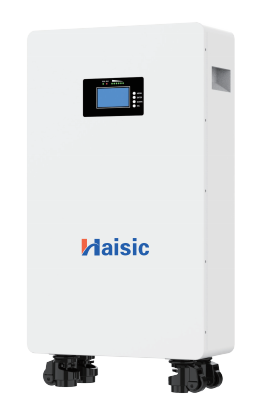
- Rack and wall‑mounted batteries like the 51.2V 305Ah 15.6kWh home energy battery with touchscreen for grid‑tied and off‑grid homes.
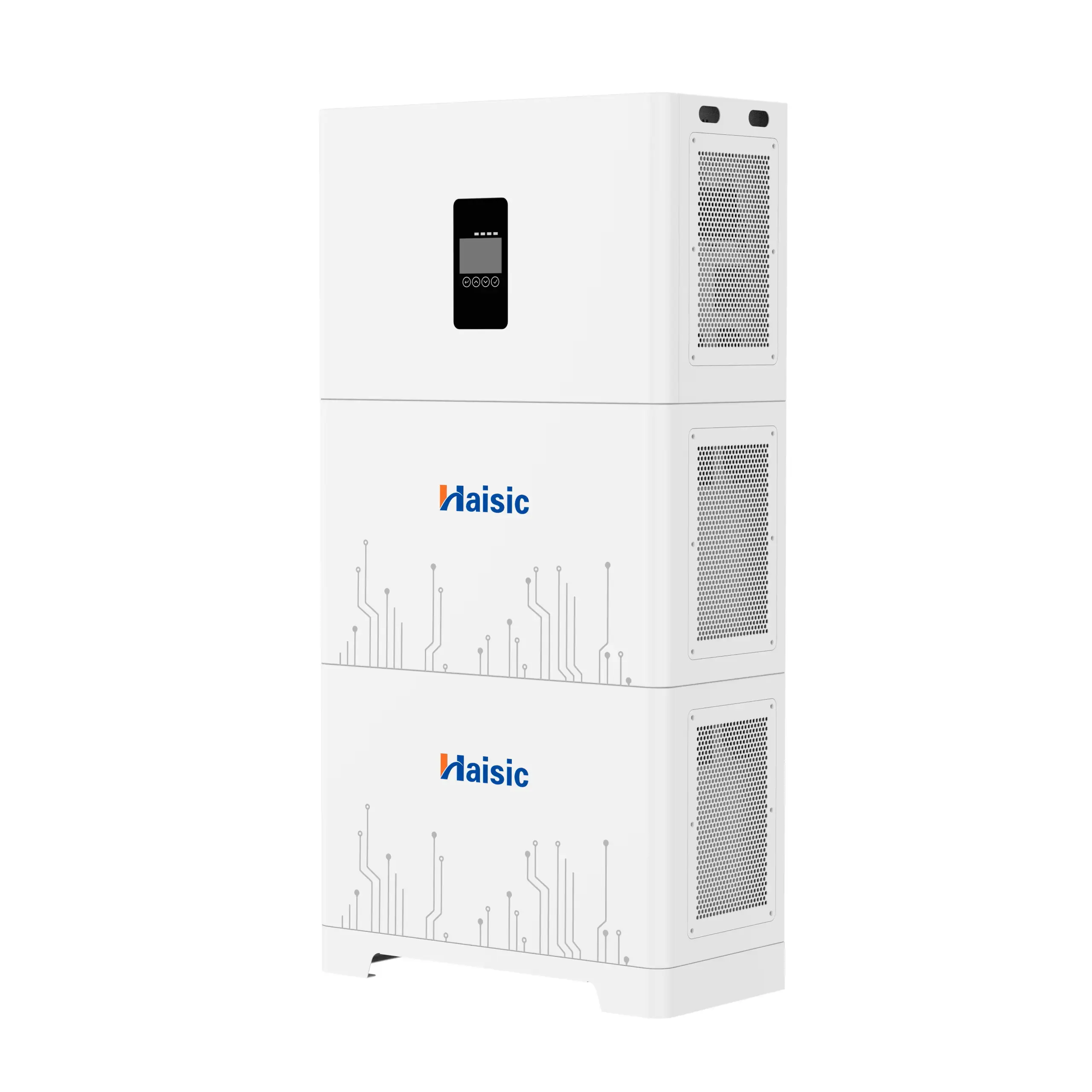
- All‑in‑one solutions such as the 32kWh home energy storage system that combine inverter and LiFePO4 storage in one package.
Key points I look at with Haisic:
- LiFePO4 chemistry, long cycle life, and high usable DoD
- Built‑in BMS tuned for solar use and common inverters
- Scalable designs for future expansion
Comparing Haisic to Other Lithium Solar Brands
Against other lithium solar brands, Haisic typically offers:
- Better value per kWh versus big international “premium” names
- Higher usable capacity (80–100% DoD) with robust cycle ratings
- Flexible system sizes (from single batteries to full home ESS)
- Clear focus on home energy storage, not just generic batteries
If you’re building a home solar battery system or off‑grid setup, Haisic often lands in that sweet spot between budget no‑name packs and ultra‑premium pricing.
How to Avoid Low‑Quality or Fake Lithium Solar Batteries
To stay away from bad or fake lithium battery packs for solar:
- Avoid unbranded or ultra‑cheap “high‑capacity” packs with no clear specs.
- Watch for vague claims like “10,000 cycles” with no test conditions.
- Always check:
- Full model number and detailed datasheet
- Real photos of terminals, BMS, labels
- Certifications and serial numbers
- Buy from official channels, trusted distributors, or directly from the manufacturer.
- Be careful with used or “refurbished” packs unless you know the history and test results.
If you treat the lithium battery for solar panel as the heart of your system and focus on brand, warranty, and real‑world performance, you’ll avoid most of the pitfalls and get a system that just works for years.
Planning for Future Expansion of Your Solar Battery System
Planning your lithium battery for solar panel setups with future growth in mind saves money and headaches later. I always design a solar energy storage system as if I’ll add more loads, more panels, and more battery capacity down the road.
Designing a scalable solar battery bank
If you want to expand later, lock in the basics from day one:
- Choose the system voltage (12V / 24V / 48V) based on where you want to end up, not where you start. For homes, 48V lithium battery solar systems scale best.
- Use modular LiFePO4 battery for solar that can be stacked or paralleled safely. Rack or wall‑mounted packs make expansion easier. High‑voltage modular systems like a 21.5kWh high‑voltage LiFePO4 home battery are built for this.
- Make sure your inverter and MPPT charge controller support the battery capacity you’ll have in 2–5 years, not just today.
Adding more lithium batteries later
With a good lithium solar battery setup, expansion is simple if you:
- Stay with the same brand, voltage, and model for compatibility and safe BMS communication.
- Follow the manufacturer’s rules for parallel / series connections and max battery count.
- Pre‑size cabling, breakers, and fuses so you can drop in extra deep cycle lithium battery for solar without redoing all wiring.
Upgrading from lead-acid to lithium for solar
If you’re moving from AGM or lead‑acid to a lithium ion solar battery:
- Keep the system voltage (12V / 24V / 48V) but replace the bank with a correctly sized LiFePO4 battery for solar.
- Update charge settings on your solar inverter and MPPT charge controller for lithium profiles.
- Expect higher usable capacity (80–100% DoD) and faster charging, so you might need fewer kWh than your old lead‑acid bank.
Integrating EV chargers and new loads
Adding an EV charger, heat pump, or bigger appliances changes everything:
- Check if your inverter power rating and battery C‑rate can handle those peaks.
- Plan for extra solar panel for lithium battery support, not just more storage.
- For heavy loads and EV charging, look at high‑voltage lithium battery for solar power solutions like a scalable [26.88kWh high‑voltage home storage system](https://haisicstorage.com/haisic
FAQs About Lithium Batteries for Solar Panels
Best lithium battery options for different solar needs
For most solar panel systems, a LiFePO4 lithium battery for solar is the best balance of safety, lifespan, and cost:
- RV / van / small off‑grid: 12V lithium battery for solar, 100–300Ah LiFePO4.
- Tiny homes / small home backup: 24V lithium solar system, 5–10kWh.
- Whole‑home or small business: 48V lithium battery solar bank, 10–30kWh+ or a modular high‑voltage rack / stacked system.
If you’re looking at larger setups, a high‑volt stacked 30kWh lithium solar battery system like the one in our modular high‑voltage series is usually the most practical long‑term option.
How long do lithium solar batteries usually last?
A good lithium solar battery (especially LiFePO4) will typically last:
- 10–15 years in normal home solar use
- 3,000–6,000+ cycles at 80% depth of discharge
In real life, that means you can cycle your solar panel battery storage every day and still have solid capacity after a decade if it’s set up correctly and not abused.
Can I use any lithium battery with my existing solar panels?
Not safely. You need to match:
- Battery voltage to your inverter and charge controller (12V, 24V, 48V, or high-voltage)
- Charge profile: your MPPT or PWM controller must support lithium (correct absorption/float, no equalize)
- BMS limits: max charge/discharge current must match your solar and inverter size
When in doubt, treat it as a system: lithium battery + solar panels + inverter + MPPT controller must be compatible, not just “close enough.”
Lithium vs lead-acid for new solar installations
For a new home solar battery system, I almost always recommend lithium over lead-acid:
- Usable capacity: 80–90% DoD vs 30–50% for lead-acid
- Cycle life: 3–10x longer
- Efficiency: 95%+ vs ~80%
- Weight/size: far lighter and more compact
Lead-acid only really makes sense today for very small, low-budget solar projects where upfront cost is the only concern and performance doesn’t matter.
Expanding an existing lithium solar battery system
You can expand most lithium battery for solar system setups, but follow these rules:
- Use the same brand, model, voltage, and capacity whenever possible
- Add modules in parallel or series exactly as the manufacturer specifies
- Update inverter/charger settings if total capacity or voltage changes
- Avoid mixing new lithium batteries with very old ones in the same string
If you’re planning a system you know you’ll expand later, choose a modular, stackable lithium solar battery pack from the start. Our modular energy storage lines are designed so you can start small and scale up cleanly instead of rebuilding the whole system.