

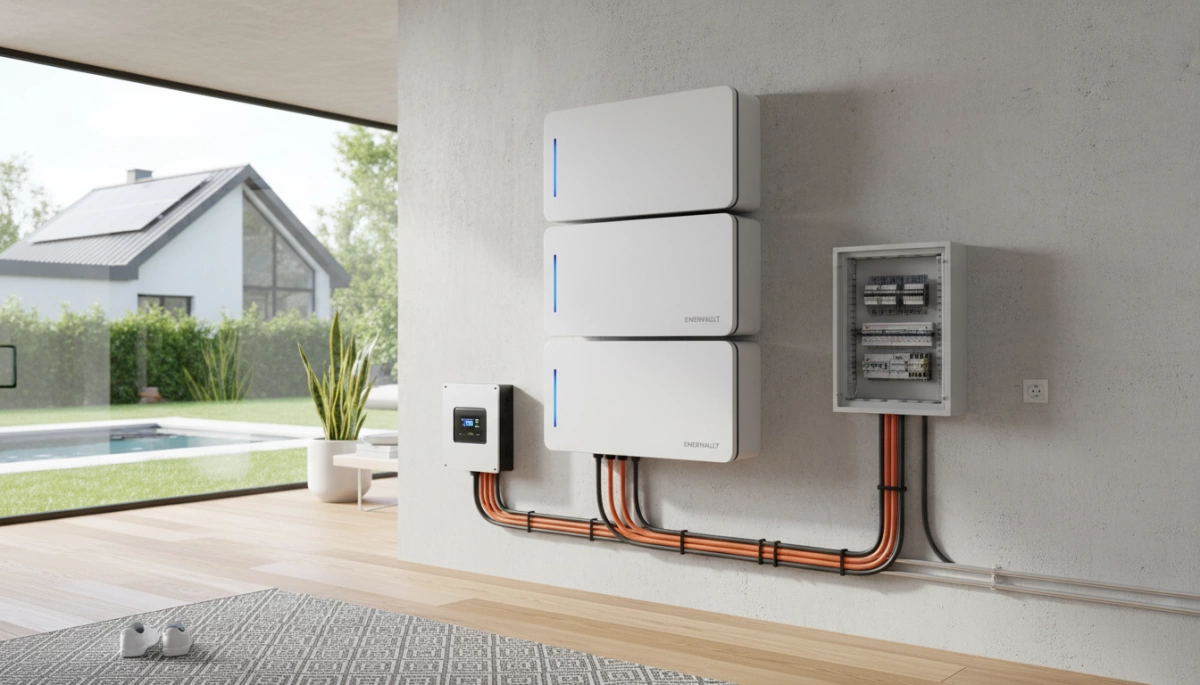
You’ve likely noticed that the power grid isn’t as reliable as it used to be…
And you’re probably tired of rising utility rates eating into your savings.
The solution seems simple: store your own power.
But actually navigating a solar battery storage installation?
That’s where things get tricky.
Is it compatible with your current panels?
What are the real costs and incentives in 2026?
And how do you choose between a standard setup and a premium modular solution like Haisic?
Well, you’re in the right place.
I’ve broken down the entire process—from assessing your home energy storage needs to the final safety inspection.
This isn’t just theory; it’s a practical, step-by-step roadmap to securing backup power and achieving true energy independence.
Let’s dive right in.
What Is Solar Battery Storage?
We often see homeowners confused about how their solar panels interact with the grid versus a battery. Simply put, a solar battery storage installation transforms your solar array from a daytime-only power source into a 24/7 energy solution. Instead of sending all your excess solar power back to the grid for a credit, a home battery captures that \”extra\” energy produced during peak sunlight hours. This stored power becomes available for you to use at night, during expensive peak-rate hours, or when the grid goes down.
Understanding the Basics of Storing Excess Solar Energy
At its core, a solar energy storage system acts like a reservoir. When your panels generate more electricity than your home consumes—typically around midday—that surplus flows into the battery rather than the utility grid.
- Daytime: Solar powers the home; excess charges the battery.
- Nighttime: The battery discharges to power lights and appliances.
- Grid Outage: If equipped with \”islanding\” capability, the system disconnects from the grid to provide home battery backup installation safety, keeping your lights on while the neighborhood goes dark.
Key Components: Modules, Inverters, and Software
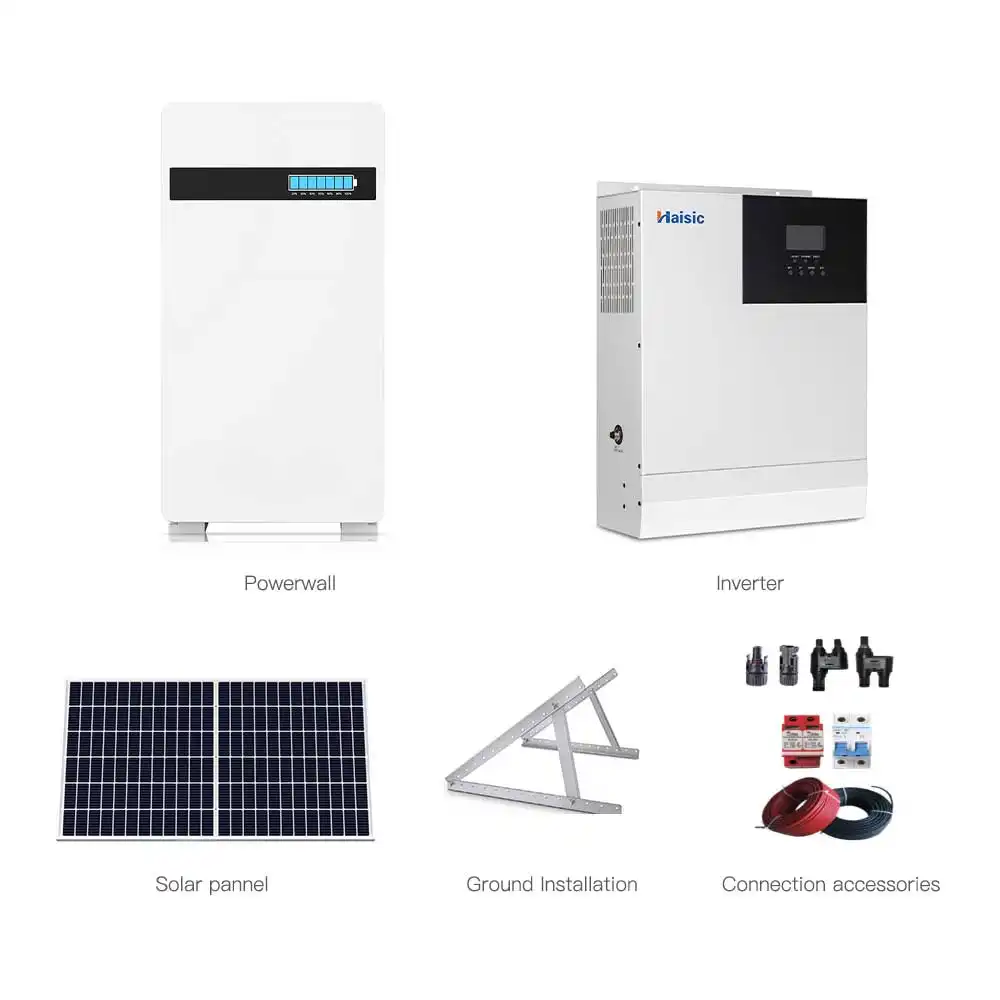
A complete storage system is more than just a box of cells. When we evaluate systems like those from Haisic or other top manufacturers, we look at three critical elements working in harmony:
- Battery Modules: The physical lithium-ion cells that store energy, measured in kilowatt-hours (kWh).
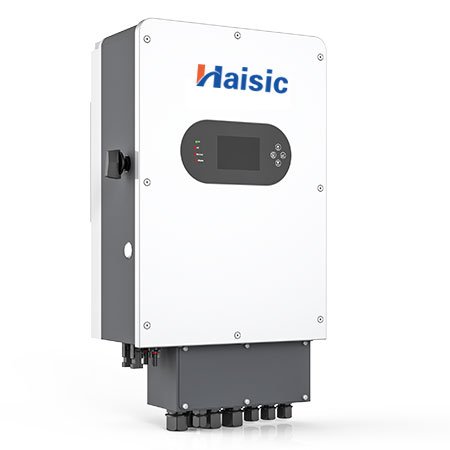
- Inverter: The \”brain\” that converts the battery\’s DC electricity into the AC electricity your home appliances use.
- Monitoring Software: A mobile app or interface that lets you track production, consumption, and battery health in real-time.
DC vs. AC Coupling: How Integration Works
When planning a solar battery storage installation, we have to decide how to connect the battery to your home\’s electrical system. This usually falls into two categories:
- DC-Coupled: The battery connects directly to the solar panels before conversion. This is highly efficient for new installations as it prevents energy loss during conversion.
- AC-Coupled: The battery is installed after the solar inverter. This is often the go-to method for retrofitting a battery to an existing solar array because it is easier to integrate without rewiring the entire solar setup.
The Shift to LFP Chemistry for Safety
While the industry standard has long been Lithium-ion for its high energy density, we are seeing a strong preference for Lithium Iron Phosphate (LFP) chemistry in modern modular home energy storage. Based on general industry data and product lifespans, these batteries are favored for their safety profile and longevity. A quality system typically offers a warranty lasting 5 to 15 years, often guaranteeing the battery will retain at least 70% of its capacity after thousands of cycles. This shift ensures that your investment in energy independence is safe, durable, and built for the long haul.
Benefits of Solar Battery Storage in 2026

Investing in a solar energy storage system has evolved from a luxury upgrade to a fundamental component of modern home energy management. As we move into 2026, the value proposition shifts beyond simple backup power to active financial and operational advantages.
Achieving Energy Independence During Outages
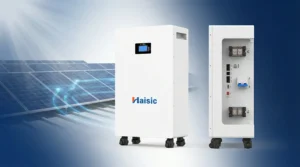
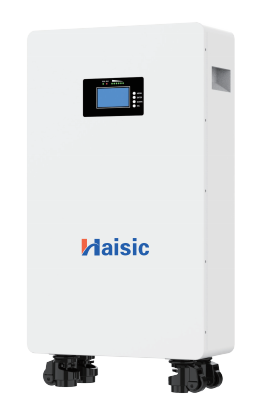
Standard grid-tied solar panels automatically shut down during a blackout to protect utility workers. This leaves you in the dark, even if the sun is shining. A professional solar battery storage installation changes this dynamic by enabling \”islanding.\” This technology isolates your home from the grid, allowing your system to continue powering essential circuits. A high-capacity touchscreen 20480Wh home energy storage battery ensures critical loads—like refrigerators, medical devices, and internet routers—remain operational when the local grid fails.
Financial Savings via Peak Shaving
Utility companies increasingly use Time-of-Use (TOU) billing, charging premium rates during peak evening hours (typically 4 p.m. to 9 p.m.).
- Arbitrage: We configure systems to store free solar energy during the day and discharge it during these expensive peak windows.
- Self-Consumption: You prioritize using your own stored power rather than buying from the utility.
- ROI Acceleration: This strategy helps recover your investment faster, especially in regions where net metering credits are low.
Environmental Impact and Future-Proofing
Storing excess energy maximizes your \”clean solar utilization.\” Instead of sending green power to the grid during the day and drawing from fossil-fuel sources at night, you cycle your own clean energy 24/7. Furthermore, a robust home battery backup installation prepares your property for increased electrical demands. As households add electric vehicles and smart automation, a reliable 5KW power energy storage solar system provides the necessary buffer to manage these heavier loads without relying solely on the grid.
Core Benefits at a Glance:
| Benefit Category | Key Function | Homeowner Advantage |
|---|---|---|
| Resilience | Grid Islanding | Keeps lights on during blackouts and brownouts. |
| Economics | TOU Arbitrage | Avoids highest utility rates; lowers monthly bills. |
| Independence | Load Management | Reduces reliance on fluctuating utility prices. |
| Sustainability | Solar Optimization | Uses stored clean energy at night instead of grid power. |
Pre-Installation Considerations
Before we jump into a solar battery storage installation, we have to do some homework. You cannot simply pick a unit off the shelf and expect it to work perfectly. We need to match the hardware strictly to your home\’s specific energy profile and existing infrastructure.
Assessing Energy Consumption and Essential Loads
The first step is a professional energy audit. We need to determine exactly how much power you use and what you need to keep running during an outage. This is about defining your \”essential loads.\” Do you want to back up the entire home, or just critical circuits like the refrigerator, Wi-Fi, and lights? This decision directly dictates the size of the solar energy storage system required.
Compatibility with Existing Solar
If you are adding battery to existing solar, we must evaluate your current equipment. Not every solar array is immediately ready for storage. We check if your inverter can handle a battery connection or if you need a retrofit. To achieve true energy resilience, the system needs \”islanding\” capability—the hardware that physically isolates your home from the utility grid so you can safely use stored power during a blackout.
Evaluating Battery Specs
When looking at options from a battery energy storage system company, focus on these three technical metrics rather than just the price:
- Capacity (kWh): This is your \”fuel tank.\” It measures the total amount of energy the battery can hold (e.g., 13.5 kWh).
- Power Rating: Continuous power is the steady stream available for lights and devices, while peak power is the surge output needed to start heavy motors like an AC compressor or sump pump.
- Round-Trip Efficiency: This percentage tells you how much energy is preserved during the storage process. A higher efficiency means less solar power is wasted.
Climate and Space Requirements
Batteries are heavy and sensitive to temperature. We assess your property to find a location that supports the weight and provides adequate ventilation. Whether it is a garage wall or a shaded exterior spot, the location must protect the Lithium-ion chemistry from extreme heat or cold to ensure the system lasts through its 5 to 15-year warranty period.
Top Solar Battery Options for 2026
Choosing the right hardware is the most critical step before scheduling your solar battery storage installation. As we move into 2026, the market has shifted away from one-size-fits-all solutions toward smarter, safer, and more resilient energy systems. When evaluating your options, you need to look beyond the brand name and focus on the technical specifications that dictate performance and longevity.
Comparing Specs: Capacity, Chemistry, and Warranty
To ensure you get the best return on investment, you must compare three core metrics: capacity, chemistry, and warranty coverage.
- Capacity (kWh): This is the size of your \”fuel tank.\” It determines how long you can run your home during an outage. Most standard residential units offer between 9 kWh and 13.5 kWh, but your specific load requirements should dictate this number.
- Chemistry: While traditional nickel-manganese-cobalt (NMC) batteries are common, the industry is rapidly adopting Lithium Iron Phosphate (LFP) chemistry. LFP batteries are safer, have a lower risk of thermal runaway, and typically offer a longer cycle life.
- Warranty: Look for a guarantee that covers at least 10 years and ensures the battery retains 70% of its capacity. A strong warranty reflects the manufacturer\’s confidence in the system\’s daily cycle life.
Best Batteries for Backup Power vs. Scalability
Not all energy storage systems are built for the same purpose. Some are designed strictly for time-of-use arbitrage—saving you money by using stored power when grid rates are high—while others are engineered for whole home backup power.
If your goal is resilience, you need a system with \”islanding\” capabilities that can disconnect from the grid and power your home independently during a blackout. However, static systems can be limiting. If your energy needs grow—for example, if you buy an electric vehicle—you need a system that can grow with you. This is where scalability becomes the deciding factor.
Why Haisic Stands Out for Modular Energy Storage
At Haisic, we prioritize flexibility and future-proofing. Unlike rigid systems that require you to buy a massive unit upfront, we focus on modular home energy storage. This allows homeowners to customize their capacity based on their current budget and energy needs, with the option to expand later.
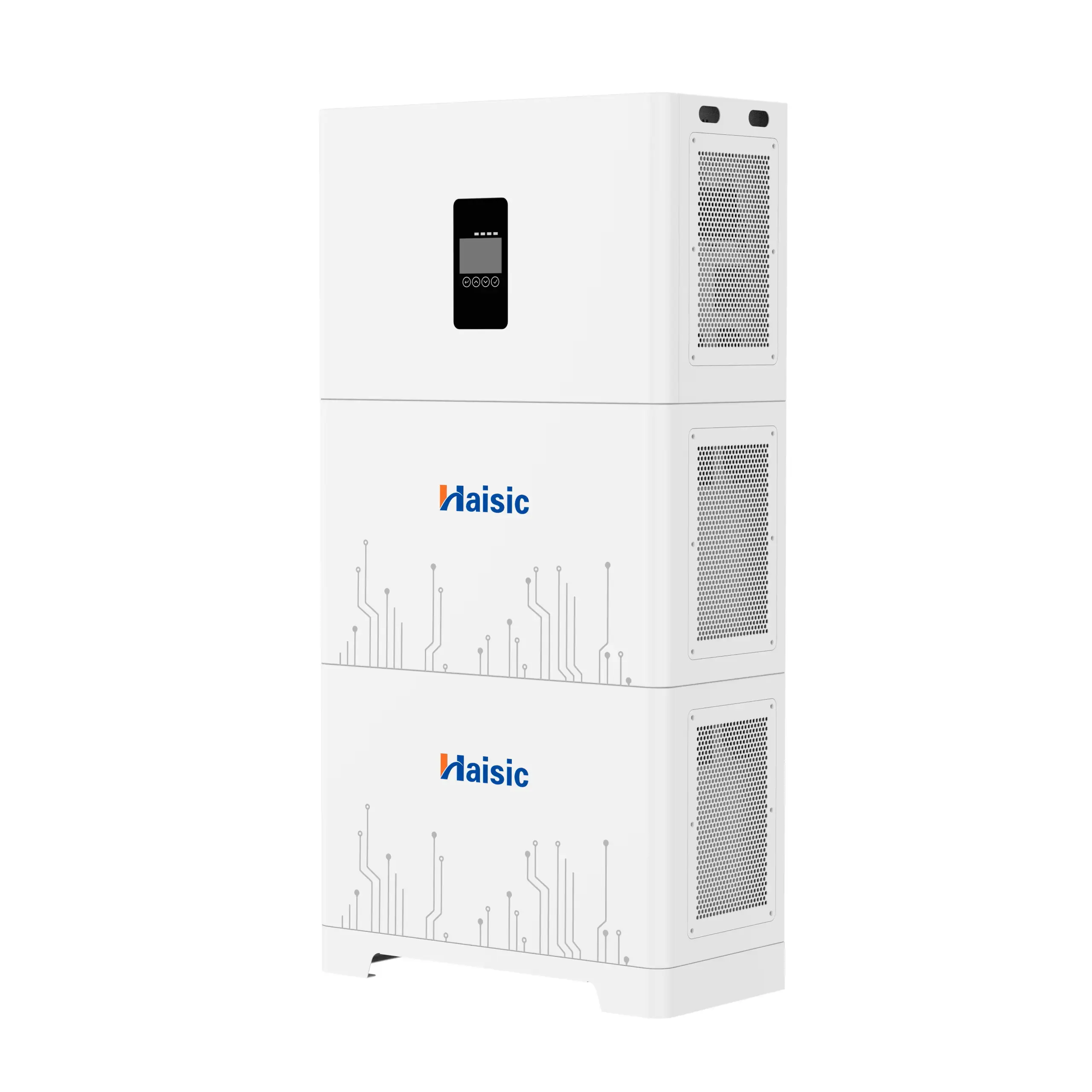
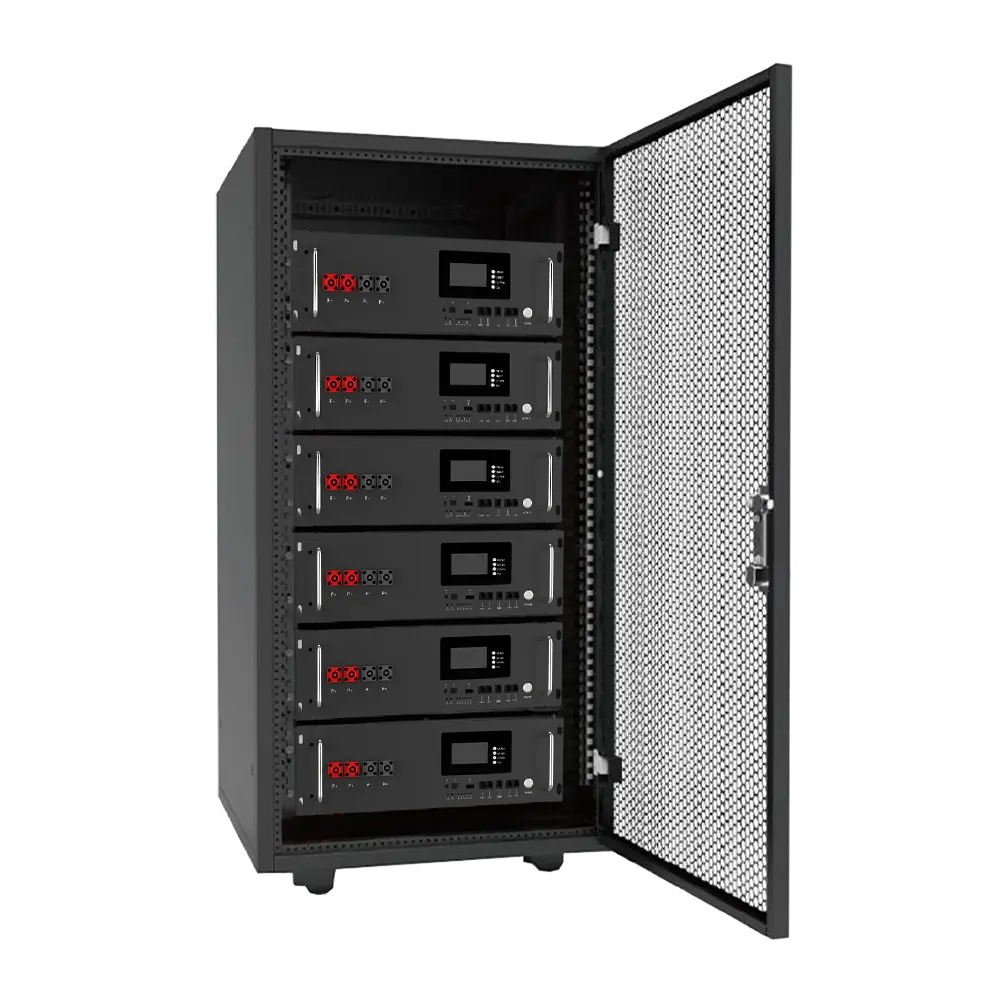
Our approach simplifies the retrofit process. For example, the Haisic 51.2V 100Ah LiFePO4 stackable energy storage battery features a modular design that eliminates the need for complex rewiring when you want to add more power. You can simply stack modules to increase your total kWh capacity. This modularity ensures that your solar battery storage installation remains efficient and relevant for decades, rather than becoming obsolete as your household energy demands increase.
| Feature | Standard Market Battery | Haisic Modular System |
|---|---|---|
| Chemistry | Often NMC (Nickel Manganese Cobalt) | LiFePO4 (Lithium Iron Phosphate) |
| Scalability | Fixed capacity (hard to expand) | Stackable modules (Easy expansion) |
| Safety | Moderate thermal stability | High thermal stability |
| Installation | Complex, heavy units | Flexible, modular components |
Step-by-Step Solar Battery Storage Installation Process
A professional solar battery storage installation transforms a standard solar array into a self-sufficient energy hub. While the concept is simple—store energy now, use it later—the actual installation is a technical process involving high-voltage electrical work. We typically complete the physical work in 1–2 days, but the entire project follows a structured five-phase timeline to ensure safety and grid compliance.
Phase 1: Site Assessment and Professional Energy Audit
Before we drill a single hole, we must understand your home\’s energy profile. This phase involves a detailed site assessment and energy audit. We analyze your historical utility bills to determine your average daily consumption and identify the specific circuits you need to back up. This ensures we don\’t undersize the system. We also evaluate the physical space in your garage or utility room to ensure it meets clearance and ventilation requirements for the battery units.
Phase 2: System Design, Sizing, and Permitting
Once we have the data, our engineers design a solar energy storage system tailored to your needs. We calculate the necessary kilowatt-hours (kWh) to sustain your critical loads during an outage. This phase also involves navigating the bureaucracy; we submit detailed line diagrams and load calculations to your local building department and utility company. Securing these permits is crucial for a legal, code-compliant installation.
Phase 3: Mounting, Wiring, and Inverter Setup
This is where the physical work begins. We mount the battery modules and the inverter hardware securely to the wall or floor, depending on the unit\’s weight and form factor. For robust whole-home solutions like the Haisic 32kWh All-in-One Home Energy Storage System, proper anchoring is essential due to the substantial capacity and size. We then install the conduit and run the wiring that connects your solar panels, the battery, and your main electrical panel.
Phase 4: Electrical Integration and App Configuration
Next, we integrate the system with your home\’s electrical grid. If you require backup power during blackouts, we install a transfer switch or a \”gateway\” device that isolates your home from the grid (islanding) during an outage to protect utility workers. Once wired, we configure the software. This involves setting up the mobile app for monitoring and programming the battery\’s behavior—whether you want to prioritize keeping the battery full for emergencies or discharge it daily for time-of-use arbitrage savings.
Phase 5: Final Inspection and Grid Interconnection
The final step ensures everything is safe and official. A city or county inspector will visit to verify that the home battery backup installation meets all local electrical and fire codes. After passing inspection, we submit the final paperwork to your utility provider. Once they grant \”Permission to Operate\” (PTO), your system goes live, ready to capture excess solar energy and provide resilience against grid failures.
Safety and Placement Best Practices
Safety is the backbone of any reliable solar battery storage installation. We do not simply place a battery wherever there is free space; we conduct a rigorous site assessment to find a location that balances accessibility with protection. The goal is to ensure the system operates efficiently while meeting all safety standards for your home.
Ideal Locations for Battery Mounting
During the initial audit, we identify spots that can support the weight of the equipment and keep wiring runs short. Most homeowners prefer the garage or a dedicated utility room. These areas typically offer the structural integrity needed for heavy units and protect the hardware from severe weather. For homes with limited floor area, a 10kWh wall-mounted home energy storage system is often the smartest choice, keeping the footprint minimal while ensuring the unit is securely attached to load-bearing studs or masonry.
Temperature and Ventilation Control
Batteries rely on specific chemistry, usually Lithium-ion, which performs best within a stable temperature range. We avoid installing units in areas exposed to direct scorching sunlight or freezing drafts. Proper ventilation is also critical to prevent overheating during operation. Maintaining a stable environment helps preserve the battery\’s efficiency and ensures it meets the longevity promised in its 10-year warranty.
Code Compliance and Inspections
A professional installation is always a compliant one. We handle the complex logistics to ensure your system meets local building codes and utility requirements.
- Permitting: We secure all necessary permits before any physical work begins.
- Grid Safety: For backup-capable systems, we install specific hardware to safely \”island\” your home from the grid during outages, protecting utility workers from back-fed power.
- Final Inspection: The process concludes with a mandatory inspection by local authorities to certify the system is safe to turn on.
Installation Costs and Pricing Breakdown
When evaluating a solar battery storage installation, it is crucial to understand that the price tag reflects more than just the battery unit sitting in your garage. You are investing in a sophisticated electrical upgrade for your home. The total cost structure generally breaks down into three main categories:
- Hardware: This includes the battery modules, the inverter (if not built-in), and essential gateway hardware.
- Labor and Electrical Work: Professional installation involves complex wiring, especially if you require a backup-capable system. Setting up \”islanding\” capabilities—which allows your home to disconnect from the grid during an outage—requires additional labor and specialized equipment like critical load panels.
- Soft Costs: These are the non-tangible expenses, including local permitting fees, utility interconnection applications, and mandatory safety inspections.
Average Installed Cost per Usable kWh
A practical way to compare value across different brands is to look at the installed cost per usable kilowatt-hour (kWh). While solar battery cost and pricing vary by region, systems with higher energy density and integrated inverters often provide better value per unit of energy stored. It is important to distinguish between total capacity and usable capacity, as most systems reserve a percentage of power to maintain battery health. properly planning your home battery storage budget ensures you account for these nuances rather than just looking at the sticker price.
Understanding ROI Based on Utility Rates
Your return on investment is directly tied to how your utility company charges for electricity. For many homeowners, the financial argument for storage is driven by Time-of-Use (TOU) arbitrage. This strategy involves charging your battery with free solar power during the day and discharging that stored energy during peak billing hours (typically 3 p.m. to 7 p.m.) when grid rates are highest.
In regions where net metering policies have been reduced—such as California’s move to Net Billing—exporting excess solar to the grid yields very little credit. In these scenarios, a battery maximizes your \”clean solar utilization,\” ensuring you consume the power you generate rather than giving it away. Using a solar storage ROI calculator or consulting with an installer can help you project these savings against the upfront costs.
Incentives, Rebates, and Financing
Investing in a solar battery storage installation is a significant financial commitment, but it is one that pays off through resilience and long-term savings. To make this upgrade more accessible, homeowners can leverage various financial tools and government programs designed to lower the upfront barrier to entry.
Navigating Federal and State Tax Credits
The most impactful financial lever available right now is the Federal Residential Clean Energy Credit. This incentive allows you to claim a credit for a significant percentage of the cost of your lithium solar battery system, including labor and site preparation.
- Federal Credit: Covers 30% of the total installed cost.
- Eligibility: Applies to both standalone battery storage (above 3 kWh) and batteries paired with solar panels.
- State Incentives: Many states offer additional tax credits or cash rebates that can be stacked on top of the federal credit.
Tips for Qualifying for Utility Rebates
Beyond tax credits, your local utility company may offer direct rebates or performance-based incentives. Because battery systems help stabilize the grid, some providers will pay you to access your stored energy during peak demand events.
- Bring Your Own Battery (BYOB) Programs: Utilities may offer an upfront cash rebate in exchange for limited access to your battery during grid stress.
- Time-of-Use (TOU) Management: While not a direct rebate, using your battery to avoid peak billing rates (arbitrage) accelerates your payback period.
- Check Eligibility: Always verify if your specific battery model qualifies for these local programs before signing a contract.
Loan, Lease, and PPA Financing Options
Since a home battery is an \”additional investment\” beyond standard solar panels, many homeowners choose financing to manage cash flow.
- Cash Purchase: Offers the highest long-term ROI and immediate ownership of the system.
- Solar Loans: specialized loans often allow you to finance the battery and installation with low interest rates, sometimes rolling in the tax credit value.
- Leases and PPAs: Some installers offer third-party ownership models where you pay a monthly fee for the equipment or the power it provides, though this may impact your eligibility for tax credits.
By combining the federal credit with smart financing and utility incentives, you can significantly reduce the net cost of your energy independence.
Selecting a Professional Installer for Your Solar Battery Storage Installation
Finding the right partner is just as critical as choosing the battery itself. A solar battery storage installation involves complex electrical work, permitting, and precise configuration to ensure your home remains powered during an outage. I always tell homeowners that even the highest-quality hardware will underperform if the system design and wiring aren\’t executed perfectly. You need a team that treats your home’s energy resilience as a priority, not just another quick job.
Recognizing Red Flags and Green Flags
When vetting potential installers, pay close attention to their process before they even touch a screwdriver. A reputable professional battery installer will never give you a final quote without understanding your specific load requirements.
-
Green Flags:
- Detailed Site Assessment: They insist on an on-site visit or a detailed remote audit to check your main electrical panel and available wall space.
- Transparent ROI: They explain how Time-of-Use (TOU) arbitrage works in your specific utility area and set realistic expectations for payback periods.
- Permitting Handling: They manage all the paperwork, including utility interconnection agreements and local building permits.
-
Red Flags:
- Skipping the Audit: If they quote a price without asking about your energy consumption or critical loads, walk away.
- Vague Backup Promises: Be wary of anyone promising to back up your \”entire home\” indefinitely without calculating the specific kilowatt-hour (kWh) capacity required.
- Hidden Costs: A solid quote should include labor, hardware, and any necessary electrical panel upgrades upfront.
Verifying Experience and Certifications
Solar storage technology is different from standard solar panel installation. It requires specific knowledge of high-voltage DC coupling or AC coupling, depending on your existing setup. You want an installer who specializes in energy storage systems, not just general electrical work.
When you are ready to compare options, getting multiple bids through our quotes list ensures you find a partner who understands your specific energy needs and local regulations. Look for teams that have a proven track record with Lithium-ion chemistries and understand the nuances of \”islanding\” technology—the capability that allows your battery to disconnect from the grid and power your home safely during a blackout.
Essential Questions to Ask During the Quote Process
Don\’t be afraid to grill your installer. Their answers will tell you if they know their stuff. Use these questions to gauge their expertise:
- \”Will this system provide full-home backup or only power critical circuits?\”
- Why ask: This determines if you need a sub-panel and helps you understand your limitations during an outage.
- \”What is the continuous vs. peak power rating of the proposed battery?\”
- Why ask: You need to know if the battery can start heavy appliances (peak) and keep them running (continuous).
- \”Does the installation include the necessary gateway hardware for islanding?\”
- Why ask: Without this specific hardware, your battery cannot function independently during a grid failure.
- \”How do you handle the warranty and future maintenance?\”
- Why ask: Ensure they support the manufacturer’s warranty, typically covering 5–15 years or a set number of cycles (e.g., 7,000 cycles).
Maintenance and Long-Term Monitoring
Once the solar battery storage installation is complete, the focus shifts to active management. I always emphasize that a home battery isn\’t just a static box on the wall; it is a dynamic energy asset. Most modern systems pair with a dedicated mobile app, which serves as your command center for energy independence. Through these platforms, you can monitor real-time solar production, track household consumption, and verify that the battery is charging correctly during peak sun hours. This visibility allows you to adjust your usage habits to maximize savings, such as running heavy appliances only when the battery is full.
Understanding Warranty and Lifespan
The longevity of your system depends heavily on the warranty terms and the underlying chemistry. Industry standards typically offer a warranty period of 5 to 15 years. However, the most critical metric to check is the \”end of warranty\” capacity guarantee. A high-quality battery should retain at least 70% of its original storage capacity after 10 years or a set number of cycles (often around 7,000).
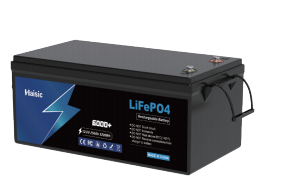
We see a strong shift toward Lithium Iron Phosphate (LFP) chemistry because of its durability. For instance, robust units like the Haisic 12.8V LiFePO4 battery pack with 6000 cycle life are designed to withstand daily charging and discharging without the rapid degradation seen in older battery types. This cycle life ensures that your investment pays off well before the hardware needs replacing.
Tips for Optimizing Battery Health
To ensure your system operates at peak efficiency for years, follow these maintenance best practices:
- Temperature Management: Batteries are sensitive to extreme heat and cold. Ensure the installation site remains within the manufacturer\’s specified temperature range to prevent efficiency loss.
- Depth of Discharge (DoD): While modern systems are designed for deep cycling, avoiding constant drains to 0% can extend the unit\’s lifespan.
- Firmware Updates: Keep your system connected to Wi-Fi to receive automatic software updates that optimize the Battery Management System (BMS).
- Visual Inspections: If you are utilizing a modular solution like a 51.2V 100Ah LiFePO4 battery system, perform annual checks on the casing and connections to ensure everything remains secure and corrosion-free.
Common Mistakes and FAQs
Navigating a solar battery storage installation can be tricky if you don\’t know what to look out for. I’ve seen plenty of projects stumble because of simple oversights. Here is a breakdown of the most common pitfalls and answers to the questions I hear almost every day.
Pitfalls to Avoid: Undersizing and Poor Placement
The most frequent mistake is underestimating energy needs. If you size your solar energy storage system based only on average usage without accounting for startup surges from pumps or AC units, your system will trip during an outage. Always size for peak demand, not just averages.
Placement is just as critical. While battery placement and safety standards have improved, installing units in areas with extreme temperature fluctuations—like uninsulated garages in freezing climates or walls facing direct afternoon sun—will degrade the Lithium iron phosphate battery chemistry faster. Keep them in temperature-controlled or shaded, ventilated areas.
Can I Retrofit a Battery to My Current Solar System?
Absolutely. Adding battery to existing solar is one of the most common requests we handle. This is typically done through AC coupling. We install a separate battery inverter that connects to your main electrical panel, allowing the battery to charge from the excess solar energy your existing inverter produces. A proper solar battery retrofit guide will always recommend checking if your current inverter is \”hybrid ready,\” but even if it isn\’t, an AC-coupled solution works universally for almost any setup.
How Long Will a Battery Power My Home During an Outage?
This depends entirely on your load profile and battery capacity. A standard 10 kWh battery won\’t run whole home backup power for days if you are running the HVAC and electric stove.
- Essential Loads Only: Lights, fridge, Wi-Fi (24+ hours).
- Heavy Loads: AC, laundry, cooking (4–8 hours).
To extend runtime, we often recommend modular solutions. For instance, integrating a high-capacity 128V 50Ah LiFePO4 lithium battery allows for a robust, stable voltage output that can handle sustained loads better than smaller, lower-voltage alternatives.
Is Solar Battery Storage Compatible with EV Charging?
Yes, but with a caveat. Charging an electric vehicle requires a massive amount of energy. If you plug your EV into your home battery during a blackout, you can drain a standard residential battery in under two hours. The best solar batteries 2026 has to offer now feature smart software that allows you to set limits—ensuring your house stays powered while only sending surplus energy to the car. If EV charging is a priority, you must oversize your storage capacity significantly.