

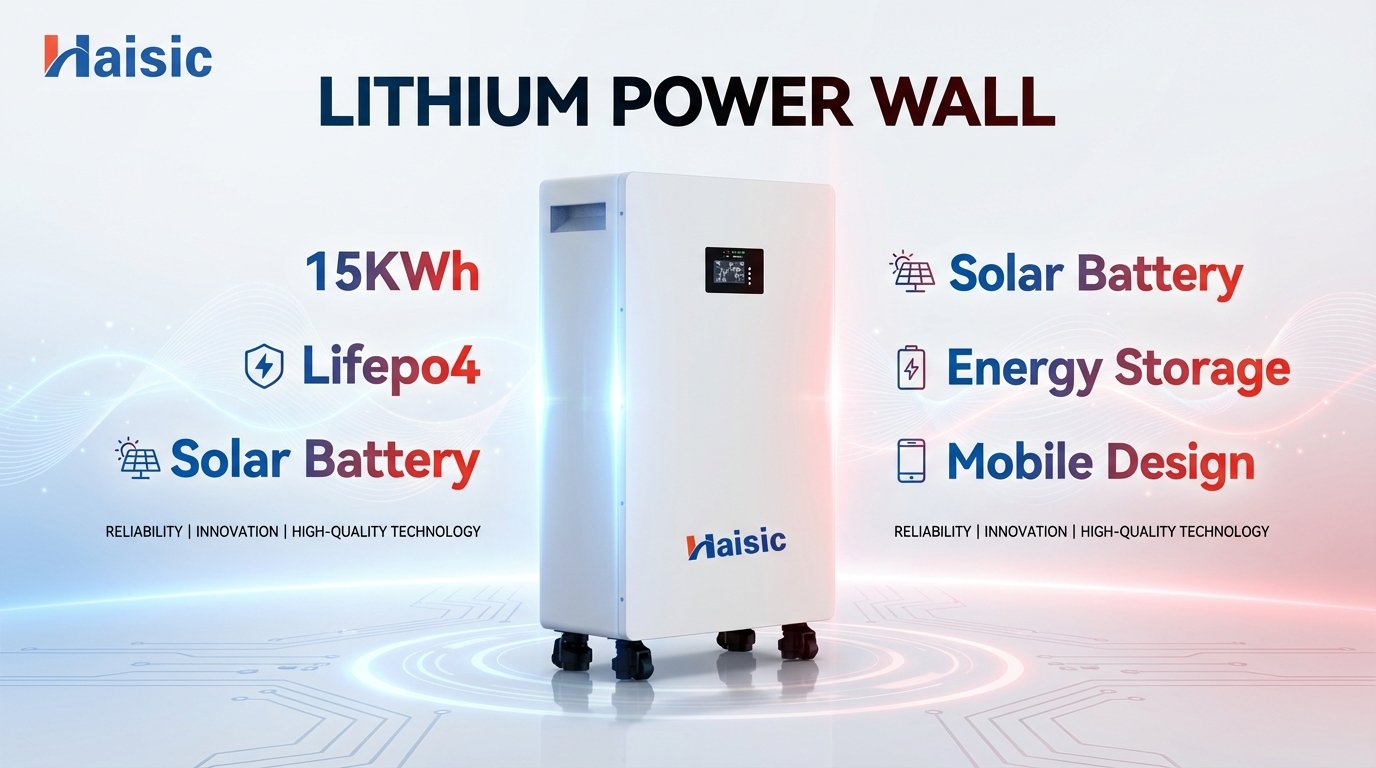
You might already know that a lithium power wall is the game-changer for modern solar setups…
But how do you choose the right one?
In this guide, you’re going to learn exactly how to select the best energy storage solution for your specific needs.
I’ve put together a complete breakdown of LiFePO4 technology, smart monitoring, and essential safety certifications.
From calculating your total daily energy requirements to securing reliable emergency home backup, we are covering it all.
So if you are looking to maximize your ROI and achieve true energy independence, this guide is for you.
Let’s dive right in.
What is a Lithium Power Wall and How Does It Work?
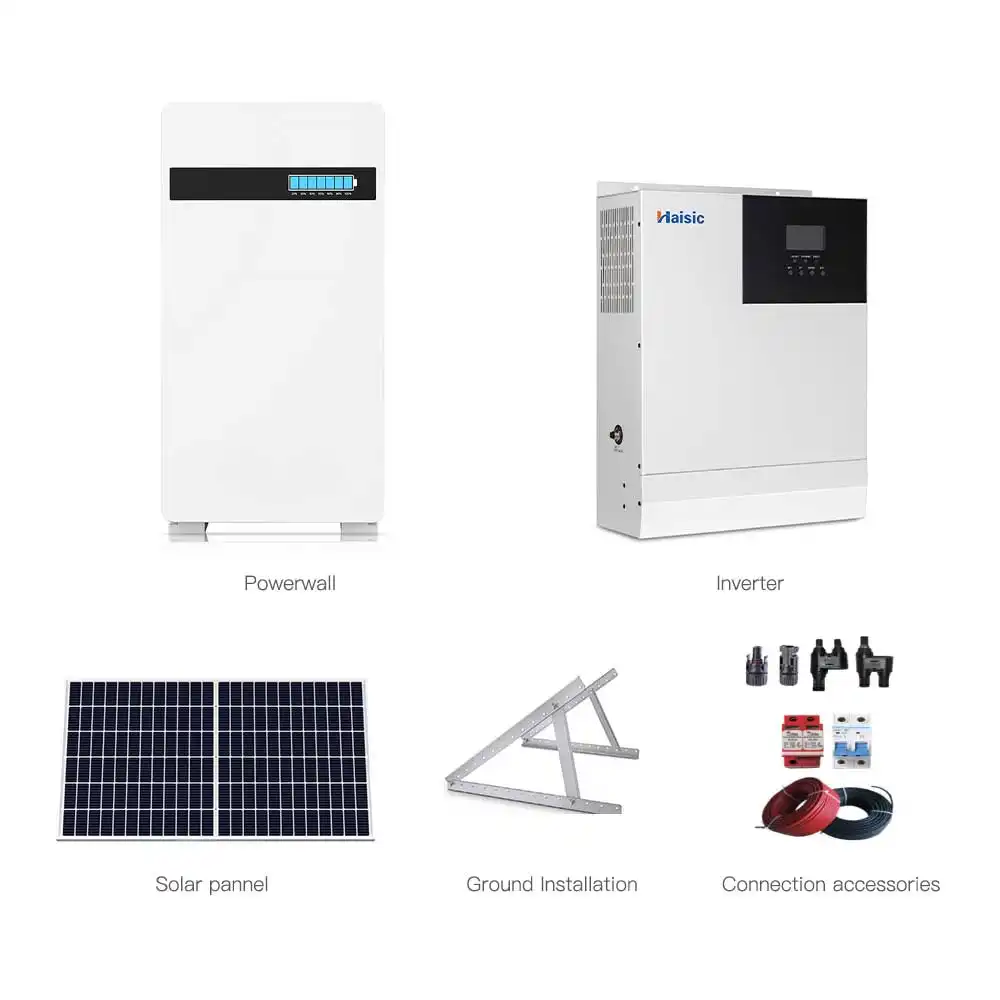
A lithium power wall is a sophisticated residential energy storage solution designed to maximize the utility of solar installations. Unlike bulky traditional battery banks, these wall-mounted units utilize high-density lithium chemistry to store electricity in a compact, space-saving form factor. The system operates by capturing excess energy generated by solar panels during peak sunlight hours and storing it chemically. When solar production drops or grid power fails, the power wall discharges this stored energy, converting it back into usable electricity for household appliances, ensuring a seamless and reliable power supply.
The Role of Energy Storage in Solar Power Systems
Solar energy storage is the critical bridge between intermittent renewable generation and constant energy demand. Without a storage system, surplus energy generated at noon is often lost to the grid or wasted. Incorporating a power wall transforms a standard solar setup into a self-sufficient energy ecosystem. It allows homeowners to utilize clean solar power during the evening or cloudy days, significantly reducing reliance on the utility grid and providing security during blackouts.
LiFePO4 Technology vs. Traditional Lead-Acid Batteries
At WHC Solar, we prioritize LiFePO4 (Lithium Iron Phosphate) technology over outdated lead-acid alternatives. While lead-acid batteries have been the standard for decades, LFP battery chemistry offers superior performance metrics that redefine home energy storage:
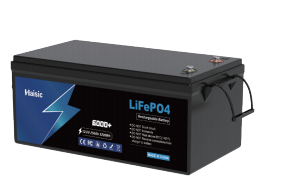
- Cycle Life: LiFePO4 batteries deliver between 2,000 to over 6,000 deep cycles, offering a service life of 10+ years compared to the 2-3 year lifespan of lead-acid units.
- Depth of Discharge (DOD): Our lithium units support 80% to 100% discharge without damage, whereas lead-acid batteries degrade rapidly if discharged beyond 50%.
- Safety: The cobalt-free chemistry ensures high thermal stability, eliminating the risk of thermal runaway common in other lithium types.
- Maintenance: These systems are strictly maintenance-free, requiring no fluid top-ups or specific ventilation.
Essential Components: Cells, Inverters, and Enclosures
The performance of a high-quality lithium power wall relies on the integration of three premium components:
- Grade A Cells: We utilize only new Grade A LiFePO4 cells. This ensures consistent voltage, maximum capacity retention, and long-term stability across the battery pack.
- Smart BMS (Battery Management System): An integrated Battery Management System acts as the brain of the unit, actively protecting against over-charge, over-discharge, over-current, and temperature fluctuations.
- Inverter Communication: The system features RS485, CAN, and RS232 ports for seamless communication. It is fully compatible with major inverter brands such as Victron, Growatt, Deye, and Goodwe, ensuring the battery and inverter work in perfect synchronization.
Top Benefits of Choosing a Lithium-Ion Power Wall
When upgrading a home energy storage system, moving from traditional battery banks to a modern lithium power wall offers immediate advantages in performance and usability. We focus on delivering systems that maximize efficiency while minimizing the physical footprint in your home or business.
High Energy Density and Space-Saving Wall-Mount Design
One of the standout features of our LiFePO4 systems is their incredible energy density. Unlike bulky lead-acid setups that require significant floor space and heavy racking, a lithium power wall packs substantial capacity into a slim, compact unit. We utilize Grade A cells to ensure that we can deliver high capacity—commonly 5kWh to 10kWh per unit—without dominating your utility room.
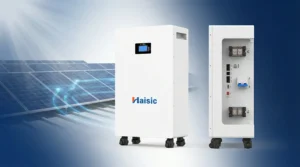
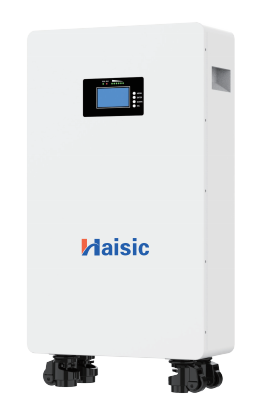
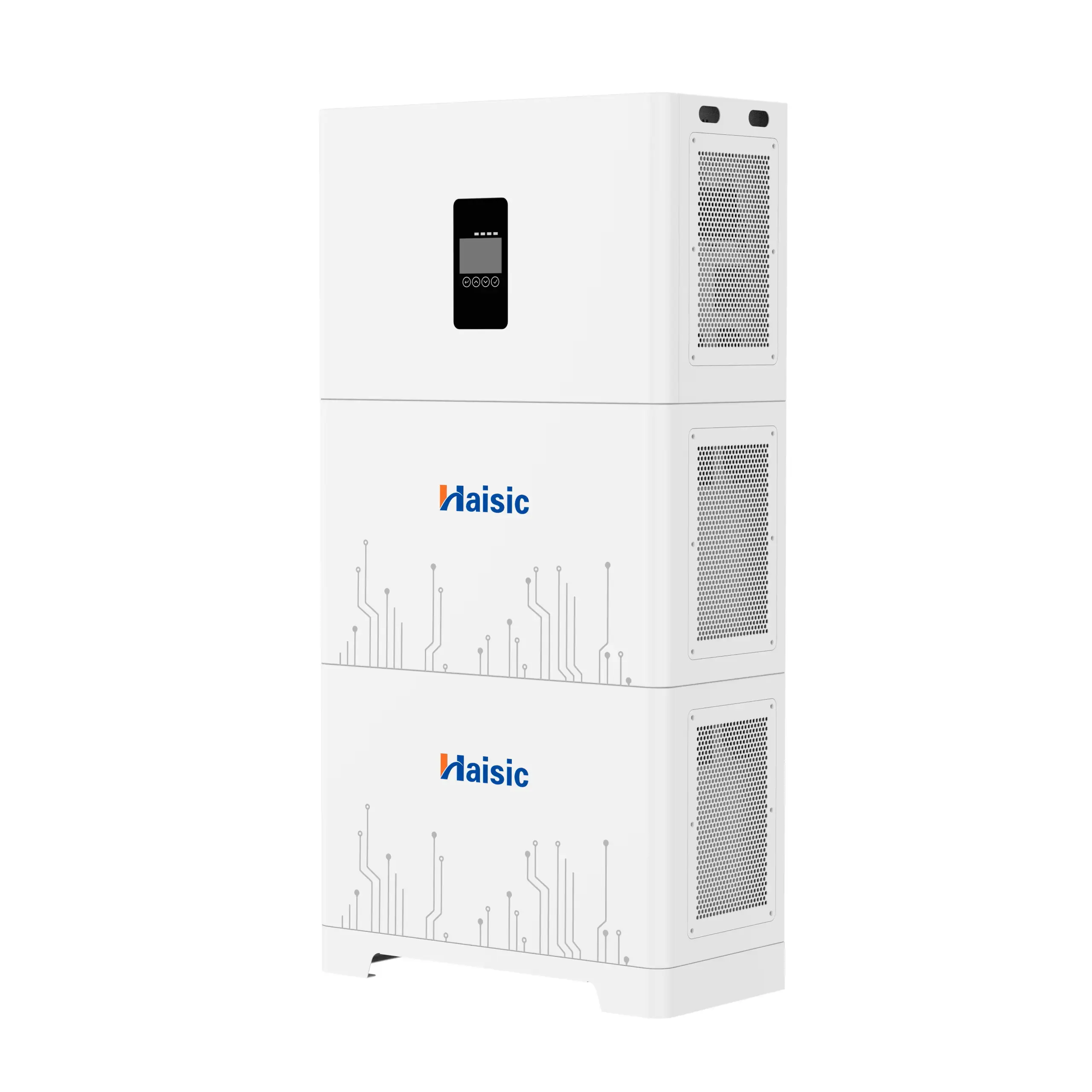
This wall-mounted design is strictly \”Plug and Play,\” allowing for a clean installation that hangs flat against the wall. This is particularly beneficial for residential users with limited space. For those needing even more power in a compact form factor, our Haisic 15kWh LiFePO4 solar battery pack provides an excellent example of high-density storage that integrates seamlessly into modern homes.
Extended Cycle Life and Long-Term Durability
Durability is the primary reason we advocate for LFP battery technology. A standard lead-acid battery typically lasts for 300 to 500 cycles before its capacity degrades significantly. In contrast, our lithium iron phosphate batteries are engineered to deliver 2,000 to over 6,000 deep cycles.
This longevity translates to a service life of approximately 10+ years, making the total cost of ownership much lower over time. The integrated Battery Management System (BMS) actively protects the cells from over-charging, over-discharging, and temperature extremes, ensuring the battery remains healthy without requiring the regular maintenance—like water topping—that older battery chemistries demand.
Higher Efficiency and Greater Depth of Discharge (DoD)
Efficiency in solar energy storage is defined by how much of the stored energy you can actually use. Traditional batteries generally limit you to using only 50% of the total capacity to prevent permanent damage. Our lithium power walls are rated for a Depth of Discharge (DoD) of 80% to 100%.
This means if you buy a 10kWh battery, you can utilize nearly the entire 10kWh to power your appliances, rather than just 5kWh. This efficiency allows you to install a smaller total battery bank to achieve the same usable power output.
Comparison: Lithium Power Wall vs. Lead-Acid Battery
| Feature | Lithium Power Wall (LiFePO4) | Traditional Lead-Acid |
|---|---|---|
| Cycle Life | 6,000+ Cycles | 300 – 500 Cycles |
| Depth of Discharge (DoD) | 80% – 100% | ~50% |
| Maintenance | Maintenance-Free | Requires Regular Maintenance |
| Weight & Size | Compact, Lightweight, Wall-Mount | Heavy, Bulky, Floor Standing |
| Safety | Built-in Smart BMS | Basic Fuses Only |
Key Technical Features and Safety Standards
Advanced Integrated Battery Management System (BMS)
At the heart of every lithium power wall we manufacture is a sophisticated Battery Management System (BMS). This intelligent component acts as the brain of the battery, ensuring the Grade A LiFePO4 cells operate within their safe technical limits. Unlike basic lead-acid options, our integrated BMS actively balances the charge across cells and provides critical protection against electrical faults.
This system is essential for maintaining the 6,000+ cycle life of the battery. It automatically disconnects the circuit if it detects unsafe conditions, preserving the investment in your home energy storage system.
Core BMS Protection Functions:
| Protection Type | Function | Benefit |
|---|---|---|
| Over-Charge | Stops charging when full | Prevents cell damage and swelling |
| Over-Discharge | Cuts power at low voltage | Extends total cycle life |
| Over-Current | Limits excessive current flow | Protects internal wiring and cells |
| Short Circuit | Instant cut-off during shorts | Prevents fire risks and hardware failure |
| Temperature | Monitors thermal levels | Ensures safe operation in 0°C to 55°C |
Smart Monitoring and Inverter Communication Protocols
Seamless integration with existing solar hardware is critical for efficiency. Our lithium power wall units are equipped with standard communication ports, including RS485, CAN, and RS232. These protocols allow the battery to communicate directly with the hybrid inverter, exchanging data on State of Charge (SOC), voltage, and health status in real-time.
We have engineered our systems to be highly compatible with major global inverter brands such as Victron, Growatt, Goodwe, Deye, and Voltronic. For user accessibility, we offer multiple monitoring interfaces. You can view system status directly on the unit\’s LCD touch screen or monitor remotely via Bluetooth and GPRS modules. This connectivity is vital when configuring the best solar powered generator setup for continuous off-grid power.
Safety Certifications: Understanding UL1973 and UL9540A
Safety is the primary concern for residential energy storage. Our batteries utilize LiFePO4 (Lithium Iron Phosphate) chemistry, which is recognized as the safest lithium technology available. It is cobalt-free and possesses high thermal stability, significantly reducing the risk of thermal runaway compared to NMC batteries.
To meet global safety expectations, our engineering focuses on compliance with rigorous standards.
- UL1973: This standard evaluates the safety of the battery pack system itself, ensuring it can withstand simulated abuse conditions without hazardous failure.
- UL9540A: This test method evaluates the fire safety characteristics of the battery energy storage system, confirming that a failure in one cell does not propagate to the entire unit.
By strictly adhering to these design principles and using stable chemical compositions, we ensure our LFP battery systems are safe for wall-mounted installation in residential homes.
Standard Configurations and Capacity Options
Common Voltage Ratings: 12V, 24V, and 48V Systems
When selecting a **lithium power wall**, voltage determines system efficiency and inverter compatibility. While 12V systems are traditional for small-scale applications like RVs, modern residential energy storage has shifted toward higher voltages to minimize energy loss.
We focus primarily on 24V, 48V, and 51.2V configurations. The 48V (often rated nominally at 51.2V for LiFePO4) is the industry standard for home solar, offering the best balance of safety and efficiency. It integrates seamlessly with most hybrid inverters on the market, ensuring your system runs cooler and more effectively than lower-voltage alternatives.
Popular Capacity Sizes: 5kWh, 10kWh, and 15kWh Units
Capacity is about how long you can keep the lights on. We engineer our units using high-density **Grade A LiFePO4 cells** to maximize storage in a compact footprint. The most common entry-point for homeowners is the 5kWh module (typically 51.2V 100Ah), which covers essential loads.
For larger homes or those aiming for greater off-grid independence, the 10kWh configuration is the sweet spot. Checking the 10kW solar battery price reveals that these larger units often provide better value per kilowatt-hour.
Standard Capacity Breakdown:
| System Voltage | Amp Hours (Ah) | Total Energy (kWh) | Typical Application |
|---|---|---|---|
| 24V | 100Ah / 200Ah | 2.56kWh / 5.12kWh | Small Cabins / Backup |
| 48V / 51.2V | 100Ah | 5.12kWh | Standard Home Backup |
| 48V / 51.2V | 200Ah | 10.24kWh | High-Demand Households |
Modular Design for Scalable Energy Storage
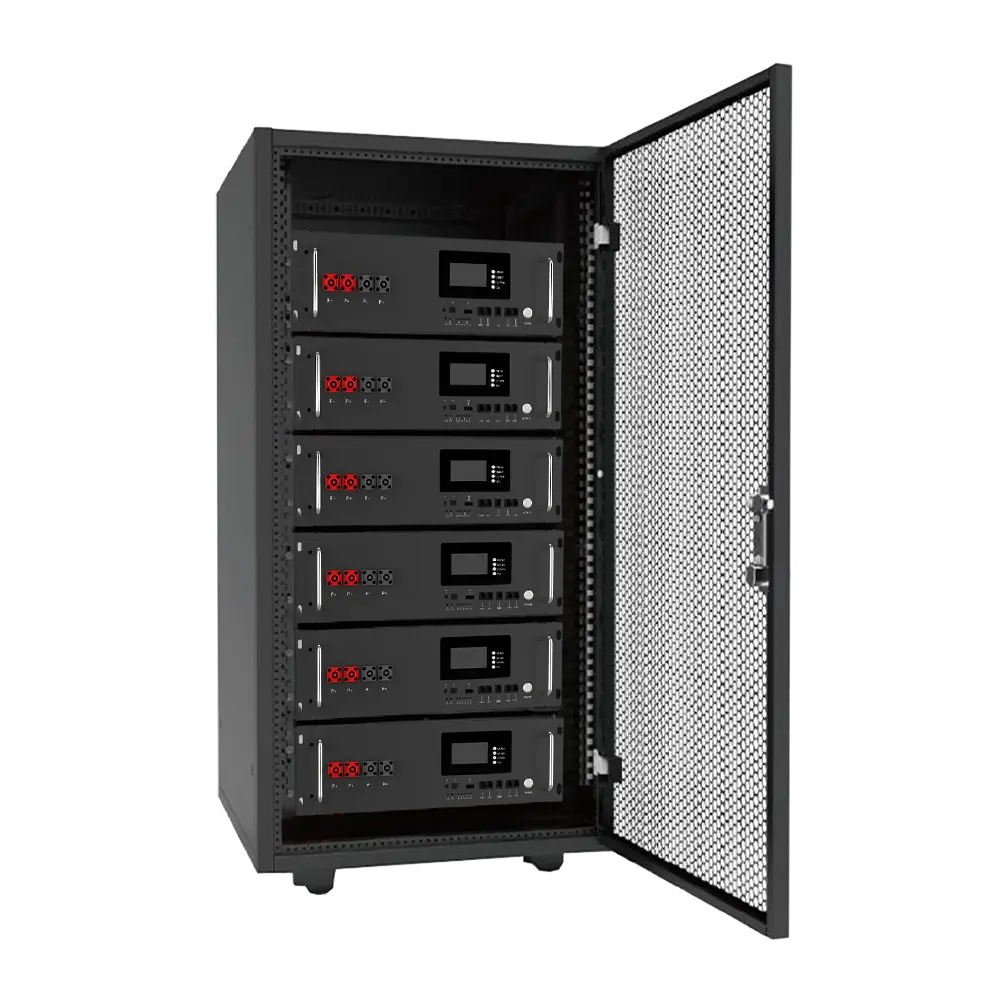
Energy needs change over time, so we build our systems to grow with you. You don\’t need to buy your maximum capacity on day one. Our **lithium power wall** units feature a modular, stackable design that allows for parallel connections.
You can connect up to 15 units in parallel, effectively turning a single 5kWh battery into a massive 75kWh energy bank. This flexibility makes residential solar energy storage practical for everyone, allowing you to expand your storage capacity simply by plugging in an additional module whenever your budget or power requirements increase.
Installation Environments: Indoor vs. All-Weather Outdoor
Choosing the right location for your lithium power wall is just as critical as selecting the battery capacity. While our LiFePO4 systems are designed to be robust, the environment directly impacts efficiency and longevity. We generally recommend a clean, dry indoor space, but modern engineering allows for flexible installation scenarios depending on your property layout.
IP65 Rated Waterproof Enclosures for Outdoor Use
If you plan to install your battery bank outside or in a semi-exposed area like a carport, the enclosure rating is non-negotiable. High-quality home energy storage units often feature IP65-rated enclosures. This certification ensures the system is dust-tight and protected against low-pressure water jets from any direction.
While our WHC Solar power walls are built with durability in mind, outdoor installations should always be shaded from direct sunlight to prevent overheating. Direct sun can spike internal temperatures, forcing the Battery Management System (BMS) to throttle performance to protect the cells.
Outdoor Installation Checklist:
- Shade: Install under an awning or on a north/south-facing wall (depending on hemisphere) to avoid direct noon sun.
- Elevation: Mount at least 3 feet off the ground to avoid snow drifts or splashback from heavy rain.
- Protection: Ensure the unit is rated for the specific humidity and moisture levels of your region.
Self-Heating Functions for Cold Climate Performance
Temperature is the kryptonite of lithium batteries. According to our technical specifications, the standard charging temperature range for a lithium power wall is 0°C to 55°C. Attempting to charge LiFePO4 cells below freezing can cause permanent damage to the internal chemistry.
For customers in colder regions, we emphasize the importance of thermal management. If the battery is installed in an unheated garage or outdoors, the system must either have an integrated self-heating function or be placed in an insulated cabinet. This ensures the cells remain above freezing before the charging cycle begins, maintaining the health of your home energy storage system LiFePO4 investment over its 10+ year lifespan.
Space Requirements and Mounting Considerations
One of the massive advantages of our design is the wall-mounted form factor. Unlike bulky lead-acid banks that eat up floor space, a lithium power wall hangs neatly out of the way. However, these units are dense and heavy.
Mounting Requirements:
- Wall Strength: Must be mounted on load-bearing studs, brick, or concrete. Drywall alone cannot support the weight.
- Ventilation: Maintain at least 15-30cm of clearance on all sides for natural airflow and cooling.
- Accessibility: Keep the unit accessible for maintenance checks and status monitoring via the LCD screen or Bluetooth interface.
| Feature | Indoor Installation | Outdoor Installation |
|---|---|---|
| Temperature Control | Excellent (Stable) | Variable (Requires Management) |
| Physical Protection | High (Safe from weather) | Requires IP65 Rating |
| Space Usage | Uses Garage/Utility Room Wall | Saves Interior Space |
| Wiring Distance | Usually closer to Main Panel | May require longer conduit runs |
We design these systems to be \”Plug and Play,\” but proper physical installation ensures safety and optimal performance. Always verify that the wall can handle the static load of the battery modules before drilling.
Primary Application Scenarios for Power Wall Batteries
Our lithium power wall solutions are engineered to serve diverse energy needs, ranging from simple residential backup to complex off-grid architectures. By leveraging high-density LiFePO4 technology, we provide reliable power storage that adapts to how you consume energy, ensuring stability whether you are connected to the grid or completely independent.
Emergency Home Backup During Grid Outages
Grid instability is a growing concern globally, making reliable energy storage a necessity rather than a luxury. We design our power walls to act as an immediate safeguard against blackouts. When the main utility fails, the system seamlessly takes over, ensuring that critical loads like lighting, refrigeration, and communication devices remain operational.
Unlike traditional generators that require fuel and maintenance, a house battery backup system provides silent, instant power. Our units feature a comprehensive Battery Management System (BMS) that protects against over-discharge during these critical moments, ensuring the battery delivers stable power until the grid is restored.
Off-Grid Power Systems for Remote Living
For remote locations where grid connection is unavailable or too costly, our batteries serve as the heart of the energy system. Off-grid living demands a battery capable of withstanding daily deep cycling. Our LFP battery cells are rated for over 6,000 cycles at 80% Depth of Discharge (DoD), offering a service life that exceeds 10 years even with heavy daily use.
- Scalability: You can connect up to 15 units in parallel to increase capacity.
- Maintenance-Free: No water filling or acid checks required.
- Stability: Consistent performance in varying temperatures.
This durability makes our power walls the ideal replacement for lead-acid banks in cabins and remote work sites, providing a \”install and forget\” solution.
Peak Shaving and Optimizing Solar Self-Consumption
The most financially savvy application of solar energy storage is maximizing self-consumption. Instead of exporting excess solar power to the grid during the day for a low return, our lithium power wall stores that energy. You can then discharge the battery during the evening when electricity rates are highest, a strategy known as peak shaving.
Our systems are compatible with major inverter brands like Victron, Growatt, and Deye, allowing for smart communication via RS485 or CAN ports. This integration ensures the battery charges and discharges at the most optimal times, significantly reducing monthly electricity bills and increasing the return on investment for your solar setup.
How to Choose the Right Lithium Power Wall for Your Home
Selecting the correct lithium power wall is critical for ensuring your home energy storage system meets your specific power demands without overspending. As a provider of residential energy solutions, I always advise customers to look beyond just the price tag and consider the technical architecture, specifically the quality of the cells and the scalability of the system. A well-chosen LFP battery system not only secures your home against outages but also optimizes your solar investment.
Calculating Your Total Daily Energy Requirements
Before purchasing, you must conduct a thorough audit of your energy usage. A lithium power wall is not a one-size-fits-all solution; it must be sized according to your daily load profile. Start by listing your essential appliances—refrigerators, lights, Wi-Fi routers, and HVAC systems—and sum up their wattage and daily running hours.
Our systems are designed with modularity in mind. For an average household, a standard 5kWh or 10kWh unit is often the baseline. However, if your calculation shows higher consumption, you don\’t need to replace the unit; you simply stack them. Our batteries support parallel connections of up to 15 units, allowing you to expand capacity as your family grows or energy needs change.
Simple Sizing Checklist:
- Identify Critical Loads: List devices that must run during a blackout.
- Calculate Daily kWh: Multiply device wattage by hours of use (e.g., 100W TV x 4 hours = 400Wh).
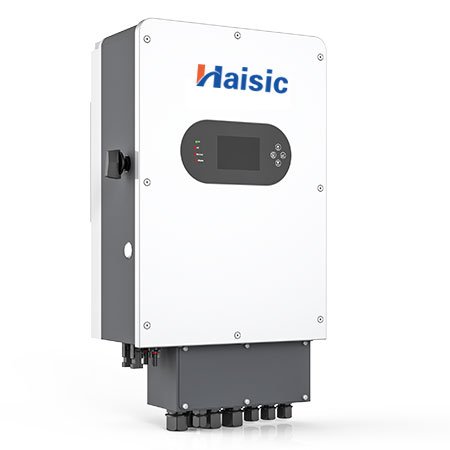
- Factor in Inverter Efficiency: Ensure your battery bank pairs well with a reliable 10kw hybrid solar inverter to handle the conversion losses and peak loads effectively.
- Determine Autonomy: Decide how many days of backup power you need without solar input.
Evaluating Cycle Life Ratings and Warranty Terms
The longevity of your home energy storage system depends entirely on the quality of the internal chemistry. We strictly use new Grade A LiFePO4 cells in our power walls. This distinction is vital because Grade B or used cells, often found in cheaper alternatives, degrade rapidly.
When evaluating options, look for a high cycle life rating. Our units offer between 2,000 to over 6,000 deep cycles at 80% Depth of Discharge (DOD). This translates to a service life exceeding 10 years, compared to the 2-3 year lifespan of traditional lead-acid batteries. Additionally, verify that the system includes a smart Battery Management System (BMS). Our integrated BMS actively monitors temperature, current, and voltage to prevent over-discharge and thermal runaway, ensuring the warranty remains valid through years of operation.
Analyzing Return on Investment (ROI) and Total Cost of Ownership
While the upfront cost of a lithium power wall is higher than lead-acid batteries, the total cost of ownership (TCO) is significantly lower. When you analyze the cost per cycle (kWh delivered over the battery\’s life), lithium is the clear financial winner. You avoid the recurring replacement costs, maintenance labor, and efficiency losses associated with older battery technologies.
ROI Comparison: Lead-Acid vs. LiFePO4 Power Wall
| Feature | Traditional Lead-Acid | WHC LiFePO4 Power Wall |
|---|---|---|
| Cycle Life | 300 – 500 Cycles | 6,000+ Cycles |
| Usable Capacity (DOD) | ~50% | 80% – 100% |
| Maintenance | Regular Water Refilling | Maintenance-Free |
| Lifespan | 2 – 3 Years | 10+ Years |
| Long-Term Cost | High (Frequent Replacements) | Low (One-time Investment) |
Investing in a high-quality solar energy storage system pays for itself by maximizing your self-consumption of solar power and reducing reliance on the grid during peak rate hours.