

Are you overwhelmed by the technical jargon when searching for a reliable lithium battery storage system?
You aren\’t alone. Selecting the right energy storage is the difference between true energy independence and a costly paperweight.
As a direct manufacturer, I know that what’s inside the box—from LFP chemistry to the BMS—matters more than the brand name on the front. I’m going to share the engineering insights that resellers often leave out.
In this guide, you’ll discover exactly how to evaluate cycle life, maximize your ROI, and choose a system that guarantees safety for your home or business.
Let’s get to the truth about energy storage.
The Core Technology: Why Lithium Iron Phosphate (LFP) Wins
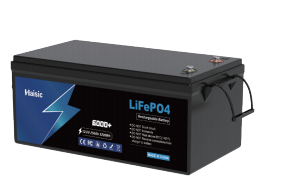
When we engineer a lithium battery storage system for long-term reliability, the chemistry inside the cell matters more than the brand on the box. In my experience, LiFePO4 battery chemistry (LFP) has emerged as the clear winner for stationary energy storage. Unlike the batteries in your phone or laptop, LFP is built for stability. It offers a superior thermal safety profile, meaning the risk of thermal runaway is virtually non-existent compared to other lithium formulations.
For homeowners and businesses looking for a \”set it and forget it\” solution, LFP delivers high power density without the maintenance headaches. We are seeing systems that maintain high performance even at 100% depth of discharge, something that would destroy a traditional lead-acid bank in months.
LFP vs. NMC Chemistry Comparison
While Nickel Manganese Cobalt (NMC)—commonly found in EVs and some residential batteries like the LG Chem RESU or Tesla Powerwall—is known for being lightweight and energy-dense, LFP dominates in safety and longevity. Here is how the two heavyweights stack up in a BESS (Battery Energy Storage System) context:
| Feature | Lithium Iron Phosphate (LFP) | Nickel Manganese Cobalt (NMC) |
|---|---|---|
| Safety | Extremely stable; high thermal runaway threshold | Requires strict thermal management |
| Cycle Life | 6,000+ cycles (10–15+ years) | Typically 3,000–4,500 cycles |
| Energy Density | Moderate (Larger physical footprint) | High (Compact, wall-mountable) |
| Degradation | Slow capacity loss over time | Faster degradation at full discharge |
For stationary applications where weight isn\’t the primary constraint, LFP is the superior choice for maximizing ROI.
Cycle Life Economics and LCOS
Many buyers get stuck on the upfront sticker price, but the real metric you need to watch is the Levelized Cost of Storage (LCOS). A lead-acid system might look cheap initially, but when you factor in replacements every 3–5 years, the costs skyrocket.
A premium lithium battery storage system utilizing LFP chemistry changes the math entirely:
- Upfront Cost: Higher initial investment.
- Operational Lifespan: 10 to 20 years.
- Usable Capacity: You can safely use up to 100% of the rated capacity, whereas lead-acid is limited to 50% to prevent damage.
By investing in a system rated for 6,000+ cycles at 80% Depth of Discharge (DoD), your cost per kWh stored over the system\’s life is significantly lower. You aren\’t just buying a battery; you are pre-paying for decades of reliable energy.
Anatomy of a Storage System: It’s More Than Just Cells
A robust lithium battery storage system is not simply a box of battery cells wired together. It is a sophisticated assembly of electronics, thermal management, and software designed to deliver power safely and reliably. To understand the value of these systems, you need to look under the hood at the components that drive performance, specifically the management systems and inverter integration.
The Battery Management System (BMS) Role
The Battery Management System (BMS) is the brain of the entire operation. In modern BESS (Battery Energy Storage System) configurations, the BMS is responsible for monitoring the health of every individual cell. It prevents common hazards associated with lithium technology by managing:
- Thermal Protection: Automatically shutting down or cooling the system if temperatures rise above safe limits.
- Voltage Balancing: Ensuring all cells charge and discharge at the same rate to maximize cycle life expectancy.
- Overcurrent Protection: preventing damage from surges or short circuits.
Without a high-quality BMS, a battery is just a chemical hazard. With it, the system becomes a maintenance-free, intelligent asset that communicates directly with your inverter to optimize charging cycles.
AC-Coupled vs. DC-Coupled Inverter Compatibility
When integrating storage, the connection method matters. We generally categorize systems into two main architectures based on how they connect to your power source:
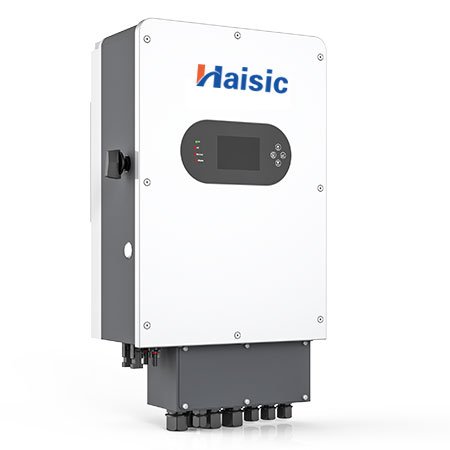
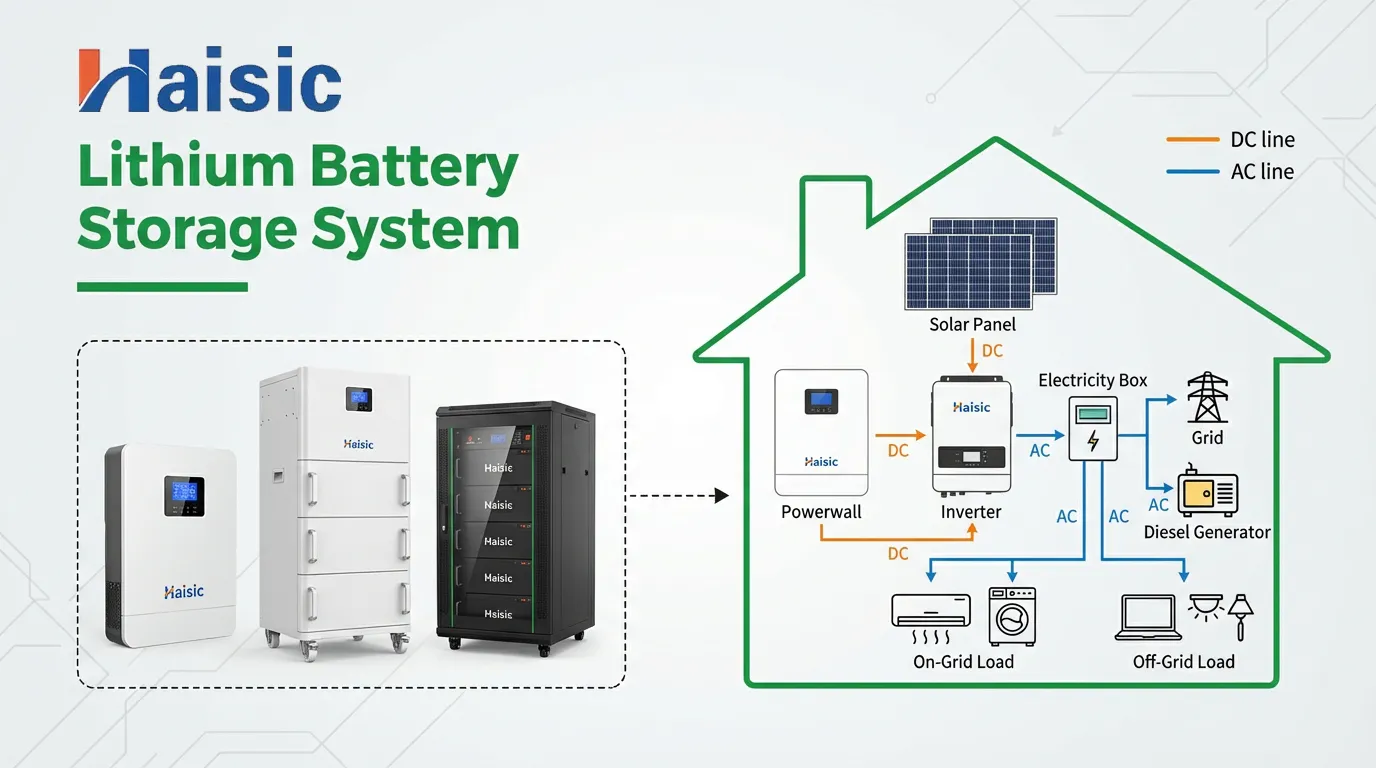
- DC-Coupled Systems: These are highly efficient for new installations. The solar panels charge the battery directly using DC power, avoiding conversion losses. Pairing your battery with a reliable hybrid solar inverter creates a streamlined system where the solar and battery share the same brain.
- AC-Coupled Systems: These are ideal for retrofitting. If you already have a solar array with standard inverters, an AC-coupled battery adds backup capability without needing to rewire your existing solar setup.
Choosing between AC-coupled vs. DC-coupled setups depends entirely on whether you are building a new site or upgrading an existing one.
Modularity and Stackable Design
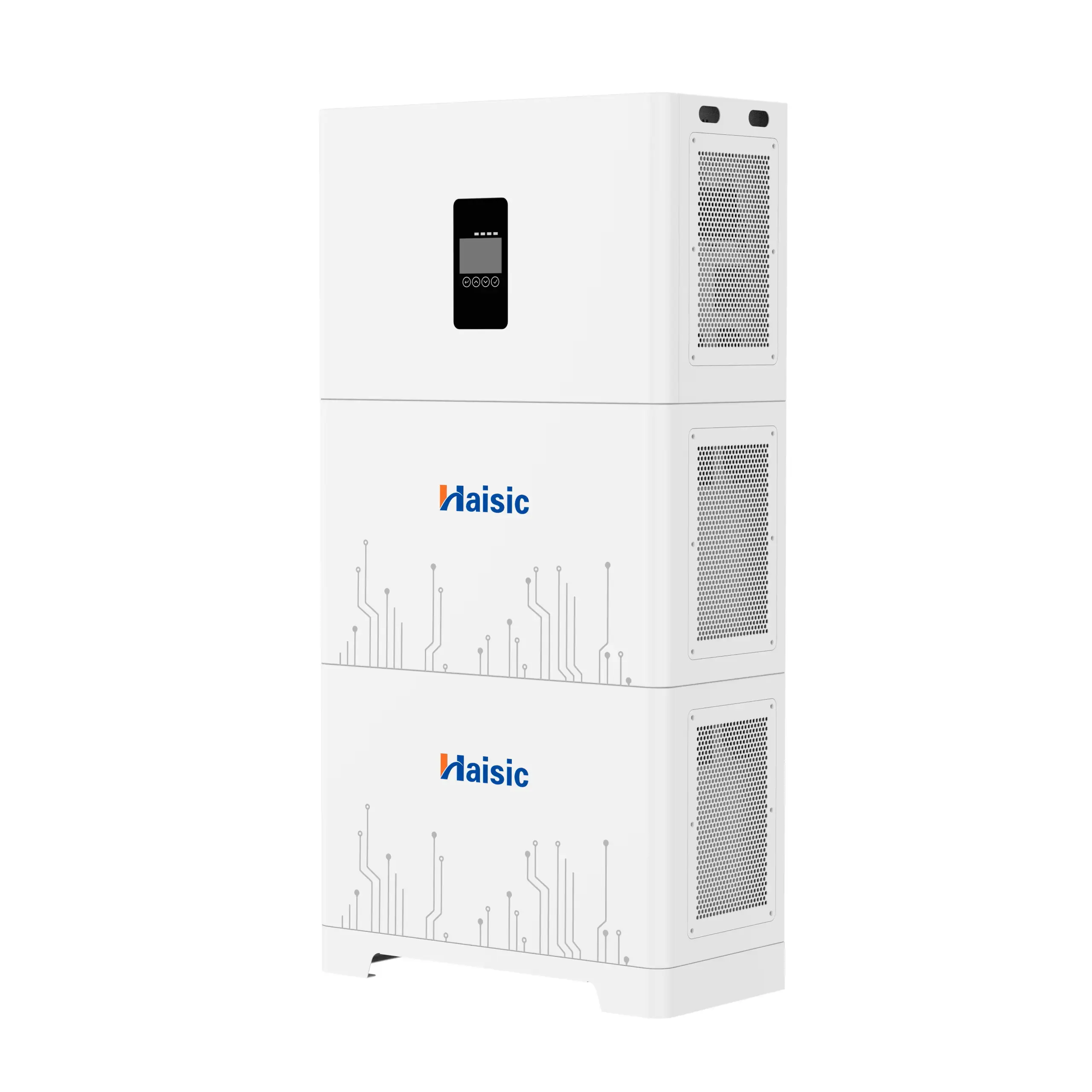
Flexibility is a key advantage of modern lithium technology. We design systems with modular energy storage in mind, allowing users to start with a base capacity and expand as energy needs grow. You are not locked into a static capacity; you can stack additional battery modules to increase your total kilowatt-hour (kWh) capacity.
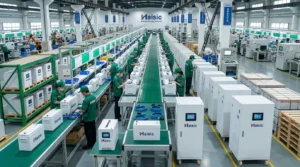
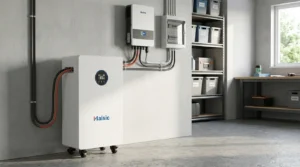
This scalability applies across the board, from residential wall-mounted units to industrial applications. For businesses requiring massive power, a scalable containerized energy storage system offers the ability to deploy hundreds of kWh rapidly. This plug-and-play modularity ensures that your initial investment remains useful even as your load requirements change over time.
Key Metrics for Buyers: How to Read the Spec Sheet
When evaluating a lithium battery storage system, the technical specifications determine whether the unit will actually meet your energy demands or leave you in the dark. We often see buyers confuse capacity with power output, but distinguishing these metrics is critical for sizing a system correctly.
Capacity (kWh) vs. Power (kW) Explained
Think of capacity (measured in kilowatt-hours, kWh) as the size of your fuel tank, while power (measured in kilowatts, kW) is the size of the pipe delivering that fuel.
- Kilowatt-hour (kWh) capacity: This tells you the total amount of energy the battery can store. A higher kWh rating means you can run your appliances for a longer duration during an outage.
- Power (kW): This indicates the maximum load the battery can support at any single moment. If you need to start heavy machinery or multiple HVAC units simultaneously, you need a high kW rating.
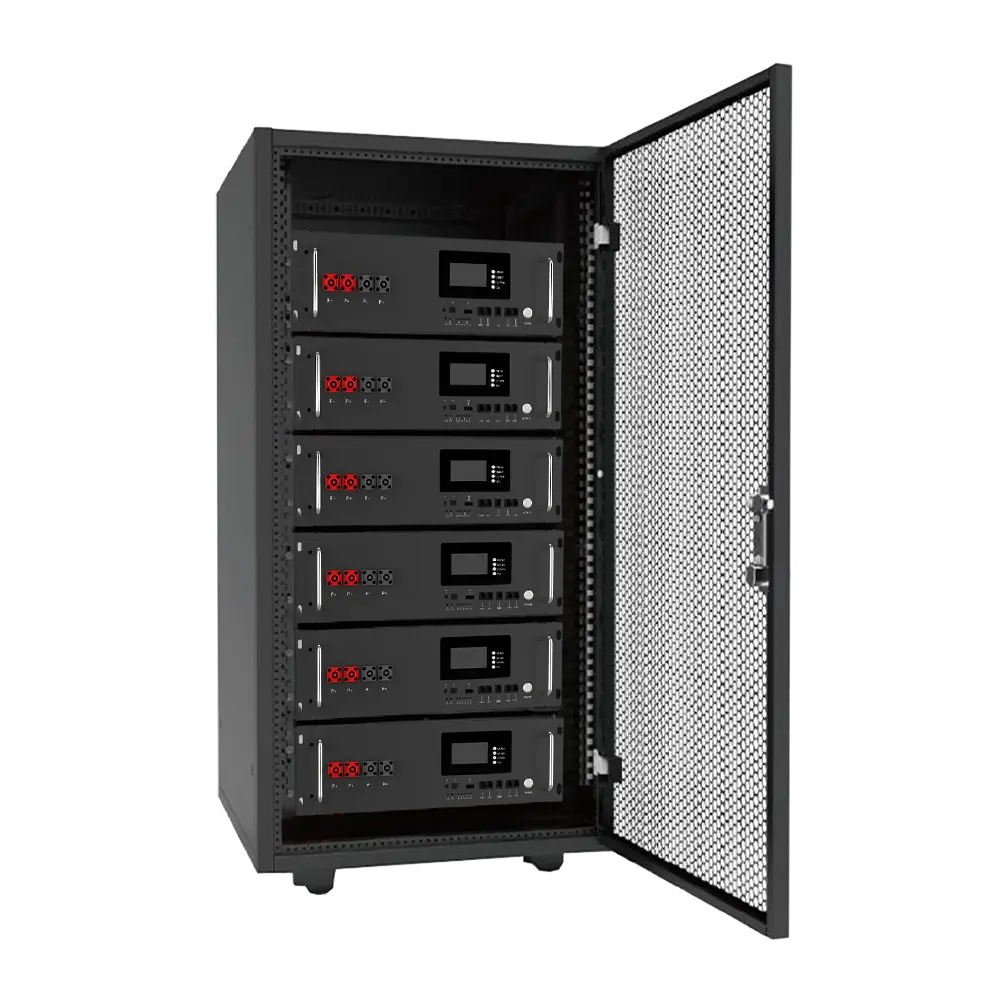
For larger operations, we design commercial battery storage systems that stack multiple modules to increase both the \”tank size\” and the \”pipe size,\” ensuring the system handles peak loads without tripping.
Understanding Depth of Discharge (DoD)
Depth of Discharge (DoD) is the percentage of the battery that has been discharged relative to its total capacity. This is where lithium chemistry, particularly LiFePO4 battery chemistry, vastly outperforms legacy technology. Traditional lead-acid batteries often fail prematurely if discharged below 50%. In contrast, a modern lithium battery storage system allows for a DoD of 90% to 100%. This means you can utilize nearly all the stored energy without degrading the battery\’s lifespan, effectively giving you more usable power for your investment.
Round-Trip Efficiency Importance
Round-trip efficiency measures the percentage of electricity put into storage that is later retrieved. No system is perfect; some energy is always lost as heat during the charging and discharging process. However, high-quality lithium systems typically achieve a round-trip efficiency of 95% to 98%. This is significantly higher than older technologies, which often hover around 80%. High efficiency is crucial for maximizing the ROI of your best battery storage for solar setup, as it ensures that the solar energy you generate is actually available for use rather than being lost in conversion.
Applications: Residential vs. Commercial Scenarios
When we deploy a lithium battery storage system, the operational goals differ significantly between a suburban home and a manufacturing plant. While the core chemistry remains similar, the scale, voltage, and control strategies change to match the specific energy demands of the user. Understanding what a battery energy storage system is at each scale is critical for maximizing return on investment.
Residential Backup and Time of Use Arbitrage
For homeowners, the priority is almost always security and independence. We design residential vs. commercial ESS configurations to provide seamless grid-tied battery backup. In this setup, the system detects a utility outage and instantly switches to battery power, keeping essential appliances like refrigerators, lights, and Wi-Fi running.
Beyond emergency power, economics play a massive role. Many utilities now charge higher rates during the evening. A smart lithium battery storage system enables solar self-consumption and time-of-use arbitrage:
- Charge: Store excess solar energy during the day when rates are low.
- Discharge: Use stored battery power during expensive evening peak hours.
- Save: Avoid buying high-cost grid electricity, effectively lowering the monthly bill.
Commercial Peak Shaving and Industrial Scaling
In the commercial sector, utility bills are often driven by \”demand charges\”—fees based on the highest amount of power drawn at any single moment. Here, peak shaving strategies are essential. We configure high-voltage systems to discharge automatically when a facility\’s power usage spikes, flattening the load curve and preventing costly demand penalties.
Industrial applications require massive scalability. Unlike fixed residential units, our commercial solutions are modular. As a Haisic energy storage system manufacturer, we can stack battery modules to scale capacity from 30kWh up to MWh levels. This allows businesses to start with a system that fits their current load and expand as their operations grow, ensuring the storage infrastructure supports heavy-duty machinery and critical 3-phase power requirements.
Installation and Integration: What to Expect
Deploying a lithium battery storage system varies significantly depending on whether you are powering a single home or a large industrial facility. The installation process dictates the system\’s reliability and long-term performance. We focus on making this phase as seamless as possible, ensuring that the hardware integrates perfectly with existing solar arrays or the grid.
Plug-and-Play vs. Custom Engineering
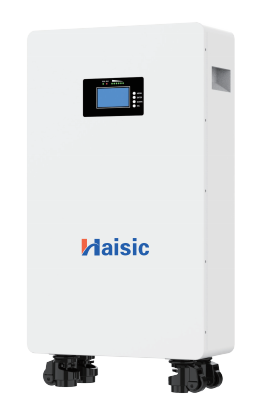
For most residential applications, the industry has shifted toward modular energy storage. This approach allows installers to simply stack battery modules to achieve the desired kilowatt-hour (kWh) capacity without complex wiring. A plug-and-play design reduces labor costs and installation errors. For instance, our 51.2V floor-mounted home energy storage units are designed for quick deployment, allowing homeowners to expand their backup power easily as their energy needs grow.
In contrast, commercial BESS (Battery Energy Storage System) projects often require custom engineering. These setups involve detailed load analysis, peak shaving strategies, and integration with high-voltage hybrid inverter compatibility.
| Feature | Residential (Plug-and-Play) | Commercial (Custom Engineering) |
|---|---|---|
| Complexity | Low; Pre-wired modules | High; Site-specific design |
| Scalability | Stackable modules | Containerized or rack-mounted |
| Inverter Type | Often AC-coupled or Hybrid | High-voltage DC-coupled |
| Timeframe | 1-2 Days | Weeks to Months |
Essential Safety Certifications (UL 9540, UN38.3)
Safety is not optional. When sourcing a lithium battery storage system, verifying certifications is the first step in risk management. These standards ensure the LiFePO4 battery chemistry (LFP) is stable and the system management is fail-safe.
- UN38.3: Required for the safe transport of lithium batteries. It certifies that the cells have passed rigorous testing for vibration, shock, and altitude simulation.
- UL 9540: The gold standard for system-level safety. It tests the interaction between the battery pack, the Battery Management System (BMS), and the inverter to prevent thermal runaway.
- IEC 62619: Specifies requirements for the safe operation of secondary lithium cells in industrial applications.
Maintenance Requirements for Lithium Systems
One of the massive advantages of LFP over legacy lead-acid is the \”install and forget\” nature of the technology. A robust Battery Management System (BMS) actively balances cell voltage and monitors temperatures, eliminating the need for manual intervention.
Maintenance Checklist:
- Visual Inspection: Check for cable integrity and physical damage annually.
- Firmware Updates: Ensure the BMS and inverter software are up to date for optimal round-trip efficiency.
- Environment Check: Keep the installation area within the recommended temperature range (usually 0°C to 45°C) to preserve cycle life expectancy.
- Cleaning: Keep vents and fans free of dust to prevent overheating.
Unlike older systems, there is no water topping, specific gravity checks, or equalization charging required. This low-maintenance profile significantly improves the ROI for both off-grid energy independence and grid-tied setups.
Cost Analysis and ROI for Lithium Battery Storage Systems
Investing in a lithium battery storage system often comes with sticker shock compared to traditional lead-acid options. However, looking at the price tag alone is a mistake. We need to evaluate the Levelized Cost of Storage (LCOS), which calculates the cost per kWh stored over the system\’s entire lifetime. When you crunch the numbers, lithium technology—specifically LFP chemistry—delivers a far superior Return on Investment (ROI).
Upfront vs. Lifetime Cost Comparison
Lead-acid batteries may look cheaper on day one, but they are a \”rental\” model in disguise. You have to replace them every 3 to 5 years because they degrade rapidly if discharged below 50%. In contrast, a high-quality LiFePO4 battery solar system offers 6,000+ cycles at a deep discharge, lasting over a decade.
The Economic Reality:
- Lead-Acid: Low upfront cost + High replacement frequency + Maintenance labor = High Lifetime Cost.
- Lithium-Ion: Higher upfront cost + Zero maintenance + 10-15 year lifespan = Lowest Lifetime Cost.
| Metric | Lead-Acid (AGM/Gel) | Lithium Iron Phosphate (LFP) |
|---|---|---|
| Usable Capacity (DoD) | ~50% | 90-100% |
| Cycle Life | 500 – 1,000 | 6,000+ |
| Round-Trip Efficiency | ~80% | >95% |
| Replacement Cycle | Every 3-5 years | Every 10-15 years |
Government Incentives and Tax Credits
To accelerate the adoption of green energy, governments globally offer substantial financial incentives that offset the initial capital expenditure of a BESS.
- Investment Tax Credit (ITC): In the United States, installing a battery system often qualifies for a significant federal tax credit (currently 30%), especially when charged by solar panels.
- Rebate Programs: Many local utilities and states (like California\’s SGIP) provide cash rebates based on the installed kWh capacity.
- Accelerated Depreciation: Commercial installations can often utilize MACRS depreciation to recover costs quickly.
Always verify local regulations, as these incentives can drastically reduce the payback period of your ESS battery storage project.
The Wholesale Advantage of Direct Manufacturing
Sourcing your energy storage hardware directly impacts your bottom line. By bypassing multi-tier distribution chains, you avoid accumulated markups that inflate the cost without adding technical value. Direct manufacturing access ensures you receive the latest battery cell technology and firmware updates immediately, rather than buying \”new\” stock that has been sitting in a distributor\’s warehouse for months. This approach secures the best price-to-performance ratio for residential and commercial projects alike.
Frequently Asked Questions About Lithium Battery Storage
Is LFP chemistry safer than other lithium batteries?
Absolutely. We prioritize LiFePO4 battery chemistry (LFP) because it offers superior thermal stability compared to cobalt-based alternatives like NMC. In a residential setting, safety is non-negotiable. LFP cells are highly resistant to thermal runaway, meaning they do not overheat or catch fire under stress. This chemistry provides peace of mind, knowing your energy storage is as safe as it is powerful.
Can I go off-grid with a lithium battery storage system?
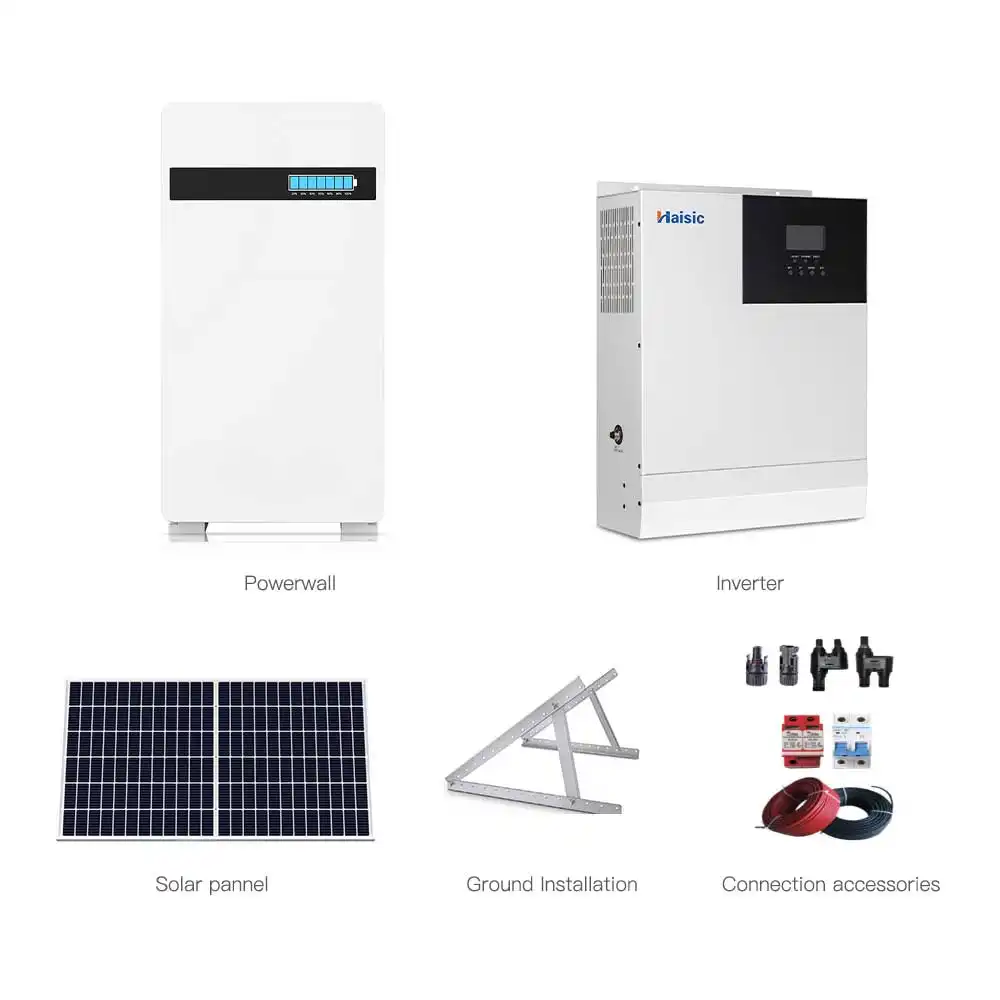
Yes, achieving off-grid energy independence is one of the primary applications for these systems. Unlike grid-tied setups that only need to run for a few hours, off-grid systems require robust cycling capabilities. Our 51.2V Powerwall energy storage solutions are designed to handle the rigorous daily charging and discharging required when you are your own power plant. Because these systems are modular, you can stack multiple units to ensure you have enough capacity to run your entire home without the grid.
How long do lithium battery storage systems last?
You can expect a significantly longer operational life compared to traditional lead-acid batteries. A high-quality lithium battery storage system typically offers a cycle life expectancy of over 6,000 cycles at 80% to 100% Depth of Discharge (DoD).
- Daily Use: If cycled once a day, this translates to roughly 10-15 years of reliable service.
- Warranty: Most reputable systems come with a 10-year performance warranty.
- Degradation: Even after the warranty period, the battery will still hold a charge, just at a slightly reduced capacity.