

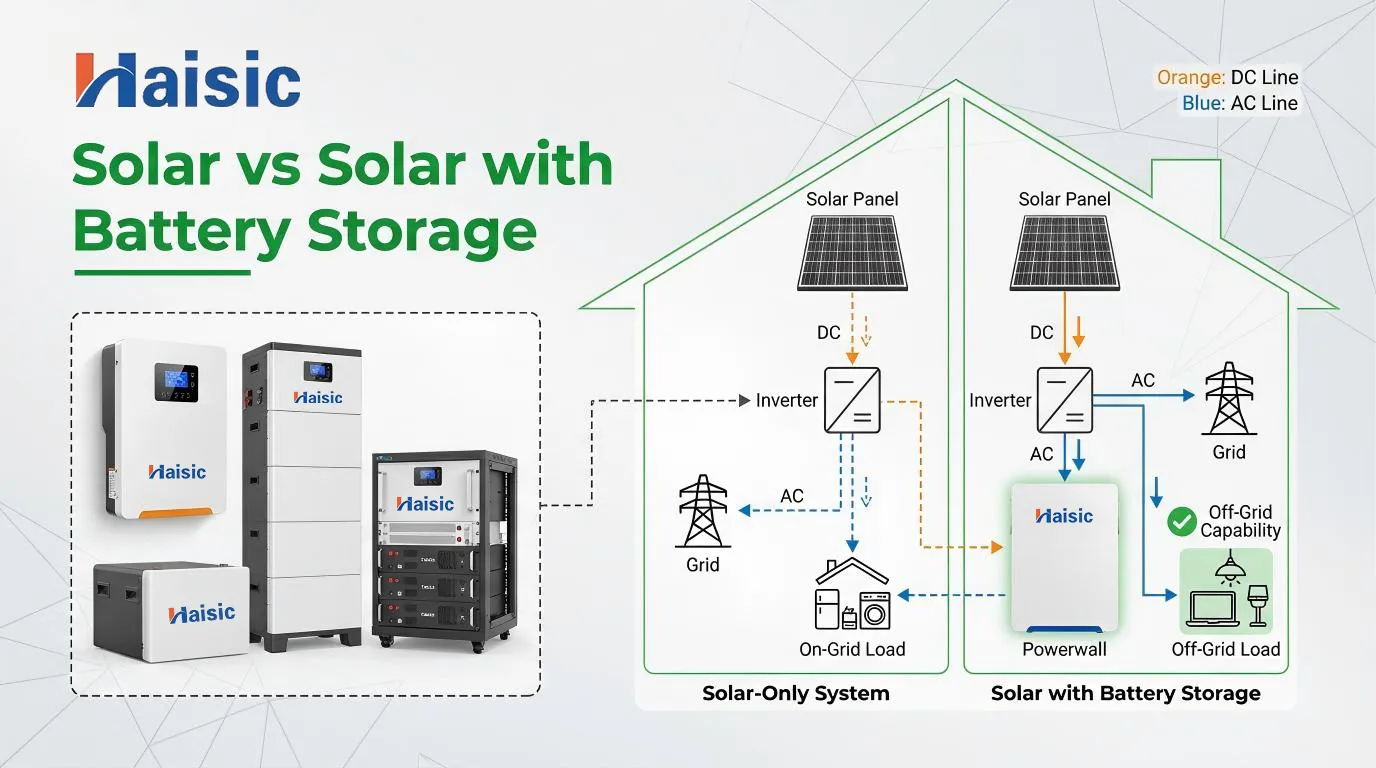
You might assume that having solar panels on your roof guarantees you power during a blackout.
But here is the uncomfortable truth: Standard grid-tied solar systems stop working the moment the grid goes down.
As a manufacturer in the energy industry, I see this misconception cost homeowners their peace of mind every day. They invest in panels, only to be left in the dark when they need energy the most.
La differenza tra solare e solare con accumulo di batteria isn\’t just a line item on a quote—it is the difference between simply lowering your bill and achieving true indipendenza energetica.
In this guide, we’re going to move past the sales fluff. You’ll learn exactly how Haisic storage solutions transform a passive solar setup into an active energia di riserva powerhouse, and whether the extra investment makes sense for your specific needs.
Let’s get straight to the facts.
Solar-Only Systems: The Basics and Limitations
The Mechanism: From Sunlight to Grid Power
When we install a standard sistema fotovoltaico in rete, the operational flow is relatively simple but strictly linear. Photovoltaic (PV) panels capture sunlight and convert it into Direct Current (DC) electricity. An inverter then transforms this into Alternating Current (AC), which powers your appliances. In this traditional setup, the utility grid functions as a virtual storage unit. When your system overproduces during peak sun hours, that energy flows out to the grid; when the sun sets, you draw power back from the utility. While efficient during normal operations, this architecture lacks autonomy.
The \”Anti-Islanding\” Safety Feature Explained
The biggest misconception we encounter is the belief that solar panels will keep the lights on during a blackout. In reality, a solar-only system shuts down the moment the grid fails. This is due to a mandatory safety protocol known as cURL Too many subrequests..
- Sicurezza prima: If your inverter continued pushing power into the grid during an outage, it could electrocute utility line workers attempting to repair the wires.
- Automatic Shutdown: To prevent this, grid-tied inverters instantly cease production when they detect a loss of grid voltage.
- Il risultato: Even if the sun is blazing, your home loses power alongside the rest of the neighborhood because there is no battery buffer to isolate your system from the public infrastructure.
Net Metering: The Economics of Exporting Power
For years, the financial viability of solar-only setups relied heavily on Net Energy Metering (NEM). This billing mechanism allows homeowners to earn credits for the excess energy they export to the grid, which can then be used to offset the cost of power drawn at night. However, the economics are shifting.
Many utilities are moving toward models that devalue these export credits, meaning you sell your green energy at a wholesale discount during the day but buy grid power at full retail price in the evening. Without the ability to store your own energy, you are financially tethered to these fluctuating utility policies and rate structures.
Solar + Battery Storage: The Complete Energy Ecosystem
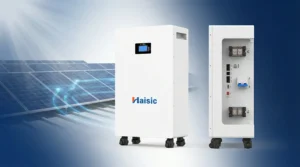
Moving from a standard solar setup to a solar with battery storage configuration transforms your home from a passive power generator into an active energy manager. While solar panels alone are great for offsetting daytime usage, adding an Sistema di Accumulo di Energia (ESS) creates a closed loop where you control exactly how and when your power is used. This ecosystem allows you to capture excess solar energy that would otherwise be lost to the grid, storing it for use at night or during expensive peak rate hours.
How Hybrid Systems Manage Energy Flow
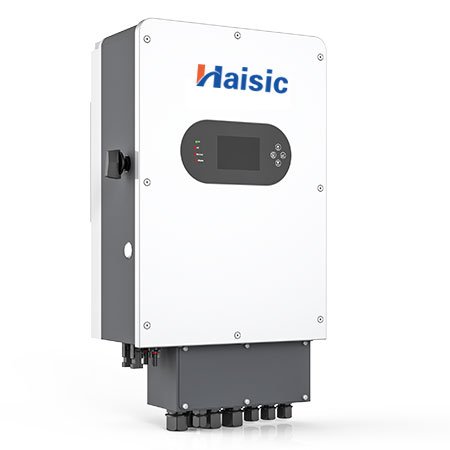
The brain of this operation is the inverter ibrido. Unlike traditional inverters that simply convert DC to AC and push it out, a smart hybrid system acts as a traffic controller for your electricity. It intelligently prioritizes energy distribution:
- Self-Consumption First: Solar power goes directly to running your home appliances.
- Battery Charging: Excess energy fills your storage unit.
- Grid Export: Only when the battery is full and the house is powered does energy flow back to the utility.
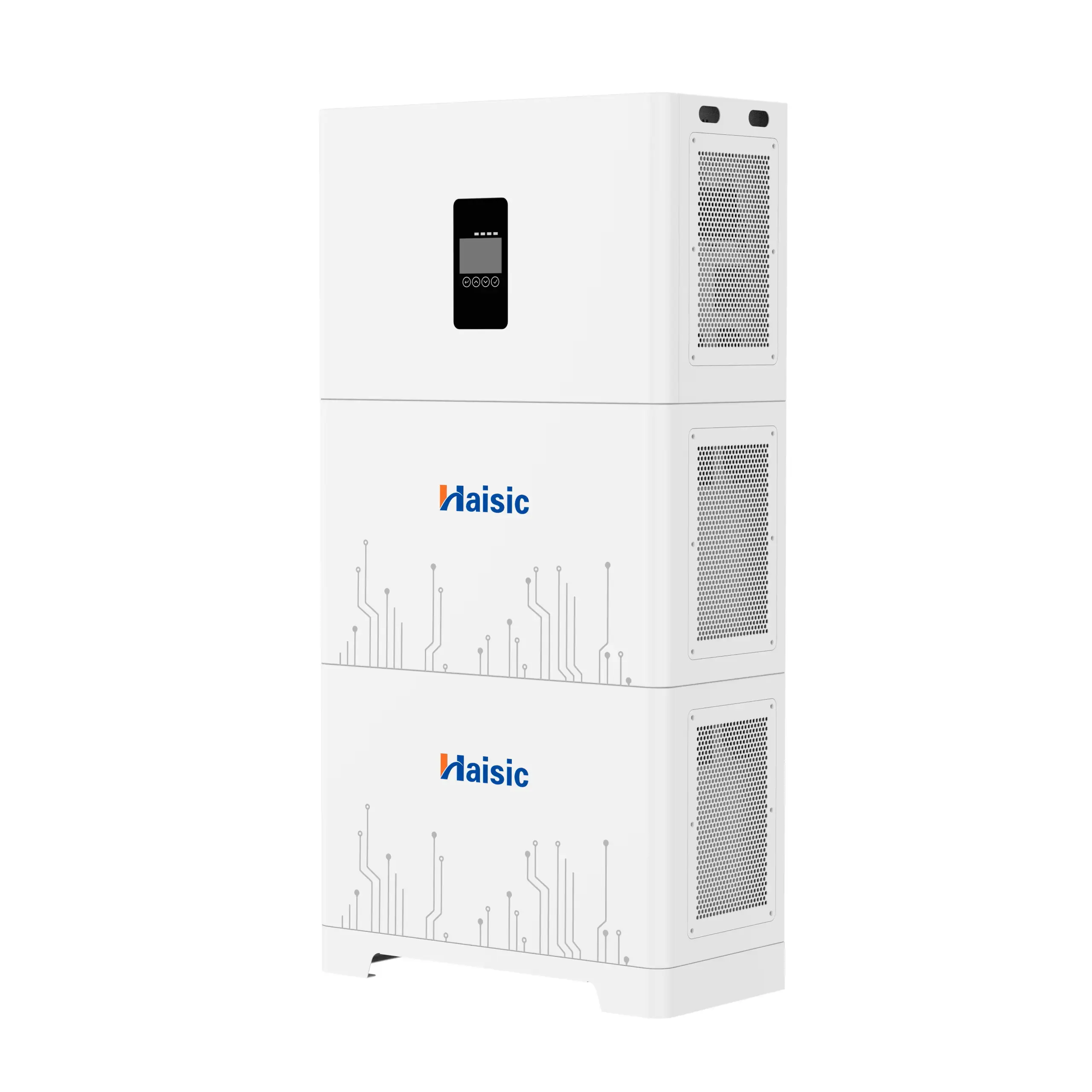
We utilize advanced inverter ibridi solari da 6 kW a 12 kW cURL Too many subrequests.
cURL Too many subrequests.
cURL Too many subrequests. cURL Too many subrequests.. cURL Too many subrequests.
cURL Too many subrequests. grid independence, cURL Too many subrequests.
cURL Too many subrequests.
cURL Too many subrequests. Fosfato di Litio Ferro (LFP) cURL Too many subrequests.
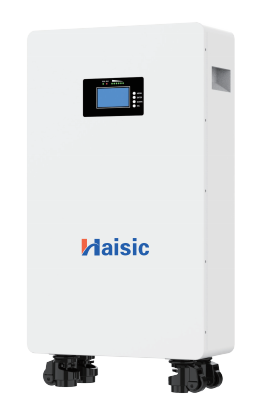
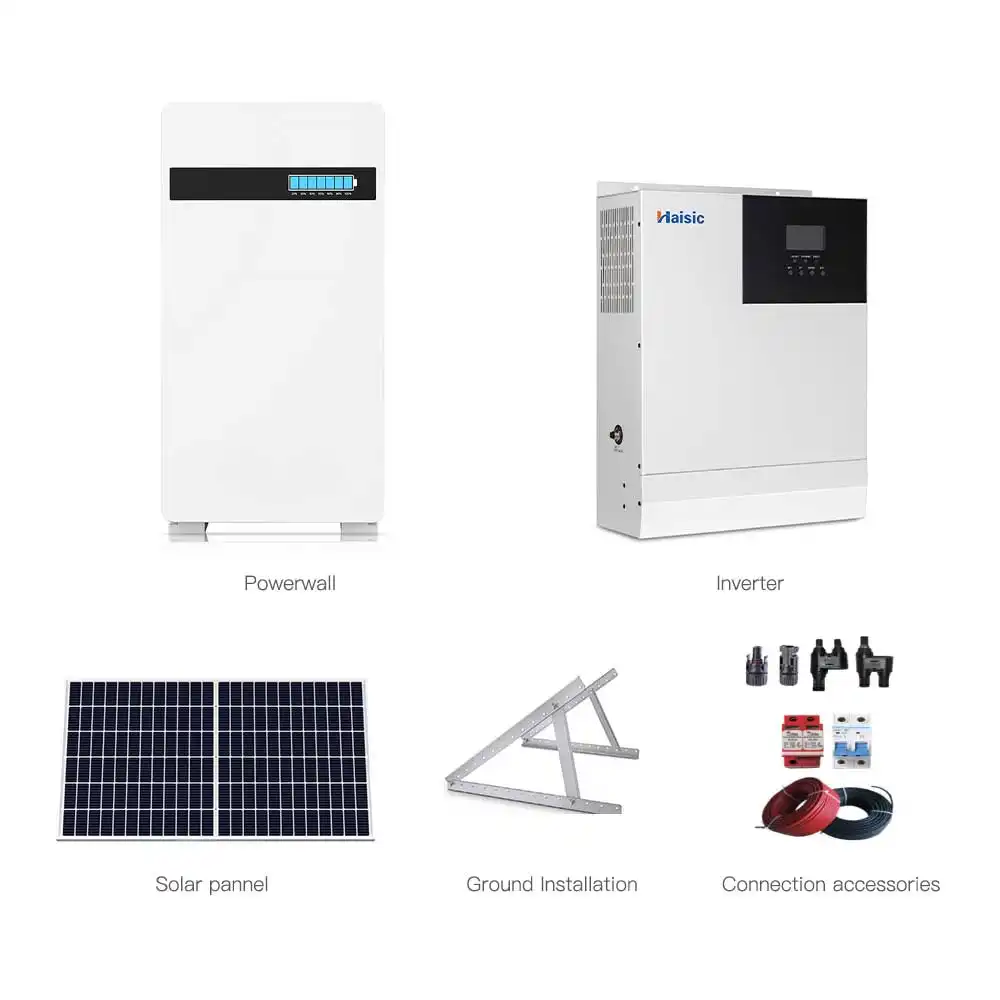
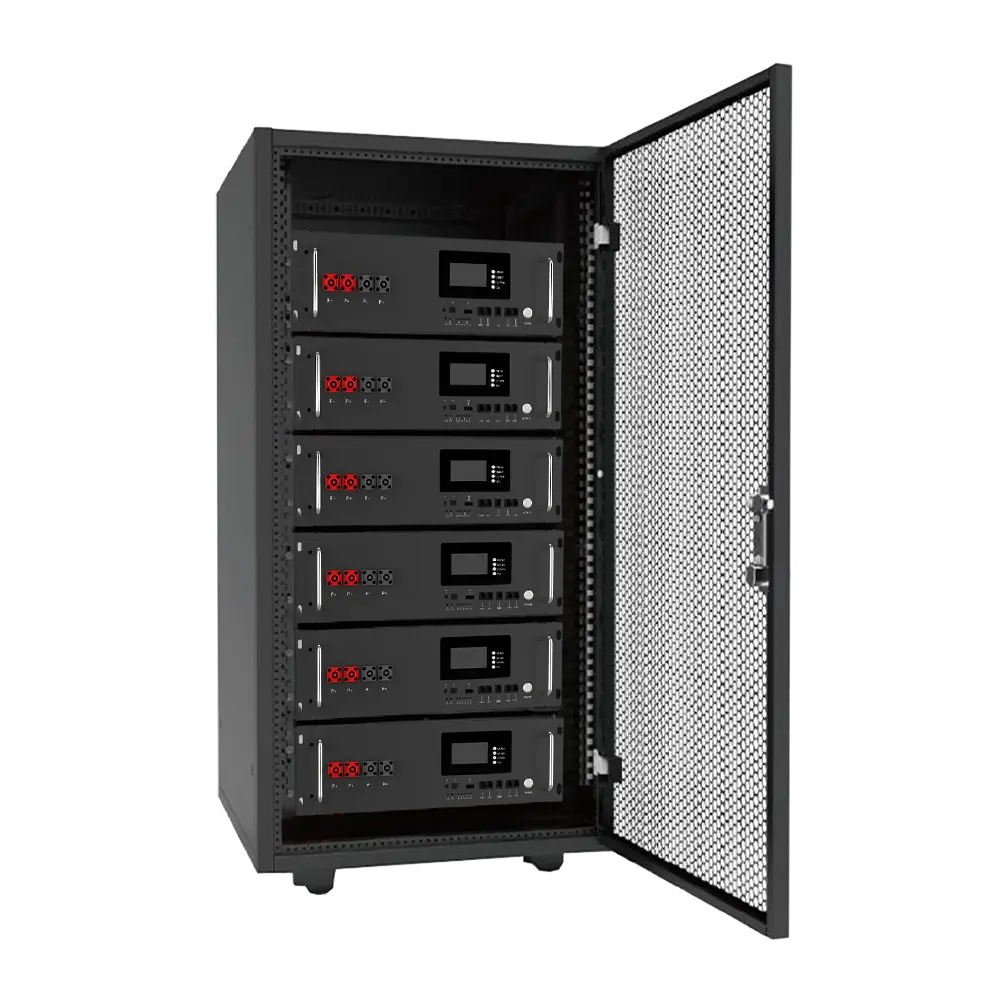
cURL Too many subrequests. Powerwall da 51,2V 100Ah per l'accumulo di energia cURL Too many subrequests.
cURL Too many subrequests.
Quando si analizza il differenza tra solare e solare con accumulo di batteria, cURL Too many subrequests.
cURL Too many subrequests.
cURL Too many subrequests.
cURL Too many subrequests. cURL Too many subrequests., cURL Too many subrequests. cURL Too many subrequests. cURL Too many subrequests.
cURL Too many subrequests.
cURL Too many subrequests. cURL Too many subrequests., cURL Too many subrequests.
- Solo Solare: cURL Too many subrequests.
- Solare + Batteria: cURL Too many subrequests.
cURL Too many subrequests. risparmio di picco, cURL Too many subrequests. lithium power wall, cURL Too many subrequests.
cURL Too many subrequests.
cURL Too many subrequests. cURL Too many subrequests., cURL Too many subrequests.
Confronto rapido: Solare vs. Solare + Accumulo
| Caratteristica | Sistema solo solare | Solare + Accumulo di Batteria |
|---|---|---|
| cURL Too many subrequests. | cURL Too many subrequests. | cURL Too many subrequests. |
| cURL Too many subrequests. | cURL Too many subrequests. | cURL Too many subrequests. |
| cURL Too many subrequests. | cURL Too many subrequests. | cURL Too many subrequests. |
| Autoconsumo | cURL Too many subrequests. | High (24/7 utilization) |
| Indipendenza dalla rete | Minimale | Maximum |
Financial Breakdown: Calculating the ROI
When we analyze the differenza tra solare e solare con accumulo di batteria, the conversation inevitably turns to the bottom line. While a standalone solar system offers a lower entry price, adding a battery changes the financial model from simple passive generation to active energy management. It is not just about producing power; it is about controlling when and how you use it to maximize value.
Comparing Upfront Costs vs. Long-Term Savings
The initial investment for a sistema fotovoltaico in rete is undeniably lower because you are paying only for panels and an inverter. However, the long-term savings of a solar-only setup rely heavily on Net Energy Metering (NEM) policies, which are becoming less favorable in many regions. Utilities are increasingly paying less for the excess power you send back to the grid.
Integando una batteria al litio per impianti fotovoltaici setups, you shift the economics. You might pay more upfront, but you gain the ability to store your free solar energy and use it when you actually need it—typically in the evening when the sun is down. This maximizes your self-consumption rate, ensuring you aren\’t selling your green energy at a discount only to buy it back at full price later.
Understanding Peak Shaving and Arbitrage
The real financial power of an energy storage system (ESS) lies in smart load management strategies like peak shaving and arbitrage.
- Riduzione della punta di domanda: Many utilities charge higher rates during \”peak\” hours (usually late afternoon and evening) under cURL Too many subrequests.. A battery system can automatically discharge during these expensive windows, effectively \”shaving\” your usage off the grid so you never pay the premium rate.
- Solar Energy Arbitrage: This involves storing energy when it is cheap (or free from your panels) and discharging it when grid electricity is most expensive.
This intelligent management turns your home into a micro-utility. Instead of being at the mercy of fluctuating grid prices, you leverage your stored power to cap your costs.
Federal Tax Credits (ITC) and Local Incentives
To accelerate the adoption of renewable resilience, governments often subsidize the cost of these systems. The Federal Investment Tax Credit (ITC) in the United States, for example, allows you to deduct a significant percentage of the cost of your solar and battery system from your federal taxes.
Local incentives and rebates can further reduce the ROI period. Some utility companies even offer \”virtual power plant\” programs where they pay you to access a portion of your battery during grid emergencies. When you factor in these incentives alongside the daily savings from TOU avoidance, the differenza tra solare e solare con accumulo di batteria becomes a clear choice for long-term financial security.
Decision Guide: Which Setup Fits Your Needs?
Choosing between a standard solar array and a full storage ecosystem comes down to your specific energy goals and local grid conditions. While both reduce your carbon footprint, the differenza tra solare e solare con accumulo di batteria is largely about control and security. Here is how I recommend breaking down the decision.
When to Stick with a Grid-Tied Solar System
For many homeowners, a simple sistema fotovoltaico in rete remains the most logical financial entry point. If your primary goal is strictly to lower your monthly electricity bill and you live in an area with stable infrastructure, you might not need to add storage yet.
You should stick with solar-only if:
- The Grid is Reliable: You rarely experience blackouts or brownouts.
- Net Metering is Generous: Your utility offers 1:1 Net Energy Metering (NEM), crediting you the full retail rate for every kWh you export.
- Budget is Tight: You want the fastest Return on Investment (ROI) with the lowest upfront equipment cost.
- Daytime Usage is High: You are home during the day to use the power as it is generated, naturally maximizing cURL Too many subrequests..
cURL Too many subrequests.
cURL Too many subrequests. grid independence cURL Too many subrequests.
cURL Too many subrequests.
- cURL Too many subrequests. Hai bisogno cURL Too many subrequests. cURL Too many subrequests.
- cURL Too many subrequests. La tua utility usa cURL Too many subrequests., cURL Too many subrequests. risparmio di picco cURL Too many subrequests.
- cURL Too many subrequests. cURL Too many subrequests. Sistema di Accumulo di Energia (ESS) cURL Too many subrequests.
- Progettazione per il futuro: cURL Too many subrequests.
cURL Too many subrequests. qual è la dimensione del pacco batteria necessario per l'accumulo di energia domestico cURL Too many subrequests. cURL Too many subrequests. cURL Too many subrequests.
Domande frequenti sull'immagazzinamento solare
cURL Too many subrequests.
cURL Too many subrequests.
cURL Too many subrequests. Sistemi collegati in corrente alternata, cURL Too many subrequests.
Questo cURL Too many subrequests. cURL Too many subrequests. cURL Too many subrequests. cURL Too many subrequests.
cURL Too many subrequests.
cURL Too many subrequests. kilowatt-hour (kWh) capacity cURL Too many subrequests.
- cURL Too many subrequests. cURL Too many subrequests.
- Gestione intelligente: cURL Too many subrequests.
cURL Too many subrequests. cURL Too many subrequests. cURL Too many subrequests.
cURL Too many subrequests.
cURL Too many subrequests.
- Arbitrage Time-of-Use (TOU): cURL Too many subrequests.
- cURL Too many subrequests. cURL Too many subrequests.
Quando calcoli cURL Too many subrequests., cURL Too many subrequests.