

Understanding Bulk Energy Storage Systems
If you’re sourcing from a bulk Energy Storage System manufacturer, you’re usually solving one of three issues: grid instability, high energy costs, or limited capacity to integrate renewables. To choose the right bulk ESS supplier, you need a clear picture of what a modern bulk battery energy storage system (BESS) actually includes and how it’s configured.
Core Components of Bulk BESS
A utility‑grade or industrial‑scale ESS from our bulk Energy Storage System factory is a complete, integrated power asset, not just a container of batteries. The core elements are:
-
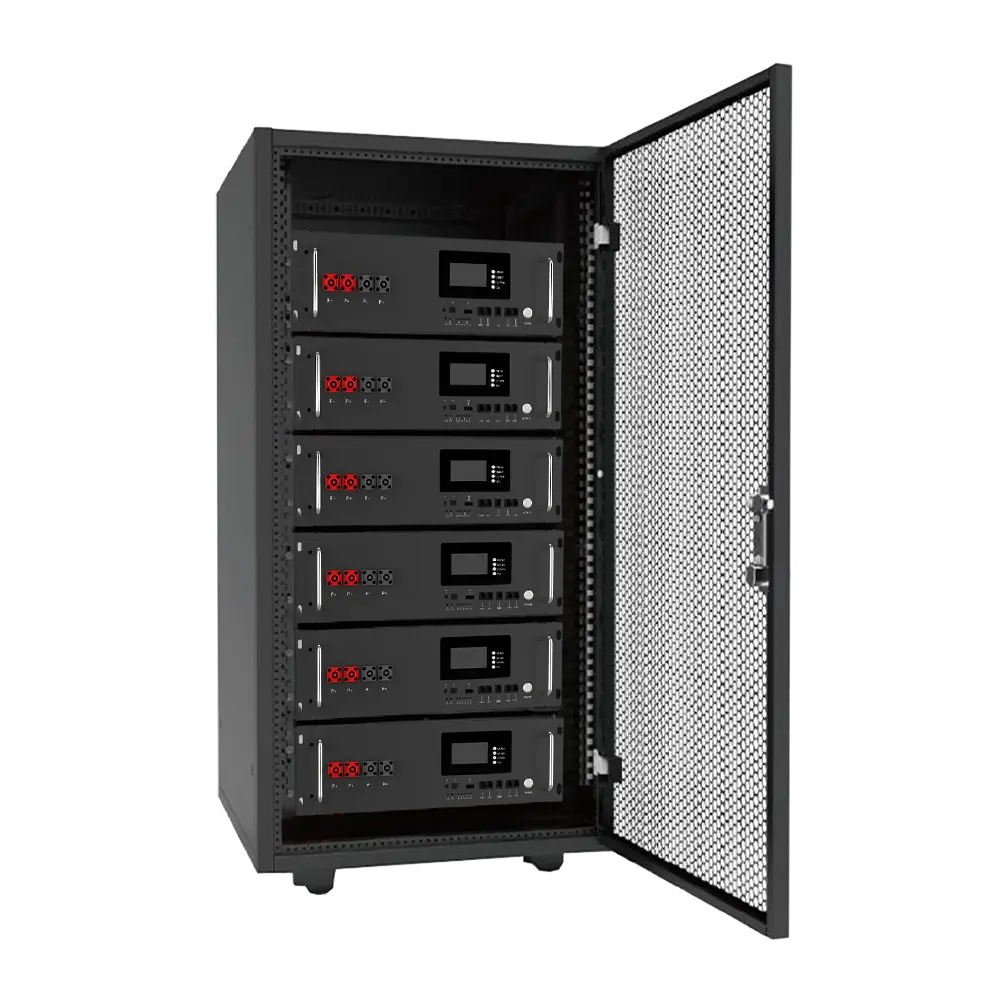
Battery Packs (LFP/Lithium‑ion)
- High‑cycle, high‑safety LFP cells for grid‑scale use
- Rack or cabinet structures for fast installation and maintenance
- Designed for large‑scale parallel connection and bulk expansion
-
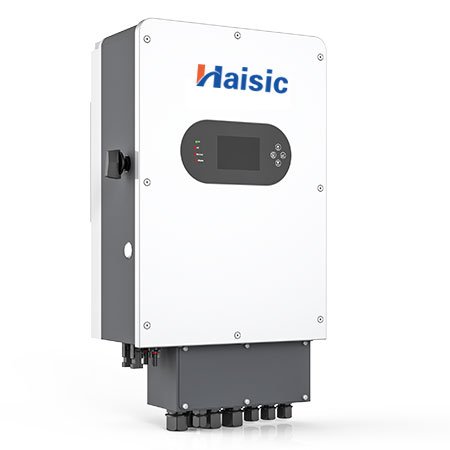
PCS (Power Conversion System)
- Bi‑directional inverters converting DC–AC and AC–DC
- Grid‑tied functions: active/reactive power control, black start, islanding
- Configurable for on‑grid, off‑grid, and microgrid modes
-
BMS (Battery Management System)
Why Work With a Bulk Energy Storage System Manufacturer
Benefits of Buying BESS in Bulk Directly From Manufacturers
When you’re planning multi‑site or utility projects, working directly with a bulk Energy Storage System manufacturer gives you more control and better pricing.
Key advantages:
- Lower cost per kWh
- Factory-direct, wholesale pricing
- Stable price over long framework orders
- Technical alignment
- Direct access to R&D and engineering
- Faster customization for project specs (voltage, PCS sizing, EMS protocols)
- Better quality control
- Full traceability from cell to complete BESS
- Easier to enforce testing standards and FAT/SAT requirements
- Stronger support
- Direct warranty with the ESS factory
- Faster troubleshooting and firmware updates for PCS/BMS/EMS
For example, if you’re sourcing a 1MWh containerized BESS, dealing straight with the bulk Energy Storage System factory that designs and builds the full stack (battery, PCS, BMS, EMS, container) cuts risk and hidden markup.
Factory-Direct vs Distributor or Trader Sourcing
| Aspect | Factory-Direct Bulk ESS Manufacturer | Distributor / Trader ESS Vendor |
|---|---|---|
| Pricing | Lowest, transparent, volume-based | Higher, multiple markups |
| Customization (OEM/ODM) | High – direct engineering access | Limited – relies on upstream factory |
| Technical support | Direct from design team | Indirect, slower escalation |
| Brand / Private label options | Full OEM/ODM and private label possible | Depends on factory relationship |
| Supply security | Can commit capacity for long-term grid-scale projects | Capacity depends on multiple factories |
Distributors still make sense for small, one-off commercial BESS. But for bulk ESS procurement, especially multi‑MWh orders, I always push clients to build a direct line with a bulk Energy Storage System supplier or utility-scale BESS factory.
Trends Shaping Bulk ESS Sourcing & Global Supply Chains
If you’re planning 3–10 years ahead, these trends matter:
- Shift to LFP chemistry
- Most bulk lithium battery storage producers now standardize on LFP for safety, long cycle life, and lower TCO.
- Containerized solutions as default
- 20ft/40ft containerized BESS is becoming the global standard for rapid deployment, especially for utility and C&I peak shaving.
- Vertical integration
- More grid-scale energy storage manufacturers control cell, module, rack, and system integration to stabilize cost and quality.
- Regional diversification
- Developers want multiple bulk Energy Storage System exporters from different regions to reduce geopolitical and logistics risk.
- Higher power and smarter EMS
- Demand is rising for high‑power PCS, grid‑support functions, and open EMS that integrates PV, wind, and microgrids.
If you’re targeting larger projects, look for a bulk Energy Storage System company with proven containerized solutions, such as a 1MWh ESS solar energy storage container system or high‑voltage commercial ESS, already deployed in your key markets.
How to Evaluate a Bulk Energy Storage System Manufacturer
When you choose a bulk Energy Storage System manufacturer, you’re choosing a long-term partner, not just a one-time supplier. Here’s what I always look at before committing to any bulk ESS factory or vendor.
1. Manufacturing Capacity & Scalability
A serious bulk Energy Storage System factory must prove it can handle large, repeat orders.
- Ask for annual BESS production capacity (MWh/GWh).
- Check number of production lines, automation level, and expansion plans.
- Confirm lead times for utility-scale and commercial BESS orders.
- Make sure they’ve already delivered grid-scale or multi‑MWh projects.
If a bulk Energy Storage System supplier can’t scale, you will face delays and cost overruns when your project pipeline grows.
2. Battery Technology, Safety & Protection
For bulk BESS, battery technology and safety design are non‑negotiable.
- Prefer LFP (lithium iron phosphate) for bulk energy storage: safer, stable, long cycle life.
- Review cell, module, rack, and container safety design (fire barriers, gas vents, isolation).
- Confirm multi‑level protection: BMS, PCS protection, EMS logic, DC/AC protections.
- Ask for test reports on thermal runaway, short‑circuit, overcharge, and fire tests.
A reliable bulk Energy Storage System manufacturer will openly share safety architecture and test data.
3. Certifications & Global Compliance
Your bulk BESS has to pass local regulations where it will be installed, not just factory tests.
Look for certifications such as:
- CE, IEC, UL, UN38.3, IEC 62619, IEC 62933 (depending on market).
- Grid codes and standards for utility-scale BESS in your target countries.
- Proof of compliance for containers, PCS, and complete ESS, not just the battery cells.
This is critical if you work with grid-scale energy storage manufacturers and plan to export or integrate into regulated markets.
4. Supply Chain Strength, Logistics & MOQ Flexibility
Bulk ESS sourcing fails when the supply chain is weak.
- Ask about cell sourcing strategy (in‑house vs top‑tier cell partners).
- Check stock levels and long-term supply agreements.
- Confirm they can support staggered shipments, multi-site deliveries, and EXW/FOB/CIF options.
- Discuss MOQ (minimum order quantity) for different containerized BESS configurations.
A strong bulk Energy Storage System exporter will protect you from raw material price swings and unexpected delays.
5. After‑Sales Service, Warranty & Performance Guarantees
Bulk BESS is a long-term asset. Service matters as much as price.
- Understand warranty terms: years, cycles, remaining capacity, and exclusions.
- Confirm on‑site support, remote monitoring, and training availability.
- Ask for performance guarantees (round‑trip efficiency, degradation rate).
- Check if they have local service partners or global support network.
A professional bulk Energy Storage System company will put clear responsibility in writing, not vague promises.
6. Environmental Responsibility & Sustainable Production
End customers and regulators care about ESG, and so should your ESS partners.
- Ask about ISO 14001, ISO 45001, and any carbon footprint or ESG reporting.
- Confirm recycling and end‑of‑life plans for packs and containerized systems.
- Check whether they use LFP systems with safer, cobalt‑free chemistry.
- Evaluate packaging, logistics, and how they reduce waste across the supply chain.
When I build energy storage solutions under my own brand, I only work with bulk Energy Storage System manufacturers that can prove both technical strength and sustainable production. If you want a sense of how a structured, compliant ESS company presents itself, you can look at how we describe our capabilities as a battery energy storage system company focused on reliable, scalable solutions for global markets.
Bulk BESS Procurement Strategy and Cost Breakdown
Sourcing from a bulk Energy Storage System manufacturer is all about getting the right balance between price, performance, and long‑term risk. When you’re buying multi‑MWh systems, every design choice, contract term, and logistics detail shows up in your final project IRR.
Wholesale pricing and volume discounts
Bulk Energy Storage System factories usually price containerized BESS on a $/kWh or $/kW basis. For serious volume, you should be pushing for:
- Tiered volume discounts – clear price breaks at 5 MWh, 20 MWh, 50 MWh, 100+ MWh
- Project vs. framework pricing – one‑off project vs multi‑year, multi‑site program
- Separated line items – batteries, PCS, containers, EMS, transport, commissioning
The more you standardize your specs across projects, the more leverage you have with bulk Energy Storage System suppliers on pricing and delivery slots.
Total cost of ownership, not just CAPEX
The cheapest quote per kWh is rarely the best deal. For bulk energy storage projects, we always look at total cost of ownership (TCO) over 10–20 years, including:
- Round‑trip efficiency and real usable capacity
- Cycle life and degradation curve (esp. for LFP containerized BESS)
- O&M costs, spare parts, on‑site service rates
- Downtime risk and revenue loss in grid or peak‑shaving applications
For many clients already familiar with residential systems, seeing the real cost of solar battery storage logic scale up to utility level helps explain why higher‑tier cells and better PCS save money over the project life cycle.
Customization and OEM/ODM for bulk BESS
If you’re a developer, EPC, or branded energy storage distributor, you’ll often need OEM/ODM energy storage system manufacturing rather than off‑the‑shelf units. Typical customization for bulk ESS includes:
- Voltage/energy configurations per container
- PCS sizing, grid codes, and protection settings per country
- Branding and private label (logo, color, HMI interface, documentation)
- Communication protocols for SCADA, EMS, and fleet management platforms
A strong bulk Energy Storage System OEM factory should support this without blowing up your lead time or certification path.
Real‑world large‑scale BESS use cases
From my side as a bulk Energy Storage System producer, the most common large deployments we see are:
- Utility‑scale frequency and capacity: 20–200+ MWh for grid support and renewable smoothing
- Commercial & industrial peak shaving: containerized systems for factories and data centers
- Microgrids and islanded grids: hybrid solar‑battery‑diesel setups, often with modular 20/40 ft containers
The same logic that applies to picking the best battery storage for solar on a home level scales up here: safety, efficiency, and control are what make or break the business case.
New tech for
Haisic as Your Bulk Energy Storage System Manufacturer
Haisic company profile & BESS manufacturing capabilities
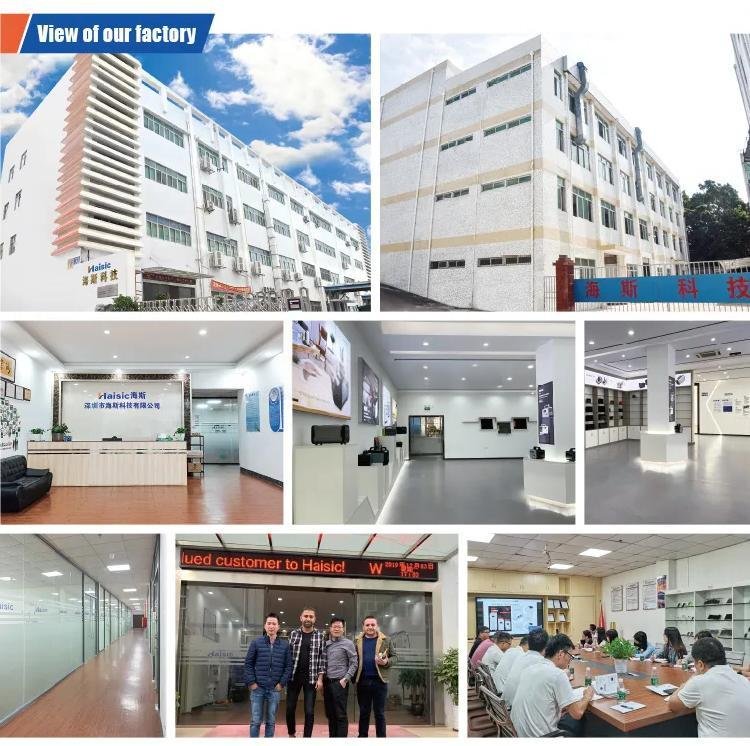
I run Haisic as a dedicated bulk Energy Storage System manufacturer focused on utility, commercial, and industrial projects. We operate as a BESS wholesale factory with fully integrated R&D, pack assembly, and system integration under one roof. Our lines cover stackable high-voltage batteries, commercial cabinets, and utility-scale containerized BESS, giving EPCs, developers, and distributors a stable, long-term grid‑scale energy storage system supplier they can actually plan around.
Bulk-ready products & containerized BESS solutions
For bulk Energy Storage System buyers, we keep standard, repeatable SKUs ready for scaling:
- 50–100kWh containerized BESS for C&I and microgrids, like our 50/100kWh containerized energy storage system
- 100kWh–MWh-class containers for utility and peak‑shaving projects, including our 100kWh containerized battery energy storage system
- Modular LFP racks and cabinets that let you build from hundreds of kWh up to multi‑MWh with the same platform
These are designed for bulk ESS manufacturing and fast replication, so bulk Energy Storage System distributors, vendors, and trading companies can standardize on one platform across regions.
OEM/ODM support, testing & quality control
As an energy storage system OEM manufacturer and ODM factory, we handle:
- OEM/private label branding for bulk Energy Storage System dealers and importers
- ODM customization (voltage, capacity, PCS matching, communication protocols)
- Full cell-to-system testing, including insulation, high/low-temperature, aging, and functional tests on every BESS batch
- Strict quality control with tracked serials, batch reports, and performance records to support project bankability
This setup makes Haisic a practical bulk Energy Storage System OEM factory and contract manufacturer for partners who need consistent quality at scale.
Why choose Haisic for bulk ESS sourcing
Haisic is built for buyers who think in containers and megawatt-hours, not single units. Key reasons global customers choose us as their bulk Energy Storage System supplier and exporter:
- LFP-first strategy for safety and long life in grid, commercial, and industrial storage
- Scalable production that supports phased rollouts and framework orders
- Engineer-to-engineer support from pre‑design to after‑sales
- Flexible cooperation models for distributors, EPCs, and project developers
If you’re looking for a bulk Energy Storage System factory that can back large, repeat orders and support OEM/ODM, Haisic is set up for exactly that.
Step-by-Step Process to Source Bulk Energy Storage Systems
Working with a bulk Energy Storage System manufacturer isn’t just about price. It’s about getting the right technical solution, at scale, with low risk. Here’s exactly how I handle bulk ESS sourcing end-to-end.
1. How to Request and Compare Bulk BESS Quotations
When you approach bulk Energy Storage System suppliers, be very specific from day one. That’s how you get clean, comparable quotes instead of guesswork.
What to include in your RFQ to bulk ESS factories:
- Required energy capacity (MWh) and power rating (MW)
- Application: peak shaving, backup, solar/wind integration, microgrid, or industrial demand management
- Battery chemistry preference (usually LFP for bulk lithium battery storage)
- AC or DC coupled, grid code requirements, and target standards (IEC, UL, etc.)
- Site conditions: ambient temperature range, altitude, indoor/outdoor, noise limits
- Expected delivery schedule and project phasing
- Customization level: standard containerized BESS vs OEM/ODM requirements
- Target incoterms (FOB, CIF, DDP) and destination port/country
How to compare quotations from bulk Energy Storage System manufacturers:
- Normalize all offers to $/kWh (energy) and $/kW (power)
- Separate pricing for:
- Battery racks
- PCS/inverters
- BMS/EMS
- Container/enclosure
- Installation support and commissioning
- Check included services: design support, on-site commissioning, remote monitoring, training
- Compare warranty terms (years, cycles, throughput, guaranteed capacity)
- Confirm what’s excluded: civil works, transformers, LV/MV switchgear, taxes, duties
Always ask each bulk Energy Storage System vendor for a clear technical datasheet, a BOM , and a pricing breakdown. That’s how you avoid hidden costs.
2. Sampling, Technical Validation, and Factory Audits
Before locking in a large PO with any bulk Energy Storage System factory, validate both the product and the production capability.
Sampling & pilot validation:
- Start with:
- A single containerized BESS unit or
- A smaller commercial battery storage system as a pilot
- Run tests on:
- Actual usable capacity vs rated
- Round-trip efficiency
- Thermal behavior at local ambient temperatures
- Communication protocols (Modbus/TCP, IEC 61850, etc.)
- EMS integration with your existing solar inverters or gensets
- Monitor real data for a few months, not just lab reports.
If you’re also building a residential or C&I portfolio, pilot products like a 10kWh wall-mounted home energy storage system or a 51.2V 100Ah powerwall unit from the same energy storage system OEM manufacturer can help you validate cell quality and BMS logic on a smaller scale.
Factory audit checklist for bulk ESS manufacturers:
- Production capacity: monthly MWh output
Bulk Energy Storage System Manufacturer FAQs
MOQ expectations for bulk BESS manufacturers
Most bulk Energy Storage System manufacturers set the MOQ (minimum order quantity) based on:
- Total energy (MWh) or number of containerized BESS units
- Customization level (standard vs OEM/ODM)
- Target market (utility, commercial, industrial, microgrid)
For grid‑scale and commercial projects, expect MOQs from 1–5 containerized BESS units or a defined floor in MWh. As a bulk Energy Storage System supplier, I always suggest sharing your 3–5 year pipeline so we can align MOQ, phased deliveries, and pricing from the start.
LFP vs other chemistries for bulk energy storage procurement
For bulk BESS manufacturing today, LFP (lithium iron phosphate) is the go‑to chemistry for:
- Better safety and thermal stability
- Long cycle life (ideal for daily cycling, peak shaving, and microgrids)
- Competitive $/kWh at bulk scale
NMC or high‑nickel chemistries are still used where high energy density is critical (space‑limited sites), but for utility‑scale and industrial projects, most bulk Energy Storage System factories, including ours, prioritize LFP‑based containerized BESS due to safety, availability, and cost.
Required certifications for reliable bulk ESS manufacturers
Any serious bulk Energy Storage System company targeting global projects should support:
- Battery & system safety: UL 9540 / 9540A, UL 1973, IEC 62619
- Grid & power electronics: UL 1741 / IEEE 1547, CE, IEC 62109, local grid codes
- Quality & environment: ISO 9001, ISO 14001, ISO 45001
When you qualify bulk Energy Storage System vendors, ask for complete test reports, not just certificates. For residential or C&I solutions, we align our designs with international standards similar to what you see on our 51.2V 100Ah home energy storage system so you can resell or integrate globally with confidence.
OEM and private label options from energy storage factories
A good bulk Energy Storage System OEM factory should offer:
- Custom branding: logo, color, labels, packaging
- Custom specs: voltage, capacity, PCS rating, EMS integration, communication protocols
- Documentation under your brand: datasheets, manuals, certificates with your company name where allowed
We run bulk Energy Storage System private label programs for distributors, EPCs, and project developers who want to build their own brand without building a factory. This includes ODM engineering if you need unique functions or form factors.
Ensuring long-term supply stability for grid-scale projects
For multi‑year grid projects, you need a bulk Energy Storage System manufacturer that can ride out price swings and policy shifts. Here’s what I focus on with global partners:
- Multi‑year framework agreements locking pricing formulas, volumes, and delivery slots
- Dual‑sourcing key components (cells, PCS, EMS) to reduce single‑point risk
- Clear spare parts strategy and on‑site service plans for 10–15 years
- Factory capacity expansion plans aligned with your project roadmap
If you’re planning large or repeated deployments, treat your bulk Energy Storage System supplier like a strategic partner, not a one‑off vendor—share forecasts, grid requirements, and site timelines early so we can design and secure capacity for you.