

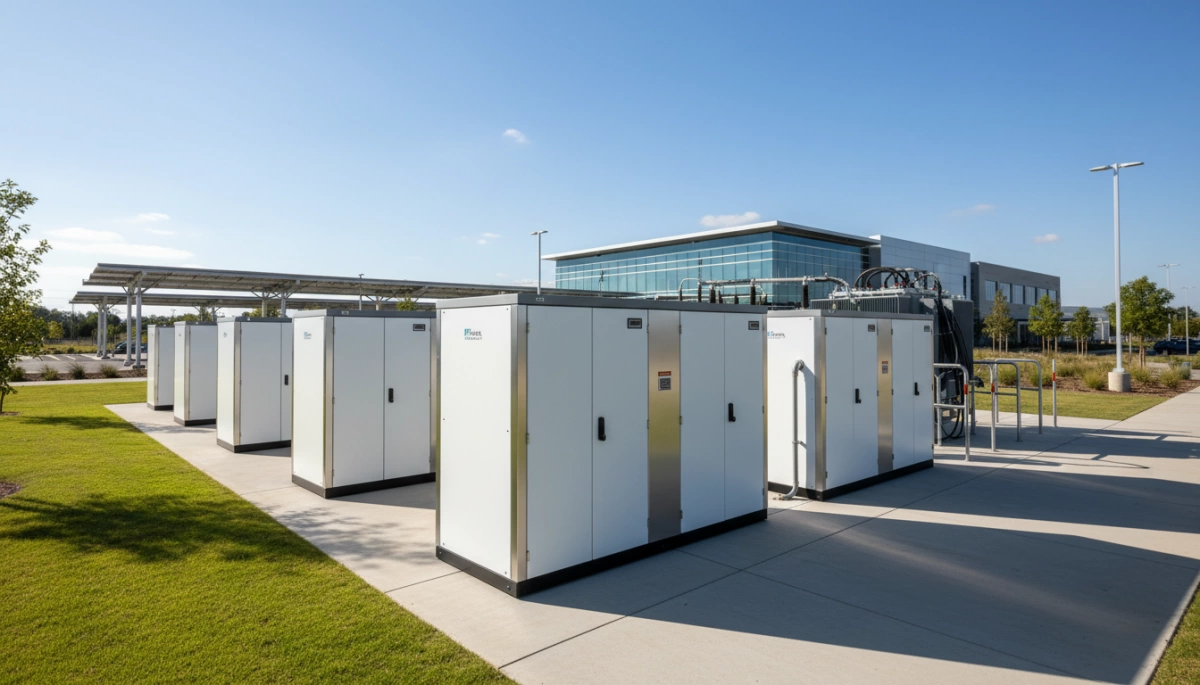
Introduction to Commercial Battery Storage
Are skyrocketing utility bills eating into your profit margins? Does the threat of a sudden power outage halting your operations keep you up at night? You are not alone. In today\’s volatile energy market, relying solely on the grid is becoming a liability for businesses across the globe.
What is Commercial Battery Storage?
Let’s get straight to the point. Commercial battery storage—technically referred to as a Battery Energy Storage System (BESS)—is more than just a large backup battery. It is a sophisticated, intelligent energy management tool designed for commercial and industrial use.
Unlike traditional backup generators, a BESS is dynamic. It captures electricity (either from the grid during cheap hours or from onsite solar), stores it, and deploys it exactly when your business needs it most. It is the bridge between unstable grid supply and your need for constant, reliable power.
The Energy Challenge for Businesses
We are currently operating in a challenging energy landscape. Commercial enterprises are battling a \”trilemma\” that directly impacts the bottom line:
- Surging Energy Costs: Base electricity rates are climbing year over year.
- Aggressive Demand Charges: Utilities are penalizing businesses heavily for short spikes in power usage.
- Grid Instability: Aging infrastructure and extreme weather are making grid failures a common operational risk.
Why Now? The Shift to Energy Independence
Why is everyone talking about commercial energy storage right now? The timing has never been better. We are seeing a convergence of falling lithium-ion battery prices and a critical need for energy cost reduction.
Investing in a commercial battery storage system is no longer just about sustainability; it is a strategic financial decision. With the massive push for renewable energy integration and the necessity of energy resilience, storage allows you to take control of your power profile. It transforms energy from an unpredictable expense into a managed asset.
Would you like me to proceed with the next section on \”How Commercial Battery Storage Works\” including the Core Components and System Architecture?
How Commercial Battery Storage Works
A commercial battery storage system (BESS) is more than just a massive power bank; it is a sophisticated, integrated ecosystem designed to manage energy flow intelligently. Understanding how the hardware and software interact is key to maximizing ROI.
Core Components: The Tech Stack
To operate efficiently, a BESS relies on four critical components working in sync:
- Battery Modules: The storage medium itself. The market currently favors LFP battery systems (Lithium Iron Phosphate) for their superior safety profile and longer cycle life, though NMC battery systems are still used where high energy density is required in tight spaces.
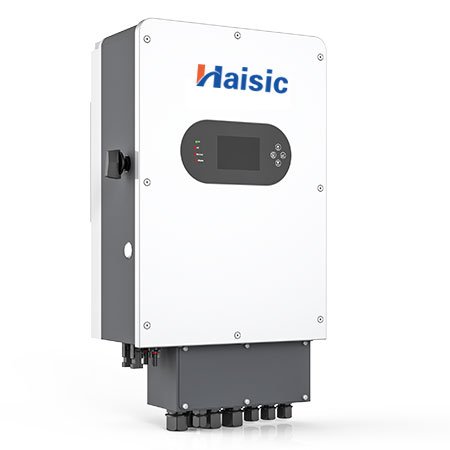
- Power Conversion System (PCS): This is the bidirectional inverter. It converts Direct Current (DC) from the battery into Alternating Current (AC) usable by your facility and vice versa.
- Battery Management System (BMS): The safety guard. It continuously monitors cell voltage, current, and temperature to prevent thermal runaway.
- Energy Management System (EMS): The \”brain\” of the operation. This software decides when to charge or discharge based on utility rates and usage data.
System Architecture
The wiring configuration dictates how the system interacts with the grid.
- On-Grid: Connected directly to the utility lines. Primary use is financial—arbitraging energy rates and integrating solar.
- Off-Grid: Operates independently, essential for remote mining or agricultural sites.
- Hybrid: The most versatile choice. Our high-voltage commercial energy storage systems can sync with the grid to save money but also \”island\” themselves to provide backup power during a blackout.
Deployment: BTM vs. FTM
Where you place the asset determines its function.
- Behind-the-Meter (BTM): Installed on the customer\’s premise (factories, offices). The focus here is reducing the user\’s electricity bill and providing backup. Many businesses opt for modular containerized battery energy storage systems for easy BTM installation.
- Front-of-the-Meter (FTM): Connected to distribution lines. These assets are usually owned by utilities or IPPs to provide grid stability services rather than local site savings.
Key Applications for Commercial Battery Storage
It is not just about keeping the lights on anymore. A modern commercial battery storage system is a dynamic asset that actively manages how your business consumes, saves, and even generates energy. We are seeing these systems transform from simple backup units into central hubs for profitability and operational stability.
Here is how businesses are currently deploying commercial energy storage to solve real-world problems:
- Peak Shaving Solutions: Demand charges can account for up to 50% of a commercial electricity bill. We use storage to stockpile cheap energy during off-peak hours and discharge it during high-rate periods. This \”shaving\” of the peaks directly results in massive energy cost reduction.
- Renewable Energy Integration: Solar production doesn\’t always match business hours. By pairing renewables with a robust containerized energy storage system, you can store excess midday power to run operations after the sun goes down. This maximizes self-consumption and ensures your commercial battery storage for solar investment pays off faster.
- Backup Power and Microgrid Resilience: For data centers and healthcare facilities, downtime is expensive and dangerous. A BESS provides instant, seamless backup, creating microgrid resilience that keeps critical infrastructure running without the lag or noise of diesel generators.
- EV Charging Infrastructure Support: Electrifying a fleet creates massive power spikes that local grids often cannot handle. Batteries act as a buffer, enabling high-speed charging without triggering expensive utility infrastructure upgrades.
- Virtual Power Plant (VPP) Participation: Your battery can become a revenue stream. By aggregating your stored energy with others, you can sell power back to the grid during emergencies, turning your asset into an active market participant.
Next Step
Would you like me to detail the specific ROI calculations and financial breakdowns for these applications in the next section?
The Financial Case: ROI and Cost Benchmarks for 2026
For most business owners and facility managers, the decision to install commercial battery storage ultimately comes down to the numbers. We are moving past the early adopter phase; in 2026, the economics are clearer, and the Return on Investment (ROI) is more predictable than ever.
Cost Breakdown: Upfront & Installation
Understanding the capital expenditure (CapEx) is the first step. Current market benchmarks for a turnkey commercial battery storage system typically range between $280 and $580 per kWh. This price variance depends heavily on the scale of the project—larger MWh-scale systems generally achieve a lower cost per unit than smaller kWh setups.
The price tag isn\’t just for the battery cells. A comprehensive budget must include:
- Hardware: Battery modules (LFP or NMC), inverters (PCS), and containerization.
- Soft Costs: Engineering, permitting, interconnection studies, and commissioning fees.
- Installation: Civil work, cabling, and onsite labor.
To get a realistic idea of how these figures stack up against market averages, it is helpful to review the current cost of solar battery storage trends, which significantly influence commercial pricing structures.
Total Cost of Ownership (TCO)
The sticker price is only part of the story. To calculate the true value, we must look at the Total Cost of Ownership (TCO) over the system\’s 15 to 20-year lifespan.
- Degradation: Batteries are chemical assets; they degrade over time. We typically factor in a capacity loss of 1-2% annually. This means your system will store slightly less energy in year 10 than in year 1.
- O&M Costs: Planned maintenance is minimal compared to mechanical generators, but you must budget for software updates, inverter checks, and HVAC filter changes for liquid-cooled systems.
- Warranties: Extended warranties often carry an upfront premium but protect against unexpected cell failures.
Calculating ROI and Payback Periods
Battery storage ROI is primarily driven by how effectively you can reduce operational expenses. For commercial battery storage for solar applications, the payback period usually falls between 4 to 8 years.
The speed of this return depends on three main levers:
- Demand Charges: If your local utility has high demand charges (paying for peak usage spikes), the system pays for itself faster by shaving those peaks.
- Arbitrage: Charging the battery when energy is cheap (off-peak) and discharging when it is expensive.
- Incentives: Local grants and federal tax credits can reduce the effective payback period by 30% or more.
Would you like me to create a comparison table for the next section detailing the specific differences between LFP and NMC battery chemistries for commercial applications?
Incentives, Subsidies, and Financing Options
Deploying a commercial battery storage system is a significant capital investment, but the financial landscape in 2026 makes it far more accessible than in previous years. You rarely end up paying the full sticker price. Through a combination of federal tax credits, local grants, and flexible financing models, businesses can drastically reduce upfront costs and accelerate their return on investment.
Federal and State Energy Storage Incentives
The most impactful financial lever for commercial battery storage in the United States remains the Investment Tax Credit (ITC) under the Inflation Reduction Act (IRA). This isn\’t just a small deduction; it is a direct credit against your tax liability.
- Federal ITC: You are eligible for a base credit of 30% of the total project cost.
- Bonus Credits: If your project meets specific Domestic Content requirements or is located in an \”Energy Community,\” this credit can stack up to 40% or even 50%.
- Direct Pay: For tax-exempt entities (non-profits, schools), \”Direct Pay\” allows you to receive the credit as a cash refund.
Beyond federal help, regional energy storage incentives can cover a large chunk of the remaining cost.
- California (SGIP): The Self-Generation Incentive Program offers rebates based on the watt-hours of storage installed.
- Texas & New York: These states offer specific grants for grid-resilience projects and Non-Wires Alternatives (NWA).
For smaller commercial outbuildings or remote monitoring stations, robust components like a 6kw IP65 Hybrid Solar Inverter can be integrated to qualify for these incentives on a micro-scale.
Financing Models Compared
Choosing the right financial structure is just as important as choosing the right battery chemistry. You don\’t always need to drain your CapEx budget to get a commercial battery storage for solar setup running.
Here is how the three main financing models stack up for business owners:
| Model | Upfront Cost (CapEx) | Owner of Asset | Key Benefit |
|---|---|---|---|
| Direct Purchase | 100% | Your Business | Maximum lifetime savings and full control over ITC tax benefits. |
| Operating Lease | Low / None | Third Party | Fixed monthly payments; keeps the asset off your balance sheet. |
| PPA (Power Purchase Agreement) | $0 | Developer | Zero risk. You only pay for the energy usage or capacity provided. |
Zero-CapEx PPAs are becoming the standard for large industrial facilities. In this model, a third-party partner installs and maintains the commercial battery storage system, and you simply share the savings generated from peak shaving or demand charge reduction. This creates immediate cash flow positivity without touching your operational budget.
Technology Comparison: Choosing the Right Commercial Battery Storage System
Selecting the right commercial battery storage system isn\’t just about capacity; it’s about matching the technology to your business goals. The market is flooded with options, but for most stationary applications, the choice comes down to chemistry, scalability, and intelligent management.
Battery Chemistries: LFP vs. NMC
While there are many variations, the two dominant contenders are LFP battery systems (Lithium Iron Phosphate) and NMC battery systems (Nickel Manganese Cobalt). For commercial use, we increasingly prioritize LFP due to its superior safety profile and longevity, even though NMC offers higher energy density.
Quick Comparison: LFP vs. NMC
| Feature | LFP (Lithium Iron Phosphate) | NMC (Nickel Manganese Cobalt) |
|---|---|---|
| Safety | High: Extremely stable structure, low risk of thermal runaway. | Moderate: Higher energy density increases heat generation. |
| Lifespan | Long: 6,000+ cycles (15+ years). | Medium: Typically 2,000–3,000 cycles. |
| Space | Requires slightly more physical footprint. | Very compact, ideal for space-constrained EVs. |
| Cost | Generally lower cost per cycle. | Higher raw material costs (Cobalt/Nickel). |
Scalability and Design: Modular vs. Containerized
Your energy needs will grow, so your commercial battery storage must be able to grow with you.
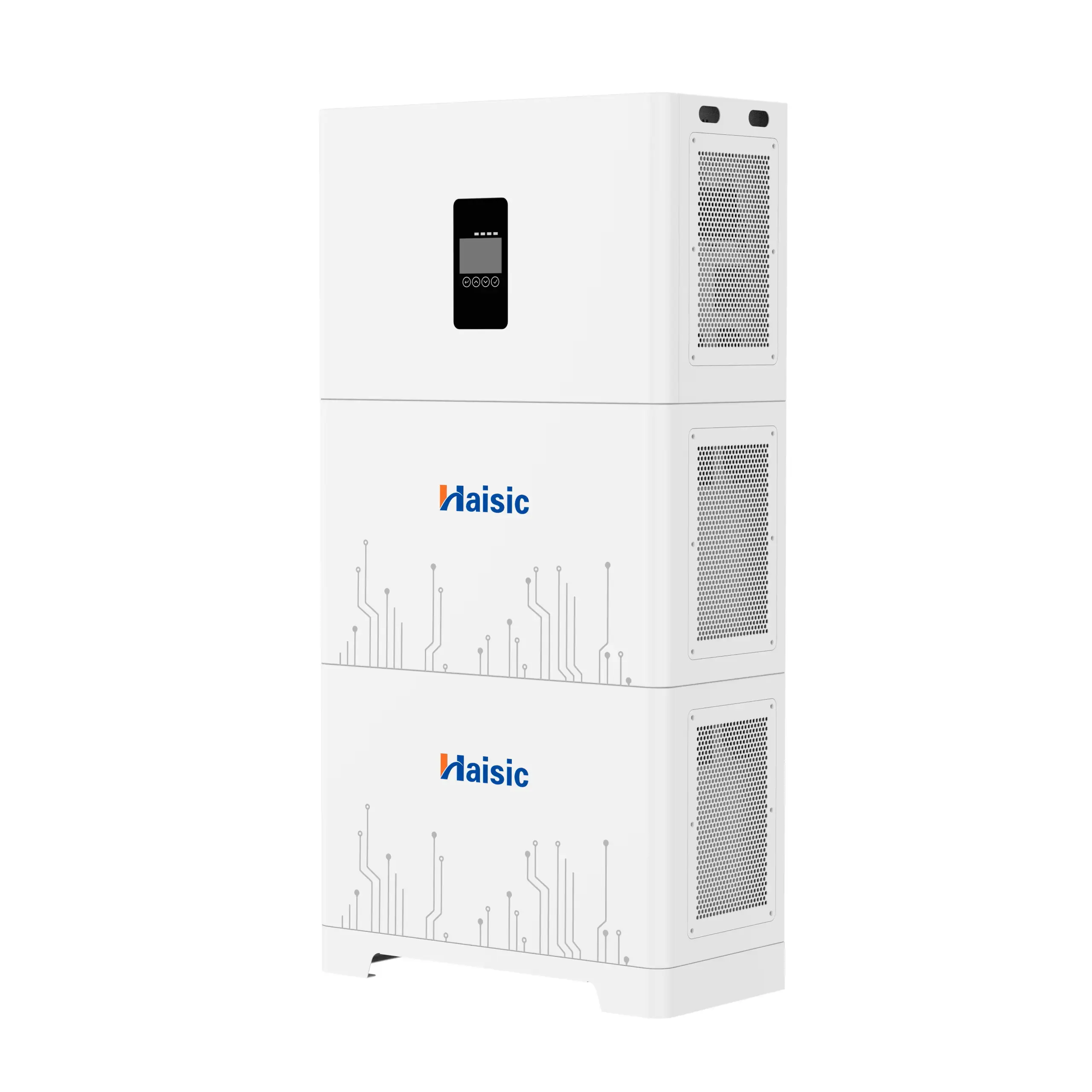
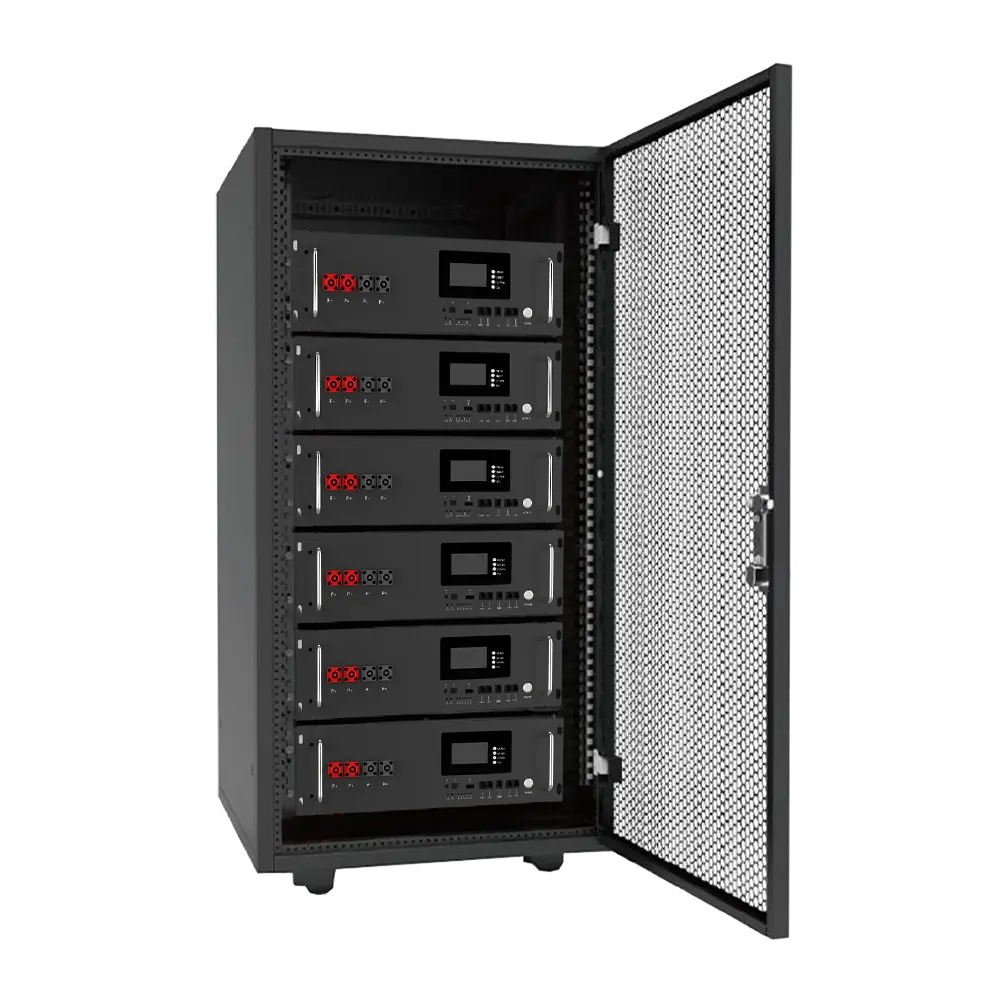
- Modular Cabinets (200 kWh+): These are perfect for small-to-medium businesses. You can start with a single cabinet and stack them as needed.
- Containerized Blocks (MWh Scale): For heavy industrial facilities or grid-support projects, standalone containers are the industry standard. For example, deploying a 1MWh ESS solar energy storage container system allows you to drop in massive capacity with minimal on-site construction.
Critical Integration Features
Hardware is useless without the software to drive it. Two features define a modern, high-performance system:
- AI-Driven EMS (Energy Management System): This is the brain of the operation. It uses predictive algorithms to buy power when it\’s cheap and discharge it when rates spike.
- Liquid Cooling Systems: Unlike basic air cooling, liquid cooling ensures every cell in your commercial battery storage for solar stays at the same temperature. This prevents degradation and significantly extends the warranty life of the asset.
Next Step: Would you like me to draft the next section on \”Safety, Compliance, and Installation Best Practices\” to ensure your facility meets all regulatory standards?
Safety, Compliance, and Installation Best Practices
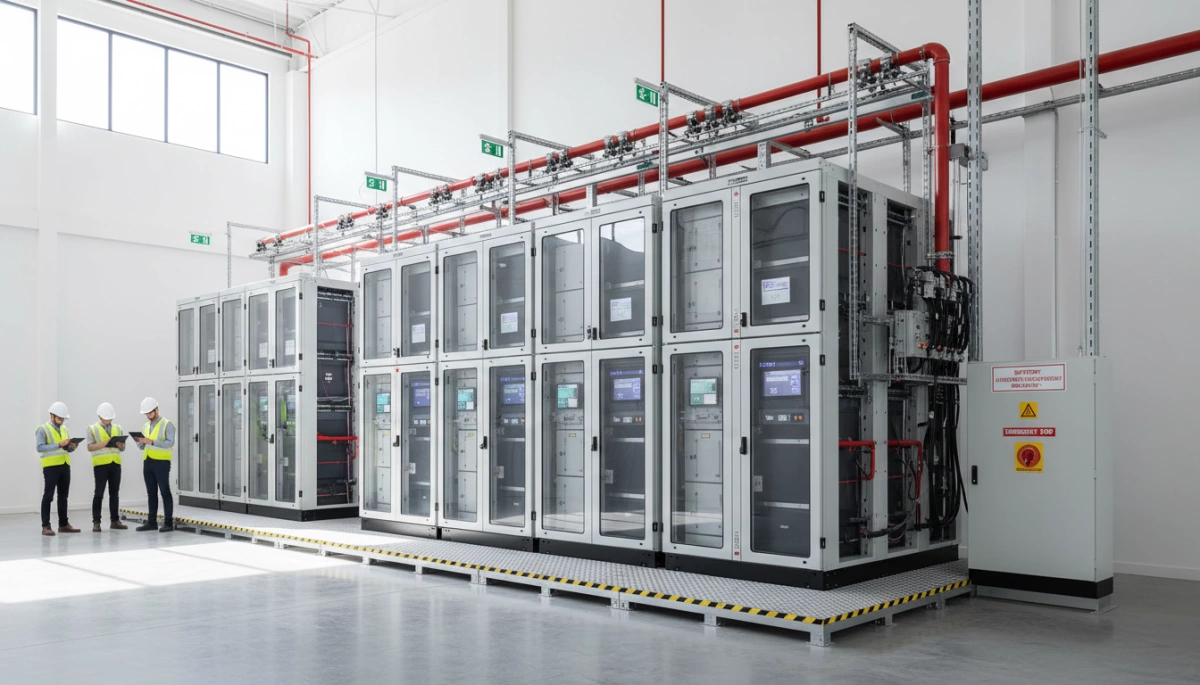
When deploying commercial battery storage, we prioritize safety above all else. These systems manage massive amounts of energy, so mitigating risk is not just about following rules—it is about protecting your assets and your people. We focus on fire-safe battery systems that are engineered to withstand extreme conditions and prevent failure before it starts.
Critical Safety Features
Modern BESS units must move beyond basic monitoring. We insist on multi-layered protection systems that actively manage risks:
- Thermal Runaway Prevention: Advanced BMS (Battery Management Systems) monitor cell temperatures in real-time to isolate issues instantly.
- Aerosol Fire Suppression: Integrated suppression units deploy automatically if a heat spike is detected, neutralizing threats without damaging the equipment.
- IP67 Enclosures: To ensure durability, systems should be housed in dust-tight and water-resistant casings, suitable for outdoor commercial environments.
Regulatory Compliance Standards
Navigating the alphabet soup of certifications can be confusing. Here is a breakdown of the essential standards we adhere to for commercial battery storage systems:
| Standard | Focus Area | Why It Matters |
|---|---|---|
| UL 9540A | Fire Safety Testing | Evaluates thermal runaway propagation limits at the system level. |
| UL 1973 | Battery Safety | Certifies the safety of the battery modules and packs for stationary use. |
| NFPA 855 | Installation Code | Sets the standard for the safe installation of energy storage systems. |
| IEEE 1547 | Grid Interconnection | Ensures the system syncs safely with the utility grid. |
Installation Logistics and Interconnectivity
A successful rollout starts long before the hardware arrives. We begin with a detailed site assessment to determine load requirements and physical placement. This is followed by navigating local permitting and grid interconnectivity processes.
Ensuring your system plays nice with the grid is vital. Using compliant components, such as a 6-12kW IP65 hybrid solar inverter, guarantees that your setup meets the strict voltage and frequency regulation requirements (IEEE 1547) demanded by utility providers. Correct installation ensures your warranty remains valid and your facility stays powered safely.
Would you like me to draft the next section on \”Real-World Case Studies and Success Stories\” to highlight specific ROI examples?
Real-World Success Stories in Commercial Energy
It is one thing to look at datasheets; it is another to see the actual savings on a balance sheet. We have seen firsthand how businesses transform their operations and profit margins by integrating commercial battery storage. Here is how different sectors are using these systems to solve real problems.
Manufacturing: Crushing Demand Charges
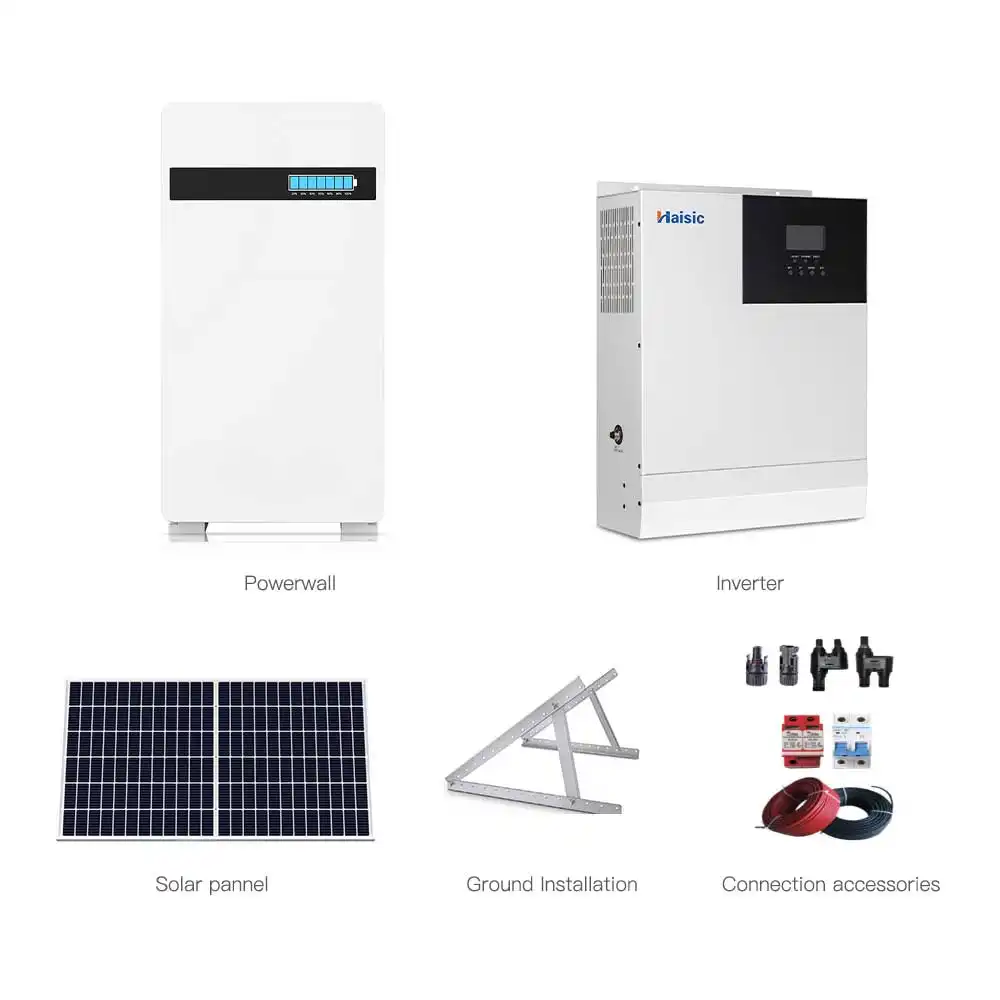
For heavy industry, power spikes are the enemy. A single machine startup can trigger massive demand charges that ruin the month\’s operational budget. We have seen manufacturing plants install a commercial battery storage system specifically for peak shaving solutions. By discharging stored power during those critical high-draw moments, businesses can achieve significant savings—often seeing a 40% reduction in demand charges almost immediately. For facilities with heavy energy loads, deploying robust large-scale all-in-one solar energy storage systems is the most effective way to flatten those expensive peaks and stabilize operational costs.
Retail and Commercial Buildings: Solar Independence
Shopping centers and office complexes are rapidly adopting commercial battery storage for solar integration. The goal here is simple: maximize self-consumption. Instead of selling excess solar power back to the grid for pennies, businesses store it to run HVAC and lighting systems after sunset. This approach not only maximizes renewable energy integration but also insulates the business from volatile grid pricing, ensuring long-term energy cost reduction.
EV Fleet Depots: Managing the Charge
As logistics companies switch to electric, charging dozens of delivery vans simultaneously creates a massive strain on local infrastructure. Instead of paying for expensive utility grid upgrades, fleet operators are using grid-ready battery systems as a buffer. The battery charges steadily throughout the day and releases high power when the fleet returns. This allows for uninterrupted fleet operations and manages load profiles without risking blackouts or incurring penalty rates.
Looking for a system that fits your specific voltage and capacity needs? Let me help you analyze your load profile to find the right storage solution.
Future Trends in Commercial Battery Storage (2026 and Beyond)
As we look toward 2026 and beyond, the landscape of commercial battery storage is shifting fast. We aren\’t just talking about incremental improvements anymore; we are seeing a fundamental transformation in how businesses generate, store, and value energy. For us in the industry, the focus is moving from simple backup solutions to intelligent, long-term energy resilience.
Technological Advancements: Beyond Standard Lithium-Ion
While standard lithium-ion battery storage has dominated the market, the next generation of tech is knocking on the door. Everyone is watching solid-state battery developments. These promise significantly higher energy density and improved safety profiles compared to traditional liquid electrolytes, reducing the risk of thermal events.
We are also seeing a massive push for Long-Duration Energy Storage (LDES). Businesses looking to run purely on renewables need systems that can discharge for 8 to 12 hours, not just the standard 2 to 4 hours. Until solid-state fully matures, highly efficient and stackable energy storage batteries remain the most reliable bridge, offering the modularity needed to scale capacity right now.
Market Growth: Electrification and Net-Zero Goals
The drive for net-zero is no longer just a PR move; it\’s a regulatory and financial necessity. As electrification expands—from heating systems to vehicle fleets—the demand for robust commercial energy storage is skyrocketing.
- Grid Independence: Companies want to reduce reliance on an increasingly unstable grid.
- Regulatory Pressure: stricter carbon reporting requires deeper renewable energy integration.
- Electrification: Supporting heavy loads from EV chargers without blowing the budget on demand charges.
Sustainable Lifecycles and Circular Economy
Sustainability doesn\’t stop at installation. The future of BESS includes a serious commitment to the entire lifecycle. We are seeing innovative approaches to second-life batteries—repurposing EV batteries for stationary commercial storage before they hit recycling centers.
Furthermore, recycling innovations are becoming a standard requirement in procurement. businesses are prioritizing commercial battery storage systems that are designed for easy disassembly and high material recovery rates, ensuring that our green energy solutions don\’t create a new waste problem down the line.
Next Step: Are you curious about how these future trends might impact your current installation plans or ROI calculations? I can help you evaluate if your facility is ready for the next generation of storage technology.
Choosing a Reliable Commercial Battery Storage Partner
Investing in a commercial battery storage system is a long-term commitment, not a one-off purchase. Your hardware is only as resilient as the team backing it up. When I look at the market, the difference between a successful deployment and a stranded asset often comes down to the partner you choose.
Evaluating Vendors and Supply Chain
You need a partner with a proven track record, not just a flashy brochure. We prioritize stability and a robust global supply chain. In an industry facing occasional component shortages, working with a vendor that has secured access to high-grade cells and components ensures your project doesn\’t get stuck in limbo. A reliable partner manages the complexities of logistics so you can focus on operations.
Customization and Scalability
One-size-fits-all rarely works for commercial energy storage. Your facility’s voltage requirements, load profile, and available space dictate the design.
- Voltage Matching: We tailor solutions to specific high-voltage or low-voltage needs.
- Capacity Planning: Whether you need a compact setup or a massive MWh container, the design must be precise.
We specialize in configuring commercial energy solutions that align perfectly with your infrastructure, ensuring you aren\’t paying for capacity you don\’t need or struggling with a system that\’s too small.
After-Sales Support and Warranties
The real work starts after installation. A robust commercial battery storage setup requires intelligent oversight.
- Remote Monitoring: Real-time data from the BMS allows us to spot anomalies before they become failures.
- Warranty Integrity: Look for transparent warranty terms that cover performance degradation, not just total failure.
- Maintenance Networks: Responsive support ensures your system stays online, maximizing your ROI and energy security.
Would you like me to detail the specific warranty terms and performance guarantees available for our commercial systems?